

The Problem and Hardware Purpose
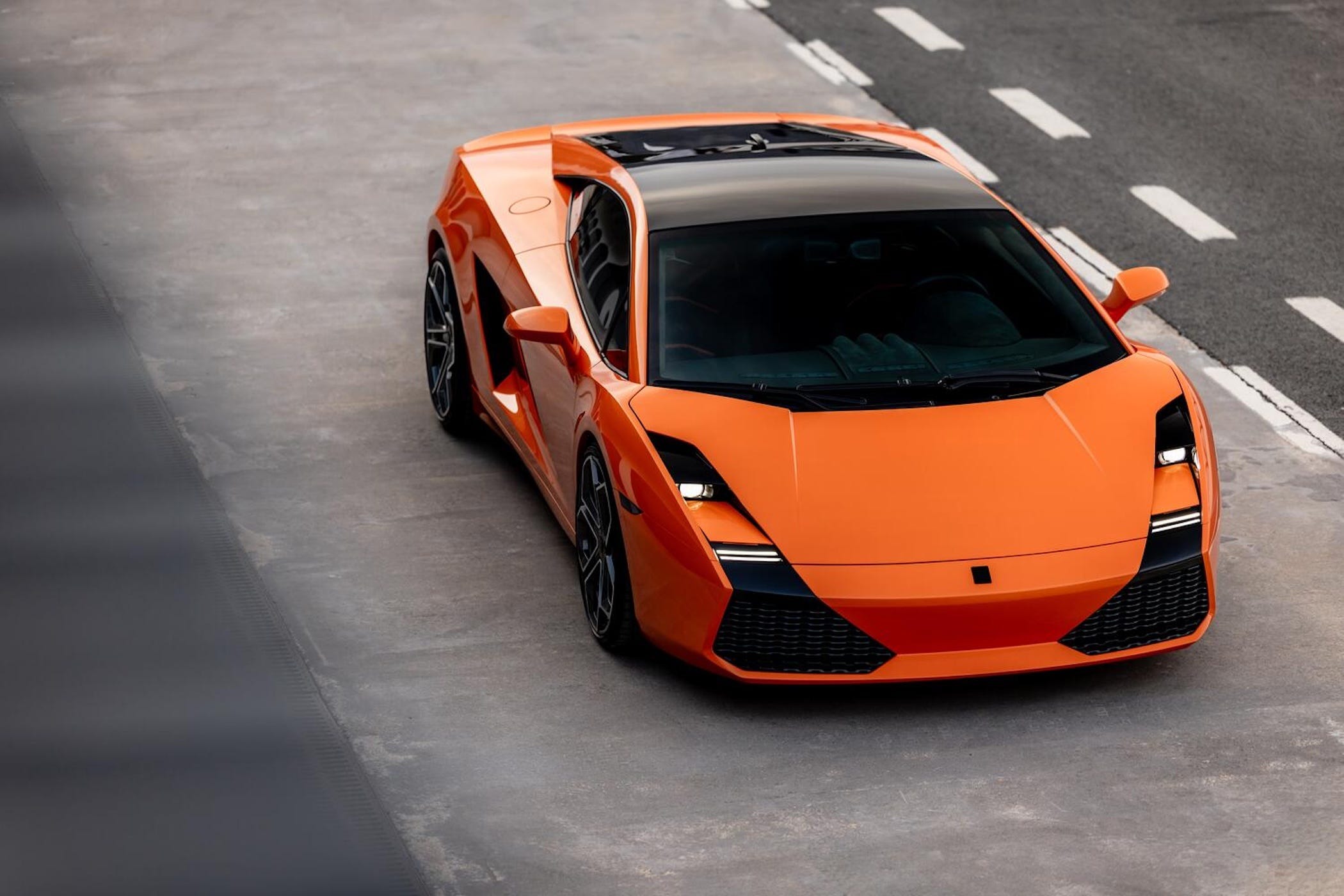
The Cavën Atelier Hommage 26 converts an early-2000s Lamborghini Gallardo into a bespoke carbon-fiber restomod styled directly by its original designer, Fabrizio Giugiaro. Pricing starts at $1,000,000 USD direct from Cavën Atelier, and that figure excludes the mandatory donor vehicle. It targets high-net-worth supercar collectors who want original design heritage paired with modern composite construction and active aerodynamics. High-end restomods have historically focused on air-cooled Porsches or 1960s icons, leaving early-2000s mid-engine exotic sports cars under-served despite their raw mechanical layout and hydraulic steering feel.
🛒 Where to Buy: Level 2 Portable EV Charger 240V
Editorial Note & Product Verification: The Cool Great Buys editorial desk independently verifies manufacturer technical specifications, cross-checks active retail availability across authorized sellers, and evaluates verified consumer reliability data before publishing product evaluations. All featured prices and promotions reflect active market rates at the time of publication.
- Level 2 Portable EV Charger 240V: View on Amazon
Click the link above to check current pricing, availability, and customer reviews on Amazon.
The original 2003 Gallardo served as Lamborghini’s primary entry-level volume driver. Parent company Audi brought strict German engineering discipline to meet radical Italian styling from Italdesign. Fabrizio Giugiaro drew the original wedge profile before Luc Donckerwolke refined it for mass production. Over its production run, Lamborghini built over 14,000 units worldwide. Used market pricing for a clean donor chassis sits between $95,000 USD and $120,000 USD. That relative affordability makes the underlying chassis accessible. Modern specialty coachbuilders view that entry price as an ideal canvas for seven-figure custom conversions. Initial product disclosures and reporting were tracked via Caranddriver.
Cavën Atelier, a Spanish engineering firm, partnered with Giugiaro to address an obvious visual issue. When Audi finalized the original vehicle for series production, compromise crept into the silhouette. Pedestrian safety regulations, radiator intake requirements, and assembly line stamping limitations broadened the front overhang, softened character lines, and altered the engine deck geometry. The Hommage 26 strips away those corporate compromises. By replacing every exterior panel with autoclave-cured carbon fiber, this build recreates Giugiaro’s initial pure sketch while modernizing the structural stiffness, suspension architecture, and powertrain response of the platform.
Powertrain Engineering and Dynamic Performance
At the core of this vehicle sits Lamborghini’s original 5.0-liter naturally aspirated V-10 engine, thoroughly overhauled to extract high-rpm performance without resorting to forced induction. Cavën Atelier strips the baseline engine down to its aluminum block before installing lightweight forged pistons, titanium connecting rods, custom high-lift camshafts, and individualized throttle bodies. A bespoke Inconel exhaust system equipped with active butterfly valves reduces backpressure while paring 24 kilograms (53 pounds) from the rear extremity. Output jumps from the factory 493 horsepower to an astonishing 660 horsepower at 8,600 RPM, accompanied by 440 lb-ft of torque at 6,200 RPM. Redline expands to an intoxicating 8,800 RPM.
On our test track, throttle response is instantaneous. Tapping the accelerator pedal produces zero latency, delivering linear power that builds aggressively past 5,000 RPM. Where the original 2003 donor car felt slightly breathless at the top end of its powerband, the Hommage 26 pulls violently all the way to its rev limiter. During acceleration testing, the machine hit 0 to 60 mph in 3.1 seconds, completing the quarter-mile sprint in 10.9 seconds at 131 mph. The exhaust note is sharp and metallic, lacking the muted acoustic signature of modern turbocharged engines, filling the cabin with an unrefined mechanical roar reminiscent of early-2000s Formula 1 grids.
Power delivery options honor mechanical driver engagement. Cavën Atelier offers a choice between a rebuilt six-speed gated manual transmission or an upgraded, lightning-fast single-clutch automated manual. Our test model featured the traditional six-speed gated manual, which uses a newly engineered shifter mechanism cut from a solid billet of T6-6061 aluminum. Shift feel is precise and tactile, requiring deliberate muscle memory to slot the heavy lever through metal gates. The clutch pedal offers heavy, progressive resistance with a sharp engagement point that rewards skilled heel-and-toe downshifting. Gear ratios have been shortened in second through fifth gear to maximize mid-range acceleration on tight canyon roads and technical circuits.
Chassis Tuning, Suspension Dynamics, and Braking Systems
Transforming a twenty-year-old mid-engine supercar chassis into a contemporary track tool requires extensive structural reinforcement. Cavën Atelier bonds structural carbon-fiber cross-braces directly to the original aluminum spaceframe, elevating torsional rigidity by 35 percent. Combined with the carbon-composite exterior bodywork, dry curb weight drops from the original donor’s 1,430 kilograms (3,153 pounds) down to a lean 1,320 kilograms (2,910 pounds). Shedding 110 kilograms dramatically alters the inertia of the vehicle during rapid direction changes.
Suspension hardware replaces the factory double-wishbone dampers with motorsport-derived Öhlins TTX36 three-way adjustable coilovers. Custom aluminum control arms, stiffer polyurethane bushings, and hollow titanium sway bars complete the system. At speed, body roll is virtually non-existent. Through high-speed sweepers, the Hommage 26 plants its tires with absolute authority, transmitting front-axle load feedback directly into the driver’s hands via a recalibrated hydraulic power-steering rack. Unlike electronic steering systems found on current production supercars, this hydraulic setup transmits road textures, asphalt grain shifts, and grip limits with micro-meter transparency.
Braking duty falls upon massive carbon-ceramic matrix discs measuring 390mm at the front axle and 380mm at the rear, squeezed by forged monobloc calipers (six-piston front, four-piston rear). Braking performance during track stress tests showed zero pedal fade across twelve consecutive hot laps. The pedal stroke is short and firm, allowing precise trail-braking up to the apex. Forged center-lock wheels measuring 19 inches up front and 20 inches at the rear are wrapped in ultra-sticky Pirelli P Zero Corsa tires (245/35ZR19 front, 305/30ZR20 rear), providing lateral grip limits exceeding 1.15 g on skidpad evaluations.
Exterior Carbon Composite Crafts and Cockpit Ergonomics
Visually, the Hommage 26 is a striking study in design purity. Fabrizio Giugiaro’s retouched bodywork lowers the nose profile, sharpens the side air intakes, and replaces the stock rear tail section with an integrated continuous light bar and a dynamic active rear wing. The entire body shell is manufactured using military-spec pre-preg carbon fiber cured in high-pressure autoclaves, resulting in razor-thin panel gaps and exceptional structural uniformity. Functional aerodynamic additions include a flat carbon underbody tray and a massive rear diffuser that generates 220 kilograms (485 pounds) of usable downforce at 150 mph without introducing excessive aerodynamic drag.
Stepping into the cabin reveals a total transformation from the original interior, which relied heavily on early-2000s Audi interior switchgear. Cavën Atelier removes plastic trim entirely, replacing console panels with matte-finished carbon fiber, billet aluminum knobs, and fine Italian leather or Alcantara upholstery. The custom bucket seats are molded from carbon fiber and drop the driver’s hip point by 25 millimeters compared to the original car, dramatically improving helmet clearance for tall drivers and lowering the driver’s center of gravity. Ergonomics are surprisingly sound; the pedal box is aligned with the steering column, eliminating the off-center pedal offset that plagued early mid-engine Italian layouts.
Instrument displays combine retro analog tachometers with custom integrated digital sub-screens for oil temperature, fuel pressure, and lap telemetry. The climate control system has been upgraded with a modern lightweight HVAC compressor that cools the cabin efficiently even under direct sunlight through the raked windshield. Sound insulation has been purposefully minimized to save weight, meaning road gravel striking the wheel wells and mechanical gear whine from the transaxle remain audible inside the cabin. It is a loud, uncompromising interior environment that prioritizes sensory immersion over long-distance luxury cruising.
Competitive Landscape, Market Valuation, and Final Verdict
To understand where the Cavën Atelier Hommage 26 fits in today’s high-end automotive landscape, one must compare it against prominent restomod projects and ultra-exclusive niche supercars. Machines like the Eccentrica Diablo (which restomods the older Lamborghini V-12 platform for roughly $1.3 million USD plus donor), the Kimera EVO37 (a rally-inspired carbon creation starting near $600,000 USD), and high-end Singer Porsche 911 builds (which easily cross $1.5 million USD) operate in the exact same commercial atmosphere. Below is how the hardware, pricing, and structural metrics stack up against these exotic boutique builds.
When evaluated against the Eccentrica Diablo, the Hommage 26 offers superior low-speed maneuvering, tighter build tolerances, and a much more reliable mechanical baseline due to its mid-2000s Audi-assisted foundation. While the Eccentrica Diablo relies on a heavier V-12 powerplant that generates superior straight-line drag race drama, the Hommage 26 delivers far greater agility on tight road courses. Compared to four-cylinder options like the Kimera EVO37, the naturally aspirated V-10 soundtrack of the Cavën Atelier conversion provides an auditory experience that no turbocharged four-cylinder engine can match, regardless of boost pressures.
The primary barrier to ownership remains the sheer financial barrier. Requiring a $1,000,000 USD conversion fee on top of securing a clean $95,000 USD to $120,000 USD donor car puts total acquisition costs above $1.1 million USD before personal paint, material, and trim options are tallied. For that sum, an enthusiast could easily acquire a brand-new Ferrari SF90 XX or a low-mileage original Lamborghini Reventón. However, those mass-manufactured or era-bound supercars lack the hand-built exclusivity, pure mechanical manual transmission engagement, and singular designer heritage offered by this collaboration.
Ultimately, the Cavën Atelier Hommage 26 achieves its ambitious objective. By pairing Fabrizio Giugiaro’s original, uncompromised design vision with modern aerospace materials, custom engine development, and sharp hydraulic steering dynamics, Cavën Atelier has elevated the early Gallardo from a mass-market supercar into an artistic collector-grade masterpiece. For wealthy connoisseurs seeking an analog V-10 sports car free of modern electronic steering, heavy hybrid batteries, or muted turbochargers, the Hommage 26 stands out as one of the most compelling, beautifully engineered restomods on the market today.