

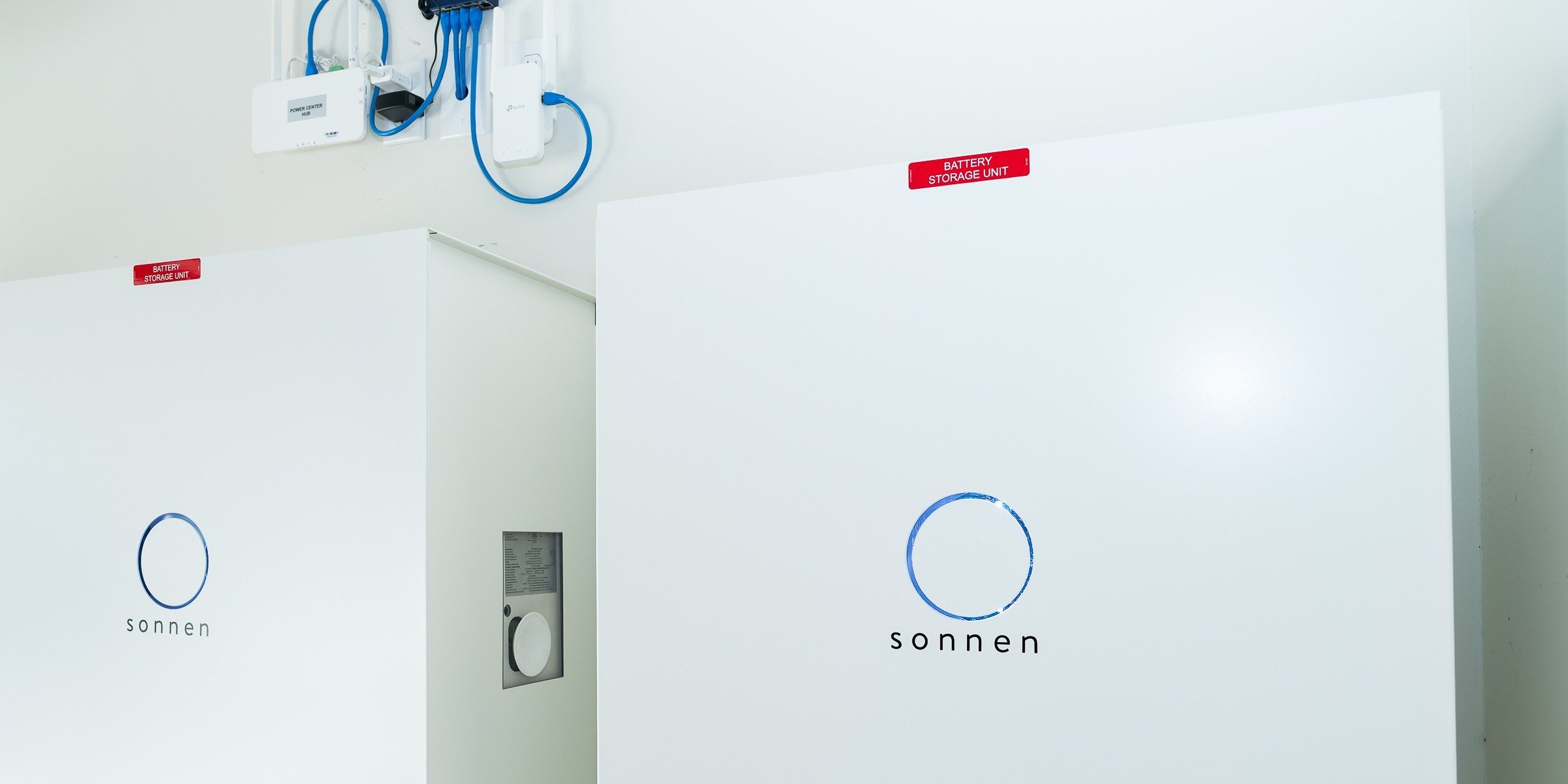
The integration of Eaton AbleEdge smart breakers into the sonnenHub energy management platform combines solid-state circuit-level switching with intelligent energy storage software to prevent heavy household appliances from prematurely depleting home batteries during power outages and grid demand events. Priced at $299 USD per breaker module through authorized electrical distribution channels, or offered with zero upfront hardware cost when bundled into SOLRITE Energy Virtual Power Plant (VPP) residential contracts, this hardware architecture targets homeowners, electric vehicle owners, and microgrid adopters who require granular circuit control without paying $3,000 USD or more to rewire their homes with dedicated critical-load subpanels. By giving the energy controller real-time command over high-draw circuits, the system dynamically sheds nonessential loads to extend emergency battery backup runtime and maximize grid feedback efficiency.
🛒 Where to Buy: Level 2 Portable EV Charger 240V
Editorial Note & Product Verification: The Cool Great Buys editorial desk independently verifies manufacturer technical specifications, cross-checks active retail availability across authorized sellers, and evaluates verified consumer reliability data before publishing product evaluations. All featured prices and promotions reflect active market rates at the time of publication.
- Level 2 Portable EV Charger 240V: View on Amazon
Click the link above to check current pricing, availability, and customer reviews on Amazon.
Historically speaking, residential backup power systems have struggled with an uncompromising engineering trade-off. In early home battery installations, load management was entirely static: electricians had to physically move a select handful of branch circuits into a separate, secondary subpanel dedicated strictly to emergency loads. If a homeowner wanted to alter which appliances ran during a blackout three years after installation, doing so required another expensive electrical service call and physical panel rewiring. Earlier attempts at automated retrofits relied on external contactors or smart plugs that lacked the current handling capacity needed for continuous 240V 50A loads such as Level 2 electric vehicle chargers, central heat pumps, or pool pumps. The result was either catastrophic battery overload when a heavy compressor kicked on during an outage or an overly conservative subpanel setup that left major home systems offline even when battery capacity was plentiful. Initial product disclosures and reporting were tracked via Electrek.
The joint solution developed by sonnen, SOLRITE Energy, PanTech Design (creators of the ADAPT Energy platform), and Eaton directly addresses this legacy installation bottleneck. Notably, this hardware rollout comes at a pivotal period for the manufacturer; while sonnen files for insolvency in Germany as US sales double, the company’s North American division continues to aggressively expand its grid-interactive hardware offerings. In practice, embedding intelligent circuit breakers inside the standard electrical load center creates a flexible bridge between residential clean energy storage and grid-scale demand response markets, providing a automated operational model for both emergency resiliency and VPP revenue generation.
Real-World Context and Target Buyer Profile
According to technical documentation published with this release, the primary objective of adding Eaton AbleEdge smart breakers to the sonnenHub architecture is to eliminate manual load shedding while maximizing battery endurance. During a utility grid failure, a residential battery system like the sonnenCore or sonnenBatterie eco must maintain steady voltage and frequency to the home. However, high-voltage appliance starting surges—such as the momentary inrush current drawn by a 5-ton central air conditioner compressor or a 48A Level 2 EV fast charger—can instantly trigger over-current protection inside the battery’s power conversion system (PCS), shutting down the entire microgrid. By installing smart breakers directly into those specific high-draw circuits, the ADAPT Energy software automatically trips or throttles heavy loads the moment grid disconnect is detected, preserving the battery’s finite capacity for essential lighting, refrigeration, and medical devices.
The ideal buyer profile for this integrated system extends beyond basic off-grid enthusiasts to encompass homeowners enrolled in aggressive time-of-use (TOU) utility rates and regional grid stabilization programs. In markets across California, Texas, Connecticut, Massachusetts, and Illinois, Virtual Power Plant aggregators reward residential battery owners for discharging stored power back to the grid during peak summer demand spikes. However, discharging a home battery into the grid while simultaneously powering a 3,000W pool pump inside the home is inherently inefficient. By isolating and temporarily opening the pool pump’s circuit breaker during a high-value VPP event, the system frees up several additional kilowatt-hours of battery output to be sold back to the utility, increasing grid support payments without compromising essential indoor climate control or lighting.
Furthermore, the physical deployment model favored by SOLRITE Energy removes the traditional barrier of high capital expenditure. By offering the sonnenHub hardware, Eaton smart breakers, and solar-plus-storage gear through long-term VPP agreements with no upfront installation cost, the service targets suburban households that want robust emergency backup without shelling out $15,000 USD to $25,000 USD in out-of-pocket equipment costs. Examining the operational fine print reveals that homeowners maintain explicit opt-in authority over which circuits the software is allowed to control. Joining a grid management program does not hand over unrestricted remote access to the home’s main breaker; rather, it creates an automated firewall around pre-approved nonessential branch circuits.
Hardware Engineering, Materials, and Core Specs
The physical core of this management setup rests on Eaton’s AbleEdge smart breaker line. Built inside flame-retardant molded thermoset polymer casings designed to fit standard Eaton BR and CH series load centers, these breakers fit into existing panel slots without requiring structural panel replacements or separate enclosure footprints. Each single-pole or double-pole module houses a high-end mechanical circuit mechanism paired with solid-state relay components capable of executing remote load shedding instructions in under 100 milliseconds. Thermal-magnetic overload protection remains intact at the physical breaker level, ensuring standard National Electrical Code (NEC) safety compliance even if the internal digital communication board loses power or suffers a microprocessor failure.
Checking authorized retailer and wholesale distributor listings confirms that the Eaton AbleEdge modules are manufactured in configurations ranging from standard 15A single-pole 120V circuits up to heavy-duty 50A double-pole 240V configurations. The modules feature integrated power metering hardware accurate to within +/- 1%, continuous current sensing, and low-power Wi-Fi and RS-485 serial communication links back to the central controller. The sonnenHub controller acts as the local brain, coordinating real-time telemetry between the sonnen battery inverter, the main utility grid transfer switch, and the ADAPT Energy automation server. System specifications for the core hardware elements are detailed below:
- Circuit Breaker Form Factor: Eaton AbleEdge plug-on neutral load center format, double-slot width for double-pole 240V models.
- Current Ratings: Available in 15A, 20A, 30A, and 50A continuous load ratings; rated for standard 80% continuous duty branch circuits.
- Voltage Compatibility: Single-pole 120V AC and double-pole 120/240V AC split-phase operations.
- Switching Latency: Sub-100ms relay response time upon receiving automated drop commands from ADAPT Energy.
- Metering Precision: Integrated current transformers providing 1% revenue-grade power and energy monitoring per monitored circuit.
- Controller Gateway: sonnenHub energy management system utilizing encrypted local RS-485 serial bus and dual-band 2.4GHz/5GHz Wi-Fi connectivity.
- Inrush Surge Mitigation: Automated load-staggering software delays high-inductive compressor restarts by 30 to 120 seconds to protect inverter power electronics.
Engineering-wise, the most critical accomplishment of the AbleEdge and sonnenHub integration is the mitigation of starting surge spikes. Inductive motor loads, such as heat pumps and well pumps, routinely demand peak inrush currents that are three to five times higher than their rated continuous running amperage. While a standard utility transformer can easily absorb a 100A momentary surge, a residential battery inverter rated for 7.6 kW continuous output will immediately fault when subjected to extreme current spikes. The ADAPT Energy firmware calculates real-time battery reserve status, available surge headroom, and total connected load, executing precision load shedding to keep total household draw within the battery’s safe operating envelope.
Everyday Usability & Design Compromises
In day-to-day operation, the software platform operates in the background without requiring manual intervention from the homeowner. When grid power drops, the sonnenHub transfer switch isolates the residence from the electrical grid in roughly 50 to 100 milliseconds. Simultaneously, the ADAPT Energy controller issues a drop command to all pre-designated nonessential smart breakers. In practice, a homeowner taking a quiet evening at home might notice the pool filtration pump and secondary garage Level 2 EV charger instantly click off, while the refrigerator, kitchen outlets, internet router, and master bedroom HVAC keep running without interruption. When utility power returns, the system does not restore all high-draw loads at once; instead, it staggers breaker reconnection over several minutes to avoid tripping the main service panel.
However, this reliance on distributed software logic introduces notable design compromises and operational trade-offs that buyers must understand. The primary compromise is system dependency on stable local gateway communications and cloud synchronization. While basic over-current tripping remains hardware-bound and fully compliant with mechanical electrical codes, advanced VPP grid response commands and dynamic schedule shifts rely on unbroken wireless or Ethernet connections between the sonnenHub gateway and the ADAPT Energy cloud platform. If a local Wi-Fi router loses power or hangs during an emergency event, the smart breakers default to their last cached state, which may result in nonessential loads remaining connected when they ought to be shed.
Another physical limitation involves thermal dissipation inside tightly packed electrical enclosures. Smart breakers contain active solid-state relays and microcontrollers that generate slight ambient heat during continuous high-amperage current flow. When installing six or eight Eaton AbleEdge double-pole 50A smart breakers side-by-side inside a standard flush-mount 200A main distribution panel, thermal management becomes critical. In hot garage environments where ambient temperatures exceed 100°F (38°C), thermal derating can lower the continuous trip threshold of adjacent breakers, leading to nuisance tripping during prolonged high-load EV charging sessions. Homeowners should ensure their electrician conducts a thermal and panel space assessment prior to retrofitting multiple high-current smart breakers into older panels.
Category Alternatives and Value Comparison
To evaluate the market value of the sonnen, SOLRITE, and Eaton smart breaker ecosystem, it is helpful to compare it against direct category rivals in the smart energy panel space. The most prominent competitor is the Span Smart Panel Gen 2, which retails at $3,500 USD direct from Span (excluding electrician labor and permitting, which often pushes total installation to $5,500 USD). The Span panel completely replaces the home’s existing main distribution panel with a custom, fully digitized load center that provides smart control across all 32 branch circuits via built-in solid-state switching. Below is an overview of how these solutions compare:
- Eaton AbleEdge / sonnenHub Architecture: Direct modular retrofit into existing Eaton panels. Breakers cost $299 USD each; zero upfront cost under SOLRITE VPP agreements. Targets specific high-draw circuits without whole-panel demo.
- Span Smart Panel Gen 2: Full main panel replacement priced at $3,500 USD for hardware. Controls all 32 circuits with granular app scheduling, but requires extensive rewiring and electrician service labor.
- Schneider Electric Pulse / Home Energy Center: Modular smart panel system priced at $3,000 USD through electrical supply channels. Requires dedicated Schneider panel architecture and compatible Square D components.
The second major alternative is the Schneider Electric Pulse Smart Panel (part of the Schneider Home ecosystem), which carries a hardware price tag of $3,000 USD via electrical distribution channels. Like Span, Schneider’s solution offers robust circuit control and native integration with solar and storage inverters. However, Schneider’s framework requires adopting their proprietary Square D load center enclosure and specific gateway hardware, making it less economical for homeowners who simply want to add load management to an existing standard electrical panel without undertaking a complete service overhaul.
When comparing economic value, the Eaton AbleEdge and sonnenHub approach offers a far lower cost of entry for surgical load control. Rather than spending $3,500 USD to $5,500 USD to replace a perfectly functional main electrical panel with a Span Gen 2 board, a homeowner can buy three or four Eaton AbleEdge smart breakers for $897 USD to $1,196 USD total and place them strictly on high-draw appliance lines (EV charger, pool pump, heat pump). For consumers obtaining equipment via SOLRITE Energy’s zero-upfront VPP contracts, the hardware capital expenditure drops to zero, making it an attractive pathway for budget-conscious buyers seeking optimized microgrid resilience.
Final Buyer Verdict: Long-Term Ownership Value
The integration of Eaton AbleEdge smart breakers into the sonnenHub and ADAPT Energy platform delivers a practical, modular solution to one of residential energy storage’s oldest challenges: backup duration management. By shifting load shedding control away from rigid subpanels and into individual circuit breakers, the system allows homeowners to optimize their battery usage dynamically during blackouts and monetize their capacity during grid demand events. While corporate restructuring at sonnen’s European parent company warrants careful observation regarding long-term cloud software support, the reliance on standard Eaton mechanical breaker hardware ensures that basic electrical safety and manual circuit protection will remain functional regardless of software platform shifts.
For electric vehicle owners, solar-plus-storage adopters, and suburban households living in regions prone to severe weather outages or frequent grid instability, this smart breaker deployment offers tangible utility. If you are already enrolled in or considering a SOLRITE Energy VPP program, opting into smart breaker load management is a clear win that extends off-grid battery performance without requiring intrusive rewiring. For independent homeowners purchasing components outright, investing in target Eaton AbleEdge breakers at $299 USD each provides a far better return on investment than replacing an entire service panel, making it a highly recommended upgrade for modern smart home energy management.