

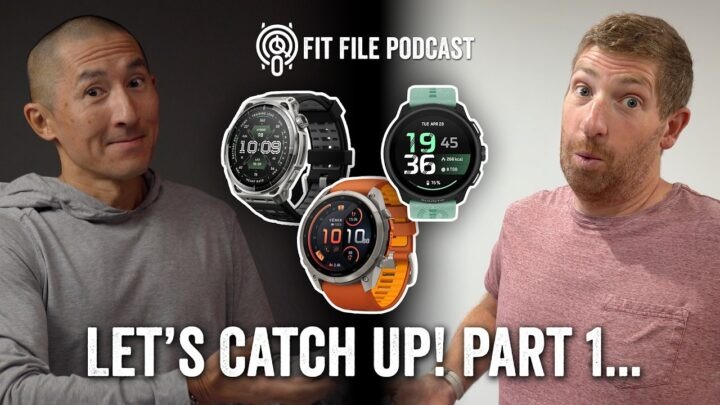
The Garmin Fenix 9 Proserves as a ruggedized multisport GPS flagship featuring an all-titanium chassis, sapphire crystal lens, and onboard top-tier navigation maps. Retailing at $1,199 USD direct from Garmin and authorized outlets like Amazon, this high-end wearable targets serious endurance athletes, triathletes, and outdoor navigators who demand physical durability and offline routing on their wrists. As the smart wearable market consolidates around premium metals and specialized sensor arrays, this release signals a clear shift toward luxury-grade endurance hardware that bridges the gap between expedition tools and daily lifestyle devices.
🛒 Where to Buy: Garmin Fenix 9
Editorial Note & Product Verification: The Cool Great Buys editorial desk independently verifies manufacturer technical specifications, cross-checks active retail availability across authorized sellers, and evaluates verified consumer reliability data before publishing product evaluations. All featured prices and promotions reflect active market rates at the time of publication.
- Garmin Fenix 9: View on Amazon
Click the link above to check current pricing, availability, and customer reviews on Amazon.
Evaluating the current fitness watch landscape requires looking beyond minor firmware updates to understand the broader arc of hardware design. In an era where annual iterative updates often feel uninspired, the transition to full titanium frames and standard sapphire glass across premium lines reflects changing consumer expectations. As highlighted in the recent industry breakdown on the FIT File dispatch, hardware manufacturers are attempting to justify elevated price points by standardizing elite build materials that were previously locked behind expensive upgrade tiers. Understanding whether this device deserves a spot on your wrist requires a rigorous look at its total cost, hardware architecture, ecosystem quirks, and rival offerings.
Upfront Investment & 2-Year Total Cost of Ownership
Acquiring the base model of this flagship requires an initial outlay of $1,199 USD direct from authorized sellers. Unlike budget activity bands that carry disposable lifespans, high-end sports watches represent a multi-year capital investment for your training toolkit. When calculating the true two-year total cost of ownership, buyers must factor in secondary accessories, replacement QuickFit silicone or nylon bands (typically $49 USD to $99 USD each), proprietary charging cables, and optional external heart rate monitors like the Garmin HRM-Pro Plus chest strap for $129 USD. Over a standard 24-month operational period, a dedicated athlete will reasonably spend approximately $1,377 USD to maintain and fully equip the device for multi-sport training cycles.
This cost structure must be weighed carefully against hardware depreciation and previous-generation clearance cycles. With the arrival of new hardware cycles, older flagship models experience substantial price drops across major retail channels. For instance, recent market analysis reveals deep discounts across earlier inventory where every deal listed, and what to buy, and what to skip points to savings of $250 USD or more on predecessor units like the Fenix 8 Pro. Buyers opting for current-generation hardware pay a distinct early-adopter premium, meaning the two-year cost delta between buying the newest flagship versus a discounted previous-generation model can exceed $450 USD for near-identical core telemetry functions.
What You Actually Get: Core Features & Build Specs
Examining the structural architecture of the device reveals why it commands a four-figure sum. In Garmin’s official launch documentation, the engineering team highlights a complete structural transition: the outer bezel and backplate are forged entirely from Grade 5 titanium, housing a scratch-resistant synthetic sapphire lens over an ultra-bright AMOLED display panel. The physical housing measures 51mm in its largest iteration (with 47mm options available), weighing in at 89 grams with the included silicone strap. The internal hardware package incorporates 32GB of onboard flash memory allocated for worldwide TopoActive maps, audio storage, and app widgets, alongside an integrated multi-LED flashlight built directly into the top edge of the watch casing.
From a sensor and battery perspective, the hardware operates on a dual-frequency multi-constellation GNSS chipset designed to maintain satellite lock under dense canopy or urban canyons. Operational longevity remains a core strength: in smartwatch mode, the device achieves up to 28 days of continuous battery performance, while continuous dual-frequency GPS tracking drains the battery at a rate that allows up to 62 hours of unbroken operational tracking. Water resistance is rated to 10 ATM (equivalent to 100 meters depth), complemented by leakproof inductive buttons that eliminate mechanical penetration points in the chassis. The internal optical heart rate array utilizes a six-channel sensor layout backed by skin-temperature monitoring and ambient light sensors to dynamically adjust screen brightness.
Hidden Costs, Ecosystem Dependencies & Fine Print
While the physical hardware specifications are impressive, living with the device exposes several frustrating ecosystem limitations and technical fine print. The one critical detail the official spec sheet buries in the footnotes is the persistent multi-device Bluetooth limitation. Despite operating on a high-tier Bluetooth 5.3 controller, the watch cannot maintain simultaneous active pairings with multiple smartphones. If an athlete uses a primary smartphone for daily personal use and a secondary device for work or dedicated bike-computer tethering, switching the watch between phones drops the existing pairing entirely. Re-pairing triggers a complete device welcome sequence, an outdated software behavior that stands in stark contrast to standard $20 USD wireless earbuds that support seamless multipoint switching.
Ecosystem lock-in represents another hidden friction point for long-term ownership. While basic data syncing to the Garmin Connect platform remains free of monthly subscription fees, maximizing the watch’s advanced routing features requires working within Garmin’s proprietary software boundaries. Off-grid satellite communications require pairing with an inReach satellite communicator, which demands an active monthly subscription plan starting around $14.95 USD per month. Furthermore, while the watch can store music offline, downloading playlists requires paid premium accounts on supported third-party streaming services like Spotify or Deezer. Users who prefer open, non-proprietary data exports must rely on third-party API syncing, which occasionally alters granular metrics during cloud-to-cloud transmission.
Smarter Alternatives at This Price
For buyers evaluating whether to spend $1,199 USD on a single multisport flagship, several compelling alternatives exist within the current market segment, offering distinct balances of cost, weight, and smart functionality. Consumers looking to purchase hardware can support independent product testing by choosing to Shop on Amazonor reviewing authorized retailer inventory before making a final commitment.
The first major competitor to consider is the Coros Pace 4, which retails at an accessible $249 USD on Amazon. The Pace 4 represents a radically different design philosophy, prioritizing ultra-lightweight polymer construction over heavy metal armor. Weighing just 30 grams, it features dual-frequency GPS, a crisp memory-in-pixel display, and up to 17 days of daily battery life. Coros has significantly disrupted the market by delivering free offline topological mapping via software updates directly to its accessible hardware lineup. For road runners, marathoners, and weight-conscious triathletes who do not need a rugged titanium shell or built-in LED flashlight, the Pace 4 delivers nearly 90% of the core tracking metrics at roughly 20% of the upfront cost.
On the smartwatch end of the spectrum sits the Google Pixel Watch 5, priced at $399 USD on Amazon. This device targets users who prioritize deep smartphone integration, cellular connectivity, LTE messaging, and complex app ecosystems over multi-day wilderness survival capabilities. Built with a refined curved glass aesthetic, the Pixel Watch 5 offers superior voice assistant integration, dynamic turn-by-turn Google Maps navigation, and advanced Fitbit-powered sleep analytics. However, its battery life tops out at approximately 36 hours per charge, making it ill-suited for multi-day backcountry expeditions or ultramarathons. It serves as an ideal daily wearable for urban fitness enthusiasts, whereas the Fenix 9 Pro remains an uncompromised expedition tool.
Additionally, runners seeking a dedicated, streamlined training partner without high-end outdoor navigation bloat should examine the Suunto Run 2, available for $299 USD on Amazon. Suunto’s lightweight offering focuses strictly on precise interval execution, heart rate zone management, and clean track logging, demonstrating that athletes do not need to spend four figures to obtain professional-grade workout telemetry.
Final Buyer Verdict: Is the Investment Worth It?
The Garmin Fenix 9 Pro represents the logical extreme of modern endurance hardware engineering. By standardizing a Grade 5 titanium chassis, scratch-proof synthetic sapphire crystal, dual-frequency GNSS tracking, and comprehensive onboard mapping, Garmin has created a durable, self-contained navigation tool capable of surviving extreme conditions. For high-mileage trail runners, mountaineers, triathletes, and outdoor professionals who rely on wrist-based mapping without cell service, the device delivers unmatched autonomy, physical resilience, and tracking accuracy that easily justifies its place at the top of the sports watch hierarchy.
However, for mainstream consumers, casual runners, or budget-conscious athletes, the $1,199 USD price tag is steep. The persistent lack of multi-phone Bluetooth pairing feels out of touch with modern multi-device workflows, and the sheer bulk of a 51mm titanium casing is unnecessary for basic road running or daily gym workouts. What’s next for this category? If this generation gets standard titanium durability right, the next iteration could finally address internal Bluetooth host memory architecture to allow seamless multi-device switching across smartphones and tablet displays. Unless you specifically require an indestructible titanium chassis and advanced offline topo mapping today, most athletes will find better overall value by opting for a lightweight alternative like the Coros Pace 4 or capitalizing on heavily discounted previous-generation flagships during seasonal clearance cycles.