

The Problem and Hardware Purpose
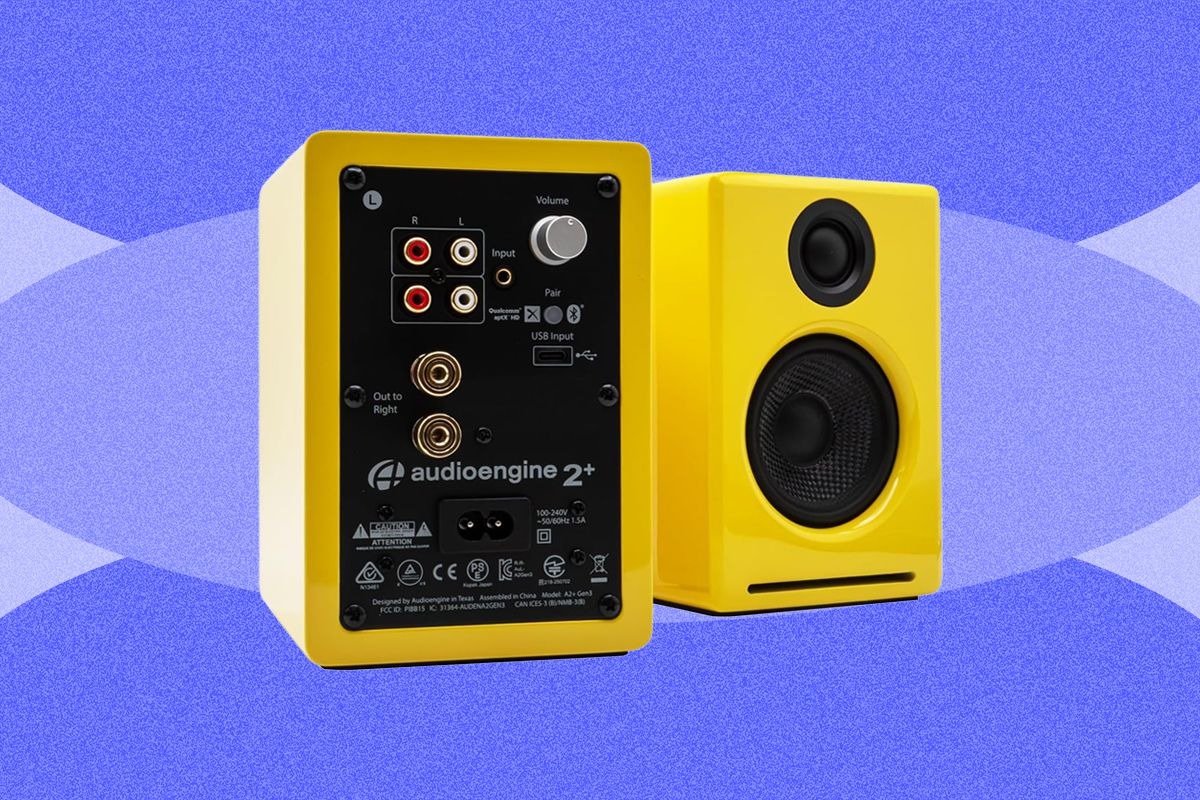
The Audioengine A2+ Wireless Speakersare a pair of ultra-compact, high-fidelity powered stereo speakers designed to eliminate hollow monitor audio and cluttered wire setups for $269 USD on Amazon. Built specifically for home office workers, casual gamers, and music enthusiasts who require genuine acoustic depth without sacrificing physical desk space, this two-channel system delivers clean sound in a cabinet footprint measuring just 6 inches tall by 4 inches wide. Most desktop computer users rely on built-in monitor drivers that sound like a tin can, or cheap plastic USB pods that buzz the moment you turn the volume up. The Audioengine A2+ addresses this exact gap by packing traditional bookshelf loudspeaker components into a footprint small enough to tuck neatly beneath dual-monitor arms.
🛒 Where to Buy: Audioengine A2
Editorial Note & Product Verification: The Cool Great Buys editorial desk independently verifies manufacturer technical specifications, cross-checks active retail availability across authorized sellers, and evaluates verified consumer reliability data before publishing product evaluations. All featured prices and promotions reflect active market rates at the time of publication.
- Audioengine A2: View on Amazon
Click the link above to check current pricing, availability, and customer reviews on Amazon.
For a normal household trying to figure out what a hardware upgrade actually costs over a multi-year lifespan, audio hardware remains one of the few desktop investments that does not suffer from rapid digital obsolescence. A decent monitor or graphic card might feel outdated in three years, but high-quality physical speaker drivers paired with modern digital inputs will deliver the exact same acoustic performance a decade from now. Upgrading your workspace sound creates a direct quick desktop upgrade that improves voice intelligibility during back-to-back video conferences, adds musical separation during work sessions, and provides clear positional audio cues during evening gaming. At $269 USD, the A2+ sits at the precise crossover point between disposable budget peripherals and overly complex studio monitoring gear.
The primary purpose of the Audioengine A2+ is to streamline the physical desktop workflow. Rather than requiring external receiver boxes, bulky audio interfaces, or floor-dwelling subwoofers, the primary active speaker houses all amplification, digital decoding, and wireless receiving circuitry within its left cabinet. A single speaker wire feeds signal to the passive right cabinet, keeping desktop cable routing minimal and manageable. This unified structural approach allows users to connect multiple host devices simultaneously—such as a work laptop over USB-C and a personal smartphone via Bluetooth—without needing to manually swap cables or reconfigure operating system settings every morning.
Engineering Architecture & How It Works
Understanding how the Audioengine A2+ achieves its warm tone requires examining its internal hardware architecture. Unlike mass-market consumer speakers that rely on inexpensive Class-D digital amplifiers tucked inside lightweight plastic shells, the A2+ utilizes a dual Class-AB monolithic amplifier system housed inside hand-finished 18mm thick MDF wooden cabinets. What caught my eye reading the full spec sheet is that Audioengine chose to retain these traditional analog Class-AB amplifiers despite their higher thermal output and manufacturing cost. Class-AB circuitry provides smooth, natural high frequencies without the harsh digital distortion often introduced by budget Class-D chips when pushed to higher volume levels.
The acoustic driver configuration consists of custom 2.75-inch aramid fiber woofers paired with 0.75-inch silk dome tweeters. Aramid fiber is exceptionally light and rigid, allowing the woofer cone to hold its structural shape under rapid piston movements without introducing cone breakup distortion. The silk dome tweeters feature neodymium magnets, delivering smooth high-frequency extension up to 22kHz without the sibilant “piercing” edge common to aluminum or plastic tweeters. Audioengine updated the underlying digital architecture for the latest model revision, integrating a high-resolution 24-bit Digital-to-Analog Converter (DAC) accessible directly via a rear USB-C port, along with Bluetooth 5.3 support featuring aptX audio codecs.
Physical signal management on the back of the left speaker includes an analog RCA input, an analog 3.5mm auxiliary input, a USB-C digital input, and a variable RCA audio output designed specifically for adding a subwoofer down the line. Because all inputs remain active simultaneously, there are no clunky selector switches on the exterior. Audioengine engineered slotted front-firing bass ports directly below the woofers rather than using rear-firing ports. This critical design choice allows you to place the speaker cabinets directly up against a drywall office partition or bookshelf without trapping lower frequencies and creating boominess.
Real-World Performance Reality
Translating theoretical specifications into everyday desktop use reveals that the Audioengine A2+ excels where standard office peripherals fail: midrange vocal clarity and clean instrumental separation. During daily remote meetings, spoken voices come through with crisp articulation, eliminating the muffled chestiness produced by cheap monitors. Music playback across pop, jazz, and classic rock showcases impressive acoustic depth, allowing instruments to sit cleanly in their own space within a wide stereo soundstage. The physical 6-inch driver placement creates an immersive near-field listening zone where sound appears to float in front of your display rather than firing directly from two static boxes.
However, the laws of acoustic physics strictly govern bass reproduction in compact desktop speakers. Because the 2.75-inch woofers operate inside a compact sealed enclosure without an external bass module, sub-bass frequencies below 65Hz rolling off naturally. While lower-midrange punch—such as bass guitar plucks and upper kick drum frequencies—remains tight and controlled, heavy action movie explosions or deep electronic bass lines will lack room-shaking rumble. For normal desktop distance (roughly 2 to 3 feet from your ears), the bass profile is clean and balanced, but users seeking heavy low-end impact will eventually need to budget for an external powered subwoofer connected to the rear RCA line-outs.
In terms of practical ergonomics, the physical placement of controls presents a minor daily trade-off. The power switch and master volume control share a single analog rotary knob located on the rear panel of the left speaker. Reaching around the back of the cabinet to adjust master volume can feel awkward if the speaker is pushed tight against a side monitor. Furthermore, because different input sources (such as a USB-C connected PC versus a Bluetooth connected phone) output audio at varying signal levels, switching between sources can occasionally cause noticeable volume jumps if your software volume isn’t matched. Optional accessories like desktop 15-degree stands elevated for ear alignment help angle the silk tweeters toward your seated ear level, improving detail retrieval dramatically.
The thing the product page buries in the footnotes is the power draw architecture. The A2+ uses an external 17.5V DC power brick rather than a standard internal power cable. While this keeps the speaker cabinets remarkably light and thermal-efficient, it does mean managing a modest power brick under your desk. On the durability front, the lack of recurring software subscriptions, fragile micro-USB ports, or locked-down mobile app dependencies ensures that these speakers remain functional as long as standard audio outputs exist on modern computers.
Competitive Landscape: Named Rivals Compared
When selecting the best desktop setup, evaluating competing options across different price points helps contextualize the overall value proposition of the Audioengine A2+. The desktop audio space has expanded rapidly, offering choices ranging from budget orb speakers to expansive multi-channel surround packages. Synthesizing data from comprehensive market evaluations like the best computer speakers guide highlights key alternatives in this category.
A primary direct rival in the compact desktop category is the Kanto UKI Desktop Speakers— $199 USD on Amazon. The Kanto UKI targets a very similar footprint, measuring 6.5 x 4.3 x 4.2 inches with a molded plastic cabinet design available in multiple vibrant colors. The UKI includes front-panel multi-function controls, integrated Bluetooth 5.0, RCA inputs, a dedicated subwoofer output, and USB-C connectivity. However, buyers should note that connecting via USB requires purchasing a separate cable, as it features USB-C (no cable supplied) out of the box. While the Kanto UKI delivers impressive warmth and convenient front-accessible controls at a lower price point, the Audioengine A2+ maintains superior high-frequency clarity and acoustic refine due to its dense MDF wood construction and custom silk tweeters.
For buyers operating on tighter budgets, the Edifier M60 Desktop Speakers— $149 USD on Amazon offer a compelling entry-level solution. The M60 set includes USB-C, 3.5mm, and Bluetooth 5.3 inputs, coming packaged with angled desktop stands right in the box. Sound performance is rich and surprisingly clear for the price, though pushing the volume on bass-heavy tracks can cause minor cabinet rattling. The M60 uses capacitive touch controls that require holding buttons down for three seconds to switch modes, which can feel less responsive than physical dials. If your budget stops under $150, the Edifier M60 delivers strong value, but the Audioengine A2+ provides significantly tighter bass control and far more elegant hardware construction.
If you prefer a single-unit form factor to clear space under a ultra-wide monitor, the Creative Stage Pro Soundbar— $119 USD on Amazon provides a 2.1-channel solution featuring a dedicated, slim under-desk subwoofer. The Stage Pro includes HDMI ARC, optical, Bluetooth 5.3, and USB inputs, making it versatile for dual computer and console setups. While the Stage Pro generates deeper bass rumble thanks to its separate subwoofer box, it lacks the true stereo separation, mid-range warmth, and acoustic imaging provided by dedicated left and right desktop channels like the Audioengine A2+.
On the extreme upper end of the spectrum sits the ultra-premium Ruark MR1 MK3— $599 USD on Amazon. Featuring handcrafted real wood cabinets, fabric grilles, and an expansive soundstage, the Ruark set delivers audiophile-grade fidelity for music lovers willing to spend triple the cost of entry-level gear. However, for a normal household seeking high-end desktop sound without spending luxury furniture prices, the Audioengine A2+ hits the practical sweet spot between build quality, desktop sizing, and cost efficiency.
For gamers seeking full spatial immersion, the multi-channel SteelSeries Arena 9— $549 USD on Amazon offers a true 5.1 surround sound system featuring wireless rear speakers, RGB lighting zones, and a dedicated control pod. While the Arena 9 excels at pinpointing enemy footstep locations in tactical shooters like Halo Infinite or rendering cinematic movie battles, it requires significant desk space and complex wire routing. For general music listening and clean office setups, a high-quality 2.0 system like the Audioengine A2+ delivers superior acoustic naturalness without cluttering your room.
Final Buyer Recommendation: Practical Value Decision
The Audioengine A2+ represents an ideal desktop audio investment for work-from-home professionals, music lovers, and practical PC gamers who prioritize high-fidelity stereo sound within a compact footprint. For $269 USD, you are paying for durable wooden acoustic cabinets, premium silk and aramid driver components, an integrated 24-bit USB DAC, and versatile Bluetooth 5.3 connectivity. Its total cost of ownership is exceptionally low over a 5-to-10-year lifecycle: there are no mandatory software subscriptions, no proprietary battery packs that degrade after two years, and no flimsy plastic housings to crack. It simply plugs in and elevates daily desktop audio across work calls, background music, and casual media playback.
However, this set is not the right choice for every buyer profile. If your primary use case involves competitive gaming where surround sound spatial tracking is mandatory, or if you demand chest-thumping sub-bass for hip-hop and action films without buying extra hardware, you should consider a multi-channel setup like the SteelSeries Arena 9— $549 USD on Amazon or add a dedicated subwoofer to your desk. Likewise, if you simply need basic audio for computer system alerts on a strict budget, lower-cost options like the Edifier M60 Desktop Speakers— $149 USD on Amazon deliver respectable performance for half the price. But if you want a refined, space-saving, and long-lasting sound upgrade that respects both your desk real estate and your wallet, the Audioengine A2+ remains the definitive benchmark standard for standard consumer desktops.