

The YG Acoustics Vesper 3 is a three-way floorstanding loudspeaker built entirely from aerospace-grade aluminum. Retailing at $44,900 USD per pair through specialized high-end audio dealers like Alma Audio, this model is explicitly targeted at wealthy audiophiles and discerning music lovers who demand deep bass extension, holographic soundstaging, and ultra-high resolution without overwhelming small-to-medium listening rooms. While many flagship loudspeakers require sprawling, dedicated listening halls to breathe properly, this compact floorstander promises to deliver full-scale orchestral weight and surgical transient speed within a footprint that integrates effortlessly into elegant living spaces.
🛒 Where to Buy: Loudspeaker
- Loudspeaker: View on Amazon
Click the link above to check current pricing, availability, and customer reviews on Amazon.
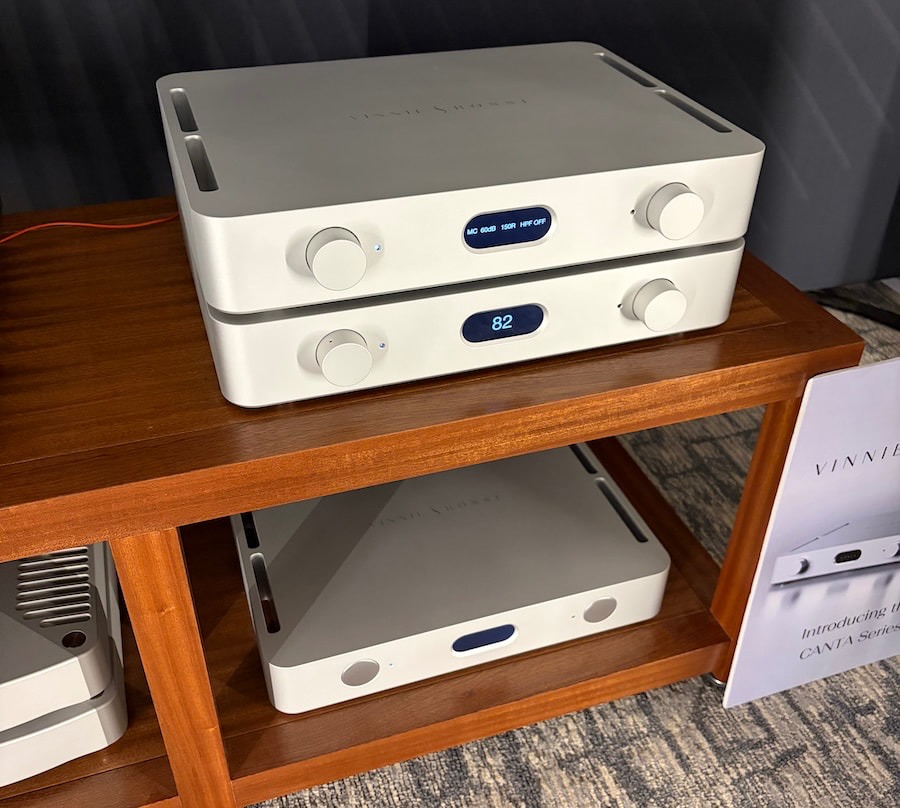
However, high-end loudspeakers never exist in performance isolation. You cannot simply plug a $44,900 USD pair of passive reference speakers into a standard wall outlet or drive them with a consumer-grade receiver and expect acoustic magic. In real-world installations, the total cost of ownership escalates rapidly once you factor in the caliber of matching electronics required to extract their true potential. At Capital Audiofest 2026, the Vesper 3 was showcased alongside the $23,995 USD CANTA Integrated Amplifier and the $17,995 USD CANTA Phono Preamplifier from Vinnie Rossi. Completing the source front-end with the $6,750 USD Thorens TD 404 DD turntable brings the core hardware stack alone to an eye-watering $93,640 USD. Initial product disclosures, system pairings, and show coverage were extensively tracked by Ecoustics.
Financial commitment to a system of this caliber extends far beyond the core electronic components. Extracting state-of-the-art performance requires substantial secondary investments in ultra-low-impedance speaker cables, balanced interconnects, dedicated 20-amp electrical lines, clean power regeneration, and engineered room acoustic treatments. Comprehensive cabling setups, such as the Kubala-Sosna Master Reference looms featured during the system’s public exhibition, easily add several thousand dollars to the overall outlay. Over a two-year ownership horizon, physical maintenance remains minimal for well-engineered solid-state electronics and passive aluminum enclosures. Nevertheless, specialized white-glove freight delivery, expert in-home positioning, and potential structural floor reinforcements represent real, practical expenses that buyers routinely underestimate during initial budget planning.
Resale value in the ultra-high-end audio market remains notoriously volatile. While highly specialized aluminum enclosures hold their market value considerably better than mass-market audio components or rapidly evolving digital source equipment, initial depreciation still hits secondary market sellers hard. Prospective buyers should anticipate a 25% to 35% drop from retail value on the used market within the first two years of ownership. Evaluating whether the complete system stack justifies its steep outlay depends entirely on whether your dedicated listening room, structural flooring, and financial baseline can accommodate a complex, six-figure audio hardware environment.
What You Actually Get: Core Features & Build Specs
On paper, the Vesper 3 presents a deceptively modest physical profile designed to slip into refined interiors. The enclosure stands 42 inches tall, measures 10.5 inches wide, and extends 16 inches deep. However, the physical reality tells a dramatically different acoustic story once you attempt to move them. Each individual cabinet weighs a massive 156 pounds, bringing the pair to a combined total of 312 pounds. That extraordinary mass is the direct result of thick, multi-layer CNC-machined aerospace aluminum panels that are press-fitted and mechanically joined using aircraft-grade hardware to eliminate cabinet colorations and internal cabinet flex entirely.
The driver complement features an advanced three-way array engineered for ruler-flat frequency linearity and expansive dynamic bandwidth. High frequencies are handled by a 26 mm proprietary Lattice hybrid tweeter, which combines an ultra-lightweight soft dome with a complex, computer-modeled aluminum airframe structure to control breakup modes beyond the limits of human hearing. Midrange duties are assigned to a 7.25-inch BilletCore driver featuring a cone machined from solid aluminum billet, powered by a massive neodymium magnet assembly for lightning-fast transient response. Low-frequency impact is delivered by an 8.75-inch long-throw BilletCore aluminum woofer operating in a sealed sub-enclosure. Overall frequency bandwidth is conservatively specified from 30 Hz up to 40 kHz, ensuring complete coverage of high-resolution audio formats.
According to technical documentation published with this release, YG Acoustics utilizes its proprietary third-generation Ultracoherent crossover network. This sophisticated circuit splits signal frequencies precisely at 92 Hz and 1.71 kHz, utilizing ultra-high-grade air-core inductors and custom-wound capacitors. This crossover topology draws directly from extensive fluid-dynamics and phase-alignment engineering research used in YG’s multi-hundred-thousand-dollar flagship Titan series. The manufacturer specifies an average nominal impedance of 4 ohms alongside a sensitivity rating of 88 dB measured at 2.83V/1m.
However, examining the fine print of the underlying electrical measurements reveals a critical performance caveat for potential buyers. While the nominal rating is listed at 4 ohms, the speaker dips down to a sharp minimum impedance of 2.8 ohms in the upper bass region where musical energy demands are highest. On paper, an 88 dB sensitivity rating suggests moderate amplifier demands. In practice, that demanding 2.8-ohm dip paired with steep electrical phase angles dictates an amplification engine capable of delivering massive, stable current into low-impedance loads without overheating or clipping. Underpowered or budget-oriented amplifiers will quickly trigger internal protection circuits, compress dynamic peaks, or introduce harsh distortion when driving this load at realistic listening levels.
Hidden Costs, hardware environment Dependencies & Fine Print
Unboxing and installing a pair of 156-pound solid metal towers requires meticulous planning and physical manpower. You cannot unbox or maneuver these enclosures alone without risking severe personal injury or permanently scarring the hand-anodized aluminum finish. Employing a professional white-glove delivery and setup service is virtually essential. Furthermore, if your intended listening area resides on an upper story of a historic home or a timber-framed apartment building, you must verify the structural floor load capacity before placing over 300 pounds of concentrated metal onto four small spike points.
Amplifier synergy represents another critical, non-negotiable dependency within this system’s architecture. The aggressive 2.8-ohm low-impedance dip immediately rules out low-power single-ended triode (SET) tube designs and budget Class-D amplifiers that struggle with complex reactive loads. The reference Vinnie Rossi CANTA electronics handled this demanding impedance curve effortlessly during auditioning, but that sophisticated pre/power amplification stack adds $41,990 USD to the system total. The matching CANTA Phono Preamplifier provides exceptional versatility, offering four selectable gain settings from 56 to 72 dB and 20 discrete resistive loading values spanning 10 to 1,000 ohms. It maintains exceptional RIAA curve accuracy within ±0.1 dB, but buyers pay heavily for that level of bench-test precision.
Source components must match the resolving capability of the loudspeaker’s driver array, as any signal bottleneck upstream will be exposed instantly. The $6,750 USD Thorens TD 404 DD turntable features high-torque direct-drive motor technology derived directly from the flagship TD 124 DD, paired with a precision TP 160 J-shaped tonearm and electronic auto-stop cueing. It incorporates fully balanced XLR output connections to maintain a low noise floor, but fully realizing its analog potential demands a premium low-output moving coil cartridge costing several thousand dollars extra. Poorly mastered vinyl pressings, worn records, or low-resolution digital converters will sound unpleasantly analytical, flat, and unforgiving on a system designed for uncompromised transparency.
Room acoustics represent the ultimate variable that can make or break the system’s final performance. The relatively compact physical dimensions of the cabinet often tempt buyers to shoehorn the speakers into small, untreated rooms or place them close to front boundaries. However, an 8.75-inch aluminum woofer capable of digging cleanly down to 30 Hz will excite room modes rapidly in constrained spaces. Without dedicated bass traps, acoustic absorption panels, and precise speaker toe-in positioning, low-frequency energy will create muddy room resonances that ruin the loudspeaker’s remarkable midrange clarity and precise spatial imaging.
Smarter Alternatives at This Price
If you are prepared to invest $45,000 USD into a pair of high-end floorstanding loudspeakers, the market offers several compelling alternatives that present distinct engineering philosophies and sound signatures. A direct rival in construction and target audience is the Magico S3, retailing for $45,500 USD on Amazon and through authorized high-end audio retailers. Magico utilizes a monocoque aluminum enclosure architecture coupled with a custom diamond-coated beryllium dome tweeter and carbon-graphene cone drivers. The S3 delivers surgical clarity, microscopic detail retrieval, and exceptional dynamic contrast. However, much like the Vesper 3, the Magico S3 is extremely heavy, visually dominant, and equally uncompromising in its requirement for high-current amplification.
For audio enthusiasts seeking a richer tonal balance, higher sensitivity, and a larger sonic scale, the Bowers & Wilkins 801 D4represents another legendary competitor, priced at $38,000 USD through specialized audio dealers and online listings. The 801 D4 features a decoupled diamond dome tweeter, a Continuum cone FST midrange driver, and dual 10-inch Aerofoil bass drivers housed in a massive, sculpted reverse-wrap wood ply and aluminum cabinet matrix. It offers higher sensitivity (90 dB) and delivers a broader, more room-filling soundstage suitable for large spaces. However, its iconic visual presence and substantial footprint lack the sleek, minimalist elegance of the aluminum cabinet design featured on the Vesper 3.
Another option in this elite tier includes the Wilson Audio Sasha V, priced significantly higher at $50 USD,000 USD. The Sasha V utilizes proprietary composite materials (X-Material and S-Material) rather than aluminum, delivering exceptional cabinet damping and an adjustable upper module for precise driver time-alignment at the listening position. While the Wilson offers unprecedented spatial height and micro-dynamic authority, its complex multi-cabinet aesthetic requires a substantially larger room footprint compared to the streamlined, single-chassis aluminum geometry of the Vesper 3.
Ultimately, selecting the optimal speaker within this price bracket comes down to room dimensions, system synergy, and visual preferences. The Magico S3 matches the Vesper 3 in structural rigidity and ultra-low cabinet coloration. The Bowers & Wilkins 801 D4 provides larger bass drivers and higher sensitivity for less money, but demands considerably more physical space. The YG Acoustics Vesper 3 carves out its unique market niche by delivering genuine full-range, three-way reference performance from an enclosure that gracefully fits into small-to-medium rooms without visually dominating the living environment.
Final Buyer Verdict: Is the Investment Worth It?
The YG Acoustics Vesper 3 is a triumph of modern audio engineering that successfully challenges traditional design assumptions regarding physical cabinet size versus low-frequency performance. At $44,900 USD per pair, it represents a substantial luxury investment by any rational standard. Yet, for that outlay, it delivers authentic sub-35 Hz bass foundation, lightning-fast transient speed, and exceptional holographic imaging without requiring a room the size of a commercial concert hall. When paired with high-current electronics like the Vinnie Rossi CANTA amplification series and a high-precision analog source like the Thorens TD 404 DD, it creates an immersive, emotionally captivating listening environment.
You should consider buying the Vesper 3 if you possess substantial financial resources, audition music in a small-to-medium room, and have allocated adequate budget to partner the speakers with high-current amplification and acoustically treated surroundings. Conversely, pass on this model if you are seeking a simple plug-and-play solution, prefer low-power tube electronics, or lack the physical muscle and space required to position 156-pound aluminum enclosures correctly. The final verdict is unequivocal: the Vesper 3 is a masterpiece of precision engineering and acoustic neutrality, built specifically for buyers who can support the complete, uncompromised signal chain it deserves.