

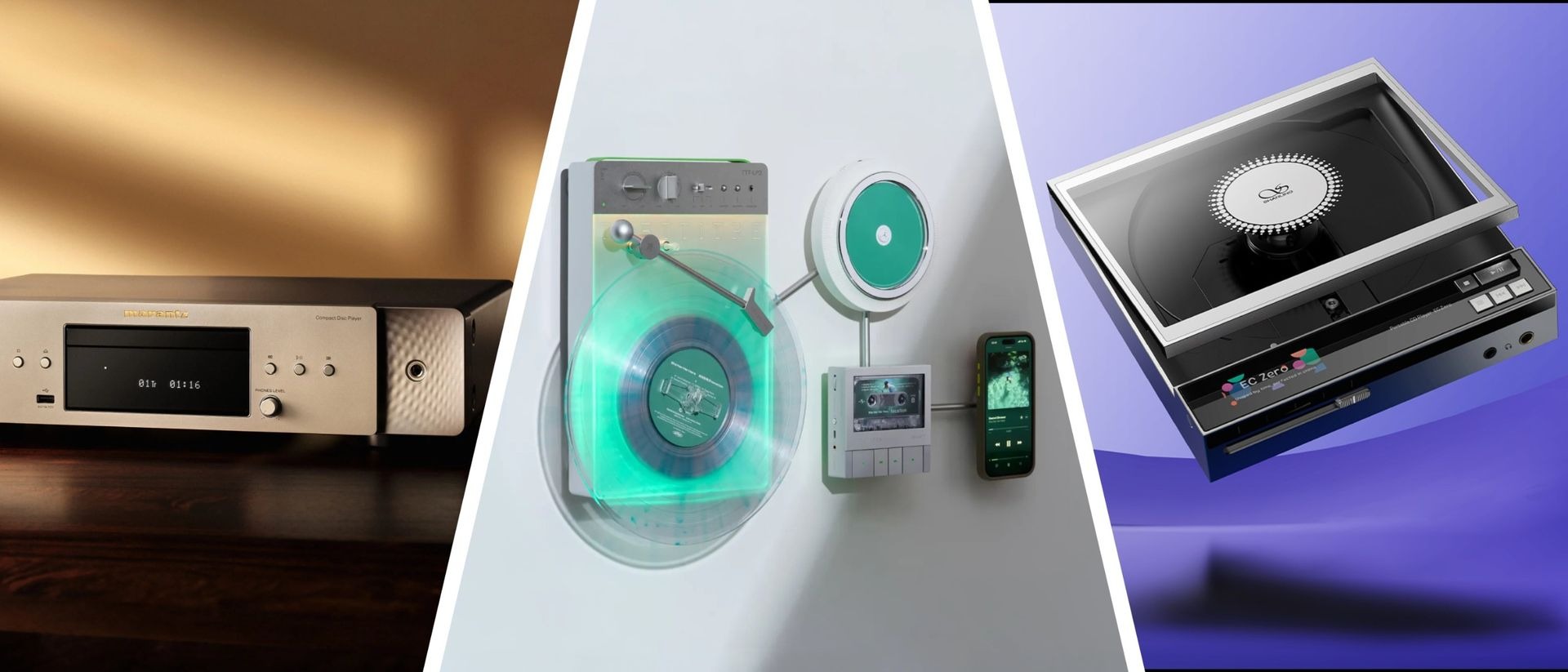
The Shanling EC Zero ASMprovides standalone Red Book CD playback, real-time optical disc ripping to USB storage, high-resolution USB digital-to-analog conversion, and wireless Bluetooth transmission for $299 USD on Amazon. Designed specifically for desktop audiophiles and physical media collectors who require precise optical media playback without committing to full-sized stereo rack components, the unit exemplifies the technical maturation of modern disc-spinning hardware. Recent industry assessments, including TechRadar reporting on the broader physical media landscape, highlight how optical formats are undergoing a structural reassessment across consumer audio markets.
🛒 Where to Buy: Shanling EC Zero ASM
- Shanling EC Zero ASM: View on Amazon
Click the link above to check current pricing, availability, and customer reviews on Amazon.
Historically speaking, the initial displacement of the Compact Disc by lossy digital downloads in the mid-2000s resulted in a rapid degradation of entry-level optical hardware. Prior attempts during the mid-2010s to revive portable CD players failed predominantly because manufacturers repurposed cheap, off-the-shelf plastic CD-ROM drive assemblies designed for desktop computers. Those transport mechanisms suffered from high rotational jitter, aggressive error correction that compromised audio timing, fragile tray gears, and sub-par 16-bit digital-to-analog converters that introduced audible noise floors. For nearly two decades, consumers seeking true fidelity were forced to choose between legacy high-end components from the late 1990s or modern ultra-expensive reference gear, leaving a massive structural gap in the mid-tier market.
The current market trajectory in 2026 demonstrates that hardware engineering has finally caught up with physical media demand. Rather than treating the format as a novelty, contemporary manufacturers are integrating modern signal chains directly into compact chassis. We are observing a spectrum of hardware solutions emerging to address different acoustic and spatial requirements: from multipurpose desktop Swiss-Army-knife designs like Shanling’s EC Zero ASM, to artistic residential display systems like Trettitre’s Retro Ambient Audio System, and reference-grade components such as Rotel’s Michi Q5 priced at $6,999 USD direct. Even major industrial conglomerates like Panasonic have validated the trend by showcasing experimental hybrid form factors that fuse CRT-inspired visual displays with integrated optical playback mechanisms.
State of the Category & What Changed
The underlying baseline of consumer audio over the past decade prioritized maximum compression and streaming convenience, which inadvertently alienated listeners seeking uncompressed 16-bit/44.1kHz digital audio ownership. What changed fundamentally in the hardware manufacturing pipeline is the miniaturization and cost reduction of precision optical pickups and low-jitter master clocks. Modern compact CD players no longer operate as isolated, single-function appliances; instead, they function as hybrid digital hubs capable of interfacing with legacy amplifiers, modern powered active monitors, high-impedance headphones, and wireless receivers simultaneously.
Checking authorized retailer listings confirms initial launch stock for units like the Shanling EC Zero ASM is shipping direct ahead of broader retail distribution, catering to an expanding demographic of buyers aged 18 to 35 who are acquiring physical CDs for the first time alongside seasoned audiophiles retrieving stored disc collections. This demand shift has altered component selection across factory supply chains. Industrial designers are abandoning the flimsy, fully enclosed clamshell plastics of the past in favor of CNC-machined aluminum structures, top-loading magnetic disc clamps, and transparent glass or acrylic windows that showcase the physical rotation of the medium.
Furthermore, the digital architecture surrounding optical media has evolved to eliminate historical operational bottlenecks. Where legacy portable players relied on mechanical spring suspension and primitive electronic shock protection that truncated audio resolution to prevent skipping during movement, modern hardware utilizes high-speed internal RAM buffers paired with stable desktop-grade laser assemblies. In practice, this architectural shift allows compact optical players to achieve dynamic range figures exceeding 110dB and channel separation metrics that rival dedicated mid-tier DAC units, effectively bridging the gap between physical media convenience and high-resolution digital processing.
Generational Delta: The Engineering Upgrades That Matter
Analyzing the primary hardware distinctions between legacy disc players and current-generation units reveals significant technical advancements across optical tracking, digital decoding, and power management. In Shanling’s official launch documentation, the engineering team claims a complete redesign of the optical drive assembly, utilizing a customized SANYO HD850 laser head paired with a specialized servo control drive board. This configuration reduces mechanical read errors at the physical pit-and-land layer of the optical disc, minimizing the reliance on mathematical interpolation algorithms during playback.
The distinction matters here because older portable architectures frequently used harsh digital filtering to compensate for poor optical tracking. Modern units replace those compromises with low-noise master crystal oscillators that reduce phase jitter to picosecond thresholds. Furthermore, digital conversion is no longer an afterthought. The integration of high-tier decoding chips—such as the ESS ES9069Q or AKM AK4493SEQ implementations found across modern compact designs—enables native processing of PCM signals up to 32-bit/768kHz and DSD512 when operating as an external USB DAC, extending hardware utility far beyond physical disc spinning.
Another major engineering delta lies in the output topology and wireless integration. Legacy CD portables were strictly limited to noisy 3.5mm single-ended analog jack outputs with high output impedance, which severely constricted their ability to drive demanding audiophile headphones. Contemporary designs incorporate dedicated headphone amplifier stages capable of delivering upwards of 240mW into 32 Ohms, alongside balanced 4.4mm Pentaconn connections and S/PDIF digital optical outputs. Wireless integration has similarly progressed from basic SBC codecs to high-bitrate Qualcomm aptX HD and Sony LDAC protocols, allowing users to stream optical disc signals directly to wireless headphones at transmission rates up to 990kbps without requiring an intermediary smartphone or computer interface.
Direct hardware feature comparison across modern optical playback categories illustrates how these engineering decisions segment the current market landscape:
- Shanling EC Zero ASM: Portable and desktop hybrid form factor featuring a top-loading mechanism, customized SANYO optical pickup, real-time CD-to-USB ripping functionality, 32-bit/768kHz USB DAC mode, 3.5mm single-ended output, and two-way Bluetooth 5.2 with LDAC and aptX HD support, priced at $299 USD on Amazon.
- Trettitre Retro Ambient Audio System: Wall-mounted modular aesthetic system integrating a top-loading CD playback mechanism alongside a vertical belt-drive turntable and analog cassette deck, targeted at interior design applications with external Bluetooth receiver connectivity, priced at $599 USD direct from manufacturer.
- Rotel Michi Q5: High-end reference stereo component utilizing a custom top-loading smooth-action CD transport mechanism, dual ESS Sabre ES9028PRO DACs in mono configuration, fully balanced XLR analog outputs, coaxial/optical digital inputs, and a custom toroidal transformer power supply, priced at $6,999 USD direct from authorized audio dealers.
Everyday Usability Trade-Offs & Adoption Barriers
Despite significant engineering advancements, physical media playback introduces intrinsic mechanical and electrical trade-offs that prospective buyers must consider. The primary physical challenge remains mechanical wear and power consumption. Rotating an optical disc at rotational speeds between 200 RPM and 500 RPM requires continuous motor power, which places a substantial drain on internal lithium-ion batteries. In practice, a compact player operating on an internal 3,500mAh battery yields approximately 7.5 hours of continuous disc playback, compared to over 14 hours when operating solely as a USB DAC with the optical motor powered down.
Examining the fine print of the hardware documentation reveals that continuous Bluetooth transmission at maximum LDAC bitrates increases thermal output across the base casing while reducing battery efficiency by an additional 18%. This thermal dissipation is an engineering trade-off resulting from packing a laser pickup assembly, power management circuitry, dual DAC channels, and a wireless transmitter into a compact chassis measuring less than 6 inches on a side. Users intending to use these devices primarily as portable pocket units during active foot travel will also find the form factor bulky compared to slim modern smartphones or dedicated digital audio players (DAPs).
Dust contamination presents another operational compromise, particularly on top-loading designs featuring clear acrylic or open-air disc covers. While open top-loaders eliminate mechanical motorized tray mechanisms that historically suffered from broken drive belts and jammed gears, they expose the optical laser lens directly to ambient dust particles, pet dander, and fingerprints. Maintaining playback reliability requires routine manual lens cleaning with isopropyl alcohol and microfiber swabs—a maintenance task that pure digital streaming hardware completely bypasses.
Consequently, adoption barriers exist for specific user demographics. Commuters seeking ultra-lightweight, drop-resistant equipment for gym or outdoor environments should look elsewhere, as physical optical reading mechanisms remain vulnerable to violent multi-axis impacts that exceed buffer capacity. Similarly, listeners who rely exclusively on algorithmic playlist curation and cloud library synchronization will find the tactile requirements of disc swapping, manual jewel case storage, and physical track navigation inherently inefficient for casual background listening.
Category Alternatives and Rival Solutions
For prospective buyers evaluating compact disc playback hardware within the current market landscape, several distinct alternatives exist across different price tiers and structural form factors. Comparing these hardware alternatives highlights the operational trade-offs between pure portability, desktop integration, and component build materials.
A prominent direct rival in the portable desktop segment is the FiiO DM13, available for $149 USD on Amazon. The FiiO unit focuses heavily on high-power output flexibility, featuring both 3.5mm single-ended and 4.4mm balanced headphone jacks driven by dual Cirrus Logic CS43198 DAC chips. It incorporates a dedicated Desktop Mode switch that bypasses the internal battery completely when connected to external USB power, preventing battery degradation during prolonged stationary use. However, the trade-off comes in chassis construction and feature set: the DM13 utilizes a lighter composite plastic casing compared to Shanling’s solid CNC aluminum body, and it lacks real-time optical disc ripping capabilities to USB drives, restricting users from archiving their physical CDs directly to digital storage without a computer.
Moving up to stationary desktop reference solutions, the SMSL PL200retails for $669 USD on Amazon. The PL200 is designed strictly as a non-portable desktop component, featuring a heavy vibration-damped chassis, an exposed top-loading mechanism with high-mass magnetic puck stabilization, and full MQA-CD decoding powered by an AKM AK4499EX DAC chip. Its tactical physical piano-key switches provide exceptional tactile feedback, and its rear panel includes balanced XLR line outputs for direct connection to high-end studio monitors or preamplifiers. However, the practical compromise is complete lock-in to mains AC power; the SMSL PL200 contains no internal battery, lacks wireless Bluetooth transmission capabilities, and carries a footprint that occupies significant desktop real estate compared to compact portable alternatives.
Final Trajectory Verdict: Future Outlook & Buying Advice
The current hardware trajectory confirms that the Compact Disc renaissance is not merely a transient marketing phenomenon, but a stable market recalibration within the consumer audio sector. Unlike the early stages of the vinyl revival—which saw an influx of cheap, poorly engineered turntables featuring heavy tracking ceramic cartridges that physically damaged record grooves—the CD revival is benefiting from mature, precision-engineered digital infrastructure. The integration of high-resolution USB DAC functionality, low-jitter laser tracking, balanced amplification stages, and high-bitrate wireless codecs ensures that contemporary disc spinners deliver genuine acoustic performance alongside physical media ownership.
For consumers holding established Red Book CD collections or those actively purchasing physical albums to maintain local media sovereignty, acquiring a versatile hybrid component like the Shanling EC Zero ASMat $299 USD on Amazon represents a logically sound investment. Its ability to serve as a standalone headphone player, a digital transport for external DACs, a high-resolution desktop USB interface, and an optical archiving tool mitigates the risk of single-purpose hardware obsolescence. Prospective buyers should choose hardware based on primary placement: select line-powered stationary components like the SMSL PL200 for permanent rack systems, and reserve compact portable units for hybrid desktop and multi-room listening workflows.