

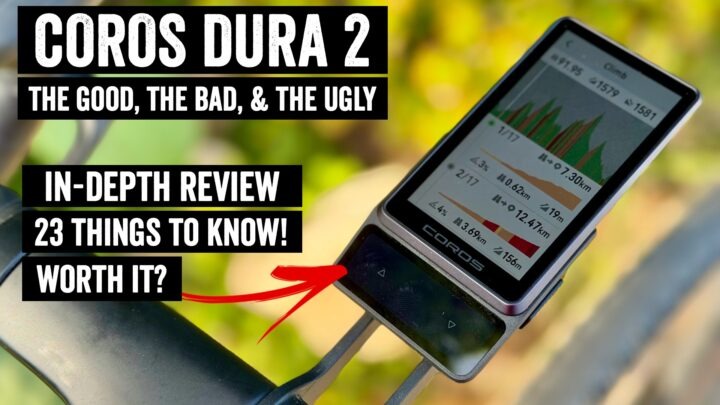
The COROS Dura 2 Solar is a dedicated GPS bike computer featuring a 3.5-inch solar-assisted display, pressure-sensitive control buttons, and built-in voice command functionality. It carries a retail price of $499 USD for the base head unit direct from COROS, or $549 USD direct when bundled with an out-front handlebar mount. The unit targets long-distance endurance cyclists and multi-day bikepackers who prioritize battery life above traditional screen brightness.
🛒 Where to Buy: COROS Dura
Editorial Note & Product Verification: The Cool Great Buys editorial desk independently verifies manufacturer technical specifications, cross-checks active retail availability across authorized sellers, and evaluates verified consumer reliability data before publishing product evaluations. All featured prices and promotions reflect active market rates at the time of publication.
- COROS Dura: View on Amazon
Click the link above to check current pricing, availability, and customer reviews on Amazon.
This release marks a massive structural shift for the product line. COROS officially discontinued the original $249 USD Dura 1. The new iteration effectively doubles the entry price for consumers overnight. Available starting November 3rd, 2026, the updated hardware drops the troublesome rotating mechanical dial found on the previous model. In its place, COROS installed traditional physical side buttons and lower solar panel pressure pads. However, the retail packaging reveals an irritating omission. COROS includes a premium braided USB-C cable and a lanyard, but completely excludes basic handlebar mounts from the base package.
Leaving out basic mounting hardware on a $500 USD bike computer creates immediate friction for buyers. The back of the device utilizes the industry-standard quarter-turn interface. If you do not already own standard hardware, you must purchase a Garmin-made quarter-turn mount for $9.00 USDor source generic dual-pack mounts for $7.00 USD on Amazon. Expecting riders to source basic rubber band mounts separately on a premium unit is a clear oversight. The physical unit looks sleek, but the total cost of ownership jumps immediately.
Core Disclosure & Hardware Announcement
COROS engineered the Dura 2 Solar as a total physical overhaul rather than an incremental software update. According to technical specs highlighted in a detailed hardware dispatch published by DC Rainmaker, the unit stretches the Memory-In-Pixel display to 3.5 inches diagonally. The overall footprint mirrors high-end competitors, yet the chassis remains visibly slimmer. The internal layout adds a speaker, an integrated microphone, tire pressure sensor support, and an expanded offline map engine that relies on a paired smartphone connection for dynamic re-routing.
The updated screen utilizes a custom 38Hz refresh rate. COROS claims this is the fastest refresh rate on any MIP display available today. The higher refresh rate produces noticeably smoother map panning and data field updates compared to older cycling screens. However, the physical overhaul comes with a staggered software rollout. The device ships without several announced features. Bike profile support, expansion to 32 active Bluetooth sensors, custom cycling heart-rate recovery metrics, and Campagnolo electronic drivetrain connectivity are scheduled for future firmware patches late in 2026.
The core hardware construction feels robust in the hand. The housing materials eliminate the fragile feel of early cycling head units. The micro-USB port from older generations is replaced entirely by a sealed USB-C charging interface. The physical quarter-turn mounting plate on the rear panel attaches via exposed screws. This design choice allows riders to replace broken mounting tabs easily without replacing the entire casing. The overall hardware aesthetics look sharp on out-front mounts. Yet, aesthetics alone cannot distract from the steep 100% price increase over the previous model.
Manufacturer Claims vs. Engineering Reality
In official product documentation, COROS claims the Dura 2 Solar delivers massive battery efficiency paired with hands-free voice controls and real-time audio alerts. Testing these claims against physical real-world riding conditions exposes major gaps between marketing materials and practical execution. Sunlight visibility presents the first clear trade-off. In direct, unfiltered sunlight, the 3.5-inch MIP display performs exceptionally well. High ambient light makes the screen dark numbers easy to read without draining power via the internal backlight.
However, reality breaks down when riding through variable light settings. Under heavy tree canopy or when riding back-lit relative to the sun, the MIP panel appears noticeably dimmer than rival LCD and OLED screens. Competing bike computers dynamically scale up screen brightness in shaded conditions to maintain contrast. The Dura 2 backlight system falls short in automatic mode. While you can still read the display with clear vision, the screen lacks the punchy vibrancy of rival color panels. You save battery power, but you trade display legibility to get it.
The voice control feature suffers an even worse fate on the road. COROS advertises the microphone and voice engine as a core control method. You must long-hold the lower side button to activate voice listening. Out on the road, wind noise above 15 kph (9 mph) corrupts audio reception completely. The internal microphone fails to filter out air turbulence over the housing. The system consistently misinterprets standard commands while moving. The voice control feature becomes essentially non-functional unless you bring your bike to a complete stop.
The newly added electronic bike bell feature shows similar real-world limitations. Riders double-tap the screen to emit an audible bell tone through the internal speaker. Sound level measurements show the speaker outputs lower decibels than rival units. More importantly, the audio pitch lacks a sharp, piercing frequency. In real-world trail tests, pedestrians and other cyclists rarely hear the tone from a distance. Furthermore, COROS offers no button integration with SRAM or Shimano shift hoods. You must remove your hand from the handlebar to tap the screen to ring the bell.
Under the Hood: Technical Architecture and Build Quality
The physical control layout of the Dura 2 replaces the old mechanical dial with dedicated side buttons and solar touch pads. A left-side physical button handles manual lap markers. The right-side button controls activity start, stop, and selection actions. The bottom solar panel incorporates two pressure-sensitive touch zones. These zones handle menu navigation and data page scrolling. Because these lower controls respond to physical pressure rather than skin capacitance, they register inputs accurately when soaked with rain or when operating with thick winter gloves.
Unfortunately, the upper system menu relies on a traditional capacitive touch layer. Accessing system settings, display brightness adjustments, or volume controls requires swiping down from the top edge of the screen glass. During heavy rainstorms, water pools across the glass face. This pooling renders the top swipe gesture completely unresponsive. Because COROS did not map system menu navigation to the physical side buttons, you cannot adjust basic settings mid-ride during severe weather. This design choice creates a critical hardware bottleneck for foul-weather riders.
Sensor management architecture displays a similar mix of raw hardware capability and software limitations. The internal radio array supports simultaneous connections for ANT+ and Bluetooth heart rate monitors, power meters, smart trainers, and radar tail lights. Pairing sensors takes only a few seconds through the device menu. However, the current software automatically imports all paired COROS sports watches into the sensor pool. These connected wearables consume available sensor slots automatically. This design quirk limits available space for dedicated bike sensors until the promised 32-sensor patch rolls out.
The internal solar charging system sits embedded along the lower chin of the front housing. Placing the solar cells below the main display cleans up the visual symmetry compared to older designs. In direct sunlight, the solar array feeds a continuous micro-charge back into the internal battery pack. This power intake successfully offsets a portion of the drain from the GPS chip and display backlight. However, solar efficiency drops rapidly under overcast skies or inside tree-covered gravel trails. The solar component acts as an extra range extender rather than a primary power supply.
Verified Market Alternatives
Cyclists looking for alternative GPS head units in this price bracket have established options with distinct trade-offs. The Garmin Edge 1040 Solaravailable for $699.99 USD on Amazon represents the standard for solar-assisted endurance computers. The Edge 1040 Solar costs $200 USD more than the base Dura 2. However, Garmin includes out-front mounts and rubber handle mounts right in the box. The Edge 1040 Solar features a highly refined mapping engine with full offline turn-by-turn recalculation without requiring a smartphone link. It also provides completely redundant physical button navigation across all software menus.
Another strong competitor in the endurance space is the Wahoo Elemnt Roam V3priced at $399.99 USD on Amazon. The Wahoo unit costs $100 USD less than the entry-level Dura 2. The Roam V3 skips solar panels entirely in favor of a high-contrast color screen with crisp LED indicator lights. Wahoo includes a sturdy out-front mount in the package. The device uses tactile physical front buttons for all menu operations. This design choice makes menu navigation reliable in heavy rain or while wearing heavy winter gear. It sacrifices multi-week battery life to deliver superior physical usability and lower upfront cost.
Choosing between these head units comes down to hardware priorities. The Garmin Edge 1040 Solar dominates in overall mapping software and sensor hardware environment depth. The Wahoo Elemnt Roam V3 delivers bulletproof button usability and screen clarity at a significantly lower price point. The COROS Dura 2 Solar attempts to sit between these two offerings. It provides extreme battery endurance, but it leaves gaps in screen brightness, menu button redundancies, and basic mounting accessory inclusion.
Final Editorial Verdict: Long-Term Reliability Outlook
The COROS Dura 2 Solar succeeds as a piece of battery hardware, but falls short as an integrated cycling computer package. Dropping the fragile mechanical crown dial improves long-term physical durability. The chassis build feels sturdy, and the pressure-sensitive solar touch pads work flawlessly under wet gloves. However, doubling the asking price to $499 USD while excluding basic handlebar mounts degrades the value proposition. The software framework relies too heavily on unreleased firmware promises, while current voice control and automated backlight systems fail to perform in real-world riding conditions.
Skip the COROS Dura 2 Solar for now. Unless you require multi-week battery life above all other features and already own compatible quarter-turn mounts, the current package carries too many hardware compromises for its asking price. Buyers seeking advanced navigation and proven reliability are better served spending more for a complete Garmin setup. Cyclists looking for direct button controls and high screen contrast at a reasonable price should buy the Wahoo Elemnt Roam V3 instead. Wait for COROS to release its promised software updates and revise its retail packaging before investing in this platform.