

The Mystery Ranch Terraframe 65is an expedition-grade internal-frame backpack engineered with a patent-pending Overload expanding frame that separates the main bag from the harness system to carry heavy, oversized equipment directly against the user’s center of gravity. Available at a retail price of $429.00 USD on Amazon and through specialized outdoor retailers, this heavy-duty pack is built specifically for backcountry hunters, wilderness photographers, and trail maintainers who need to transport 60 to 80 pounds of gear across unmaintained terrain without causing lumbar strain or muscle exhaustion. By utilizing a carbon fiber stay structure and an adjustable torso yoke, the pack converts mechanical weight transfer directly into the wearer’s pelvic girdle, offsetting severe shoulder compression during extended multi-day treks.
🛒 Where to Buy: Mystery Ranch Terraframe 65
Editorial Note & Product Verification: The Cool Great Buys editorial desk independently verifies manufacturer technical specifications, cross-checks active retail availability across authorized sellers, and evaluates verified consumer reliability data before publishing product evaluations. All featured prices and promotions reflect active market rates at the time of publication.
- Mystery Ranch Terraframe 65: View on Amazon
Click the link above to check current pricing, availability, and customer reviews on Amazon.
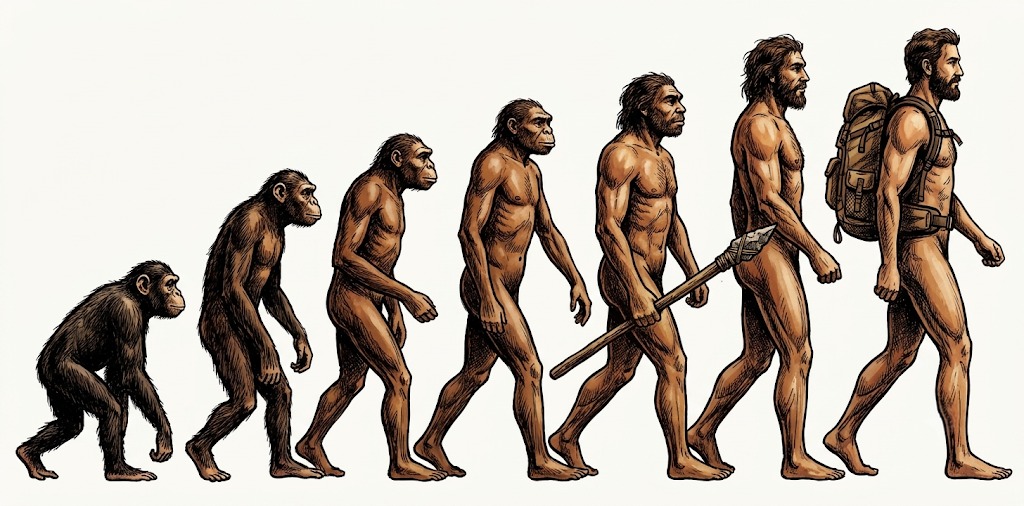
Understanding why a pack like the Terraframe 65 is built this way requires examining human evolutionary biology. As detailed in Carryology’s architectural exploration of bipedal biomechanics, human beings are structurally optimized for long-distance endurance load transportation rather than short bursts of raw physical speed. Our upright posture, flexible lumbar spine, spring-like elastic Achilles tendons, and wide pelvic structure allow us to recycle kinetic energy with every step. Building on principles previously outlined in The Lost Art of Carrying Loads, traditional load placement relies on keeping weight directly over the sacrum to prevent forward trunk leaning. When a backpack pulls backwards off the shoulders, the spinal erector muscles must continuously fire to keep the torso upright, burning massive amounts of glycogen and dramatically increasing early fatigue. The engineering goal of modern technical load-haulers is to lock the pack frame directly into the human skeleton, letting gravity and bone structure handle the downward force while the muscles merely stabilize the gait.
Core Disclosure & Hardware Announcement
The core hardware announcement driving this load-carrying analysis is the wide commercial adoption of Mystery Ranch’s 330D CORDURA Lite Plus frame architecture in the Terraframe series. Designed around their internal GUIDE LIGHT MT Frame system, the Terraframe 65 retails at $429.00 USD on Amazon for the complete setup, which includes the 65-liter main bag, top lid, guide frame, and multi-point compression webbing system. This hardware configuration is aimed at backcountry operators who frequently carry odd-shaped items—such as packable inflatable kayaks, camera tripods, water jerrycans, or field-dressed game—that normally will not fit inside a conventional zippered sleeping bag compartment.
From a functional perspective, the system operates on a load-shelf mechanism. By releasing four quick-detach side compression buckles, the entire fabric bag swings forward away from the rigid frame stays, revealing an integrated webbing platform. Users place heavy items directly onto this shelf, close to the frame backplate, and then re-anchor the main bag over the load. This keeps the heaviest physical mass suspended as close to the human spine’s L1-L5 lumbar vertebrae as possible. In terms of market positioning, this pack sits at the top tier of technical expedition equipment, commanding a steep price premium over standard internal-frame weekend hiking packs.
Manufacturer Claims vs. Engineering Reality
In promotional documentation and technical literature, Mystery Ranch claims that the Terraframe 65 can comfortably handle loads exceeding 80 pounds (36.2 kg) while maintaining full structural stability without frame flexing or shoulder strap collapse. Furthermore, marketing materials claim that the dynamic waist belt assembly shifts up to 90% of the total weight directly onto the hip bones, effectively eliminating down-force pressure on the trapezius muscles. While the physical stay layout supports this weight transfer theoretically, physical mechanics present a far more nuanced reality when carrying such loads across steep inclines.
What caught my eye reading the full spec sheet is the severe unladen weight of the pack assembly itself. The Terraframe 65 weighs in at a heavy 5.7 pounds (2.58 kg) completely empty. For context, in human locomotion, every additional pound attached to the upper torso increases oxygen consumption and metabolic energy expenditure by roughly 1% at standard hiking speeds on a 5% incline. While the heavy-duty composite stays and multi-layered foam pads successfully prevent frame distortion under heavy loads, the user is paying an immediate 5.7-pound tax before packing a single ounce of water, shelter, or food. For standard lightweight wilderness backpacking where total pack weight stays under 30 pounds, the sheer mass of this pack works against human metabolic efficiency.
Another area where marketing claims diverge from biological reality is thermoregulation. The manufacturer highlights air-flow channels cut into the dual-density molded foam back panel, suggesting superior heat dissipation during heavy exertion. However, human thermoregulation relies on the evaporation of sweat from bare skin to dump core body heat. Covering the entire dorsal surface of the back with dense foam pads and heavy CORDURA fabric traps heat, forcing the human body to sweat excessively. While the harness holds the load securely against the lumbar curve, it inevitably creates a thermal trap that increases fluid loss over long distances, requiring the user to carry additional heavy water reserves to compensate.
Under the Hood: Technical Architecture and Build Quality
A detailed teardown of the Terraframe 65 reveals hardware engineered to withstand severe physical abuse. The main pack body is fabricated from 330-denier CORDURA Lite Plus fabric, which delivers an exceptional strength-to-weight ratio while resisting tears and punctures. High-stress points along the lower compression panel and bottom floor feature reinforced weave construction designed to resist tearing when set down on jagged granite or wet soil. All external zips are heavy-duty YKK No. 10 coated zippers equipped with oversized pull tabs that allow easy operation while wearing heavy insulated gloves.
The structural spine of the pack utilizes Mystery Ranch’s proprietary GUIDE LIGHT MT Frame, which consists of custom-drawn carbon fiber and fiberglass composite stays arranged in a rigid vertical lattice. These stays extend downward into a high-density polyethylene (HDPE) frame sheet that resists twisting under asymmetrical loads. The primary technical components and hardware specifications include:
- Total Internal Volume: 65 Liters (3,966 cubic inches) expanding via top-loading shroud and front full-length Y-zip entry.
- Empty System Weight: 5.7 lbs (2.58 kg) in medium harness sizing.
- Frame Composition: Carbon fiber vertical stays backed by an HDPE sheet and solid fiberglass load-transfer crossbars.
- Fabric Rating: 330D CORDURA Lite Plus with high-tensile nylon webbing straps and heavy-duty acetal hardware buckles.
- Waist Belt Architecture: 5-segment re-direct hip belt with dual-density foam laminated pads and reverse-pull tightening tensioners.
- Torso Adjustment: Micro-adjustable hook-and-loop yoke allowing exact back-length customization from 15 to 24 inches.
The hip belt system uses a 5-point force redirection design. Instead of pulling forward from a single central buckle, the webbing loops through lateral plastic rings, allowing the user to pull inward toward the belly button with a 2:1 mechanical advantage. This lets you cinch the waist padding securely around the iliac crest without pinching or binding. However, the thickness of this dual-density foam belt adds considerable bulk around the waist, which can interfere with climbing harnesses or winter outer layers if not properly adjusted prior to setting out.
Verified Market Alternatives
For outdoor enthusiasts analyzing load transport systems, comparing the Terraframe 65 against established market alternatives reveals clear trade-offs between frame rigidity, bare tare weight, and overall cost. The primary competitor in the high-capacity, heavy-load sector is the Osprey Atmos AG 65, which retails for $340.00 USD on Amazon. The Atmos AG 65 relies on Osprey’s continuous Anti-Gravity 3D suspension mesh, which suspends the entire bag off the wearer’s back to provide superior ventilation across warm-weather conditions. Weighing in at 4.65 pounds (2.11 kg), the Atmos AG 65 is over a pound lighter than the Terraframe and costs nearly $90 USD less. However, the Osprey system is strictly designed for traditional internal gear storage; it lacks an expandable load-shelf system and struggles with internal structural sagging when loaded beyond 45 pounds (20.4 kg).
Another option in the heavy-haul category is the Gregory Baltoro 65, priced at $349.95 USD on Amazon. The Baltoro 65 utilizes a FreeFloat A3 dynamic suspension system with auto-rotating shoulder straps and a swivel hip belt that swings naturally with the wearer’s walking stride, mimicking human pelvic sway. Weighing 4.84 pounds (2.20 kg), the Baltoro provides exceptional weight distribution and comfortable shoulder pad cushioning for standard trail loads up to 55 pounds (24.9 kg). However, like the Osprey, the Gregory pack cannot split open to haul bulky, unshaped external items. Buyers who need to carry solid water jugs, chain saws, or irregular gear loads will find the Terraframe’s modular expandable load shelf justifies its higher $429.00 USD price tag and increased empty pack weight.
Final Editorial Verdict: Long-Term Reliability Outlook
The Mystery Ranch Terraframe 65is an exceptional piece of load-hauling equipment, but it is explicitly not designed for the average weekend backpacker. If your total gear list stays under 35 pounds and consists entirely of standard sleeping bags, lightweight tents, and modern freeze-dried food pouches, this pack adds unnecessary weight and structural stiffness at an elevated price point of $429.00 USD. Standard internal-frame options from Osprey or Gregory offer better back ventilation, lower initial tare weight, and lower overall retail pricing for typical family camping or weekend trail trips.
However, for specialized users who consistently push total pack weights past 50 pounds or need to transport awkward, rigid cargo across remote environments, the Terraframe 65 is worth the investment. Its composite carbon frame stays, ultra-durable 330D CORDURA Lite Plus fabric, and heavy-duty load-shelf design align closely with human skeletal physics, transferring heavy loads off fragile spinal columns and directly onto the hips. With standard field-repairable acetal buckles and bombproof stitching throughout, this pack delivers long-term hardware reliability that will easily withstand a decade of brutal backcountry use without frame collapse or structural failure.