

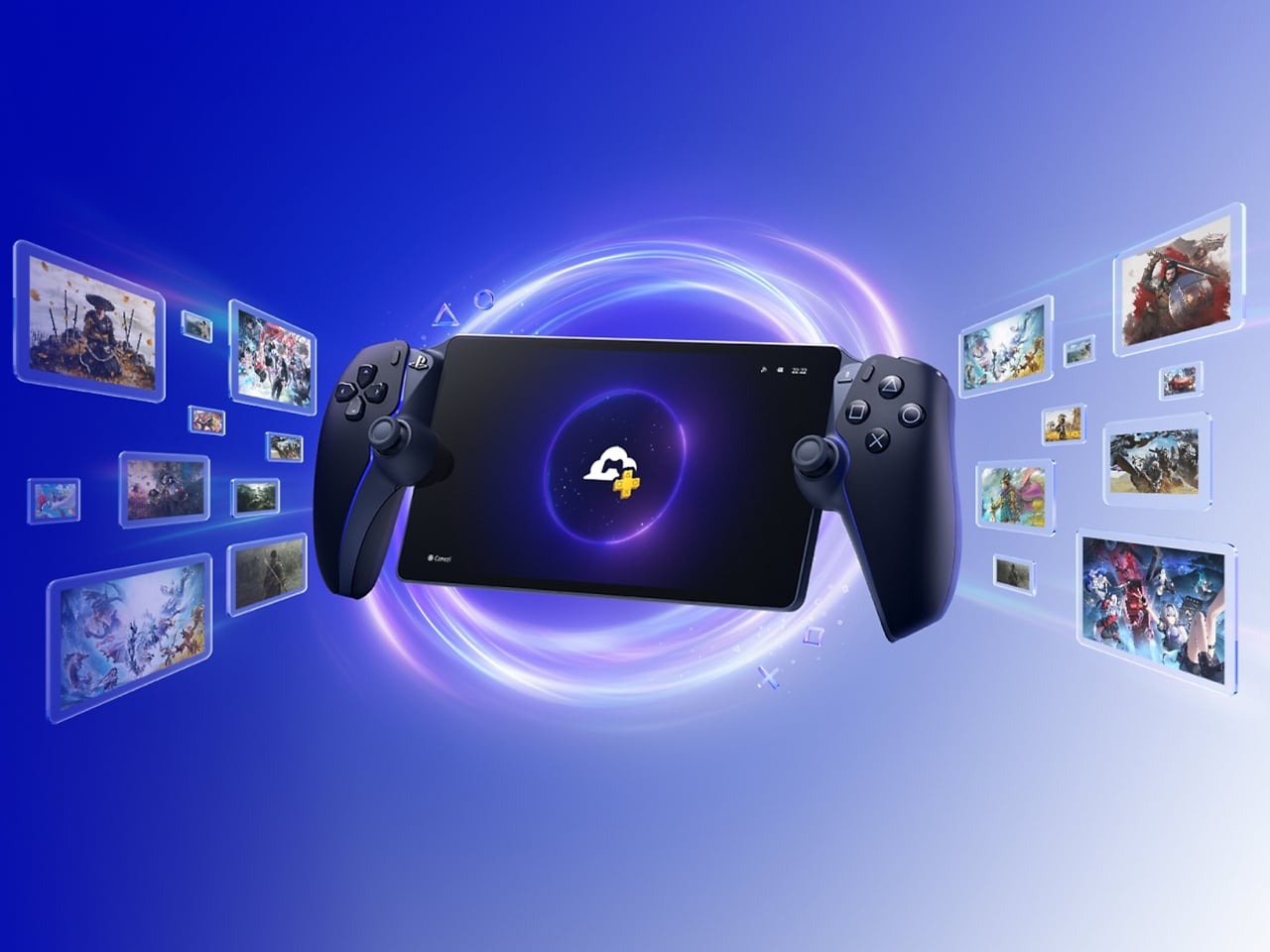
The Sony PlayStation Portal(2026 Revision) is an 8-inch dedicated remote play and cloud streaming handheld that integrates full DualSense haptic controls around a 1080p display, priced at ¥39,980 JPY (approximately $252 USD) direct from Sony for console owners seeking off-screen access to their PlayStation library. Announced on November 9, 2026, for launch in select Asian markets, this hardware iteration introduces integrated internal flash storage while retaining the original form factor, targeting home users who share a primary living room television or require dedicated terminal access to Sony’s cloud infrastructure.
🛒 Where to Buy: Sony PlayStation Portal
- Sony PlayStation Portal: View on Amazon
Click the link above to check current pricing, availability, and customer reviews on Amazon.
Historically speaking, dedicated remote play accessories have struggled to define their place within the broader handheld landscape. When Sony paired the PlayStation Vita with the PlayStation 4 back in 2013, the engineering trade-off involved squeezing console-grade inputs onto a smaller chassis with missing shoulder triggers and unpredictable network compression. The original PlayStation Portal solved the input parity problem in late 2023 by literally splitting a DualSense controller down the middle and mounting an 8-inch display between the handles. However, it cemented the device as a secondary terminal rather than an independent console. This latest 2026 iteration attempts to nudge the platform forward, though its core operational model remains tightly tethered to remote server infrastructure. Initial product disclosures and reporting were tracked via Yankodesign.
The distinction matters here because handheld hardware expectations have shifted dramatically toward local execution. Consumers accustomed to portable PC architecture frequently expect onboard storage to accommodate local game installations, title updates, and offline media playback. By introducing internal storage without enabling local game execution, Sony has created a curious hardware profile—one that expands physical board space while maintaining strict software reliance on external render pipelines. Understanding where this hardware fits requires examining how the internal components operate, how the platform has evolved since its initial cloud streaming trials, and whether the physical upgrades translate to practical utility on the couch.
State of the Category & What Changed
The handheld gaming market of 2026 is sharply divided between local x86/ARM processing architecture and dedicated thin-client streaming hardware. Devices built around local execution demand heavy thermal cooling solutions, high-capacity lithium-ion cells, and variable power profiles to deliver acceptable frame rates. Conversely, streaming terminals prioritize network interface controllers, decoder efficiency, and input latency reduction while leaving the graphics rendering burdens to local host consoles or remote server racks. The baseline PlayStation Portal established itself firmly in the latter camp, offering no local operating system interface beyond network configuration menus and home screen streaming feeds.
Sony’s announcement on November 9, 2026, confirmed that the revised PlayStation Portal will arrive on local shelves in Japan and South Korea on December 10, 2026, with preorders opening November 13 at 10 a.m. local time. The standard pricing of ¥39,980 JPY (about $252 USD) includes tax alongside a single bundled month of PlayStation Plus Premium service. Aesthetically, the revision utilizes the Midnight Black finish previously introduced as an option in February 2025, wrapping the entire central bezel and split-grip housings in a uniform matte shell. Notably, the hardware retains the wide, stretched profile that defined the original release, choosing control ergonomics over pocketable dimensions.
What sets this release apart in market positioning is Sony’s deliberate adjustment of its official hardware naming conventions in regional communications. By omitting the word “Remote” from the product label in promotional documentation, the manufacturer explicitly acknowledges that the device is no longer positioned solely as a companion accessory to a physical PlayStation 5 console sitting in the same household. Instead, it is being pitched as a self-contained window into the PlayStation ecosystem via cloud infrastructure—provided the user maintains an active subscription and resides within a supported network region.
Generational Delta: The Engineering Upgrades That Matter
According to technical documentation published with this release, the primary engineering alteration inside the updated chassis is the inclusion of dedicated internal non-volatile storage. In the original hardware revision, storage was negligible, reserved strictly for low-level system firmware, network handshake protocols, and temporary display buffer caches. The 2026 iteration incorporates expanded storage modules on the main logic board, though Sony has notably refrained from publishing the exact gigabyte capacity or disclosing what software features will utilize this reserved memory in upcoming system updates.
The distinction between storage inclusion and local game execution is critical for potential buyers to digest. Examining the fine print of the hardware documentation reveals that Sony explicitly prohibits the downloading or local installation of PlayStation 5 software titles directly to the internal storage. Unlike standard handheld consoles that store executable binary files on onboard NVMe or eMMC media, this revision continues to run game code remotely—either on a local PS5 host console via Remote Play or across cloud server clusters for PlayStation Plus Premium subscribers. In practice, the internal storage currently serves no user-accessible local library functions at launch.
Crucially, the visual and physical interaction layer remains entirely unchanged from previous revisions. The handheld features the same 8-inch IPS LCD panel operating at 1080p resolution with a maximum refresh rate of 60Hz. Players hoping for an update to OLED panel technology, higher peak luminance for true High Dynamic Range (HDR) performance, or variable refresh rate (VRR) support will find identical display specifications to the 2023 original. The main control assemblies retain full DualSense functionality, including dynamic adaptive triggers with variable resistance feedback and linear resonant haptic actuators that mirror standard console control inputs.
Software-level evolution on the platform has progressed steadily over the past two years, establishing the background against which this hardware revision arrives. Cloud streaming capabilities first entered public beta testing on the original Portal hardware in November 2024 before officially launching across supported subscription tiers in November 2025. That software rollout allowed users to stream select PS5 catalog titles directly from Sony’s cloud servers without turning on a home console. The 2026 hardware revision reflects this operational reality out of the box, offering native server-side streaming paths alongside traditional console-to-handheld local Wi-Fi bridges.
Everyday Usability Trade-Offs & Adoption Barriers
The primary operational compromise of the PlayStation Portal remains its absolute dependence on low-latency network infrastructure. Because local storage cannot host game executables, taking the device outside the home introduces significant usability variables. Operating the terminal in a coffee shop, airport lounge, or hotel room relies on the stability, jitter performance, and NAT configuration of public Wi-Fi networks or mobile hotspots. If the wireless connection degrades, input latency increases exponentially, frame drops occur, or the session disconnects entirely, rendering the internal storage incapable of sustaining an offline single-player session.
Physical ergonomics present a secondary trade-off that buyers must evaluate based on their intended use cases. The decision to retain full-sized DualSense grips yields excellent thumbstick travel, familiar face button geometry, and comfortable palm support during long gaming sessions. However, the total physical footprint measures significantly wider than standard compact handhelds. The rigid controller handles do not fold or detach, meaning the unit requires a dedicated hard-shell travel case and substantial backpack space compared to flatter, slab-style mobile gaming accessories.
Battery performance and thermal characteristics remain tied directly to display brightness and wireless radio usage. Because the central processor is tasked with decoding a incoming 1080p 60fps video stream rather than rendering 3D graphics locally, system heat remains exceptionally low, eliminating the aggressive fan noise typical of PC gaming handhelds. However, driving an 8-inch back-lit LCD screen alongside continuous dual-actuator haptic feedback drains the internal battery in roughly 4 to 6 hours of continuous play, requiring users to keep a USB-C Power Delivery charger nearby for extended gaming sessions.
Furthermore, regional localization imposes strict adoption barriers on imported units from this initial production run. Sony specifies that the Japanese release model is tailored strictly for domestic deployment, locking the system UI language to Japanese and restricting account linking to Japan-region PlayStation Network accounts. The South Korean release enforces identical regional software locks. Consequently, Western players seeking to import early hardware shipments via third-party exporters will encounter account authentication barriers that severely limit immediate functionality outside the designated sales territories.
Category Alternatives and Rival Solutions
For gamers evaluating portable hardware options within this price bracket, alternative handheld architectures offer vastly different compromises regarding software ownership, network independence, and local processing capabilities.
The Valve Steam Deck OLED($549 USD on Amazon for the 512GB model) represents the benchmark for native local execution in modern handheld gaming. Powered by a custom AMD Sephiroth 6nm APU, the Steam Deck processes game code locally on device, eliminating network latency and enabling complete offline play during travel. Its 7.4-inch 90Hz HDR OLED display delivers superior contrast ratios and color volume compared to the Portal’s LCD panel, while its integrated NVMe storage allows users to download and store hundreds of native PC and retro titles. The trade-off comes in unit weight, thermal output, a lower native rendering resolution of 1280×800, and a significantly higher purchase price.
Within the dedicated cloud streaming category, the Logitech G Cloud($349.99 USD on Amazon) serves as a direct cross-platform competitor. Featuring a 7-inch 1080p LCD screen operating at 60Hz, the G Cloud runs an open Android operating system, allowing users to switch seamlessly between Xbox Cloud Gaming, NVIDIA GeForce NOW, Steam Link, and third-party remote play clients. While it lacks the advanced adaptive triggers and immersive haptic motor assembly of Sony’s DualSense controller grips, it delivers a lighter physical chassis, broader software versatility, and an exceptional battery life reaching up to 12 hours on a single charge due to its power-efficient ARM mobile chipset.
Final Trajectory Verdict: Future Outlook & Buying Advice
The 2026 revision of the PlayStation Portal is a incremental hardware update that solidifies Sony’s commitment to streaming infrastructure while leaving the platform’s primary limitation unaddressed. By adding internal storage to the chassis, Sony has laid potential physical groundwork for future system software capabilities—such as offline media caching, OS UI speed improvements, or lightweight system utilities. However, as long as the device remains strictly locked out from downloading native PS5 game executables, the presence of onboard storage provides minimal practical value to the end user at launch. The experience continues to live and die by the quality of your wireless network connection.
For Japanese and South Korean consumers who already own a PlayStation 5 console or maintain an active PlayStation Plus Premium subscription, the revised Portal at ¥39,980 JPY remains a refined, highly ergonomic terminal for off-screen home gaming. The Midnight Black aesthetics and built-in DualSense haptics offer an unmatched control experience for streaming PS5 titles around the house. However, Western buyers and frequent travelers requiring offline functionality should pass on importing this regional release. Until Sony officially discloses a software roadmap that utilizes the new internal storage for offline capabilities, existing PlayStation Portal models or native handheld competitors like the Steam Deck offer far greater operational flexibility for your money.