

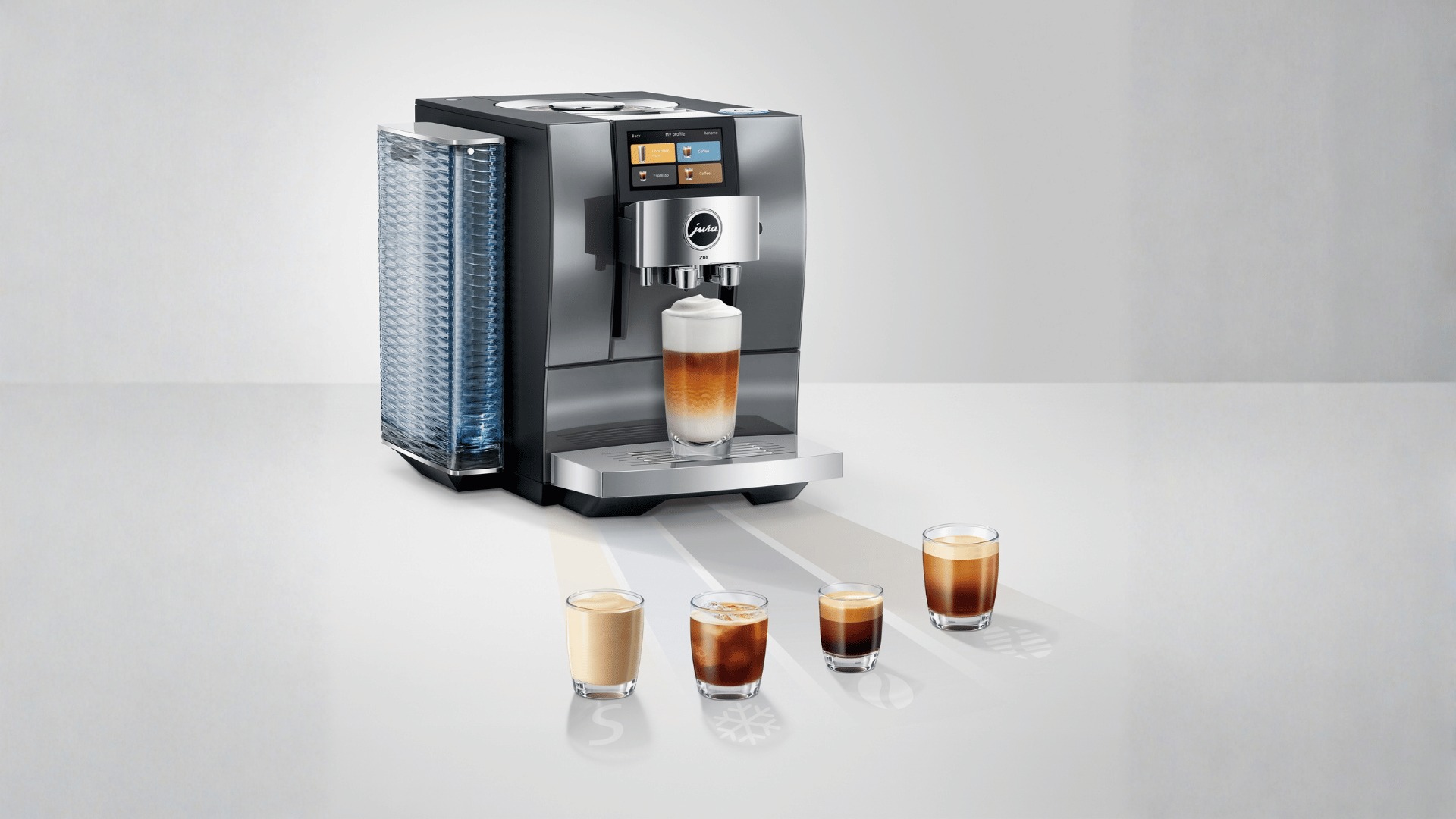
The JURA Z10 Gen 2 is a fully automatic bean-to-cup espresso and specialty coffee system featuring an automatically adjusting ceramic grinder and a dual-circuit thermal block architecture, retailing for $4,399 USD direct from authorized retailers and specialty appliance distributors. Designed for uncompromising coffee purists and households with diverse daily beverage requirements, this machine bridges the traditional performance gap between commercial-grade bar setups and domestic kitchen automation.
🛒 Where to Buy: Z10 Gen
- Z10 Gen: View on Amazon
Click the link above to check current pricing, availability, and customer reviews on Amazon.
Historically speaking, domestic super-automatic espresso machines have struggled with a persistent engineering dilemma: the friction between extraction versatility and beverage authenticity. Early iterations across the luxury appliance market forced users to compromise on either the precision of the grind or the method of extraction, frequently treating cold extraction as an afterthought by forcing hot espresso over melting ice. Examining the fine print of the official hardware documentation reveals that the Z10 Gen 2 attempts to resolve this historical compromise through discrete hydraulic pathways and a software-driven grinding mechanism, positioning itself squarely at the apex of contemporary kitchen automation. Initial product disclosures and reporting were tracked via Coolmaterial.
Upfront Investment & 2-Year Total Cost of Ownership
The initial financial commitment for the JURA Z10 Gen 2 sits firmly at $4,399 USD, an investment that immediately positions the hardware in the upper echelon of consumer kitchen appliances. When evaluating the two-year total cost of ownership, prospective buyers must factor in more than the upfront purchase price. Ongoing operational expenditures include specialized maintenance supplies such as JURA’s proprietary CLEARYL Smart water filters, periodic cleaning tablets, and milk system cleaner to maintain the automated hygiene circuits. Assuming an average household consumption of four specialty milk or espresso beverages daily, consumable maintenance products average roughly $150 USD annually, bringing the cumulative two-year financial obligation to $4,699 USD excluding bean costs.
From a purely economic perspective, this pricing structure requires a significant baseline of daily coffee consumption to approach parity with commercial specialty coffee shops over a standard depreciation window. However, for a multi-user household consuming multiple premium milk-based beverages or cold-brew specialties daily, the system offsets external café expenditures within a predictable operational timeline. Notably, the machine’s internal construction features modular components designed for longevity, though out-of-warranty servicing through authorized regional depots commands professional repair labor rates typical of high-end European kitchen engineering.
Analyzing the long-term utility of the hardware requires examining the depreciation curve and wear characteristics of high-utilization components such as the brewing unit and internal seals. Unlike lower-tier bean-to-cup models that utilize plastic brew groups requiring frequent replacement, the interior of this unit incorporates robust stainless-steel water pathways and heavy-duty mechanical solenoids engineered to withstand thousands of extraction cycles. Maintenance reminders are handled intelligently by onboard diagnostics, which track throughput volume and water hardness levels to prompt descaling and cleaning cycles precisely when required, mitigating the risk of premature mineral scale accumulation within the dual thermal block boilers.
What You Actually Get: Core Features & Build Specs
Out of the box, the sculptural profile of the JURA Z10 Gen 2 is dominated by its Diamond Onyx finish, featuring polished metallic accents and a heavy-duty housing that weighs in at roughly 27 pounds. The interface centers around a responsive 4.3-inch touchscreen complemented by JURA’s tactile Rotary Dial, allowing users to navigate a library of 51 distinct programmable beverage profiles. Hardware capabilities are anchored by the P.R.G.2+, or Product Recognizing Grinder, an electronically controlled ceramic burr set that dynamically adjusts physical grind size and dose weight on-the-fly based on the specific beverage selected by the user profile.
The internal brewing architecture is partitioned into four distinct operating modes that JURA terms worlds of indulgence: Hot Brew, Light Brew, Cold Brew, and Sweet Foam. Unlike conventional machines that route heated espresso over ice, the Cold Extraction Process bypasses the internal heating element entirely, slowly pulsing cold water under high pressure through the coffee bed to produce authentic cold brew directly into the cup. Furthermore, the integrated Sweet Foam function flavors milk foam during the texturing process, while a dedicated chocolate attachment enables one-touch mochaccinos and cocoa-infused milk foam preparations without requiring external frother manipulation.
Delving deeper into the physical specifications, the unit measures approximately 12.6 inches in width, 15 inches in height, and 17.7 inches in depth, requiring a stable countertop surface capable of supporting its substantial operational weight. The water reservoir holds an ample 81.2 fluid ounces, reducing the frequency of refilling during peak multi-user morning rushes, while the top-mounted bean hopper accommodates up to 9.9 ounces of whole coffee beans and features an airtight aroma preservation seal to protect delicate roasting notes. The intelligent pre-heating system ensures that the first shot of the day achieves optimal thermal stability without requiring tedious manual warm-up flushes typical of commercial group heads.
Hidden Costs, Ecosystem Dependencies & Fine Print
Operating a high-end appliance of this technical complexity involves several ecosystem dependencies that merit careful consideration prior to purchase. The machine relies heavily on JURA’s proprietary RFID-enabled CLEARYL water filtration cartridges; failing to utilize these genuine filters or failing to configure water hardness accurately via the onboard menu prompts can trigger premature descaling alerts and potentially void regional warranty protections. Additionally, the complex fluid pathways for the Sweet Foam and chocolate dispensing attachments demand scrupulous daily rinsing using JURA’s automated cleaning cycles and specialized liquid detergents to prevent milk protein accumulation within the internal valves.
Storage and counter space represent another critical architectural constraint. With dimensions measuring roughly 12.6 inches wide, 15 inches high, and 17.7 inches deep, the unit demands substantial vertical clearance beneath standard upper kitchen cabinetry, particularly when filling the top-mounted bean hopper. The internal waste bin and drip tray require frequent emptying under heavy multi-user workflows, as the machine’s automated rinsing routines discharge significant volumes of clean water into the internal basin upon every power cycle. Prospective owners must ensure their installation site accommodates both the physical footprint and convenient access to a dedicated electrical circuit capable of handling high-draw thermal block heating elements.
Furthermore, relying on proprietary consumables creates an ongoing financial commitment that extends beyond routine bean purchases. The specialized cleaning tablets and milk system purifiers are formulated specifically for JURA’s automated cleaning routines, and substituting generic cleaning agents can damage internal rubber gaskets or leave undesirable chemical residues within the brewing chamber. Users must also account for the physical effort required to transport the machine to an authorized service center if a major component failure occurs outside of standard warranty coverage, as the sophisticated internal plumbing and integrated electronics preclude easy DIY repairs for the average consumer.
Smarter Alternatives at This Price
Consumers evaluating the item have access to several elite alternatives in the luxury automatic and semi-automatic market. The DeLonghi Eletta Explore, retailing for $1,999.95 USD on Amazon, offers a compelling alternative for households prioritizing cold beverage variety. The Eletta Explore features DeLonghi’s LatteCrema system and dedicated cold extraction technology capable of delivering over 50 hot and cold recipes via a streamlined interface. While it lacks the automated P.R.G.2+ electronic grinder adjustment found on the JURA, it provides comparable beverage versatility at less than half the financial outlay, though with a heavier reliance on plastic exterior finishes and manual cleaning routines.
For buyers willing to transition from fully automatic convenience to artisanal manual control, the Breville Oracle Jet, priced $1,999.95 USD on Amazon, represents a formidable competitor. The Oracle Jet automates the grinding, dosing, and tamping process while leaving milk texturing to an automated steam wand with customizable microfoam settings. This hybrid approach delivers superior espresso extraction consistency and allows for granular adjustment of grind parameters that fully automatic ceramic burrs cannot replicate. However, it requires active user intervention to transfer the portafilter from the grinder cradle to the group head, making it less suited for multi-user households seeking effortless one-touch operation.
Another notable competitor in the ultra-premium space is the Miele CM 6360 MilkPerfection, which retails $2 USD,499 USD. The Miele offers exceptional build quality, intuitive dual-user profiles, and a WiFi-enabled app interface that mirrors much of the convenience found in higher-end automated appliances. While the Miele excels in quiet operation and elegant aesthetic integration, its grinder lacks the dynamic electronic grind adjustment capabilities of the P.R.G.2+, requiring manual intervention when switching between light-roast single origins and dark-roast espresso blends. Consequently, buyers must weigh whether the absolute automation of the JURA justifies its substantial price premium over these capable market alternatives.
Final Buyer Verdict: Is the Investment Worth It?
The the product is an extraordinary piece of culinary engineering that successfully eliminates the traditional compromises between automated convenience and beverage diversity. By incorporating a dynamically adjusting grinder, true cold extraction hydraulics, and advanced sweet-foam texturing into a single polished chassis, it delivers a commercial-grade user experience tailored for residential environments. It is unequivocally recommended for multi-user households with demanding, varied coffee preferences who value counter space efficiency and absolute operational simplicity over manual barista experimentation.
Conversely, budget-conscious consumers, dedicated espresso traditionalists who view manual tamping and dial-in execution as essential rituals, and those with modest daily coffee consumption should bypass this model in favor of traditional semi-automatic equipment or lower-tier super-automatics. The steep upfront investment of $4,399 USD is only justifiable for individuals who will systematically utilize the expansive menu of 51 specialty drinks and appreciate the meticulous automation working quietly behind the polished Diamond Onyx exterior.
Ultimately, purchasing this sophisticated espresso system requires looking past the initial sticker shock to evaluate how seamlessly it integrates into daily domestic routines. For households where time is at a premium and family members demand everything from morning ristrettos and afternoon flat whites to chilled cold brew and flavored milk specialties without sacrificing cup quality, the hardware delivers unmatched capability. By combining intelligent software architecture with robust mechanical engineering, the device sets a definitive benchmark for what consumers can expect from modern countertop coffee automation.