

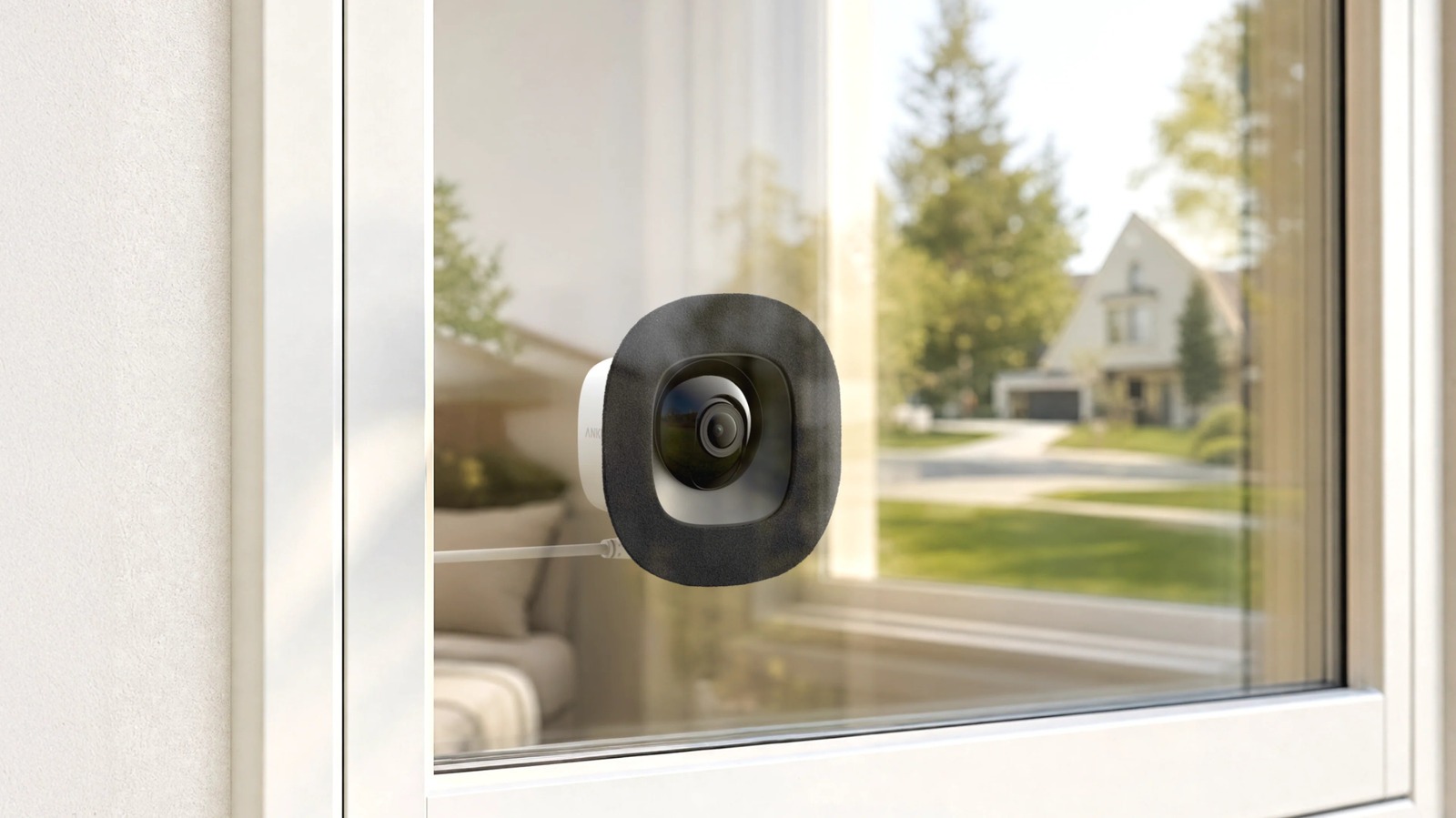
The Eufy Window Camera E10 mounts directly against interior window glass to monitor outdoor spaces without requiring external drilling, weatherproof housing, or permanent physical installation. Retailing for $80 USD direct from Eufy and on Amazon, this compact security camera is designed specifically for apartment renters, home office workers, and budget-conscious families who need reliable exterior perimeter monitoring without damaging exterior walls or taking on recurring monthly cloud storage fees. By positioning its lens flat against indoor glass, the hardware attempts to eliminate the wash-out glare and interior reflection that traditionally ruin night recordings when standard desktop cameras point outside.
🛒 Where to Buy: Eufy Window Camera E10
Editorial Note & Product Verification: The Cool Great Buys editorial desk independently verifies manufacturer technical specifications, cross-checks active retail availability across authorized sellers, and evaluates verified consumer reliability data before publishing product evaluations. All featured prices and promotions reflect active market rates at the time of publication.
- Eufy Window Camera E10: View on Amazon
Click the link above to check current pricing, availability, and customer reviews on Amazon.
For home office workers monitoring package deliveries or families keeping an eye on front porches and driveways, outdoor surveillance usually comes with annoying physical compromises. Mounting traditional exterior security gear often involves breaking out an electric drill, running weather-sealed power cables through exterior siding, or climbing ladders to swap dead batteries every few weeks. If you rent your living or working space, drilling into brick or vinyl exterior walls is often a direct lease violation. The Window Camera E10 bypasses those physical installation roadblocks entirely, offering a zero-tool deployment that keeps the hardware safely inside your climate-controlled room while keeping its eye trained on the outside world.
First announced at IFA 2026 and detailed in Engadget’s coverage of the Eufy Window Camera E10 release, Anker’s specialized optic design addresses the fundamental physics problem of glass optics. Traditional smart home cameras reflect their own status LEDs and ambient indoor desk lamps back into the lens when pointed through a windowpane, rendering nighttime footage completely unusable. The E10 tackles this head-on with a tailored physical chassis designed to sit flush against the glass, creating an optical seal that blocks interior light bleed while recording clear exterior events round the clock.
Real-World Context and Target Buyer Profile
The primary target buyer for the Eufy Window Camera E10 is any user who needs exterior line-of-sight monitoring but cannot—or will not—mount heavy hardware outside. In plain English, if you live in a rented apartment, lease a commercial workspace, or simply do not want to bore holes into your exterior stucco, this device fills a very specific vacuum. Positioned on a home office window sill or adhered to a ground-floor living room window pane, it turns an ordinary glass surface into a protective lens barrier. For a normal household, setting up front door or driveway coverage takes less than three minutes without opening a single tool chest.
From an office and productivity perspective, having real-time visual situational awareness from your desk without constant phone notifications or cloud delay improves daily workflow. When working from home, missing a signature-required delivery or walking down two flights of stairs for a false alarm takes a toll on productivity. The E10 provides an immediate live feed directly to your workstation or mobile device. Because it operates inside your physical room envelope, there is zero risk of weather degradation, water intrusion during heavy storms, or physical theft of the camera body off your porch.
However, understanding where this camera fits requires identifying its physical limitations. The device is optimized primarily for ground-floor installations, porch-facing windows, ground-level office panes, and single-story structures. If your desk is located in an eighth-floor apartment, pointing a flush lens downward creates severe structural sightline issues. The fixed field of view will largely capture sky and opposite buildings rather than the sidewalk directly below your building entrance. For standard suburban homes, townhouses, and ground-level office suites, though, the target scenario is spot on.
Hardware Engineering, Materials, and Core Specs
Examining the hardware architecture reveals a purpose-built plastic chassis engineered around glass contact points. The front ring of the device utilizes a proprietary, pressure-sensitive adhesive strip designed to secure the camera weight flat against glass while leaving zero sticky chemical residue behind when peeled away. The optical core features a 2.5K resolution sensor capable of capturing crisp details at 2560×1440 resolution, paired with an 8x digital zoom feature for examining fixed distance license plates or package labels. To handle night capture without active infrared LEDs reflecting off the window glass, Anker integrated its MaxColor Night Vision processing algorithm, which relies on ambient outdoor streetlights to deliver natural color video after dark.
To address varying window frames and sill heights, the lens assembly sits within a manually adjustable mounting housing capable of a 25-degree downward mechanical tilt. This physical tilt allows you to stick the base frame straight onto vertical glass while angling the optical sensor downward toward garden paths, vehicle parking spots, or doorstep delivery zones. Power is supplied via a single USB-C port located on the side of the housing. Rather than relying on rechargeable lithium-ion cells that degrade over time, the unit requires continuous wall power, ensuring uninterrupted 24/7 recording capability.
On the processing and connectivity front, the hardware includes dual-band Wi-Fi networking supporting both 2.4GHz and 5GHz wireless bands. This dual-band support is crucial for modern mesh network environments, preventing standard smart home signal congestion. Onboard silicon handles machine learning tasks locally, executing artificial intelligence algorithms for human detection, vehicle motion identification, and pet tracking directly inside the camera housing. Local video clip recording is handled via an integrated MicroSD card slot capable of accepting media cards up to 256GB in capacity, preserving your data locally without requiring internet uploads.
Everyday Usability & Design Compromises
Deploying the the unit reveals clear operational strengths alongside tangible everyday trade-offs. The installation process is undeniably fast: clean your window pane with isopropyl alcohol, peel the protective film off the adhesive ring, press the camera firmly against the glass for ten seconds, and plug in the power cord. In daylight testing conditions, the optical clarity delivers exceptionally sharp video through clean single-pane and double-pane glass. The flush light ring effectively seals out room reflections, meaning you can leave high-intensity overhead office lights or desk lamps burning directly behind the camera without creating interior glare reflections on the recorded feed.
That’s the catch, though: physical glass characteristics dictate optical success. According to technical documentation published with this release, clear glass windows with one or two panes yield the best visual performance. If your building features heavy triple-pane thermal glass or special low-emissivity (Low-E) coatings, light bounce between internal glass layers can introduce visible ghosting or slight glare when interior lamps remain on nearby. Furthermore, textured, frosted, or decorative privacy glass completely disrupts the focus mechanism, making this device strictly incompatible with privacy-treated office glass.
The one critical detail the official spec sheet buries in the footnotes is the total real-world cost of initial deployment. While the retail box includes the camera, mounting adhesive, and power cable, Anker does not ship a MicroSD card in the package. If you plan to use local continuous recording and AI event storage without signing up for cloud services, you must purchase a high-endurance MicroSD card separately. Adding a quality 128GB or 256GB endurance card adds roughly $15 to $25 USD to your initial checkout total. That’s actually fair given the absence of recurring monthly fees, but buyers should factor it into their upfront total cost of ownership.
Cable management represents another design compromise to plan for around your workspace. Because the camera lacks an internal battery, a white USB-C cable must stretch from your window frame down to the nearest electrical wall socket. If your home office desk is positioned away from the window wall, running a visible cord down baseboards or trim lines can look untidy without clip management. Audio performance also carries physical caveats: while the onboard microphone captures loud outdoor sounds like car alarms, sirens, or shouting, ambient subtle outdoor sounds are noticeably dampened by thick double-pane glass insulation.
Category Alternatives and Value Comparison
When evaluating the competitive landscape for home office and residential entry monitoring, the market offers several high-profile security cameras, but few mirror the E10’s dedicated flush-window design. The most direct market alternative is the popular Ring Indoor Cam (2nd Gen)— $59.99 USD on Amazon. The Ring camera carries a lower initial hardware price, but it is engineered strictly as a desktop or shelf-mounted indoor camera. When set on a window sill to monitor the outside, Ring’s exposed spherical lens reflects interior desk lamps back into the glass, creating severe whiteout glare at night. More importantly, using Ring’s intelligent alerts and clip storage requires a mandatory Ring Protect subscription, adding $4.99 USD per month or $49.99 USD annually to your running operational costs.
Another popular budget competitor is the Wyze Cam v4— $35.98 USD on Amazon. The Wyze v4 offers an IP65 weatherproof housing, allowing it to be mounted directly outdoors on exterior siding or fascia boards. While Wyze hardware is less expensive upfront, installing it outdoors requires drilling pilot holes into exterior wall studs, running outdoor-rated wiring, or purchasing expensive magnetic mounts. Furthermore, while Wyze offers local MicroSD recording, accessing advanced vehicle and person AI detection without delays typically pushes users toward the Wyze Cam Plus subscription service, which costs $2.99 USD per month per camera.
Evaluating total cost of ownership over a standard two-year operating period clarifies the value proposition for a normal person. The Window Camera E10 carries an initial hardware cost of $80 USD plus $20 USD USD for a high-endurance 128GB MicroSD storage card, resulting in a fixed 24-month total investment of $100 USD with zero monthly subscriptions. By comparison, a subscription-dependent alternative like Ring costs $59.99 USD for hardware plus $99.98 USD in subscription fees over two years, totaling roughly $160 USD while still struggling with window reflection glare. For budget-conscious buyers, Eufy’s local AI processing architecture delivers clear financial savings over long-term ownership.
Final Buyer Verdict: Long-Term Ownership Value
The the hardware successfully solves a frustrating structural problem for renters, home office workers, and budget-conscious homeowners. By re-engineering the indoor camera chassis to sit flush against window glass, Anker eliminates the optical reflections and washed-out night video that plague standard desktop cameras pointed outside. Its 2.5K sensor clarity, 25-degree mechanical tilt adjustability, dual-band Wi-Fi, and subscription-free AI detection for humans, pets, and vehicles deliver excellent practical utility for basic exterior monitoring. The tool-free adhesive mount makes deployment painless, eliminating the hassle of electric drills, ladder climbing, and exterior structural modifications.
While buyers must account for physical real-world trade-offs—such as routing a USB-C power cable across your window wall, picking up an endurance MicroSD card separately, and avoiding frosted or triple-pane thermal glass—the long-term financial value is solid. You get continuous 24/7 video recording and smart AI alerts without tying your household budget to recurring cloud subscription services. For anyone needing clear, hassle-free outdoor line-of-sight monitoring from the comfort of an indoor desk or living room window, the the device earns a strong recommendation as a practical, cost-effective addition to your home productivity setup.