

Real-World Context and Target Buyer Profile
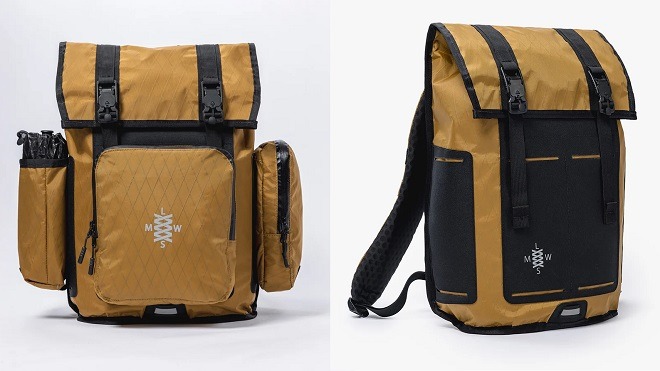
The DSPTCH Standard Pack 18Lis a minimalist technical daypack constructed from high-tenacity synthetic textiles and advanced laminates, retailing for $418 USD direct from DSPTCH and authorized retail channels. Engineered specifically for urban commuters, hardware field engineers, and daily carry enthusiasts, this platform prioritizes environmental resistance, structural longevity, and quick external access over redundant internal dividers. Evaluated within the broader landscape of late 2026 carry releases highlighted in Carryology’s technical gear dispatch, the pack exemplifies a calculated return to classic teardrop daybag silhouettes updated with modern industrial textiles.
🛒 Where to Buy: DSPTCH Standard Pack 18L
Editorial Note & Product Verification: The Cool Great Buys editorial desk independently verifies manufacturer technical specifications, cross-checks active retail availability across authorized sellers, and evaluates verified consumer reliability data before publishing product evaluations. All featured prices and promotions reflect active market rates at the time of publication.
- DSPTCH Standard Pack 18L: View on Amazon
Click the link above to check current pricing, availability, and customer reviews on Amazon.
Urban carry platforms have historically struggled with the tension between modular organization and excessive baseline tare weight. In prior product generations—most notably the dense 1050D ballistic nylon packs popular throughout the early 2010s—manufacturers frequently over-engineered internal organizer panels to the point where an unladen bag weighed upwards of 3.2 lbs, penalizing the user before a single piece of hardware was stowed. The current market trajectory attempts to resolve this historical design flaw. By swapping traditional polyurethane-coated nylons for dimensional laminates like Dyneema Composite Fabric and X-PAC X50, modern designers achieve structural rigidity and superior hydrostatic resistance at a fraction of the physical mass.
The target buyer for this caliber of technical carry comprises professionals transporting sensitive electronic hardware through demanding climate conditions. This includes remote workers carrying 16-inch mobile workstations, digital creators carrying dedicated travel imaging gear such as the Nocs Provisions Portal AFN7, and frequent airline travelers who require a streamlined bag capable of sliding beneath commercial aircraft seats without sacrificing weatherproofing. The distinction matters here: this gear caters not to weekend hikers seeking lightweight trail packs, but to urban commuters who view their carry as a daily utilitarian tool built for multi-year survival.
Hardware Engineering, Materials, and Core Specs
Material selection serves as the primary engineering focus of the DSPTCH Standard Pack iteration. According to technical documentation published with this release, DSPTCH offers the pack shell in four distinct performance fabrics, all uniformly priced at $418 USD: 5.0 oz Dyneema Composite Fabric (DCF), X-PAC X50 Tactical, ECOPAK EPLX 1680D ballistic, and ECOPAK EPX400. The 5.0 oz Dyneema variant is particularly notable, utilizing ultra-high-molecular-weight polyethylene (UHMWPE) fibers laminated between polyester films. This construction achieves a tensile strength per unit weight that outclasses traditional nylon weaves while maintaining a hydrostatic head rating exceeding 20,000 mm, rendering the main body effectively waterproof under standard atmospheric rain exposure.
Internally, the 18L volumetric capacity is logically divided to isolate vulnerable electronics from primary cargo. The dedicated rear laptop compartment features a suspended, tilting padded sleeve capable of accommodating laptops up to 16 inches. The sleeve is engineered with a 1.5-inch false bottom, ensuring that when the pack is dropped vertically onto hard concrete, the lower edge of the laptop chassis remains suspended above the impact zone. Secondary internal storage includes an integrated tablet sleeve, a zippered security pocket along the back wall, a zippered mesh pocket for power bricks, and pleated top-loading slots. Externally, the chassis features pleated side bottle pockets engineered to accept wide-diameter vessels up to 32 oz, such as the double-walled memobottle memo Round, while collapsing flat against the exterior wall when empty.
This material-first philosophy is mirrored across adjacent technical releases in the autumn 2026 cycle. The collaborative Mission Workshop x LandSpeeder Sanction LS relies on a 210D Dimension-Polyant VX21 shell paired with German-engineered Fidlock magnetic fasteners and a modular side attachment system. In apparel hardware, the SPC/LST SEARCHER_01W Workshirt($145 USD direct) utilizes a proprietary Cordura cotton stretch broken twill with specialized pocket geometry. Across these designs, manufacturers are opting for technical composite weaves and precision hardware over decorative trim, establishing a high standard for mechanical durability.
Everyday Usability & Design Compromises
Evaluating technical carry hardware in real-world urban environments inevitably highlights deliberate engineering compromises. In practice, the use of rigid laminate fabrics like X-PAC X50 and 5.0 oz Dyneema creates a firm structural shell that holds its shape regardless of load state. However, this rigidity introduces a tactile stiffness and a noticeable acoustic crinkle when flexing the bag opening during cold weather operation. Users transitioning from soft, unlaminated canvas or broken-in cotton twill will observe that high-crystallinity polyethylene film layers simply do not drape naturally against the body until subjected to months of mechanical wear.
The shoulder harness suspension system presents a secondary operational trade-off. DSPTCH employs high-density closed-cell EVA foam inside the shoulder straps. While this material resists long-term compression under static loads of 15 lbs to 25 lbs, it feels relatively rigid during initial wear. The harness requires a break-in period of approximately 14 to 21 days of continuous use before the foam molds to individual shoulder contours. Furthermore, while the pleated external bottle pockets lie commendably flat when unoccupied, loading a full 1L rigid flask into the side pocket while the internal 18L main compartment is packed to capacity demands considerable force, as internal volume encroaches upon external pocket elasticity.
Hardware disassembly and daily maintenance reveal further design trade-offs across current technical releases. Consider the memobottle memo Round($45 USD on Amazon), designed to solve the sanitation vulnerabilities of standard travel flasks. The unit features a three-piece lid assembly that detaches in 3 seconds, eliminating hidden gasket channels where organic buildup occurs. However, because its double-walled 304 stainless steel chassis is engineered specifically for cold fluids, introducing boiling liquids risks thermal degradation of the silicone seals over prolonged cycles. Similarly, the Vollebak Sashiko Chore Jacket utilizes 1 million meta-aramid fire-retardant stitches across heavy Japanese cotton; while offering exceptional tear strength, the high stitch density creates stiff seams at the hem that require multiple wash cycles to soften.
Category Alternatives and Value Comparison
To contextualize the DSPTCH Standard Pack’s pricing of $418 USD, it must be evaluated alongside established technical daypacks operating within the 15L to 21L volume class. The market contains several direct rivals that take contrasting approaches to material selection and internal layout.
The primary direct alternative is the Peak Design Everyday Backpack 15L Zip, which retails for $219.95 USD on Amazon. Peak Design utilizes a double poly-coated 400D nylon shell and an internal FlexFold divider system aimed at photographers and tech workers. The Peak Design option is considerably less expensive and provides superior customizable interior padding for delicate gear. However, the Peak Design chassis weighs 2.96 lbs empty—roughly 40% heavier than the Dyneema variant of the the software—and its rigid shell architecture cannot be flattened for storage inside larger luggage.
A second competitor in the premium utilitarian sector is the Goruck GR1 21L Slick, priced at $335 USD direct from Goruck. Constructed from abrasive 1000D CORDURA nylon, the GR1 offers exceptional drop-test durability and a full clamshell opening. Yet, the GR1 lacks external water bottle sleeves entirely, requiring users to purchase aftermarket MOLLE pouches or store liquids internally alongside laptops. Furthermore, the unlined CORDURA surface can cause friction pilling on delicate clothing layers like technical merino wool or lightweight windbreakers.
Evaluating raw value metrics reveals that DSPTCH demands a substantial premium for its advanced composite material choices and domestic American manufacturing. For buyers whose daily routine does not demand extreme hydrostatic performance or ultra-lightweight composite textiles, standard 500D nylon packs priced under $200 USD deliver adequate functional utility. However, for users who prioritize strength-to-weight ratios, structural longevity, and domestic labor standards, the price differential reflects genuine textile manufacturing costs rather than arbitrary brand markup.
Final Buyer Verdict: Long-Term Ownership Value
The the technology 18L, along with the broader collection of autumn carry releases evaluated this month, represents a refined execution of technical carry principles. By prioritizing robust raw materials—such as 5.0 oz Dyneema, X-PAC laminates, and 1680D ballistic weaves—over superficial stylistic elements, DSPTCH has delivered a hardware platform designed for long-term service. The inclusion of a 1.5-inch false bottom laptop sleeve, lie-flat bottle pockets, and domestic lifetime warranty backing offsets the initial capital outlay for serious commuters.
Prospective buyers should carefully assess their functional requirements before committing to a $418 USD technical daypack. If your daily workflow involves wet-weather transit, commuting with expensive computing gear, and a preference for lightweight USA-built hardware, the the platform stands out as a prudent long-term investment. For general office workers operating in mild climates, more economical nylon alternatives will suffice. But for technical buyers seeking an uncompromising balance of textile durability, modern weatherproofing, and understated industrial design, this release represents one of the most complete carry platforms available in late 2026.