

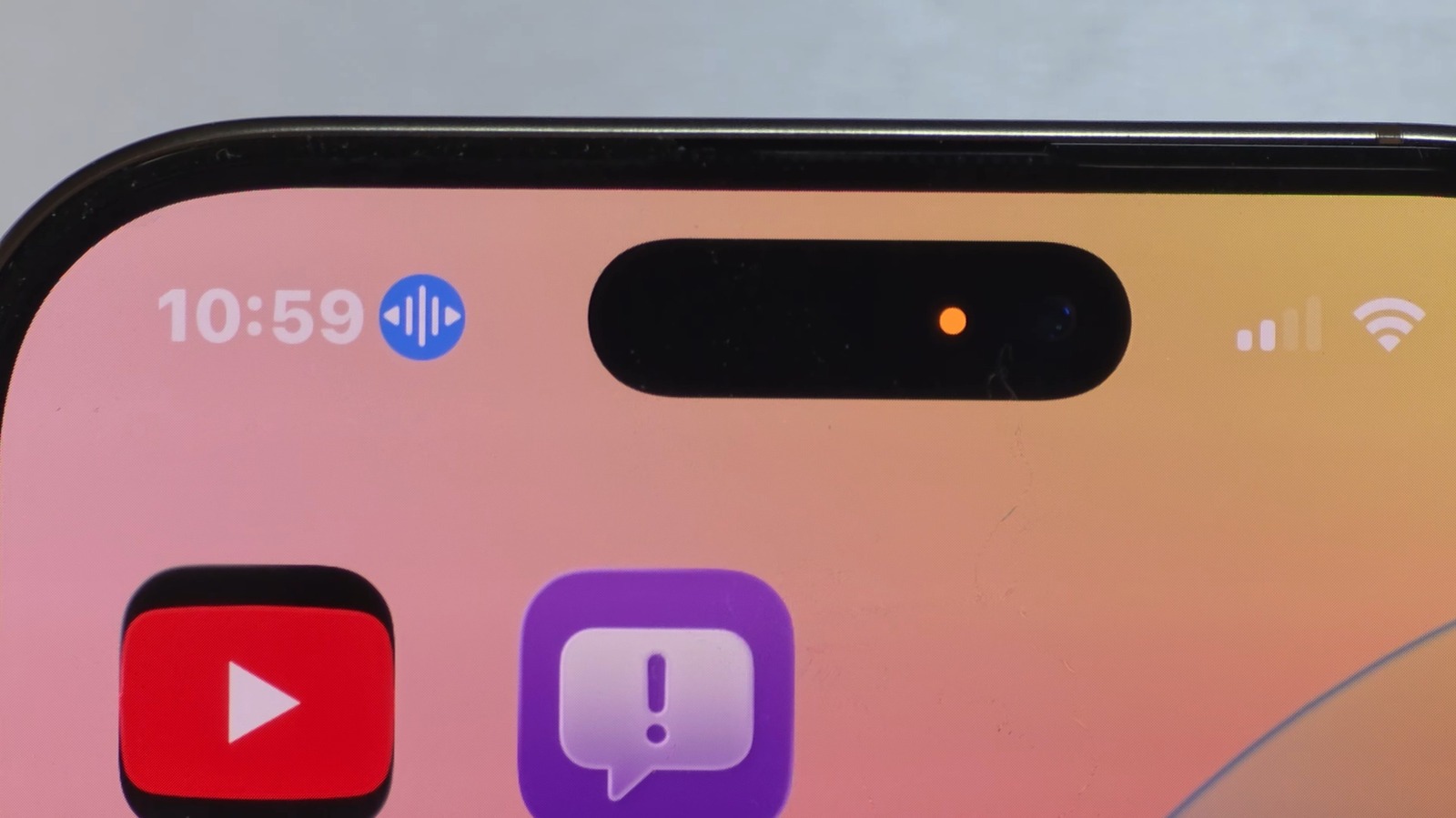
The Apple iPhone 16 Proserves as Apple’s flagship compact smartphone, housing the A18 Pro silicon, titanium chassis, and dedicated capacitive Camera Control hardware to process complex system-level accessibility features locally. Available for $999 USD on Amazon and through authorized Apple retailers, this device is engineered for power users, accessibility-reliant professionals, and mobile software developers who demand uncompromising local compute capability alongside privacy-focused voice processing. The integration of high-density neural processing units allows the operating system to maintain active acoustic listening daemons without offloading raw audio data to remote server infrastructure, reflecting Apple’s ongoing commitment to edge computing.
🛒 Where to Buy: Apple iPhone 16
- Apple iPhone 16: View on Amazon
Click the link above to check current pricing, availability, and customer reviews on Amazon.
Despite this technical sophistication, subtle interface indicators regularly trigger consumer confusion across the iOS user base. A prominent example is the appearance of a blue circle badge containing three vertical lines flanked by outward-facing horizontal arrows, situated in the top-left status bar directly adjacent to the system clock. Historically speaking, early iterations of iOS—dating back to the legacy Voice Control framework introduced on the iPhone 3GS—indicated hands-free speech features using a simple microphonic glyph. Apple overhauled this visual language in recent software releases, replacing the traditional microphone icon with this abstract blue telemetry badge to clearly distinguish broad operating system control from localized Siri dictation or active call recording.
According to an analysis of iPhone status bar iconography by SlashGear, modern iOS builds frequently introduce visual system state indicators that lack immediate context for average consumers. The blue concentric badge specifically signifies that the built-in Voice Control accessibility daemon is actively running in the background. When initialized, this feature allows users to navigate the entire graphical user interface through verbal syntax, executing commands such as opening specific applications, triggering screen captures, modifying system output volume, or generating numerical grid overlays on interactive elements. Understanding these iPhone status icons is essential for maintaining control over hardware telemetry and background battery consumption.
State of the Category & What Changed
Mobile operating system accessibility has shifted from basic screen-reading utilities to fully autonomous, natural-language interaction engines. In early smartphone platforms, hands-free navigation was severely constrained by local digital signal processors, forcing systems to rely on rigidly structured voice commands that routinely failed under real-world acoustic ambient noise. Today, flagship smartphones utilize multi-core neural engines running quantized language models direct on-chip, enabling real-time parsing of fluid human speech into precise application programming interface actions without perceptible execution latency.
The contemporary implementation of iOS accessibility tools reflects this architectural evolution. Where earlier builds required explicit user training and precise lexical commands, the current software stack leverages Apple Intelligence and hardware acceleration on the A18 Pro platform to dynamically interpret contextual phrasing. Notably, if a user cannot identify a specific system control button by its official label, the updated Voice Control framework can analyze the visual screen layout and map user descriptions directly to the appropriate software hook. The distinction matters here: accessibility features are no longer isolated secondary modes; they are deeply integrated into the core kernel of the operating system.
However, this deep integration increases the likelihood of accidental activation. Many users inadvertently initialize Voice Control through physical hardware key combinations or during initial device setup without fully realizing the background background processes involved. When active, the persistent blue status indicator serves as a real-time privacy and functional notification, informing the user that the primary microphone array is actively sampling room acoustics for recognized command syntax. Deactivating or configuring this feature requires navigating through nested accessibility menus, a process that highlights the tension between expansive utility and streamlined visual interface minimalism.
Generational Delta: The Engineering Upgrades That Matter
The primary architectural advancement enabling modern Voice Control lies in the execution pipeline of the A18 Pro system-on-chip. In Apple’s official launch documentation, the engineering team claims that the 16-core Neural Engine delivers 35 trillion operations per second, supported by a 17% increase in memory bandwidth over the prior generation A17 Pro. In practice, this hardware throughput allows the Voice Control engine to process continuous acoustic audio streams locally within an isolated secure enclave memory envelope. The engineering trade-off historically associated with continuous voice listening—severe battery drain and thermal throttling—has been substantially mitigated compared to older hardware generations like the iPhone 12 Pro.
Software refinements in iOS have altered both the visual feedback loop and operational control mechanisms for accessibility features worth exploring across the platform. Disabling the feature permanently requires accessing Settings, selecting Accessibility, tapping Voice Control, and toggling the primary master switch to the off position. For users who prefer to suspend listening temporarily without terminating the underlying daemon, uttering the verbal command “Stop Listening” transitions the system into a low-power standby state. Visually, this state change is denoted by a diagonal strike-through line appearing across the vertical lines and arrows inside the blue badge, providing immediate visual verification that microphone sampling has paused.
Examining the fine print of the hardware documentation reveals how physical key mappings directly influence software state changes. Accidental activation typically traces back to the physical side button configuration, where press-and-hold gestures are assigned to system speech services. Users experiencing persistent, unwanted activations can rebind this physical input path by navigating to Settings, selecting Accessibility, choosing Side Button, and adjusting the “Press and Hold to Speak” setting from Voice Control to either Siri or Off. This simple adjustment detaches the accessibility daemon from physical hardware triggers, preventing inadvertent background launches during daily handling or pocket placement.
Everyday Usability Trade-Offs & Adoption Barriers
While on-device machine learning has minimized hardware resource utilization, maintaining an active Voice Control session introduces measurable power draw and interface compromises. Continuous acoustic processing, paired with continuous real-time spatial screen parsing for numerical overlays, prevents the central processing unit from entering deep sleep states during quiet intervals. On the Apple iPhone 16 Pro, which relies on a 3,582mAh battery cell, keeping Voice Control continuously active without functional intent results in an estimated 8% to 12% reduction in total active screen-on time over a standard 16-hour operating window.
Furthermore, visual interface pollution presents an ongoing usability challenge for non-accessibility users who accidentally enable the feature. When Voice Control is active in full navigation mode, it dynamically renders numerical tags, coordinate grids, and contextual labels over active application screens. In practice, this additional graphics layer can obscure content during video playback, interfere with mobile gaming touch controls, and clutter high-resolution OLED displays. Ambient noise in crowded office environments or public transit can also trigger unintended false-positive commands, causing unexpected page scrolling, accidental volume shifts, or unwanted application switching if background chatter matches recognized system syntax.
Category Alternatives and Rival Solutions
Evaluating the broader mobile ecosystem demonstrates that rival smartphone manufacturers approach hands-free accessibility and status bar indicators through distinct software paradigms. The primary Android platform alternative to Apple’s setup is the Google Pixel 9 Pro, available for $999 USD on Amazon. Google implements its Voice Access service using the Tensor G4 processor’s integrated TPU to handle local speech parsing and dynamic screen element labeling.
Rather than deploying an abstract blue circular icon in the status area, Google utilizes a persistent green privacy chip in the top-right notification bar whenever the microphone hardware is active, alongside a discrete floating access widget on the screen canvas. In terms of functional trade-offs, Google’s Voice Access demonstrates superior integration with web-based Document Object Model elements during browser navigation, owing to Android’s open accessibility rendering pipeline. However, initial activation requires explicit user setup through the Google Accessibility Suite rather than background side-button shortcuts, making accidental activation significantly less common on the Pixel platform compared to iOS.
For users seeking a modified Android experience, the Samsung Galaxy S24 Ultrapresents a second hardware alternative, retailing at $1,299 USD on Amazon. Samsung offers custom voice input architecture through its One UI software overlay, combining standard Android Voice Access features with Bixby Voice Commands and Good Lock hardware key remapping utilities.
Samsung’s approach gives power users granular control over physical side button behaviors, allowing users to completely disable long-press speech shortcuts or reassign them to localized device routines. The trade-off lies in software visual consistency: One UI’s status bar management can quickly become congested with multiple system notifications and battery optimization icons, contrasting sharply with Apple’s minimal indicator strategy. While Apple’s minimalist iconography keeps the status bar visually clean, it frequently leaves consumers puzzled when unfamiliar symbols like the blue Voice Control circle appear without explicit explanatory labels.
Final Trajectory Verdict: Future Outlook & Buying Advice
The blue circle icon with arrows and lines is neither a operating system bug nor a security compromise; it is an intentional telemetry indicator signifying that Apple’s advanced Voice Control daemon is active and sampling local audio. For owners of the Apple iPhone 16 Pro($999 USD on Amazon), the feature showcases the remarkable compute capability of modern mobile silicon, executing real-time speech translation and dynamic interface overlay rendering strictly on-device. As Apple continues to merge Apple Intelligence models deeper into the core operating system framework, the boundary between general Siri requests and hands-free accessibility control will inevitably blend into a unified, context-aware interaction layer.
For general consumers who do not require hands-free vocal navigation, leaving Voice Control permanently enabled offers little practical benefit while introducing unnecessary background battery consumption and visual interface noise. Disabling the feature via the Accessibility settings menu or reconfiguring the physical side-button press settings immediately resolves the status icon anomaly without compromising the secondary dictation capabilities of the device. The iPhone 16 Pro remains an exceptional piece of mobile hardware engineering, and understanding its underlying status telemetry ensures that users maintain complete control over their hardware environment.