

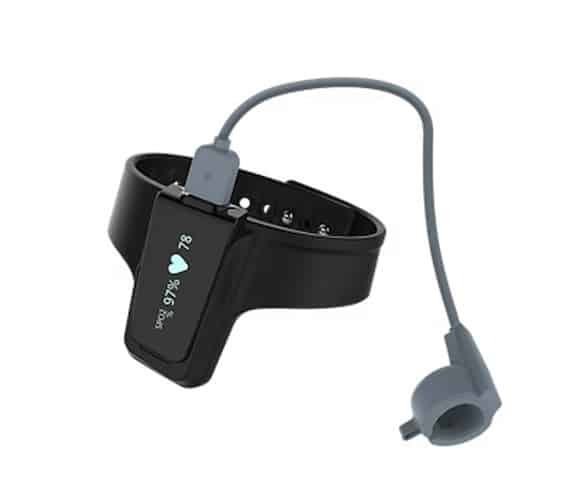
The Wellue Checkme O2 Maxref=lxwb8d5ymz” target=”_blank” rel=”noopener”>Wellue. It targets sleepers tracking nocturnal hypoxia, respiratory disturbance patterns, or sleep apnea symptoms who require higher data fidelity than standard consumer wearables provide.
🛒 Where to Buy: Wellue Checkme O2 Max
Editorial Note & Product Verification: The Cool Great Buys editorial desk independently verifies manufacturer technical specifications, cross-checks active retail availability across authorized sellers, and evaluates verified consumer reliability data before publishing product evaluations. All featured prices and promotions reflect active market rates at the time of publication.
- Wellue Checkme O2 Max: View on Amazon
Click the link above to check current pricing, availability, and customer reviews on Amazon.
Consumer fitness trackers have integrated optical SpO2 sensors into standard wristwatches for years. However, mainstream smartwatches present structural limitations for medical-adjacent monitoring. Most smartwatches sample blood oxygen intermittently during sleep. Intervals often range from once every several minutes to spot checks during non-REM stages. These wide windows miss brief oxygen desaturations. A drop lasting 15 seconds can easily pass undetected between polling cycles on standard consumer hardware.
The medical technology sector has long relied on bulky, hard-plastic fingertip clamps attached to desktop monitors. These traditional devices restrict hand movement and interrupt sleep cycles. The Checkme O2 Max occupies the space between passive fitness bands and clinical sleep lab machinery. It trades general multi-sport tracking features for raw data frequency and customizable real-time alerts. For individuals monitoring chronic respiratory conditions, this physical hardware shift provides targeted data collection without requiring full polysomnography equipment at home.
Recent shifts in home health telemetry have driven demand for actionable bio-data over generalized wellness scores. Most modern wearables synthesize raw metrics into proprietary recovery scores. Those single-digit summaries obscure the underlying physiology. The Checkme O2 Max reverses that trend. It presents raw physiological metrics without hiding overnight variations behind simplified software algorithms.
State of the Category & What Changed
The wearable health category has split into two distinct philosophies. Multi-sensor smartwatches prioritize broad lifestyle tracking, sacrifice battery life, and smooth over raw sensor data. Dedicated health monitors focus strictly on high-frequency data capture for single metrics like oxygen saturation or electrocardiograms. The market baseline for blood oxygen tracking has historically leaned on reflective optical sensors placed on the dorsal side of the wrist. Wrist optical sensing suffers from poor light penetration through thick skin layers and frequent motion artifacts. The signal degrades rapidly when the wearer moves during sleep.
Transmittance pulse oximetry remains the gold standard for non-invasive oxygen measurement. Transmittance sensors pass light directly through thin tissue, such as a fingertip or thumb, into a photodetector on the opposite side. The Checkme O2 Max adopts this architecture by physically decoupling the processor unit from the optical sensor. A flexible ribbon cable connects the wrist display module to a soft silicone ring sensor. This engineering choice addresses the signal-to-noise ratio issues inherent to wrist-only optical sensors.
Hardware pricing in this specialized sub-category has stabilized around the $200 USD threshold. Early clinical pulse oximeters with continuous recording capabilities cost upwards of $500 USD and required specialized software licenses to read the logs. The introduction of consumer-accessible Bluetooth units equipped with low-energy mobile pairing changed access dynamics. The Checkme O2 Max provides professional-grade data structures without hidden software subscription tiers or locked diagnostic reports.
This design shift targets users who find general wellness rings and wristbands inadequate for tracking specific health conditions. While general wellness bands offer passive sleep stage estimations, they fail to alert users during active physiological events. The hardware implementation of the Checkme O2 Max focuses entirely on immediate tactile notification and continuous log capture. It ignores step counting, GPS tracking, and notifications to preserve memory and battery for continuous oxygen sensing.
Generational Delta: The Engineering Upgrades That Matter
The primary technical differentiator between the Checkme O2 Max and consumer smartwatches lies in sensor sampling rate. Standard smartwatches record blood oxygen values at sparse intervals. The Checkme O2 Max samples oxygen saturation and pulse rate continuously at a rate of 1Hz (one sample per second). Over an 8-hour sleep period, this device records 28,800 discrete data points for oxygen and heart rate. That sampling rate catches transient desaturations that last only a few seconds.
Customizable real-time haptic alerts represent another major engineering upgrade. Users configure low SpO2 thresholds between 80% and 95% alongside high and low pulse rate limits via the companion ViHealth mobile application. When blood oxygen drops below the configured limit, the wrist unit’s internal motor triggers a sustained physical vibration. This alert wakes or prompts the wearer to shift position, relieving airway obstructions before severe oxygen dips occur. The vibration intensity features adjustable strength levels to accommodate both light and heavy sleepers.
In Wellue’s official technical documentation, the engineering team claims an SpO2 accuracy tolerance of ±2 percentage points within the 80% to 100% range and ±3 percentage points within the 70% to 79% range. According to documentation verified in Gadgets & Wearables original review by analyst Marko Maslakovic, these figures were validated against arterial blood samples analyzed on a laboratory CO-oximeter to meet ISO 80601-2-61 standard requirements. In the real world, hardware reality dictates that physical motion still impacts optical readings. Extreme limb movements can trigger artificial dips, though the high-frequency sampling filter resolves baseline readings as soon as motion stops.
Data export flexibility provides clear advantages for clinical consultation. The companion ViHealth software processes continuous logs into printable PDF diagnostic reports. These summaries calculate the overall O2 Score, time spent below critical oxygen thresholds, total desaturation events, and average pulse rate trends. The app supports raw data export in CSV format. Users can import exact second-by-second numerical values directly into custom analysis tools or electronic health records systems without software lock-in.
Everyday Usability Trade-Offs & Adoption Barriers
The continuous monitoring architecture of the Checkme O2 Max forces physical design trade-offs. The most obvious drawback is form factor ergonomics. Wearing a wrist unit connected via an exposed wire to a finger sensor feels less integrated than wearing a smart ring or watch. The thin cable can snag on bedding if routed loosely across the back of the hand. While the silicone ring sensor is softer than rigid clinical finger clips, having a cable attached to a digit requires an initial period of physical adjustment.
Physical strap hardware presents minor friction during daily application. The wristband utilizes a traditional pin-and-hole silicone closure mechanism. Threading the flexible pin through the sizing hole requires two hands and firm pressure. A hook-and-loop or magnetic closure would simplify nighttime fitting. However, once secured, the strap prevents the main 32-gram display body from shifting position on the wrist during sleep.
Ingress protection remains strictly limited. The device carries an IP22 rating. This ingress level protects against vertical water drops when tilted at 15 degrees, but offers zero protection against immersion, high humidity, or pressurized sprays. It cannot be worn in the shower, submersed for cleaning, or used during intense sweaty exercise. The device is built exclusively for indoor resting environments and dry night conditions.
The charging setup relies on a proprietary cable design that introduces potential usability friction. The wrist unit omits standard USB-C ports to preserve its compact chassis shell. Instead, the port used for the wired finger sensor doubles as the battery charging port. Recharging requires unplugging the finger sensor and inserting a proprietary USB-A to D-type connector cable. Losing this specialized cable disables the hardware entirely until a replacement arrives. Battery performance yields up to 72 hours of continuous operational runtime. That translates to roughly 7 to 9 full nights of sleep monitoring per 3-hour charge cycle.
Category Alternatives and Rival Solutions
Evaluating the Checkme O2 Max requires direct comparison against competing dedicated hardware and multi-metric fitness bands. Consumers seeking high-density health tracking typically consider dedicated pulse oximeters alongside general fitness wearables. The following dedicated competitors offer distinct hardware balances between physical comfort, sampling frequency, and price.
The Lookee Wrist Pulse Oximeterrepresents a direct rival, retailing for $149 USD on Amazon. The Lookee device utilizes a similar wrist-mounted body connected to a soft silicone ring sensor. It features onboard vibration alerts for low blood oxygen dips and logs continuous overnight trends. However, the Lookee relies on an older display interface with lower pixel density and reduced screen brightness. Its internal memory holds fewer recording sessions, requiring more frequent app syncs over Bluetooth to prevent data overwrites. While it saves $50 USD upfront, its app suite lacks the detailed CSV data export capabilities found in the Wellue software platform.
For users who prefer a traditional wristband form factor, the Garmin vivosmart 5retails for $149.99 USD on Amazon. The vivosmart 5 functions as a complete daily fitness tracker with step counting, sleep staging, stress tracking, and smartphone notifications. Its wrist-based optical sensor can monitor SpO2 continuously throughout the night. However, the engineering trade-offs become clear in sample rate and alert capability. Garmin samples oxygen at longer periodic intervals to preserve multi-day battery life. The wrist sensor suffers from light leakage if the band shifts during sleep, generating false desaturation readings. Furthermore, the vivosmart 5 lacks real-time haptic alarms to wake users during low-oxygen events, rendering it a passive monitoring tool rather than an active alert system.
The choice between these devices hinges entirely on structural priorities. The Garmin band excels at lightweight daily wear and general lifestyle tracking, but sacrifices continuous high-frequency sampling and immediate physical alerts. The Lookee device offers dedicated continuous sampling at a lower price point, but relies on dated companion software and limited local storage. The Checkme O2 Max sits at the top of this comparison curve. It justifies its $199 USD price tag through higher sample rates, superior app report exports, and stable physical construction.
Final Trajectory Verdict: Future Outlook & Buying Advice
The market trajectory for personal health monitoring is moving rapidly toward continuous, diagnostic-grade hardware. As consumers become more proactive about identifying underlying sleep issues, basic wellness averages are proving insufficient. Multi-purpose smartwatches will continue to dominant daily activity tracking. However, dedicated devices like the Checkme O2 Max remain essential for continuous nocturnal data capture. The physical reality of transmittance optical sensing means finger-based hardware will continue to outperform wrist-only reflection sensors for precision SpO2 tracking.
Future iterations of this hardware category will likely adopt universal USB-C charging standards and refined strap closures. Wireless finger rings using short-range Bluetooth could eventually eliminate the physical tether wire. Until micro-battery technology allows continuous 1Hz transmission inside a standalone ring without overheating, wired hybrid designs remain the most reliable compromise for night-long tracking.
The purchasing decision comes down to your specific health monitoring requirements. If you simply want a general indication of overnight recovery to complement your daily workout routines, stick with a standard smartwatch or smart ring. Paying $199 USD for a single-purpose device with an external wire is unnecessary for basic wellness tracking. The Checkme O2 Max is not built for daytime convenience or casual activity metrics.
Buy the Wellue Checkme O2 Maxif you need continuous 1Hz blood oxygen tracking, customizable real-time vibration alerts for desaturation dips, and clean PDF or CSV data exports for medical review. It delivers clinical data density in a comfortable package. Skip it if you want an all-in-one smartwatch, daytime wearability, or submersable waterproofing. For its intended medical-adjacent sleep tracking workflow, the hardware delivers exactly what it promises on paper.