

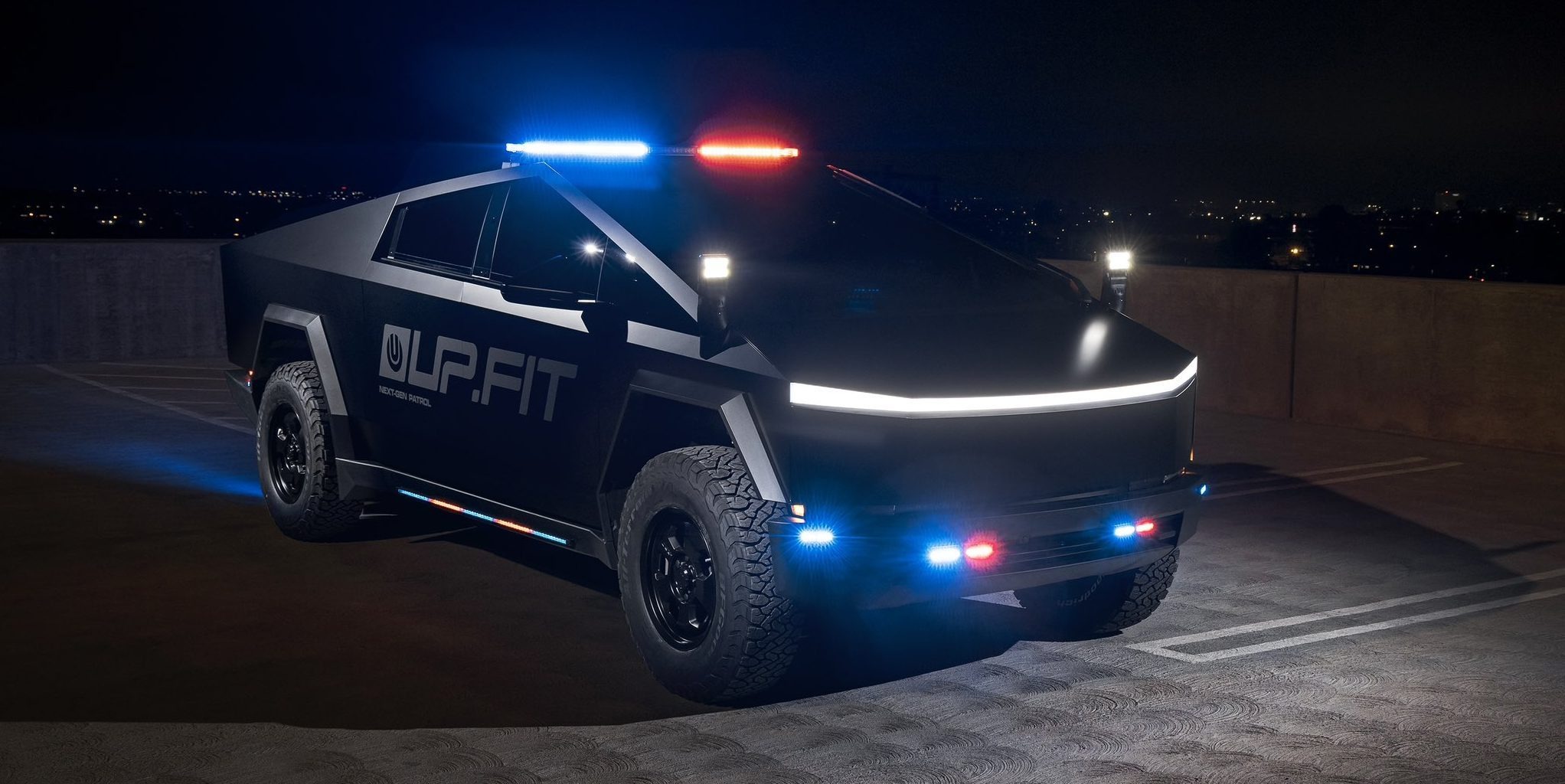
The Tesla Cybertruck is an all-electric, full-size light-duty pickup truck utilizing a cold-rolled stainless steel exoskeleton and full steer-by-wire architecture. Currently listed starting at $65,000 USD direct from Tesla for the dual-motor All-Wheel Drive variant—following a mid-year price increase of $5,000 USD—the vehicle is tailored for early-adopter commercial fleet managers, high-net-worth tech enthusiasts, and specialized municipal operators who require extreme structural durability alongside high-voltage utility power output. However, the future availability of this platform has encountered a pivotal structural shift following official confirmation from chief executive Elon Musk that Tesla plans to wind down Cybertruck production at its Austin, Texas facility around mid-2027 to reallocate factory space toward autonomous taxicab manufacturing.
🛒 Where to Buy: Level 2 Portable EV Charger 240V
- Level 2 Portable EV Charger 240V: View on Amazon
Click the link above to check current pricing, availability, and customer reviews on Amazon.
In response to this production sunset, aftermarket tuner Unplugged Performance has submitted a public proposal to assume complete manufacturing responsibility for the Cybertruck line. Under the terms posted in its public pitch, Unplugged Performance (UP), backed by a consortium of private investors, offers to operate production independently, absorbing all floor space, headcount, and operational capital costs away from Tesla’s primary balance sheet. In exchange, Tesla would collect licensing fees along with ongoing Full Self-Driving (FSD) software subscription revenue for every unit manufactured. Historically speaking, third-party platform handoffs of this magnitude are rare in the automotive sector, recalling moments such as Lotus selling its Seven production tooling to Caterham, or the resurrection of the Studebaker Avanti by independent distributor networks. The distinction matters here: transferring an active, high-voltage assembly process reliant on megawatt-scale gigapresses to an independent entity introduces unprecedented engineering and capital hurdles.
The operational context driving this takeover pitch stems from a persistent imbalance between manufacturing capacity and consumer absorption. As reported when Tesla announced the wind-down, Cybertruck delivery volumes have hovered at approximately 12% of the initial 250,000-unit annual projection established during pre-production announcements. Despite Giga Texas possessing over 10 million square feet of total operational footprint, the dedicated assembly line has run at roughly a quarter of its installed 125,000-unit annual capacity. For prospective buyers and commercial operators considering capital deployment into this platform, understanding the hardware engineering, daily usability trade-offs, and third-party manufacturing viability is essential prior to committing capital before the 2027 transition window closes.
Real-World Context and Target Buyer Profile
Understanding the Cybertruck’s market placement requires disentangling its performance metrics from its public positioning. The primary buyer profile for this vehicle has evolved from general residential truck buyers to a specialized demographic comprising commercial technology operators, security infrastructure firms, and specialized municipal fleets. In practice, traditional pickup buyers seeking straightforward body-on-frame repairability and universal bed tool compatibility have historically gravitated toward conventional domestic alternatives. The Cybertruck instead serves operators who prioritize integrated export power systems, structural dent resistance, and dynamic low-speed maneuverability via software-driven steer-by-wire linkages.
Market demand data underscores this narrow target buyer profile. According to automotive registration analysis, quarterly deliveries have stabilized at an annualized pace of approximately 30,000 units. Industry registration figures highlight how heavily commercial institutions anchor these figures; for example, trade filings show SpaceX purchased 1,279 Cybertrucks in Q4 2025 alone, accounting for roughly 18% of total domestic registrations in that three-month window. Furthermore, internal delivery figures indicating an estimated 7,000 to 8,000 Cybertruck deliveries in Q3 reveal that overall retail appetite reached a plateau shortly after initial reservation backlogs were fulfilled.
Unplugged Performance’s initiative aims to capture this lingering niche demand by expanding the platform into specialized vehicle iterations that Tesla itself declined to industrialize. In its proposal, UP outlined plans to introduce a three-row passenger variant designated as the “CyberSUV” alongside a fully autonomous, driverless logistical transport termed the “CyberCargo.” While these concepts mirror long-standing fleet demand for durable, multi-passenger structural utility vehicles, executing them under a licensed manufacturing framework requires overcoming severe supplier chain realities. Prospective buyers must recognize that an independent manufacturing run, even if sanctioned by Tesla, will inevitably alter long-term component pricing, warranty administration, and service center accessibility compared to direct factory-backed models.
From a financial standpoint, purchasing a Cybertruck under the current factory production model involves navigating volatile pricing structures. After briefly attempting to launch a lower-cost Rear-Wheel Drive trim, Tesla eliminated the entry-level option, establishing the dual-motor All-Wheel Drive variant as the baseline configuration before implementing a price increase that raised prices by $5,000 in August. This baseline MSRP of $65,000 USD places the vehicle directly in competition with premium executive trims from established commercial manufacturers, making residual value protection a critical consideration for prospective buyers.
Hardware Engineering, Materials, and Core Specs
Examining the fine print of the hardware documentation reveals an engineering approach defined by radical manufacturing consolidation and non-standard material selection. The structural foundation of the Cybertruck relies on an ultra-hard 30X cold-rolled stainless steel exoskeleton paired with massive single-piece aluminum front and rear gigacastings. This architecture eliminates traditional stamped body panels and paint lines, relying instead on structural metal stress skins to absorb torsional load. While this grants the exterior exceptional resistance to superficial impacts, it creates complex structural stress paths that require specialized frame-alignment equipment during collision repairs.
Underneath the stainless steel skin, the powertrain utilizes a 123 kWh structural battery pack configured with 4680 cylindrical cells, supplying nominal high-voltage current to dual permanent-magnet electric motors. According to official technical specifications, this powertrain delivers a combined system output of 600 hp and 7,437 lb-ft of wheel torque, enabling a 0-60 mph acceleration sprint in 4.1 seconds. Operational power parameters and physical dimensions are summarized below:
- Base MSRP: $65,000 USD direct from Tesla (Dual-Motor AWD configuration).
- Battery Pack Capacity: 123 kWh structural pack (48V low-voltage auxiliary loop).
- Maximum Towing Capacity: 11,000 lbs (SAE J2807 standard compliant).
- Maximum Payload Capacity: 2,500 lbs enclosed bed capacity.
- Suspension Architecture: Adaptive four-corner pneumatic air suspension with 16 inches maximum ground clearance.
- Curb Weight: 6,843 lbs total unladen mass.
- Overall Length: 223.2 inches with a 143.5-inch wheelbase.
The chassis mechanics represent a departure from standard truck engineering, notably in the implementation of variable-ratio steer-by-wire. By completely eliminating physical mechanical linkages between the steering yoke and the front rack, the digital control system continually adjusts steering lock parameters based on vehicle velocity. At low parking speeds, full wheel articulation requires less than 360 degrees of total rotation at the yoke, eliminating hand-over-hand maneuvering. At highway velocities, the control algorithms reduce sensitivity to preserve tracking stability. This digital control framework operates alongside a 48-volt low-voltage electrical architecture, which reduces wiring harness mass across the vehicle chassis by roughly 70% compared to traditional 12-volt systems.
However, from an engineering perspective, this level of system integration complicates independent third-party manufacturing. In Unplugged Performance’s proposal to take over the vehicle line, UP would need to secure uninterrupted supply lines for Tesla’s proprietary silicon carbide motor inverters, 48V distribution controllers, and structural battery modules. Even if UP operates as an independent brand extension—akin to early AMG working alongside Mercedes-Benz—the reliance on Tesla’s core component supply chains means any manufacturing bottleneck at Giga Texas regarding battery cell production would directly stifle third-party vehicle completion schedules.
Everyday Usability & Design Compromises
In day-to-day operation, the Cybertruck presents a distinct balance between structural utility and practical daily friction. The primary functional benefit of the vehicle centers on its enclosed cargo bed, termed the “Vault.” Featuring a motorized composite tonneau cover capable of supporting dynamic loads, the bed provides 6 feet of length and integrated high-voltage power distribution points. The bed walls house dual 120-volt 20-amp power outlets alongside a single 240-volt 50-amp heavy-duty receptacle, supplying up to 11.5 kW of continuous vehicle-to-load (V2L) continuous power export. For field technicians and job-site operators, this capability allows running high-draw pneumatic compressors, arc welders, or mobile command centers directly from the traction battery without requiring a secondary diesel generator.
However, these functional advantages are counterbalanced by prominent design compromises dictated by the vehicle’s geometry. The sharp, angular roofline and thick structural C-pillars induce severe rearward sightline blockages, forcing driver reliance almost entirely on high-definition video camera feeds routed through the central 18.5-inch infotainment screen. In practical urban conditions, the vehicle’s 223.2-inch overall length and wide track create notable parking friction in standard suburban garages and tight municipal lots. Furthermore, while the stainless steel body panels resist shopping cart dings and trail scratches, the bare unpainted metal surface readily retains finger oils and atmospheric chemical deposits, requiring specialized surface cleaners to maintain uniform appearance.
Off-road maneuverability and payload dynamics also introduce specific engineering trade-offs. The adaptive pneumatic suspension provides up to 16 inches of ground clearance in extreme extraction modes, but elevating the air springs to maximum height significantly stiffens damping compliance, resulting in a harsh ride over uneven terrain. Furthermore, while the steer-by-wire system excels in low-speed maneuvering, drivers accustomed to natural mechanical road feedback through steering columns will find the digital force-feedback system synthetic. The lack of physical tactile kickback reduces intuitive driver awareness of front-tire traction thresholds during high-speed cornering or low-friction snow operation.
For municipal and law enforcement users, aftermarket specialists like Unplugged Performance have developed tailored chassis modifications to mitigate some of these factory trade-offs. Through UP’s “Invincible” product line, the tuner supplies heavy-duty steel bumpers, underbody armor plates, manual disconnect sway bars, and specialized tactical law enforcement conversions. These upgrades solve specific durability demands for specialized fleets, but they add further structural weight to a platform that already scales at 6,843 lbs, directly penalizing operational efficiency and real-world battery range under heavy loads.
Category Alternatives and Value Comparison
When assessing long-term purchasing value, prospective buyers must evaluate the Cybertruck against established all-electric pickups that employ conventional manufacturing standards and standard dealer service networks. Two prominent category alternatives warrant direct comparison: the Rivian R1T Dual-Motor and the Ford F-150 Lightning Flash.
The Rivian R1T Dual-Motor starts at $69,900 USD direct from Rivian, positioning it slightly above the Cybertruck AWD baseline. The R1T utilizes a conventional high-strength steel frame with aluminum body panels, offering an EPA-estimated range up to 380 miles when equipped with its Large battery pack. In contrast to the Cybertruck’s extreme geometric styling and steer-by-wire layout, the R1T provides a traditional hydraulic steering feel, double-wishbone front suspension, and independent air springs with hydraulic roll control. The interior cabin execution of the Rivian emphasizes luxury material refinements and flexible storage solutions, including an innovative cross-chassis “Gear Tunnel” cargo pass-through. While the R1T offers lower maximum towing capacity (capped at 11,000 lbs, matching the Cybertruck), its total vehicle footprint is substantially more garage-friendly at 217.1 inches in overall length.
The Ford F-150 Lightning Flash represents a fleet-focused alternative starting at $67,995 USD direct from Ford. Built on Ford’s standard full-size pickup architecture, the Lightning Flash incorporates an extended-range battery pack delivering an EPA-estimated 320 miles of range and 580 hp. The primary advantage of the Ford platform lies in operational fleet familiarity and maintenance integration. Body repairs can be executed at standard aluminum-certified collision centers nationwide, and the interior retains tactile physical buttons, direct instrument displays, and conventional steering columns. Furthermore, Ford’s Pro Power Onboard system supplies up to 9.6 kW of continuous export power through up to 10 standard outlets distributed across the front trunk, cab, and bed. For commercial operators prioritizing predictable downtime metrics over novelty material science, the Lightning presents a significantly lower long-term liability profile.
Evaluating these options highlights a clear divergence in value retention and service predictability. While the Cybertruck offers superior low-speed steering agility via its digital rack and unprecedented structural panel toughness, its long-term total cost of ownership (TCO) is shrouded by Tesla’s planned production wind-down in mid-2027. If assembly shifts to a third-party licensee like Unplugged Performance, component production volumes will inevitably drop, driving up replacement body and structural parts prices. Conversely, Rivian and Ford maintain established, high-volume production trajectories that ensure multi-year component availability and standard commercial insurance underwriting.
Final Buyer Verdict: Long-Term Ownership Value
The Tesla Cybertruck remains a technically impressive exercise in radical automotive simplification, featuring advanced high-voltage distribution, steer-by-wire calibration, and exceptional structural resilience. However, Elon Musk’s confirmation of a mid-2027 production phase-out at Giga Texas fundamental shifts the risk analysis for prospective buyers. While Unplugged Performance’s public offer to assume manufacturing operations offers a potential lifeline for the platform, buyers must not base capital allocation decisions on speculative third-party licensing deals that face enormous capital, regulatory, and supplier hurdles. Purchasing a vehicle heading toward direct factory discontinuation inherently increases long-term depreciation risks and potential component sourcing delays once secondary manufacturing lines close down.
For high-net-worth individual buyers and specialized commercial fleets that can amortize capital equipment quickly, acquiring a factory-built dual-motor Cybertruck at its current $65,000 USD baseline direct from Tesla remains viable if high-capacity export power and panel durability are top priorities. However, for general commercial fleet operators and daily utility buyers seeking dependable ten-year operational lifecycles, established alternatives like the Ford F-150 Lightning Flash (starting at $67,995 USD direct from Ford) or the Rivian R1T Dual-Motor (starting at $69,900 USD direct from Rivian) represent substantially safer capital investments. Unless Tesla formally ratifies an assembly transfer agreement with Unplugged Performance, buyers should treat the Cybertruck as a limited-run collector utility platform rather than a permanent fixture of the electric truck landscape.