

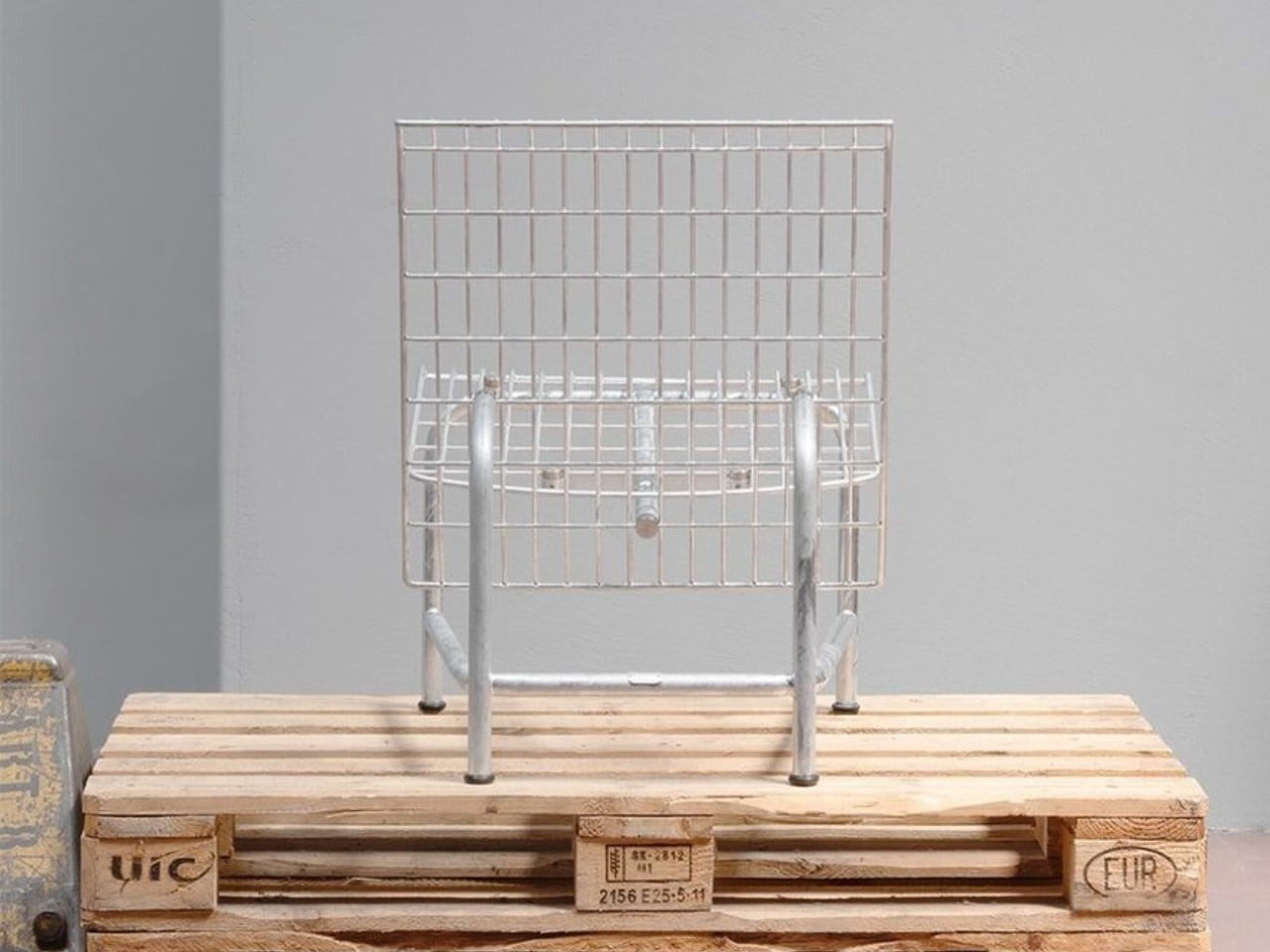
Swiss furniture manufacturer Embru has revealed the Embru Patio Chair, an industrial lounge seat featuring a fully replaceable seating surface mounted to a permanent steel frame, priced at an estimated $950 USD direct from Embru upon its late 2026 release. Designed by Swiss designer Moritz Schmid, this high-end seating hardware targets design-focused homeowners, architects, and hospitality managers who want to stop scrapping entire metal chairs when a single component wears out. Rather than welding the seating grid directly into the structural chassis, the design separates the wear surface from the load-bearing frame using exposed mechanical fasteners.
🛒 Where to Buy: Embru Patio Chair Modular
Editorial Note & Product Verification: The Cool Great Buys editorial desk independently verifies manufacturer technical specifications, cross-checks active retail availability across authorized sellers, and evaluates verified consumer reliability data before publishing product evaluations. All featured prices and promotions reflect active market rates at the time of publication.
- Embru Patio Chair Modular: View on Amazon
Click the link above to check current pricing, availability, and customer reviews on Amazon.
The outdoor furniture market has a massive scrap metal problem. Most patio lounge chairs fall into two categories. You either buy cheap tubular steel gear that rusts out in two seasons, or you buy expensive designer pieces where a single bent wire grid ruins the whole item. When an outdoor seat degrades under sun and moisture, the frame usually remains structurally sound. Yet manufacturers force consumers to throw away 100% of the physical object because the seat plane is permanently welded or bonded to the legs. According to the primary Embru Patio Chair announcement, Schmid’s new layout challenges that throwaway model directly.
Embru aims to shift the expectations for commercial and residential outdoor seating. By making the seating surface a swappable module, the underlying skeleton stays in service for decades. The aesthetic relies heavily on transparent geometry. The wire-grid design lets light and water pass straight through, keeping the profile visually light. Meanwhile, the outer frame provides a rigid structural perimeter. On paper, it is a practical approach to sustainable furniture manufacturing. In practice, its real-world success will depend entirely on how easily buyers can source spare parts five to ten years after initial purchase.
State of the Category & What Changed
For decades, premium patio furniture relied on static single-body construction. Traditional metal lounge chairs use fully welded joints to ensure structural rigidity against harsh wind and weather. While welding prevents parts from loosening over time, it makes localized repairs impossible for typical buyers. If a severe storm bends a wire on your patio seat, your only options are industrial welding or the local recycling center. High-end brands occasionally offer professional refinishing, but shipping a heavy steel frame back to a factory often costs more than buying brand-new furniture.
What changed with the Embru Patio Chair is the refusal to hide the assembly hardware. Moritz Schmid engineered a visible mounting system that turns structural attachment points into deliberate aesthetic highlights. In Embru’s release photography, a circular metal fitting interrupts the wire grid on the backrest. It does not try to blend in with body-matched paint or hidden plastic snaps. It acts as an explicit mechanical coupler. You can look at the chair and instantly understand how to disassemble it with basic hand tools.
This structural clarity represents a distinct shift in high-end Swiss design. Instead of molding smooth reliable panels that look sleek in a showroom but break under real stress, the hardware celebrates component independence. The frame provides strength, while the central insert provides support. If the seating surface snaps, scratches, or weather-check fractures after years under heavy sun exposure, you unbolt that specific section. The load-bearing legs, arm supports, and structural chassis remain right on your deck.
Generational Delta: The Engineering Upgrades That Matter
Comparing the Patio Chair to standard outdoor seating reveals significant structural differences in frame architecture and component isolation. Standard grid chairs weld individual metal wires directly into the outer tubular frame. Over time, heat expansion and moisture cause stress fractures at those rigid weld points. Schmid’s modular approach isolates the seating surface completely. In Embru’s official launch documentation, the engineering team claims the mounting system uses custom mechanical hardware built directly at their Rüti factory in Switzerland, allowing independent thermal expansion between the frame and the seat insert.
Material flexibility is another critical upgrade over previous lounge releases. Embru plans to offer two distinct physical configurations built on the exact same base frame. The outdoor model features a heavy-duty metal grid finished with hot-dip galvanizing or industrial powder coatings in wine red, gray-blue, black, and silver. For interior spaces, users can swap the metal grid for solid wood-veneer panels available in oak, ash, black ash, and walnut. This modular flexibility allows a single underlying steel frame to transition from a weather-exposed backyard patio to an indoor living room layout simply by changing four mechanical mount points.
Schmid previously explored similar industrial production methods with Embru’s Park Chair. That earlier design used a continuous tubular steel frame with curved rear legs designed specifically to maximize the bending machinery at Embru’s Rüti facility. The Patio Chair takes that manufacturing heritage a step further. It transforms the Rüti plant’s metal-stamping capabilities from a static shape exercise into an interchangeable hardware system. The generational leap here is functional longevity rather than purely decorative form.
Everyday Usability Trade-Offs & Adoption Barriers
Despite the smart engineering, physical realities create obvious usability trade-offs. Bare wire-grid seating is historically difficult to sit in comfortably for extended periods without supplemental cushions. Metal wire surfaces create high pressure points on human tissue. After 45 minutes with a book, an unpadded metal grid leaves distinct impression lines and causes body fatigue. While the open design allows rain to drain instantly without pooling, it forces buyers to evaluate whether they want to compromise on immediate ergonomic soft-cushion comfort for structural longevity.
Weight is another physical barrier. Embru constructs its frames from solid, industrial-grade steel to survive outdoor winds and harsh winters. This makes the chair exceptionally heavy compared to lightweight aluminum patio sets. Moving four of these units across a lawn or storing them during harsh winter storms requires real physical effort. Furthermore, while the metal grid configuration holds up well outdoors, the wood-veneer indoor variant will degrade rapidly if exposed to ambient moisture, limiting hot-swapping between indoor and outdoor setups without careful weather protection.
The biggest long-term risk for consumers is manufacturer spare-part support. Modular right-to-repair hardware is only useful if replacement modules remain affordable and readily available for decades. If Embru charges 70% of the original chair’s purchase price just to ship a replacement wire grid insert from Switzerland to North America, the repairability feature becomes useless. Buyers in the US face additional uncertainty, as Embru has not yet confirmed wide retail distribution channels or standardized replacement part order systems for American buyers ahead of its late 2026 availability window.
Category Alternatives and Rival Solutions
Buyers shopping for high-end, durable outdoor lounge furniture have several established alternatives to consider while waiting for Embru’s late 2026 release. The commercial outdoor sector is dominated by iconic French and American manufacturers who take vastly different approaches to structural durability, material weight, and overall maintenance.
The Fermob Luxembourg Armchair— $465 USD on Amazon — is one of the most widely deployed outdoor seats in luxury hospitality. Built from extruded aluminum rather than heavy steel, the Luxembourg chair weighs significantly less than Embru’s steel frame, making it far easier to stack and move around a patio. However, Fermob uses fixed, welded aluminum slats. If a slat bends or snaps under heavy weight, the entire frame must be scrapped. It offers great immediate mobility and lower upfront costs, but completely lacks the component replacement path offered by Schmid’s modular design.
At the higher end of architectural outdoor furniture sits the Knoll 1966 Lounge Chair— $1,450 USD on Amazon. Designed by Richard Schultz, this classic piece uses a cast aluminum frame fitted with a woven vinyl mesh seating panel and a synthetic rubber gasket. The Knoll 1966 provides vastly superior immediate comfort compared to a bare metal wire grid due to the flexing nature of its mesh sling. However, replacing a worn-out mesh sling on a Knoll chair requires specialized tools and expensive factory-level refurbishment kits that often cost hundreds of dollars. The the technology undercuts Knoll’s price tag while providing a much simpler bolt-on repair process using standard Allen keys and circular surface fittings.
Final Trajectory Verdict: Future Outlook & Buying Advice
The the platform brings a needed dose of mechanical honesty to high-end furniture design. By treating a chair as an assembly of distinct structural components rather than a single disposable mass, Moritz Schmid and Embru have created a clear blueprint for sustainable hardware manufacturing. The exposed circular fittings, dual-purpose indoor wood and outdoor wire configurations, and heavy-duty steel construction make a compelling argument on paper. It represents a practical step away from short-lived, throwaway patio furniture.
However, practical buyers should hold off on pre-orders until Embru fully discloses its spare parts pricing catalog and physical US distribution model closer to the late 2026 launch date. A modular chair is only as good as the supply chain supporting its replacement parts. If Embru delivers affordable, easily ordered seat modules and pairs them with optional ergonomic seat pads, the Patio Chair will be a benchmark investment for long-term outdoor living spaces. Until those service details are finalized, keep this release on your radar, but demand full pricing transparency on spare components before pulling the trigger.