

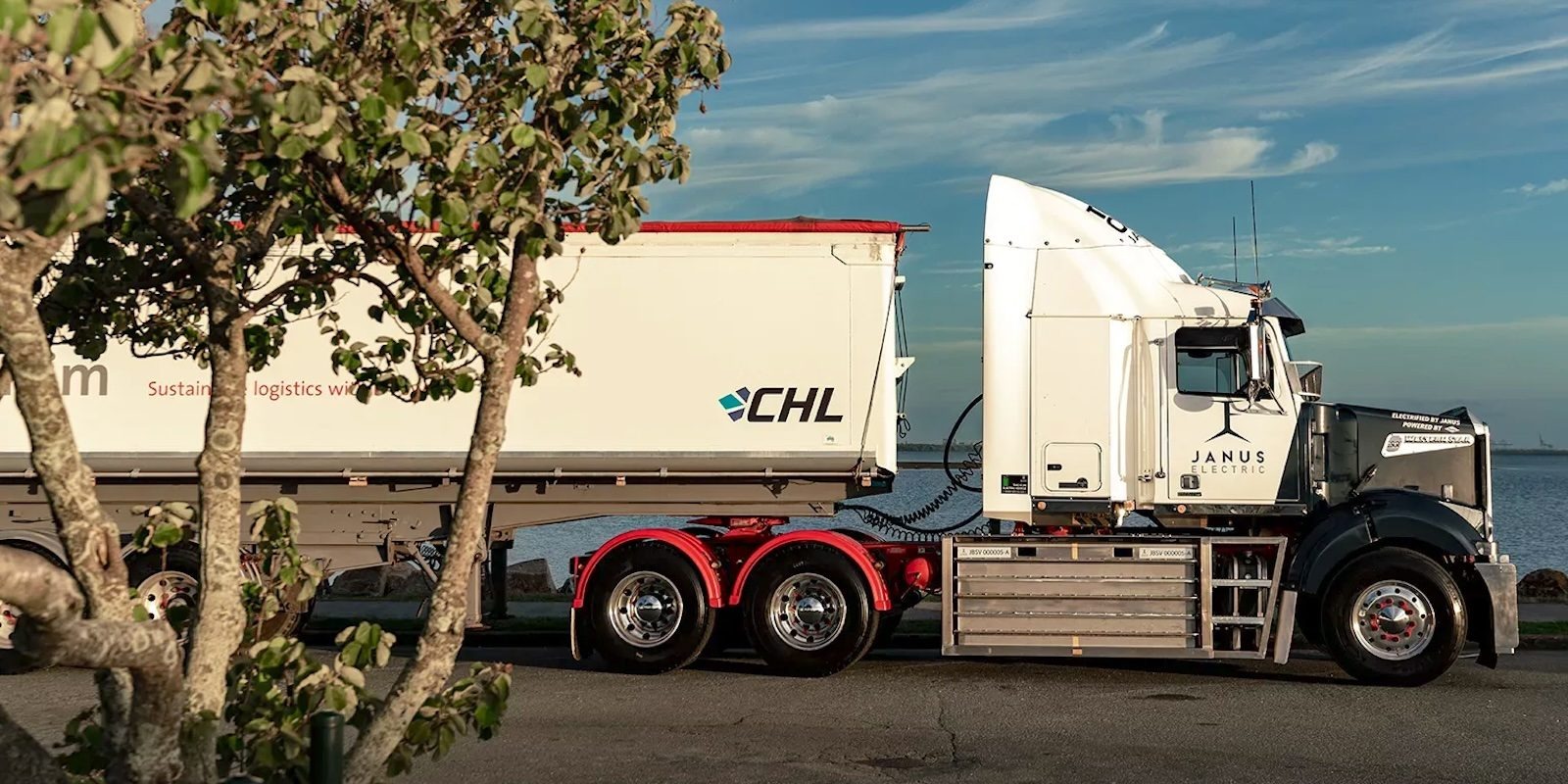
The Janus Electric Class 8 Glider EV Conversion converts heavy-duty diesel freight trucks into battery-swappable electric semi-trucks utilizing a single 480 hp electric drive system and modular side-mounted energy packs. Priced at a baseline conversion cost of $350,000 USD direct from Janus Electric—which drops to $184,000 USD net when combining maximum California HVIP and Port of Los Angeles voucher stacking—this conversion package targets regional freight carriers, port drayage operators, and logistics fleet managers seeking to eliminate diesel operating expenses without incurring multi-hour depot charging delays.
🛒 Where to Buy: Level 2 Portable EV Charger 240V
Editorial Note & Product Verification: The Cool Great Buys editorial desk independently verifies manufacturer technical specifications, cross-checks active retail availability across authorized sellers, and evaluates verified consumer reliability data before publishing product evaluations. All featured prices and promotions reflect active market rates at the time of publication.
- Level 2 Portable EV Charger 240V: View on Amazon
Click the link above to check current pricing, availability, and customer reviews on Amazon.
Historically speaking, electrifying heavy transport has remained bound to a strict tradeoff between battery mass, charging speed, and continuous operational uptime. While light-duty commercial delivery vehicles comfortably handle overnight depot charging, Class 8 regional hauling demands continuous wheel rotation to maintain operational profitability. The commercial trucking industry has long relied on glider chassis—rolling body and frame assemblies sold without a factory engine or transmission—to allow fleet operators to dropship their preferred internal combustion engines from suppliers such as Cummins or Detroit. Janus Electric’s core thesis relies on stepping directly into that established glider procurement model, substituting traditional diesel engines with a standardized electric drive unit and a removable battery housing assembly. Initial product disclosures and reporting were tracked via Electrek.
Until recently, the primary vulnerability in Janus Electric’s commercial trajectory was scaling hardware production to match its growing order pipeline. Having accumulated over 70 confirmed reservations across North America and Australia, the conversion specialist faced the manufacturing bottleneck common to early-stage transport firms: securing stable, high-capacity battery cell allocations. That supply constraint has now been addressed through a formal supply agreement with Canadian battery manufacturer Electrovaya. The deal includes an initial $26 million USD purchase order for custom Electrovaya lithium-ion battery packs, alongside a direct $1.4 million USD equity investment by Electrovaya into Janus Electric stock.
According to technical documentation published with this release, Electrovaya will support Janus Electric’s North American scaling efforts through its manufacturing footprint, which is set to expand significantly with a new lithium-ion cell, module, and pack production plant in Jamestown, New York. Scheduled to come online in 2027, the Jamestown facility is designed to meet Build America, Buy America (BABA) compliance standards, guaranteeing that fleet operators claiming US federal grants will comply with domestic sourcing mandates. This structural supply agreement provides the physical foundation necessary for Janus to fulfill commercial fleet deliveries across the United States and Canada.
State of the Category & What Changed
The Class 8 heavy-haul sector is experiencing a structural pivot driven by aggressive regulatory mandates and escalating diesel maintenance costs. In North America, incentive frameworks have accelerated the financial viability of zero-emission conversions. Fleet operators navigating regional routes are discovering that regulatory funding can absorb nearly half the initial hardware investment. A primary driver of this shift is the state of California, where combining the standard state incentives with port-specific support programs creates unprecedented capital relief for commercial transport companies.
Specifically, when fleet buyers combine California’s regional incentives with the Port of Los Angeles’ “Plus” funding tier, operators can access up to helped along in part by California’s HVIP Program vouchers worth up to $166,000 USD per vehicle. Additional federal backing, such as the EPA’s DERA grants, further offsets conversion expenditures. When analyzed alongside the massive fuel savings of electric propulsion over standard 6.5 mpg diesel semi-trucks, the total cost of ownership calculation shifts favorably toward electric conversions, particularly for high-mileage, predictable drayage corridors.
What changed with this announcement is the transition from localized prototype conversions to standardized industrial output. Previous attempts by independent engineering firms to offer aftermarket Class 8 electrification suffered from fragmented supply chains, where battery modules were retrofitted from disparate automotive excess stock. By standardizing on Electrovaya’s proprietary lithium-ion chemistry and cell geometry, Janus Electric establishes a uniform hardware baseline across all converted gliders, including popular square-nose Western Star chassis configurations preferred by traditional fleet owners.
Furthermore, Electrovaya’s equity participation signals an alignment of hardware roadmaps rather than a transactional vendor relationship. The integration of Electrovaya’s high-cycle-life ceramic separator cells provides Janus with energy storage units designed specifically for high-stress heavy vehicle operations. This technical alignment is essential for reassuring commercial lenders and fleet risk officers who view battery pack longevity and thermal stability as primary operational risks.
Generational Delta: The Engineering Upgrades That Matter
Analyzing the manufacturer spec sheet reveals that the Janus conversion ditches the conventional engine block, transmission, and fuel tanks in favor of a central electric motor rated at 480 hp (358 kW) continuous output. Power is supplied by standard 310 kWh lithium-ion battery modules mounted externally along the frame rails where side diesel tanks historically resided. Fleet configurations can accept up to two total packs—one mounted on each side of the chassis—yielding a maximum combined onboard energy capacity of 620 kWh.
In practice, this dual-pack configuration yields an operational loaded range of up to 370 miles under standard gross vehicle weight conditions. While fixed-pack electric Class 8 trucks rely entirely on stationary high-voltage charging networks, the Janus architecture offers dual replenishment pathways. The vehicle can be recharged via standard megawatt-capable DC fast charging in approximately 90 minutes, or the depleted battery packs can be physically swapped for fully Charged units in approximately 4 minutes using standard industrial machinery, functioning without requiring much in the way of specialized equipment beyond a heavy-duty lift mechanism.
The distinction matters here: battery swapping changes the duty-cycle mathematics for multi-shift trucking fleets. In a traditional two-shift or three-shift port drayage loop, a fixed-battery truck loses 1.5 to 3 hours per day to high-power fast charging, during which time the asset generates zero revenue. By reducing power replenishment to a 4-minute pit-stop procedure, the Janus conversion replicates the turnaround cadence of liquid diesel refueling. This architectural shift separates vehicle uptime from battery charging speed.
Historically speaking, earlier attempts at battery swapping in the commercial transit and passenger vehicle sectors—most notably Israel’s Better Place initiative in the early 2010s—failed due to massive capital expenditure requirements for automated robotics and a complete lack of vehicle standardization. Janus Electric avoids this pitfall by keeping the battery exchange mechanics simple and manual. The packs sit in exposed side bays using standard lock pins and heavy-duty power connectors, allowing fleet yards to execute module swaps using existing forklifts or yard cranes without constructing multi-million-dollar automated swap stations.
Everyday Usability Trade-Offs & Adoption Barriers
Despite the operational advantages of rapid battery swapping, real-world deployment presents distinct physical and financial trade-offs that fleet operations managers must evaluate. Chief among these is the compromise in tare weight. Carrying dual 310 kWh energy packs adds substantial hardware mass to the frame rails, increasing the overall curb weight of the vehicle compared to a standard unladen diesel tractor. Under US Department of Transportation regulations, which enforce strict 80,000 lb gross vehicle weight limits (with a 2,000 lb exemption for zero-emission vehicles), additional tractor mass directly reduces maximum cargo payload capacity.
Thermal management during high-stress operational cycles represents another engineering trade-off worth observing. Continuous heavy hauling across elevated ambient temperatures subjects side-mounted battery modules to intense thermal stress. Electrovaya’s cell chemistry utilizes proprietary ceramic separators designed to prevent thermal runaway, but the physical exposure of side-mounted packs makes them vulnerable to lateral collisions, road debris impact, and localized temperature spikes. Fleet maintenance departments will need to implement rigid visual inspection protocols for frame-mounted latching points and high-voltage connections.
Furthermore, the economic viability of the battery-swap model depends on maintaining a standardized pool of charged spare packs at designated regional hubs. If a fleet operator runs point-to-point interstate routes outside dedicated regional loops, the battery-swap advantage degrades entirely, forcing the truck to rely on its 90-minute DC fast-charging mode. Organizations operating non-linear long-haul routes or carrying weight-sensitive liquid bulk cargo should look elsewhere, as purpose-built fixed-battery or fuel-cell platforms offer better optimized chassis weight distribution for those specialized applications.
Finally, fleet technicians accustomed to maintaining mechanical Cummins, Detroit, or Volvo Penta diesels face a steep training curve. While removing the internal combustion engine eliminates oil changes, transmission rebuilds, and exhaust aftertreatment system maintenance (DEF/DPF), servicing 800V electrical architecture requires certified high-voltage safety gear, specialized diagnostic software, and dedicated safety bays within existing maintenance facilities.
Category Alternatives and Rival Solutions
To contextualize the commercial positioning of the Janus conversion, it must be evaluated alongside established OEM electric Class 8 options currently operating in North American freight corridors. The most direct factory-built competitor is the Freightliner eCascadia, priced at approximately $380,000 USD direct from Freightliner authorized dealers prior to state incentives. Evaluated in motor transport reviews by outlets like Car and Driver, the eCascadia features an integrated Detroit ePowertrain delivering up to 470 hp powered by a fixed battery system of up to 438 kWh. It achieves an operational range of approximately 230 miles and relies strictly on CCS Type 1 DC fast charging, requiring roughly 90 minutes to reach 80% capacity.
The engineering distinction between the Freightliner eCascadia and the Janus Electric conversion centers on chassis origin and downtime management. Freightliner offers an OEM-integrated cab and chassis built from the ground up on modern safety architectures, including active lane assist and advanced collision mitigation. However, its fixed battery layout means the vehicle must remain stationary during charging cycles. For fleets operating single-shift pickup and delivery routes, the eCascadia’s 230-mile range and integrated warranty offer lower operational risk, but for multi-shift continuous operations, its charging downtime presents a clear operational bottleneck.
A second major alternative in the heavy-haul sector is the Tesla Semi, which carries an estimated base price of $250,000 USD direct from Tesla for its 500-mile range variant. As documented in transport analyses by Edmunds, the Tesla Semi utilizes a tri-motor rear-axle drive architecture and a massive fixed battery pack estimated at near 850 kWh. It relies on Tesla’s proprietary Megawatt Charging System (MCS), capable of replenishing up to 70% range in 30 minutes when connected to dedicated high-power infrastructure.
While the Tesla Semi delivers superior energy efficiency, aerodynamic styling, and single-charge range, its primary commercial barrier remains charging infrastructure dependence and vehicle availability. Tesla’s MCS network requires heavy electrical grid interconnections that many regional fleet yards currently lack. In contrast, the Janus Electric model allows fleet operators to electrify existing, paid-off glider assets or low-cost glider frames, decoupling energy storage from the vehicle chassis while utilizing accessible forklift infrastructure for rapid power swaps at existing logistics hubs.
Final Trajectory Verdict: Future Outlook & Buying Advice
Janus Electric’s battery supply deal with Electrovaya elevates the company from an Australian conversion boutique to a credible player in the North American heavy transport transition. By securing a $26 million USD initial battery pipeline and backing it with domestic manufacturing capabilities coming to Jamestown, New York in 2027, Janus has resolved its most pressing supply chain liability. The inclusion of battery-swap functionality within a standardized Class 8 glider frame solves the operational downtime problem that continues to hinder fixed-battery commercial semi-trucks.
For fleet directors managing predictable drayage, port logistics, or regional hub-and-spoke routes, the financial and operational math favors the Janus conversion model—particularly within high-incentive regions. Taking advantage of the combined $166,000 USD in California HVIP and Port of Los Angeles subsidies drops the net entry price of the conversion to $184,000 USD direct from Janus Electric, bringing hardware acquisition costs into near-parity with new diesel tractors while delivering immediate operational fuel savings.
However, conservative fleet buyers should approach deployment with a phased strategy. Organizations should initially commission small pilot units along defined regional loops where forklift-assisted battery swapping can be closely managed within existing depot footprints. Until Electrovaya’s domestic Jamestown facility achieves full volume production in 2027, high-volume fleet rollouts will remain bound to initial battery import schedules. For regional freight operations needing continuous wheel rotation today, the Janus Electric conversion represents a pragmatic, field-serviceable bridge between legacy diesel gliders and the zero-emission transport grid.