

State of the Category & What Changed
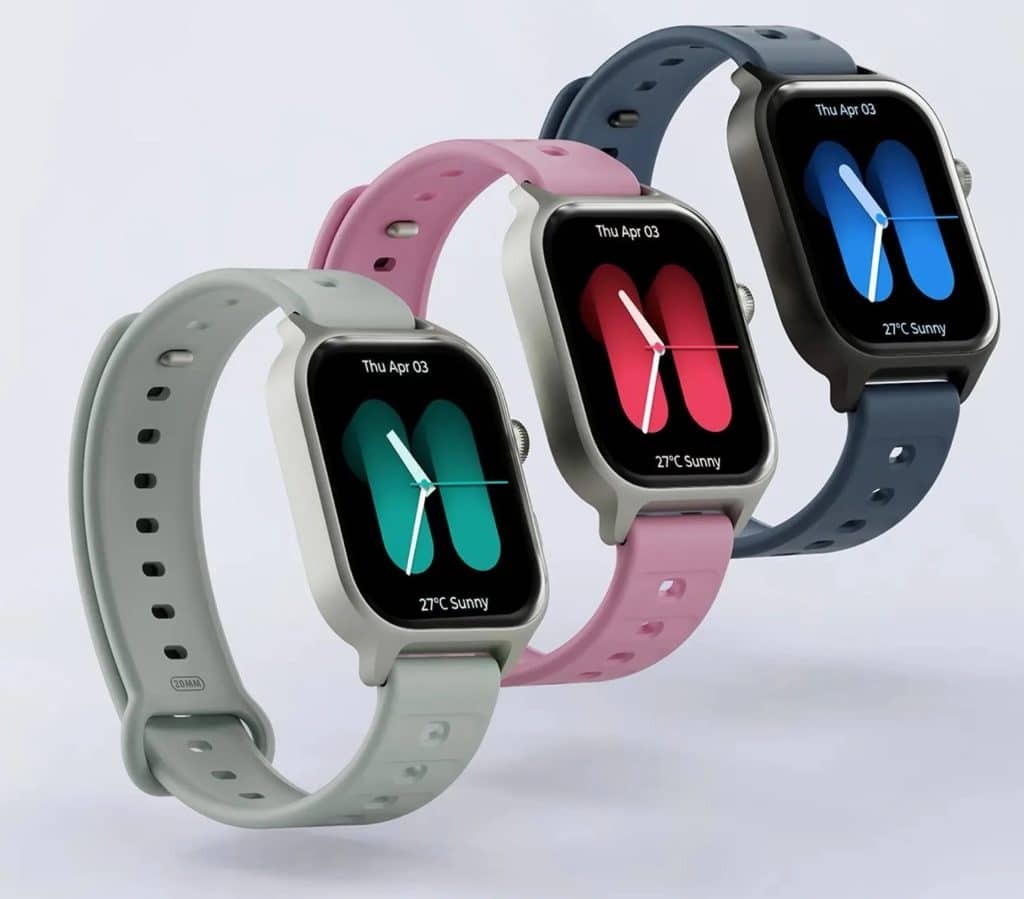
Budget fitness trackers usually suffer from terrible software. Manufacturers toss cheap optical sensors into plastic shells and rely on rudimentary step counters. The Moto Watch Fit 2attempts to flip that script. It is a lightweight, rectangular fitness watch featuring an RTOS operating system, dual-frequency GPS, and professional recovery algorithms licensed directly from Polar. It retails at €119 EUR (approximately $130 USD) direct from Motorola across European, North American, Latin American, Middle Eastern, and Asia-Pacific markets. This device targets cost-conscious athletes who demand serious recovery data without paying premium sports watch prices.
🛒 Where to Buy: Moto Watch Fit
Editorial Note & Product Verification: The Cool Great Buys editorial desk independently verifies manufacturer technical specifications, cross-checks active retail availability across authorized sellers, and evaluates verified consumer reliability data before publishing product evaluations. All featured prices and promotions reflect active market rates at the time of publication.
- Moto Watch Fit: View on Amazon
Click the link above to check current pricing, availability, and customer reviews on Amazon.
The fitness wearable landscape in 2026 has hit a distinct fork in the road. On one side sit full smartwatches that drain their batteries in 24 hours. On the other side sit dumb activity bands that offer meaningless health numbers. Motorola took a hybrid approach for this second-generation release. According to a Gadgets & Wearables report, the company chose to preserve lightweight hardware while completely revamping the underlying health intelligence. Rather than burning millions in research and development to build proprietary fitness metrics, Motorola licensed Polar’s proven algorithmic suite.
This software pivot represents a significant shift for mass-market budget wearables. When Motorola announced their partnership with Polar earlier in the year, initial integrations were modest. The Fit 2 (also marketed as the Moto Watch 27 in specific regions) expands that integration into a comprehensive biometric tracking system. It brings high-end training metrics to a device priced comfortably under $150 USD. Hardware changes are subtle on the surface. Software changes inside the casing alter the value proposition entirely.
Generational Delta: The Engineering Upgrades That Matter
Comparing the new model against the original Moto Watch Fit reveals a classic trade-off in wearable engineering. The original version featured a slightly larger 1.9-inch screen. However, it capped out at a dim 1,000 nits of peak brightness. The new Fit 2 steps down to a 1.85-inch gOLED panel. Crucially, display brightness leaps to 1,500 nits. Outdoor legibility in direct sunlight improves drastically. Corning Gorilla Glass 3 continues to protect the glass panel. The hardware maintains its 5ATM water resistance rating alongside an IP68 dust and water ingress certification.
Positioning accuracy gets a major hardware upgrade. Motorola replaced the original basic GPS with a dual-frequency L1/L5 satellite receiver. Dual-frequency GPS locks onto multiple satellite bands simultaneously. This reduces signal drift when running beneath dense tree cover or near tall city buildings. Motorola also added an onboard microphone and speaker. Users can now answer Bluetooth phone calls directly from the wrist when tethered to a companion phone. Voice assistant integration is also planned. Motorola’s Qira AI assistant will eventually launch on the device for users paired with compatible Motorola smartphones.
The real story lies in the software payload. The first-generation model provided simple heart rate, blood oxygen (SpO2), basic sleep, and elementary workout logging. The Fit 2 integrates Polar’s advanced athletic engine. The suite includes Sleep Plus Stages for sleep phase breakdown and Nightly Recharge for autonomic nervous system (ANS) recovery tracking. It includes Running Index to measure aerobic running performance over time. It adds Active Intensity Zones, Energy Sources to estimate carbohydrate, fat, and protein consumption during workouts, Smart Calories, Daily Activity Goals, and Daily Activity Scores.
In Motorola press announcement materials, the engineering team highlights the addition of Polar’s Nightly Recharge and Running Index features to justify the generation skip. On paper, acquiring elite Polar recovery analytics for €119 EUR sounds like an unbelievable deal. In practice, algorithms are only as good as the raw sensor data fed into them. A deep dive into the official original Moto Watch Fit spec sheet shows that while the optical heart rate sensor layout remains physically similar, processing overhead has grown substantially to handle continuous ANS data collection. Marketing promises elite recovery tracking, but real-world accuracy still hinges on how snugly that lightweight plastic chassis stays glued to your wrist during intense workouts.
Everyday Usability Trade-Offs & Adoption Barriers
Upgrading internal hardware always extracts a toll on battery longevity. Motorola rates the the hardware 2 for up to 12 days of battery life between charges. That marks a 25 percent reduction compared to the 16 days offered by the previous generation. The drop is easy to explain. Driving a 1,500-nit screen takes serious power. Processing dual-frequency GPS signals consumes extra juice. Running continuous background heart rate algorithms for Polar Nightly Recharge metrics taxes the battery further. Powering a speaker and microphone for wrist calls burns through remaining reserves.
Despite the battery drop, 12 days remains an impressive figure for an active fitness watch. Motorola achieves this efficiency by sticking with its lightweight Real-Time Operating System (RTOS). Wear OS smartwatches rarely survive 48 hours away from a wall outlet. However, RTOS brings rigid functional barriers. You cannot install third-party apps. You cannot reply natively to complex messaging threads using a full keyboard. You cannot store large offline music libraries directly on the watch. The device operates as a dedicated health sensor hub and notification mirror rather than a wrist-bound computer.
Physical compromises are also evident in the wrist housing. The rectangular casing remains exceptionally lightweight, which feels great during overnight sleep tracking. However, the plastic-heavy construction lacks the premium tactile feel of aluminum or stainless steel competitors. The glass top panel handles accidental bumps fine, but the frame lacks elevated bezels to protect against edge impacts. If you scrape the side of the watch against a concrete wall, the casing will show scratches instantly.
Software reliance on specific mobile phone setups presents another barrier. While general fitness data syncs across standard Android and iOS devices using the companion app, upcoming features like the Qira AI assistant require a connected Motorola smartphone. Buyers using Samsung or Apple hardware will miss out on wrist-based voice AI commands. You must accept that you are buying a streamlined fitness tracker with basic call capabilities, not an expansive app platform.
Category Alternatives and Rival Solutions
The budget fitness tracking market is fiercely competitive. Buyers looking at the €119 EUR price point have strong alternative options that prioritize different feature combinations. One direct competitor is the Amazfit Active, priced at $109.99 USD on Amazon. The Amazfit Active features a crisp 1.75-inch AMOLED screen, built-in GPS, Bluetooth calling, and proprietary Readiness recovery scoring. Amazfit delivers up to 14 days of battery life under typical use. However, Amazfit relies on its in-house health algorithms, which lack the decades of scientific validation that Polar brings to Motorola’s software platform. Athletes who prioritize proven heart-rate algorithms will favor the the device 2, while users wanting a more polished, customizable software interface may lean toward Amazfit.
Another major competitor in this form factor is the Fitbit Charge 6, available for $159.95 USD on Amazon. Fitbit offers advanced health hardware, including EDA stress sensors and an ECG sensor for electrocardiogram readings. It also integrates directly with Google Maps and Google Wallet. However, Fitbit hides its most detailed recovery metrics and historical trends behind a mandatory Fitbit Premium monthly subscription. The the unit provides Polar’s Nightly Recharge and Running Index features completely free without subscription paywalls. Furthermore, the Fitbit Charge 6 features a much smaller screen and lacks Bluetooth wrist-calling capabilities.
When evaluated against both rivals, the the hardware carves out a distinct niche. It beats the Amazfit Active on algorithm credibility thanks to Polar’s athletic tracking software stack. It beats the Fitbit Charge 6 on display size, voice calling hardware, and long-term value by eliminating recurring software subscription fees. The trade-off is clear: you accept slightly bulkier rectangular dimensions and reduced battery life compared to the previous model to gain superior recovery metrics and outdoor screen visibility.
Final Trajectory Verdict: Future Outlook & Buying Advice
Motorola’s decision to partner with Polar is a smart strategic move for budget wearables. Rebuilding biometric software from scratch is an unnecessary gamble for hardware makers. By licensing Polar’s established Nightly Recharge, Sleep Plus Stages, and Energy Sources engines, Motorola instantly elevated its RTOS wearable platform. The hardware loss of four battery days—dropping from 16 days to 12 days—is a acceptable penalty for gaining dual-frequency GPS, a 1,500-nit screen, and wrist calling capabilities. It proves that budget fitness watches can deliver serious recovery analysis without forcing users into mandatory monthly subscription tiers.
Buy the the device if you want accurate, science-backed recovery data, reliable outdoor GPS tracking, and clear screen visibility for roughly $130 USD. Skip it if you require a true smartwatch with third-party app stores, offline music storage, or premium metal casing materials. For budget-conscious runners and fitness enthusiasts who value battery longevity over app stores, Motorola’s latest offering delivers tremendous real-world performance for the money.