

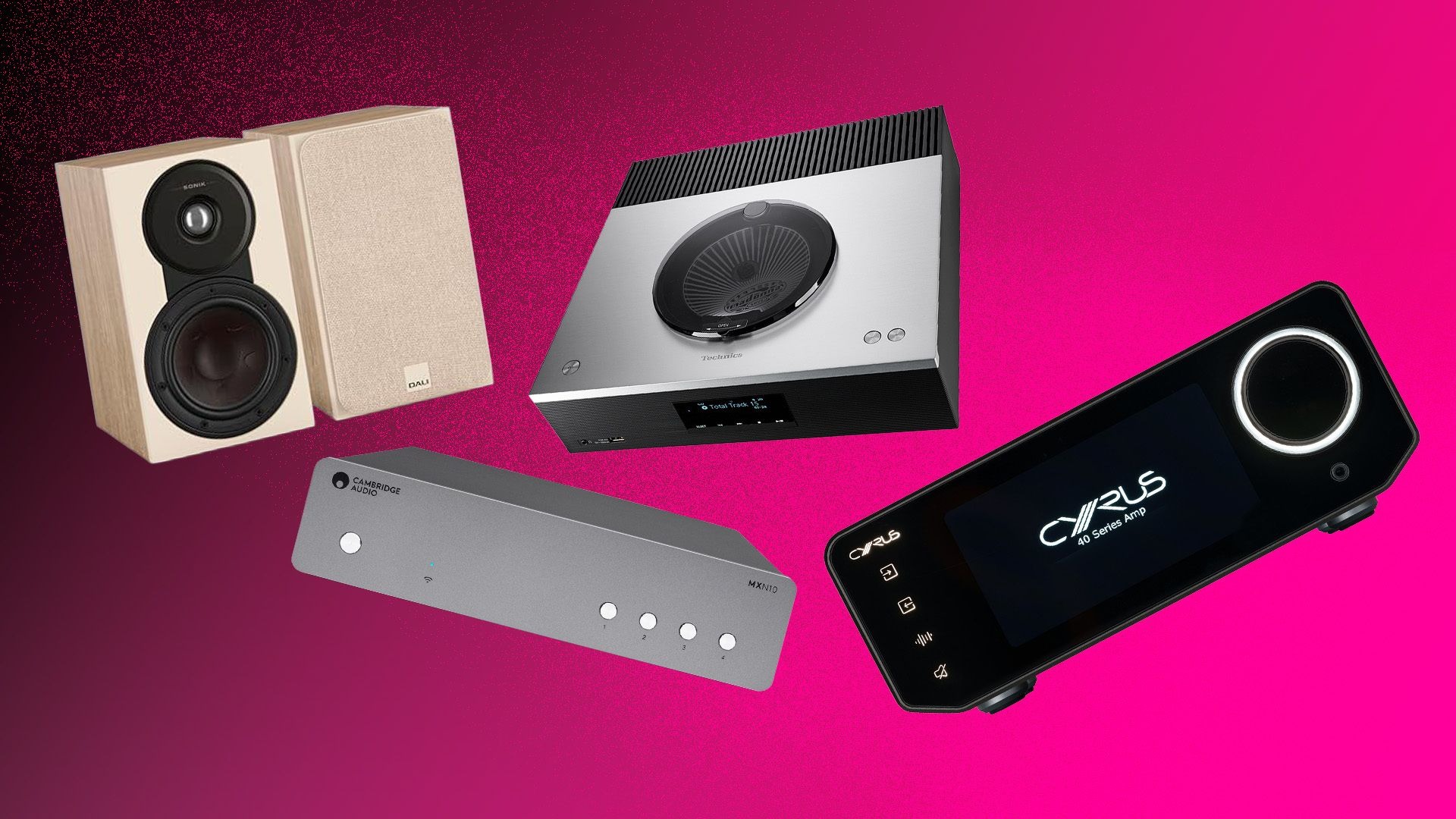
The Cyrus 40 ST is a dedicated high-resolution network streamer housed in an extruded aluminum half-width chassis designed to process digital audio streams up to 24-bit/192kHz across local networks and commercial streaming platforms. Currently priced at $2,995 USD on Amazon and authorized specialty audio channels, the component targets discerning audiophiles seeking low-jitter digital transport and modular upgrade capability within a dedicated hi-fi separates system. Awards and early seasonal promotional cycles, the hi-fi separates market is undergoing a structured repricing that merits thorough technical and economic evaluation.
🛒 Where to Buy: Cyrus
- Cyrus: View on Amazon
Click the link above to check current pricing, availability, and customer reviews on Amazon.
Upfront Investment & 2-Year Total Cost of Ownership
Acquiring the Cyrus 40 ST requires an initial capital outlay of $2,995 USD for the standalone streaming unit. However, evaluating this component solely on its primary sticker price ignores the reality of high-fidelity separates systems. In practice, achieving optimal performance from a digital source component of this caliber necessitates complementary infrastructure. A realistic baseline configuration requires high-quality balanced XLR interconnects, costing approximately $150 USD, along with a shielded Cat 6A Ethernet run to eliminate Wi-Fi latency during high-bitrate playback. Furthermore, to unlock the full engineering potential of the Cyrus 40 ST, many owners will inevitably consider the optional Cyrus 40 PSU outboard power supply, which carries an additional retail cost of $1,495 USD. Initial product disclosures and reporting were tracked via Whathifi.
When factoring in operational overhead over a 24-month ownership cycle, ongoing service costs remain modest but non-zero. A high-resolution streaming subscription, such as Tidal HiFi Plus or Qobuz, adds roughly $12.99 USD per month, accumulating to $311.76 USD over two years. Power consumption for the streamer itself is minimal, drawing approximately 15W during active playback and less than 0.5W in standby, contributing negligible utility expenses. Thus, the total two-year cost of ownership ranges from approximately $3,460 USD for the standalone setup with streaming software to $4,955 USD for a fully expanded system featuring the external power supply and premium cabling. The distinction matters here: unlike consumer wireless speakers that face rapid battery degradation and software obsolescence, modular hi-fi separates retain substantial operational longevity, amortizing their higher upfront investment across a decade or more of service.
To contextualize this financial commitment within the broader audio hardware landscape featured in early Black Friday price reductions, prospective buyers should evaluate where their system needs genuinely lie. For entry-level digital playback, streamlined components like the Cambridge Audio MXN10offer network streaming functionality at a significantly lower entry price of $499 USD on Amazon. Similarly, space-constrained listeners seeking an all-in-one amplifier, CD, and streaming hub might look toward the Technics+SA-C600″ target=”_blank” rel=”noopener”>Technics SA-C600, priced at $1,099 USD on Amazon. However, for listeners building a reference-grade system around discrete separates, the the hardware occupies a distinct tier defined by mechanical isolation, power supply refinement, and long-term modularity.
What You Actually Get: Core Features & Build Specs
The engineering architecture of the the equipment reflects a dedicated focus on digital signal integrity and chassis damping. Housed in Cyrus’s signature die-cast aluminum half-width enclosure, the unit features an anodized front panel anchored by a high-contrast glass display screen. Internal conversion is handled by an ESS ES9039Q2M SABRE 32-bit DAC chip, implemented alongside custom digital clocking circuitry designed to minimize phase noise and timing jitter. According to technical documentation published with this release, the internal power supply layout completely isolates digital processing clocks from analog output stages using multi-stage linear regulation, suppressing parasitic electrical interference before it reaches line-level outputs.
Connectivity options on the rear panel are comprehensive for a dedicated streamer. The the gear provides both unbalanced RCA and balanced XLR analog outputs, alongside optical and coaxial digital inputs and outputs. Network connectivity is managed via an RJ45 Ethernet port or dual-band Wi-Fi. Software orchestration is driven by the established BluOS operating system, granting native access to high-resolution streaming platforms, internet radio, and local network-attached storage (NAS) drives supporting PCM audio files up to 24-bit/192kHz as well as MQA decoding. Below is a breakdown of the core hardware specifications verified for this unit:
- Digital-to-Analog Converter: ESS ES9039Q2M SABRE 32-bit DAC
- Streaming Engine: BluOS multi-room high-resolution platform
- Analog Outputs: 1x Stereo RCA, 1x Stereo Balanced XLR
- Digital I/O: 1x Optical Input, 1x Coaxial Input, 1x Optical Output, 1x Coaxial Output
- Network Connectivity: Gigabit RJ45 Ethernet, Wi-Fi 5 (802.11ac)
- Chassis Dimensions: 215 x 75 x 365 mm (Half-width die-cast aluminum)
- Power Supply Port: Dedicated multi-pin connection for optional Cyrus 40 PSU
Historically speaking, early network streaming adapters from the mid-2010s were plagued by unreliable UPnP handshake protocols, sluggish app interfaces, and unrefined switching power supplies that injected high-frequency switching noise directly into analog preamp stages. The the item directly addresses these historical engineering trade-offs. By deploying BluOS software architecture alongside a heavily shielded internal transformer, the streamer eliminates the buffering dropouts and harsh high-frequency grain that characterized previous generations of digital network players. This refinement extends across the broader award-winning component ecosystem, where high-density digital playback works alongside precision analog components like the Nagaoka MP-200moving magnet phono cartridge (available for $450 USD on Amazon) and dedicated disc transports such as the Cyrus 40 CDplayer, establishing a consistent sonic baseline across diverse media formats.
Hidden Costs, Ecosystem Dependencies & Fine Print
Despite its technical merits, operating the the product introduces specific software dependencies and fine-print operational constraints that prospective buyers must account for. Primary control of playback, software routing, and firmware updates relies entirely on the BluOS application running on iOS, Android, macOS, or Windows. While the front panel features a clean visual interface displaying track metadata and system status, physical control buttons on the chassis are minimal. Users who prefer full hardware control without relying on a smartphone or tablet may find this app-centric workflow restrictive over extended listening sessions.
Examining the fine print of the hardware documentation reveals critical networking details. While the device includes built-in dual-band Wi-Fi, uncompressed 24-bit/192kHz FLAC streaming across local network drives requires a stable wired Ethernet link to prevent dropouts caused by wireless network congestion or local RF interference. Furthermore, while the unit integrates smoothly into multi-room BluOS ecosystems, it does not support native AirPlay 2 transmission or Chromecast Built-in out of the box, forcing users into the BluOS environment or Bluetooth connectivity for basic device casting.
Ecosystem dependencies also extend to secondary components within early holiday discount offerings. For audiophiles looking at compact system additions, the portable Chord Mojo 2DAC/headphone amplifier (priced at $650 USD on Amazon) retains a legacy Micro-USB charging port alongside its USB-C data input, requiring users to maintain duplicate cable types. Similarly, selecting compact passive loudspeakers like the Dali Sonik 1standmount speakers (available for approximately $399 USD on Amazon) requires pairing with an external integrated amplifier like the matching Cyrus 40 AMP, increasing total system power requirements and rack space consumption. Grounding management across multi-box component stacks also requires attention; placing multiple linear power supplies in close proximity can induce 60Hz hum if clean electrical isolation is not maintained across all interconnect ground loops.
Smarter Alternatives at This Price
When evaluating digital streamers in the $1,000 USD to $4,000 USD price bracket, buyers should weigh the the model against established market competitors that offer differing architectural philosophies, user interfaces, and feature sets.
The first notable competitor is the Eversolo DMP-A6, which carries a retail price of $859 USD on Amazon. The Eversolo presents a stark contrast in design philosophy, featuring a prominent 6-inch color touchscreen display, dual ESS ES9038Q2M DAC chips, and an internal NVMe M.2 SSD slot supporting local music storage up to 4TB. Its primary advantage lies in user interface interactivity and direct local storage expansion at less than one-third the cost of the the hardware. However, from an engineering trade-off perspective, the Eversolo utilizes a custom Android-based operating system that may face software lifecycle challenges compared to the specialized BluOS platform. Furthermore, the the equipment delivers a measurably superior analog output stage with lower noise floor characteristics and offers a dedicated hardware upgrade path via its outboard power supply connection, a feature entirely absent on the Eversolo.
At the upper end of the component spectrum sits the Naim ND5 XS 2, available for $3,999 USD on Amazon. The Naim unit represents an alternative high-end approach, utilizing Naim’s proprietary NP800 streaming board, low-voltage differential signaling (LVDS), and a custom toroidal transformer within a full-width brushed aluminum chassis. The Naim streamer excels in rhythmic drive and dynamic impact, appealing to listeners who prioritize timing precision. However, the ND5 XS 2 lacks a front-panel display screen altogether, forcing total reliance on external control apps, and commands a $1,004 USD price premium over the the gear. The distinction matters here: the the item strikes a highly balanced middle ground, offering a crisp front display, modular power upgrades, and reference-grade DAC conversion at a significantly lower price point than traditional full-size high-end British separates.
Final Buyer Verdict: Is the Investment Worth It?
The the productstands as an exceptionally refined digital source component that successfully balances traditional audio engineering with modern network flexibility. Its combination of an ESS ES9039Q2M SABRE DAC, rigid mechanical damping, and the robust BluOS software platform delivers clean, authoritative sonic performance free from digital harshness. While the initial investment of $2,995 USD on Amazon is substantial, its modular upgrade path via the optional 40 PSU ensures that the unit can evolve alongside a expanding high-fidelity system rather than requiring premature replacement.
For buyers seeking an all-in-one desktop solution or interactive touchscreen navigation, alternative options like the touchscreen-equipped Eversolo DMP-A6or self-contained all-in-one systems like the