

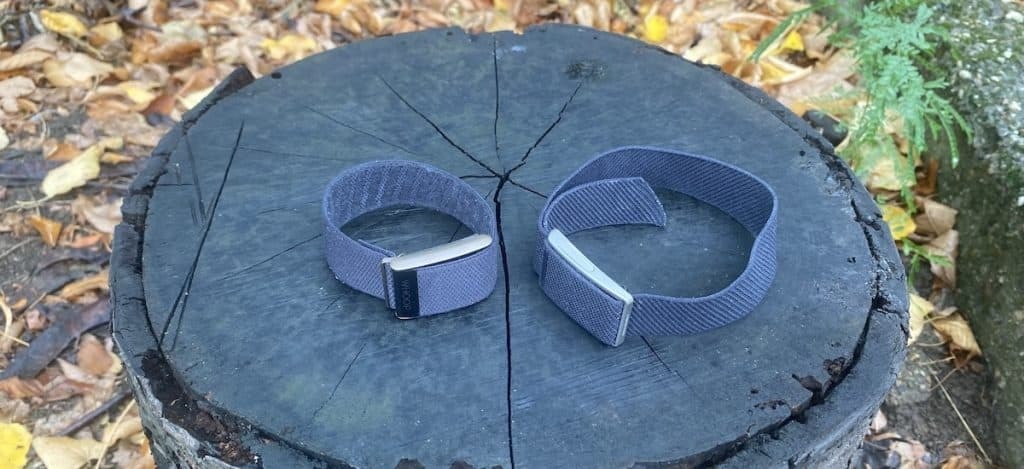
The Speediance Strap is a screenless fitness wearable designed for continuous biometric tracking, retailing at $129 USD on the official Speediance website for the standard stainless-steel edition and $159 USD for the titanium Strap Pro. Built for data-driven athletes and everyday wellness enthusiasts who prefer an unobtrusive form factor without display distractions, this newcomer challenges the long-standing market dominance of screenless health bands by introducing advanced thermal monitoring and an upfront ownership model.
🛒 Where to Buy: Featured Deals
Editorial Note & Product Verification: The Cool Great Buys editorial desk independently verifies manufacturer technical specifications, cross-checks active retail availability across authorized sellers, and evaluates verified consumer reliability data before publishing product evaluations. All featured prices and promotions reflect active market rates at the time of publication.
- Speediance Strap: View on Amazon
- Speediance Strap Pro: View on Amazon
- Whoop 5.0: View on Amazon
Click any link above to check current pricing, availability, and customer reviews on Amazon.
When unboxing the standard stainless-steel variant, users immediately notice the minimalist aesthetic that defines modern screenless fitness hardware. There are no distracting notifications, vibrating alerts for incoming text messages, or glaring touchscreens to contend with during high-intensity training sessions. Instead, the focus remains squarely on collecting continuous biometric streams that feed into the companion mobile application. This philosophy appeals strongly to marathon runners, CrossFit competitors, and weightlifters who want to eliminate digital noise from their wrists while maintaining a granular log of their daily strain, cardiovascular load, and overall recovery progression.
State of the Category & What Changed
For years, the screenless fitness tracker category has become a lot busier as consumers pivot away from notification-heavy smartwatches in favor of discrete biometric data collection. The arrival of the Speediance Strap signals a broader shift in wearable architecture, moving past basic step counting and conventional sleep stages into deeper physiological modeling. Until recently, buyers looking for a continuous, display-free health band had very few alternatives that did not lock them into rigid, high-cost subscription ecosystems. Initial product disclosures and reporting were tracked via Gadgetsandwearables.
Speediance, a brand better recognized for its connected home gym systems, enters this competitive landscape with a fundamentally different pricing and architectural philosophy. By offering the base Speediance Strapat $129 USD and the upgraded Speediance Strap Proat $159 USD direct from the manufacturer, the company targets performance-minded buyers who want continuous strain and recovery metrics without paying a perpetual software ransom. This hardware release alters the market calculus for endurance athletes who want granular analytics without committing to recurring annual fees.
The historical tension in the wearable market has always revolved around the hidden costs of software infrastructure. Traditional industry titans built entire business models around recurring membership tiers, convincing consumers that ongoing server costs justified charging upwards of three hundred dollars every single year just to unlock their own physiological data. By disrupting this paradigm with an outright hardware purchase model, Speediance invites a much broader demographic of fitness enthusiasts into the ecosystem. Users who previously abandoned smart bands due to subscription fatigue are now finding a viable path toward long-term data collection without incurring endless monthly or annual charges.
Generational Delta: The Engineering Upgrades That Matter
Examining the technical specifications reveals that Speediance is not merely copying existing hardware formulas. While most contemporary wearables stop at surface skin temperature measurements, the Speediance Strap incorporates sophisticated heat-flux sensing, skin temperature metrics, and advanced physiological modeling first showcased at IFA 2026. Utilizing underlying Calera technology supplied by the Swiss firm greenteg, the device estimates core body temperature to drive actionable training insights rather than letting raw data sit statically in a mobile app graph.
This thermal hardware feeds directly into specialized software features designed to optimize training timing and monitor thermal strain. Peak Window evaluates core temperature alongside circadian rhythms to pinpoint optimal windows for high-intensity exercise, while Warm-Up Readiness tracks thermal adaptation during the initial minutes of exertion, and Heat Load Monitoring flags dangerous thermal strain in real time. Stepping up to the $159 USD Pro model further expands the sensor suite by integrating an electrodermal activity (EDA) sensor to improve stress tracking, all while swapping the stainless-steel frame for a lightweight titanium build that drops the total weight from 28 grams down to just 21 grams.
Beneath the surface enclosure, the sensor array relies on high-precision optical photoplethysmography (PPG) alongside multi-wavelength LEDs to measure heart rate variability (HRV), resting heart rate, and blood oxygen saturation. During intense cardiovascular workouts—such as threshold cycling intervals or long-distance running—the optical sensors maintain a secure lock against the wrist, minimizing motion artifacts through advanced algorithmic filtering. When compared against chest strap monitors, the unit tracks pulse rates with commendable fidelity, though sudden anaerobic surges can still exhibit minor smoothing typical of wrist-worn optical architectures.
Everyday Usability Trade-Offs & Adoption Barriers
Hardware miniaturization always demands physical compromises, and the Speediance Strap handles power delivery through a conventional magnetic charging dock. This design choice means users must physically remove the tracker during charging sessions, interrupting continuous 24/7 data logging. While the device boasts a robust battery life rated for up to 14 days on a single charge, the removal requirement contrasts sharply with modular competitors that utilize slide-on wireless power packs allowing uninterrupted wear during replenishment cycles.
Material choices and sensor omissions also define the daily wear experience. The base $129 USD model relies on a stainless-steel chassis, which adds noticeable heft compared to the 21-gram titanium Pro variant. Furthermore, hardware purists tracking advanced cardiovascular diagnostics should note that the Speediance ecosystem lacks specialized clinical tools such as electrocardiogram (ECG) monitoring or dedicated blood pressure insights. Buyers prioritizing medical-grade cardiovascular tracking over thermal load analysis will need to weigh these hardware omissions against the upfront cost savings.
Ergonomically, the band utilizes a breathable, elasticized fabric strap that wicks away sweat during strenuous exercise sessions. Unlike rigid silicone bands that trap moisture and cause skin irritation during humid summer runs, the woven strap dries quickly and distributes pressure evenly across the wrist circumference. However, removing and re-threading the band through its adjustment buckle can occasionally feel cumbersome when swapping the device between wrists or cleaning the casing after particularly grueling workouts. The magnetic charging cable snaps securely onto the rear contact points, but users must ensure the contacts remain free of salt residue and sweat buildup to guarantee uninterrupted power transfer.
Category Alternatives and Rival Solutions
The screenless biometric band market is anchored by established ecosystem leaders, most notably the Whoop band available on Whoop’s website. The Whoop 5.0matches the Speediance endurance benchmark with a battery life rated for 14-plus days, alongside advanced hardware additions like the Whoop MG tier featuring ECG and Blood Pressure Insights. However, this clinical-grade maturity comes with a mandatory subscription model in the US, where pricing spans from $199 USD per year for the Whoop One tier up to $359 USD per year for the comprehensive Life membership, wrapping hardware costs directly into the recurring software fee.
For users seeking a display-free health tracking experience without subscriptions, alternative options include the Amazfit Band 7priced around $49.99 USD on Amazon, though it includes a small AMOLED screen and lacks the advanced thermal modeling found in specialized recovery bands. Another popular screenless alternative is the Fitbit Inspire 3retailing for roughly $99.95 USD on Amazon, which offers exceptional sleep and heart rate tracking but similarly misses out on heat-flux core temperature sensing and continuous electrodermal activity monitoring. These alternatives highlight the distinct trade-off between mature software ecosystems, display inclusions, and upfront hardware ownership costs.
When evaluating these ecosystem rivals against the Speediance hardware, the choice ultimately boils down to a financial and analytical calculus. Competitors like Whoop offer extensive community features, team leaderboards, and polished third-party app integrations, but those perks require accepting an indefinite financial commitment. Conversely, choosing the Speediance hardware means accepting a slightly less mature software interface in exchange for complete financial independence from recurring subscription fees. For budget-conscious endurance runners and strength athletes who care strictly about raw physiological metrics—such as strain scores, core body temperature fluctuations, and sleep architecture—the upfront ownership model presents an exceptionally compelling value proposition.
Final Trajectory Verdict: Future Outlook & Buying Advice
The Speediance Strap successfully carves out a distinct technical niche in a crowded wearables market by prioritizing advanced thermal modeling and an accessible upfront pricing model. By refusing to lock core health features behind a perpetual subscription wall, Speediance has delivered a compelling alternative for athletes who want deep physiological recovery data without ongoing financial commitments. While it lacks clinical-grade additions like ECG sensors and requires removal during magnetic dock charging, its innovative core-temperature features make it a formidable challenger to incumbent ecosystem subscriptions.
For early adopters and data-focused fitness enthusiasts currently evaluating their next wearable upgrade, purchasing the $159 USD Speediance Strap Pro offers an ideal balance of lightweight titanium comfort and advanced stress tracking. If future software iterations expand third-party app integrations and refine sleep-staging algorithms, this hardware platform could permanently alter how consumers expect to pay for continuous fitness analytics. For now, immediate adoption makes financial and functional sense for anyone eager to escape recurring membership fees while tracking advanced thermal strain.
Ultimately, the long-term viability of this device will depend on Speediance’s commitment to continuous software refinement and firmware updates. As rivals introduce increasingly sophisticated biometric sensors, the ability to interpret raw thermal data into meaningful, actionable training recommendations will dictate whether this hardware platform achieves mainstream adoption. For athletes willing to embrace a newcomer in the continuous health tracking space, the investment delivers impressive returns in both physical comfort and financial savings.