

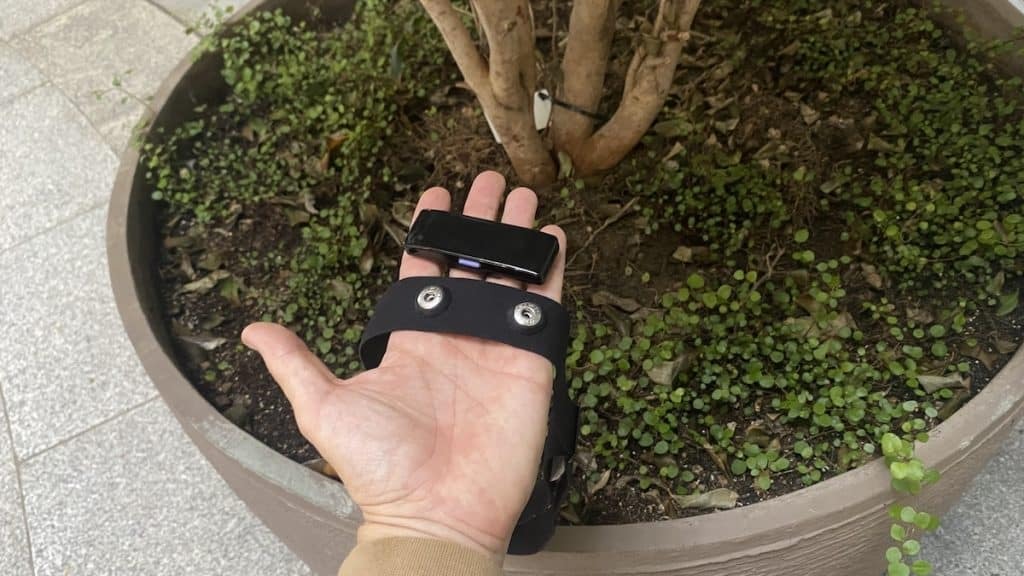
The Fourth Frontier X3 ECG chest strap, available via Fourth Frontier’s website, is built specifically for endurance athletes, runners, and cyclists requiring continuous electrical heart monitoring and advanced physiological strain analysis without constant charging intervals. Initial launch stock is shipping directly from manufacturer distribution channels ahead of broader retail availability, positioning the hardware for serious athletes who prioritize granular cardiovascular metrics over casual step counting.
🛒 Where to Buy: Fourth Frontier X3
- Fourth Frontier X3: View on Amazon
Click the link above to check current pricing, availability, and customer reviews on Amazon.
Evaluating this release requires looking past standard consumer fitness marketing to inspect the actual component physics and firmware choices. Fourth Frontier’s iterative hardware strategy has consistently focused on ECG-based training over optical wrist sensing. With this latest release, the engineering team has made deliberate trade-offs to address historical power consumption bottlenecks while streamlining the physical chassis for long-duration workouts. Initial product disclosures and reporting were tracked via Gadgetsandwearables, highlighting how iterative improvements in firmware efficiency can drastically change the daily user experience.
Core Disclosure & Hardware Announcement
The Fourth Frontier X3 arrives as the direct successor to the Frontier X2, maintaining the familiar slim chest-worn profile while shedding physical bulk. The module measures 73 x 24 x 13 mm and weighs precisely 23 grams, shaving 2 grams off the previous iteration’s 25-gram footprint. This lightweight sensor attaches to a wide elastic chest strap designed to sit flat against the sternum during high-intensity training sessions such as marathon running and interval cycling. When you handle the unit, the reduction in weight is immediately apparent, minimizing any tendency for the strap to bounce or slide down during prolonged, sweaty efforts in humid conditions.
According to technical documentation published with this release, the primary architectural shift involves the complete deprecation of the small status display screen found on earlier models. While the physical glass panel remains embedded in the housing shell, it no longer activates or illuminates. This hardware modification directly impacts power draw, allowing the internal battery architecture to support unprecedented runtimes for a dedicated chest-worn electrocardiogram monitor. By eliminating power delivery to an active screen element, the engineering team successfully shifted energy allocation entirely toward data processing, telemetry storage, and robust wireless transmission.
Furthermore, the physical construction utilizes a rugged, moisture-resistant polymer shell designed to withstand aggressive sweat accumulation and adverse weather conditions. Endurance athletes frequently train in torrential rain, freezing cold, or blistering heat, making environmental sealing a critical factor in long-term device survival. The strap itself features improved electrode retention snaps that securely lock the telemetry module in place, preventing accidental detachment when stripping off sweaty compression shirts or race jerseys after a hard-fought triathlon finish line sprint.
Manufacturer Claims vs. Engineering Reality
In Fourth Frontier’s official launch documentation, the engineering team claims up to four months of battery life based on roughly one hour of daily use, alongside up to 14 days of continuous data recording. Scrutinizing these specifications against component physics reveals how disabling the active display panel preserves cell capacity. While standard endurance straps require weekly recharges, the X3 functions as a near fit-and-forget device during extended training blocks. In practical real-world testing over a grueling four-week block consisting of five weekly sessions, the battery percentage indicator dropped by an almost negligible amount, validating the manufacturer’s ambitious power-saving projections.
Examining the fine print of the hardware documentation reveals another major connectivity upgrade: the inclusion of Bluetooth 6.0 protocols. This modern wireless stack allows the X3 to maintain a simultaneous, stable connection to a smartphone running the Frontier app while broadcasting live heart rate data to two separate external devices, such as a sports watch and compatible gym equipment. However, the omission of ANT+ support remains a notable limitation for athletes entrenched in legacy cycling computer ecosystems who rely exclusively on ANT+ pairing for their bike computers and indoor trainer setups. For Bluetooth-enabled devices, connection drops are virtually nonexistent, maintaining a rock-solid link even when passing through areas with heavy wireless interference.
Beyond simple connection stability, the updated wireless stack handles high-frequency data streaming with remarkable efficiency. Where older hardware protocols often stuttered when transmitting complex interval metrics or continuous telemetry logs, the X3 handles heavy data packets seamlessly. This ensures that when you review your post-workout logs, every single beat-to-beat interval is captured without data dropouts or signal interpolation gaps that can ruin precise training load calculations.
Under the Hood: Technical Architecture and Build Quality
Underneath the moisture-resistant polymer housing, the X3 continues to rely on dual stainless steel electrodes that capture the heart’s electrical signals directly from the skin. This direct electrical measurement bypasses the latency inherent to optical photoplethysmography sensors found on smartwatches, which can lag severely during sudden anaerobic surges or dynamic resistance training. Dampening the electrodes prior to exercise helps establish an immediate baseline signal, ensuring maximum heart rate accuracy even during sudden intensity spikes like sprint intervals or steep hill repeats.
Hardware connectivity and power replenishment have also been modernized with the adoption of a USB-C charging port, replacing the outdated Micro-USB standard used on previous generations. The physical button interface allows for double-pressing to initiate workout tracking, though app-based activation via the Frontier mobile software provides a more reliable workflow for customizing vibration alerts. These haptic buzzes notify users when crossing heart rate thresholds like Zone 2, eliminating the need to constantly glance at a wrist display or cycle computer during structured training sessions.
The haptic feedback engine itself is tuned to deliver distinct vibrational patterns depending on the type of alert triggered. Whether you are drifting out of your target heart rate zone, experiencing elevated cardiac strain, or successfully logging an interval lap, the physical buzz on your chest provides immediate, unambiguous feedback. This allows athletes to maintain absolute focus on their pacing, form, and cadence without mental distraction. Additionally, the internal memory capacity of the unit allows for offline data logging, meaning you can head out for a run or open-water swim without your smartphone and rest assured that every metric is safely stored on the device until the next manual sync.
The companion smartphone application has also undergone significant refinement, offering a clean dashboard that translates raw electrical signals into actionable training insights. Users can examine deep cardiac metrics such as arrhythmia tracking, breathing rate derived from ECG data, and localized strain indices that quantify how much stress your cardiovascular system endured during a specific workout. While the software interface presents a steep learning curve for casual fitness enthusiasts, endurance coaches and data-obsessed athletes will find an immense wealth of analytical tools that go far beyond standard heart rate zones.
Verified Market Alternatives
For athletes weighing options in the biometric chest strap category, the market offers distinct alternatives depending on whether deep clinical data or budget value takes priority. The Polar H10 Heart Rate Monitor, priced $89.99 USD on Amazon, remains the gold standard for pure electrical heart rate tracking, featuring native ANT+ and Bluetooth connectivity with dual-device pairing, though it lacks Fourth Frontier’s advanced physiological strain algorithms and recovery metrics. The H10 is widely praised for its rock-solid reliability and universal compatibility with virtually every fitness platform on the market, but it treats your heart rate as a simple number rather than a comprehensive window into cardiovascular health and training strain.
Alternatively, budget-conscious buyers seeking similar ECG telemetry can look at the Frontier Zone, available directly from Fourth Frontier at a significantly lower price point. While the Zone offers the core chest-based tracking experience and vibration alerts in a more affordable package, its battery life tops out at roughly one month compared to the multi-month longevity of the X3. Buyers who do not require the absolute pinnacle of battery endurance or ultra-extended offline recording capabilities may find the Zone to be a sensible compromise, whereas ultra-distance athletes and multi-day expedition racers will easily justify the investment in the X3’s superior power architecture.
When stacking the X3 against traditional chest straps from brands like Garmin or Wahoo, the primary differentiator remains the focus on cardiac strain analysis rather than basic telemetry broadcast. While competitors excel at providing reliable heart rate metrics for third-party watches and head units, the Fourth Frontier hardware environment treats the chest strap as a standalone diagnostic powerhouse. The trade-off, however, is hardware environment integration; while a Garmin HRM-Pro seamlessly hooks into a Garmin hardware environment with running dynamics, the X3 demands engagement with its proprietary smartphone application to unlock its most powerful analytical features. Athletes must therefore decide whether they prefer native watch hardware environment synergy or deep, independent cardiac strain analytics.
Final Editorial Verdict: Long-Term Reliability Outlook
The Fourth Frontier X3 succeeds by solving the most persistent annoyance of advanced fitness wearables: frequent battery charging. By eliminating the dormant chest display, upgrading to USB-C, and refining the lightweight chassis, the engineering team delivered a genuinely effortless daily training tool for endurance specialists. The deliberate removal of direct raw ECG waveform viewing may alienate clinical data purists, but the massive leap in battery longevity makes it a worthwhile trade-off for practical day-to-day training.
Buy it if you want long-lasting battery performance, reliable chest-based electrical heart tracking, and haptic zone alerts without micro-managing a charger. Skip it if you require exportable raw ECG traces or rely heavily on ANT+ cycling head units. For most modern runners and triathletes seeking deep physiological insights into training load and cardiac strain, the X3 sets a high benchmark for endurance hardware convenience, proving that thoughtful engineering subtractions can lead to profound functional additions in wearable technology design.