

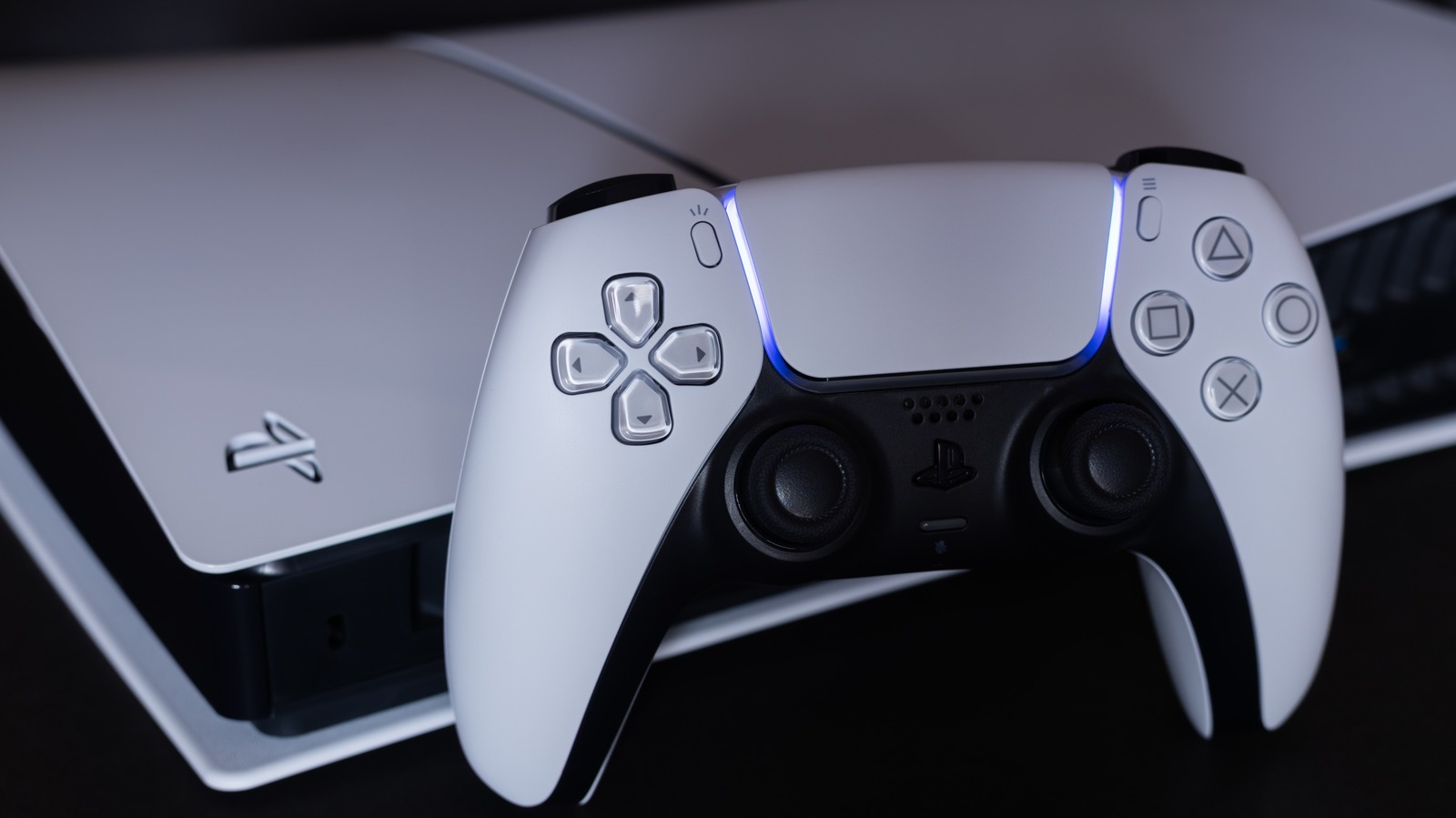
The Sony PlayStation 5 family functions as a high-performance home entertainment and gaming console powered by custom AMD processor architecture, offering 4K video rendering and high-speed solid-state storage. The base Sony PlayStation 5 Consolecurrently sells for $649 USD on Amazon for the disc-equipped chassis, while the discless Sony PlayStation 5 Digital Editionsits at $599 USD on Amazon, and the flagship Sony PlayStation 5 Prodemands $899 USD on Amazon. This ecosystem targets household media centers and dual-purpose home office setups where users want high-end gaming performance alongside streaming capabilities, though unprecedented hardware price increases have fundamentally altered its financial appeal.
🛒 Where to Buy: Sony PlayStation 5
Editorial Note & Product Verification: The Cool Great Buys editorial desk independently verifies manufacturer technical specifications, cross-checks active retail availability across authorized sellers, and evaluates verified consumer reliability data before publishing product evaluations. All featured prices and promotions reflect active market rates at the time of publication.
- Sony PlayStation 5: View on Amazon
Click the link above to check current pricing, availability, and customer reviews on Amazon.
Evaluating any major hardware purchase for a household comes down to total cost of ownership over a multi-year lifespan. When Sony launched the original disc unit at $499 USD and the digital variant at $399 USD back in late 2020, the value proposition was clear. Today, buyers face price tags that are 30 percent higher for the disc model and 50 percent higher for the digital version. Global memory component shortages—often dubbed “RAMageddon” across the hardware industry—have forced component manufacturing costs upward, breaking the historic console trend where hardware becomes steadily cheaper as it matures. For a normal household trying to balance tech expenditures, paying more for six-year-old foundational technology requires a cold look at what you actually get for your money.
A broader shift in media distribution further complicates the investment equation. As highlighted in Engadget’s analysis of current console drawbacks, buying into the PlayStation hardware family in 2026 means navigating higher upfront hardware costs, reduced long-term physical media flexibility, and diminishing generational performance leaps. For home office workers who double their desk area as an evening entertainment hub, understanding these underlying structural shifts is essential before committing substantial budget to Sony’s current ecosystem.
Real-World Context and Target Buyer Profile
The ideal user for the PlayStation 5 ecosystem has historically been the household seeking an all-in-one media powerhouse. Previous PlayStation generations earned their spot on the entertainment center desk by pulling double duty. The PS2 served as an affordable home DVD player, while the PS3 introduced millions of families to High-Definition Blu-ray playback. In a home office or shared family space, a device that plays high-end games while handling 4K physical discs and streaming apps delivers clear utility per square inch. That dual-identity made high launch prices easier to justify for budget-conscious parents.
That balance is shifting rapidly. The current PlayStation 5 range appeals primarily to core interactive entertainment enthusiasts who prioritize exclusive software franchises above all else. If your primary goal is running multi-platform titles, managing remote work workloads, or maintaining a flexible media library for your kids, the financial math looks very different today. With software pricing holding firm at $70 USD per digital title and hardware prices rising instead of falling, setting up a standard PS5 setup with a second controller and two major games now easily crosses the $800 USD threshold before tax.
For a normal person looking at family expenditures, the key question is whether this ecosystem provides friction-free longevity. Sony’s aggressive pivot toward pure digital delivery directly impacts how families manage software budgets. Without the ability to buy used physical discs at local retailers, trade in completed games, or pass physical copies between siblings and coworkers, your total cost of ownership over a three-year window escalates quickly. Every game must be bought full-price from a single proprietary digital storefront. That’s the catch.
Hardware Engineering, Materials, and Core Specs
From an engineering perspective, the PlayStation 5 family relies on high-impact injection-molded ABS plastic side plates wrapped around a matte black central structural core. The base chassis measures 390mm in height, 104mm in width, and 260mm in depth, weighing in at a heavy 4.5kg (9.9 lbs). The updated Slim variants trim those physical dimensions down to 358mm x 96mm x 216mm at 3.2kg (7.0 lbs), while the high-end Pro retains a tall profile at 388mm x 89mm x 216mm weighing 3.1kg (6.8 lbs). Internal cooling across all variants relies on a high-static-pressure centrifugal fan pairing with a custom liquid metal thermal interface material applied directly to the main system-on-chip (SoC).
Under the hood, both the standard PlayStation 5 and the PS5 Pro utilize an AMD Zen 2 CPU architecture containing 8 cores and 16 threads. In the baseline system, this processor operates at a variable dynamic frequency capped at 3.5GHz. The flagship PS5 Pro pushes that clock speed up to 3.85GHz—representing a modest 10 percent CPU frequency gain. The GPU side shows a wider divergence: the base system generates 10.3 TFLOPS of compute power across 36 AMD RDNA 2 compute units, whereas the PS5 Pro delivers 16.7 TFLOPS across 60 compute units. That represents a 45 percent uplift in raw graphical compute capacity.
The thing the product page buries in the footnotes is that the raw processing unit on the PS5 Pro retains the exact same Zen 2 architectural foundation from late 2020, yielding only a 10 percent frequency bump that leaves heavy CPU bottlenecks unaddressed. In plain English: while the GPU boost allows for sharper upscaled output via PlayStation Spectral Super Resolution (PSSR), games that put heavy processing demands on high NPC counts, physics simulations, or complex world geometry remain constrained by the underlying processor. Internal storage has also seen revisions: while the standard disc model now ships with a 1TB custom PCIe 4.0 NVMe SSD, the entry-level Digital Slim variant reverts to the smaller 825GB storage floor, offering roughly 667GB of usable space after accounting for system OS allocation.
Everyday Usability & Design Compromises
Living with any member of the PlayStation 5 family on an office desk or inside a living room media console requires planning around physical scale and thermal dissipation. The swooping white collar design and flared outer plates make the unit visually dominant in any room. Placed vertically, the standard console demands over 15 inches of vertical clearance. Placed horizontally on a desk, the asymmetrical housing requires plastic snap-on support feet to stay level. If placed inside a closed office cabinet without active ventilation, the liquid-metal-cooled SoC quickly ramps up internal fan speeds to exhaust thermal energy, elevating ambient noise during work hours.
Media flexibility is also reaching a definitive crossroads. Official documentation confirms that Sony won’t put games on discs starting in 2028, aligning with external hardware trends. Industry analysis from FlatpanelsHD’s reporting notes that consumer audio-visual hardware like the Sony UBP-X700/K marks the final generation of dedicated physical 4K Blu-ray hardware from the manufacturer. For users who rely on an office media setup to double as a physical film archive, the gradual removal of optical drives removes a primary secondary feature that once justified the console’s footprint.
The practical consequences of the switch to digital hit home budgets directly. In an era where hardware costs remain significantly more expensive than when they first launched, physical disc ownership offered a crucial financial buffer. Buying a physical game allowed parents to resell the disc after completion or share games between family members. Transitioning to a mandatory digital model locks every purchase to a single user account without resale value. When coupled with recurring PlayStation Plus subscription costs—ranging from $79.99 USD to $159.99 USD per year—the ongoing operational expense of maintaining the system grows significantly over time.
Category Alternatives and Value Comparison
When evaluating high-performance home entertainment and gaming hardware for a home office environment, buyers have distinct options across dedicated gaming consoles and compact desktop computers. Comparing total system costs, physical footprints, and multi-use utility helps clarify where the PS5 sits in the current landscape.
- Microsoft Xbox Series X( priced at $499 USD on Amazon ): Microsoft’s flagship console features an 8-core AMD Zen 2 CPU running at 3.8GHz, paired with a 12 TFLOPS RDNA 2 GPU and a 1TB internal SSD. Unlike the PS5, the Series X retains its traditional rectangular tower form factor (151mm x 151mm x 301mm), making it significantly easier to fit neatly alongside a desktop monitor or inside standard office shelving. Its primary value advantage lies in Xbox Game Pass integration, providing access to a broad library of titles for a single monthly fee without requiring $70 USD individual purchases. However, it lacks Sony’s exclusive first-party software lineup and dynamic DualSense haptic feedback integration.
- Apple Mac mini M4( priced at $599 USD on Amazon ): For users prioritizing dual-purpose office productivity, Apple’s ultra-compact desktop features an 8-core CPU and 10-core GPU architecture integrated into a tiny 127mm x 127mm x 50mm aluminum enclosure. Operating at under 15W during standard office tasks, it functions as a silent work station capable of driving high-resolution displays, rendering 4K video streams, and executing complex productivity workflows. While its gaming library is restricted compared to dedicated consoles, its long-term hardware construction, thermal efficiency, zero-subscription core operating system, and residual resale value present a compelling alternative for budget-conscious buyers who need actual computing productivity alongside light gaming and media streaming.
For a household evaluating pure entertainment value per dollar, the Xbox Series X holds a structural price advantage by staying near its original MSRP while offering subscription-based library access. On the productivity side, a small-form-factor desktop like the Mac mini M4 delivers genuine office utility, low power consumption, and long support cycles for the same price as a discless console. That’s actually fair.
Final Buyer Verdict: Long-Term Ownership Value
The PlayStation 5 remains a technologically impressive platform, but its position as an automatic recommendation for budget-conscious households has vanished. Paying $649 USD for a disc-equipped standard unit or $899 USD for the PS5 Pro represents a steep entry barrier for hardware that relies on core CPU architecture first introduced years ago. When you add the required optical drive add-ons ($79 USD), extra DualSense controllers ($74.99 USD), and an annual PlayStation Plus subscription ($79.99 USD to $159.99 USD), the two-year cost of ownership easily breaches $1,000 USD. The impending phaseout of physical game discs further eliminates the secondary market savings that once softened the blow of high hardware costs.
If you are a dedicated gaming enthusiast who must play Sony’s flagship narrative titles on day one, the PlayStation 5 ecosystem delivers unmatched graphical polish and controller haptics. However, for a normal household seeking a practical multi-use device for a shared office space or living room, holding off or exploring market alternatives is the smarter financial move right now. Between ongoing global component pricing pressures and Sony’s shift toward an all-digital distribution framework, buying into the PS5 platform today means paying peak prices for an ecosystem that offers less long-term flexibility than ever before.