

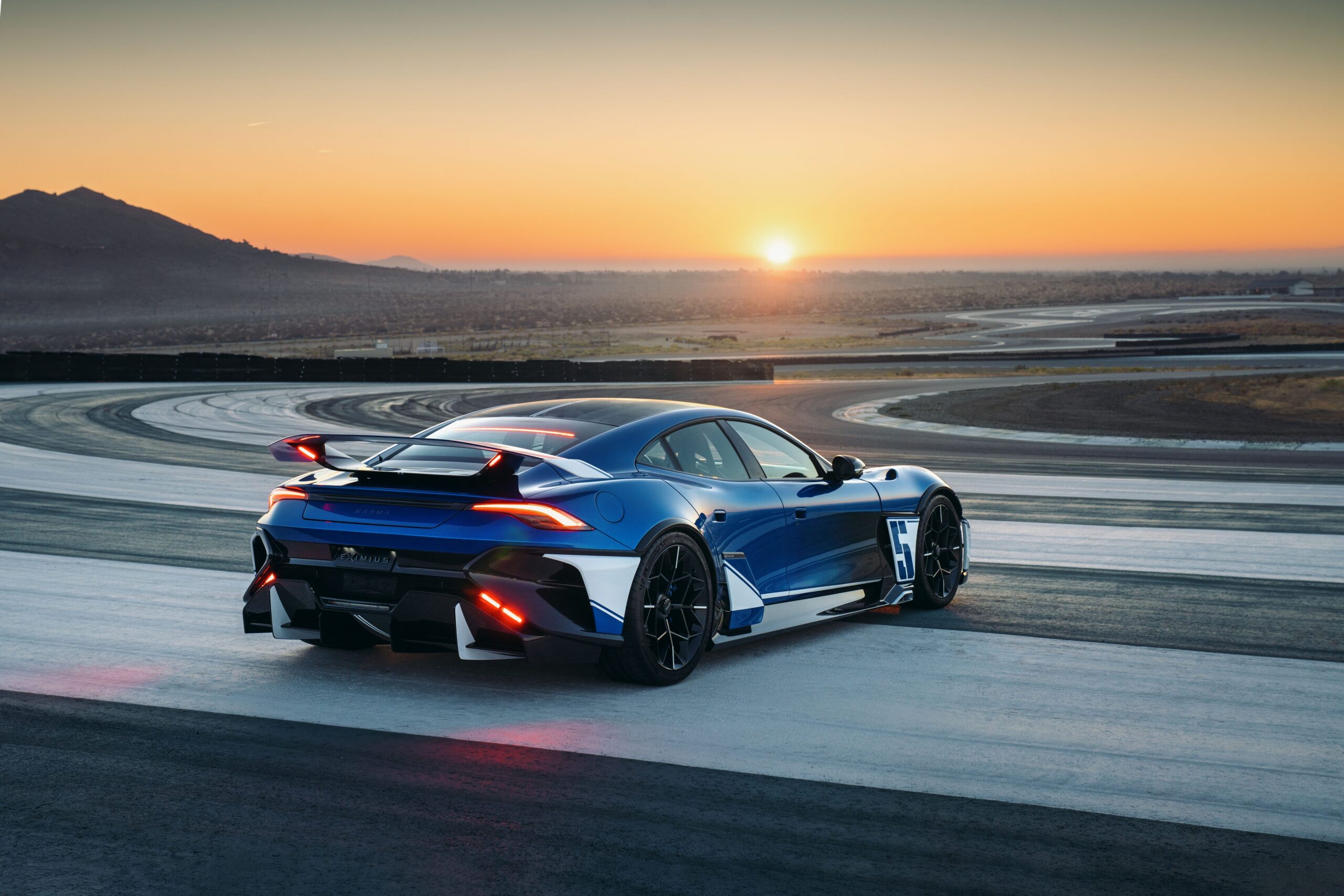
The Karma Eximius 1 is a track-focused, one-off series hybrid sedan that swaps out Karma’s standard small generator engine for a massive 6.2-liter V-8 engine. Standard donor models like the Karma Revero start at $149,000 USD direct from Karma Automotive, while bespoke Eximius program builds reach deep into custom coachbuilding territory. This vehicle is built for ultra-wealthy collectors who want aggressive carbon-fiber bodywork, bespoke chassis tuning, and extreme straight-line acceleration.
🛒 Where to Buy: NOCO Boost Plus GB40 Jump Starter
Editorial Note & Product Verification: The Cool Great Buys editorial desk independently verifies manufacturer technical specifications, cross-checks active retail availability across authorized sellers, and evaluates verified consumer reliability data before publishing product evaluations. All featured prices and promotions reflect active market rates at the time of publication.
- NOCO Boost Plus GB40 Jump Starter: View on Amazon
Click the link above to check current pricing, availability, and customer reviews on Amazon.
Personalization programs are taking over the high-end auto industry. Porsche runs its Sonderwunsch division. Bugatti operates Sur Mesure. Rolls-Royce builds unique vehicles through its Coachbuild unit. Karma Automotive is now launching its own custom division named Eximius. The California-based automaker revealed its first completed vehicle, the Eximius 1, at the Concours at Wynn in Las Vegas. The announcement signals a pivot for a company that spent years updating the original Fisker Karma design through its Revero and GS-6 nameplates.
According to launch coverage in the Car and Driver report, Karma wants to end the current Revero generation with high-performance hardware. Instead of focusing solely on full battery electrification or efficient commuter range extension, Karma turned to traditional displacement paired with electric drive. The result is an aggressive track toy that pushes the limits of the existing platform. It establishes a template for how Karma intends to sell low-volume, high-margin special editions to wealthy enthusiasts over the next several years.
This strategy reflects broader changes across the luxury sports car landscape. High-net-worth buyers increasingly ignore standard factory options lists. They demand unique bodywork, custom mechanical setups, and exclusive production runs. Karma plans to build a maximum of 9 bespoke vehicles for each series production model it releases. The Eximius 1 serves as a public proof-of-concept for that program. It demonstrates how far the company can stretch its chassis and powertrain hardware when cost constraints are removed from the equation.
Generational Delta: The Engineering Upgrades That Matter
The core mechanical difference between the Eximius 1 and a standard Karma Revero lies under the hood. The baseline Revero uses a series hybrid design. A turbocharged 1.5-liter three-cylinder engine acts strictly as a generator. It creates electricity to charge an onboard battery pack, which then powers two rear-mounted electric motors. That system delivers respectable power, but it prioritizes smooth cruising over raw track pace.
The Eximius 1 replaces that three-cylinder generator with a heavy-hitting 6.2-liter V-8 engine. The engine functions alongside the electric propulsion hardware to generate a total system output of 1,195 horsepower. That is an increase of more than 600 hp over the standard Revero production car. In Karma’s official launch documentation, the engineering team claims a zero-to-60 mph sprint of 2.7 seconds and a top speed of 200 mph. Scrutinizing the hardware spec reveals a massive leap in mechanical ambition for the brand.
To handle that power jump, Karma widened the chassis by nearly 2 inches compared to a standard Revero. The suspension upgrades replace stock dampers with Öhlins semi-active dampers. Stopping power comes from two-piece slotted carbon-ceramic brake rotors. The car rides on 21-inch forged magnesium wheels featuring center-lock hubs. These hardware upgrades directly target track performance rather than quiet street cruising.
Aerodynamic modifications alter the body shape dramatically. Up front, a carbon-fiber splitter works alongside large air intakes with integrated LED light strips. Thin nostrils sit near the headlights, creating an aggressive front fascia. Carved vents behind the front wheels release air pressure from the wheel arches. Carbon fiber is used extensively across the exterior. The front fenders display exposed carbon weave, which gradually fades into blue paint across the front doors. A massive rear diffuser and a tall rear wing supply rear downforce.
The cabin strips away standard luxury amenities in favor of motorsport components. Blue-tinted carbon fiber covers the dashboard, steering wheel, center console, and door panels. Recaro bucket seats feature blue Alcantara and blue leather lower cushions paired with Moondust Alcantara upper sections. The throttle pedal, brake pedal, and dead pedal are machined from solid billet aluminum. Karma simplified the center console controls to focus on essential driving modes, including a prominent red emergency kill switch.
Everyday Usability Trade-Offs & Adoption Barriers
On paper, packing 1,195 horsepower into a slinky sedan sounds impressive. In practice, putting a 6.2-liter V-8 inside a low-slung series hybrid chassis creates physical compromises. Curb weight remains a major hurdle. Squeezing a big-block engine, high-voltage battery cells, power electronics, and electric drive motors into one vehicle creates significant mass. Extra weight hurts braking endurance, tire wear, and agility during tight cornering. Carbon-ceramic brakes help, but physical weight limits real-world track performance.
Thermal management presents another serious challenge. The original platform was engineered around a tiny three-cylinder generator. Dropping a high-output V-8 into that tight engine bay generates intense heat. The large fender vents and aluminum exhaust cutouts are not decorative trim pieces. They are functional requirements to stop component overheating under load. Drivers pushing this vehicle on a hot track day will test the limits of its cooling loops.
Real-world delivery schedules create another barrier for buyers. Karma states that the Eximius 1 will not be delivered to its owner until 2027. A long multi-year lead time for a vehicle based on an existing production platform introduces waiting risk. Technology changes quickly in the high-performance hybrid space. Hardware features that seem extreme today may look standard by the time the vehicle hits the track.
Ownership maintenance will be complicated. Karma operates a limited dealer and service network across North America. Obtaining replacement body panels, carbon-ceramic brake parts, or proprietary hybrid control modules for a custom 1-of-1 chassis will require direct factory support. Everyday usability takes a back seat when parts must be custom-machined or shipped directly from the factory floor. This is a collector vehicle designed for occasional track outings, not daily transportation.
Category Alternatives and Rival Solutions
Buyers looking for ultra-high-performance hybrid luxury sedans do not need to wait for boutique custom programs. The Porsche Panamera Turbo E-Hybrid starts at $191,000 USD direct from Porsche. It combines a 4.0-liter twin-turbo V-8 engine with a transmission-integrated electric motor to produce 670 horsepower and 685 lb-ft of torque. It accelerates from zero to 60 mph in 3.0 seconds and reaches a top speed of 196 mph. While its horsepower figure is lower than the Karma on paper, Porsche offers standard active air suspension, rear-axle steering, and proven circuit reliability.
The Panamera provides usable back seats, intuitive infotainment software, and an extensive dealer support network. Track support and replacement brake components are readily available through authorized centers nationwide. Porsche engineered its battery cooling system for repeated hard launches without thermal throttling. Drivers get repeatable, high-speed performance backed by comprehensive warranty coverage. It lacks the ultimate exterior exclusivity of a custom coachbuilt car, but it functions reliably on road and track alike.
Another fierce rival in the high-output hybrid space is the Mercedes-AMG GT 63 S E Performance, starting at $194,990 USD direct from Mercedes-Benz. This model pairs a hand-built 4.0-liter biturbo V-8 with a rear-mounted electric drive unit to deliver 831 horsepower and over 1,000 lb-ft of torque. It rockets to 60 mph in 2.7 seconds, matching the claimed sprint time of the Eximius 1. Mercedes-AMG uses Formula 1-derived battery cooling technology to ensure the electric boost stays available during aggressive driving.
The AMG GT 63 S E Performance balances extreme acceleration with real-world luxury. It features fully variable all-wheel drive, active roll stabilization, and multiple drive modes that adapt the car from a comfortable highway cruiser to a track weapon. It carries a heavy curb weight, but its chassis electronics manage that mass effectively. Crucially, buyers can order and take delivery of an AMG GT 63 S E Performance today through established retail channels, bypassing multi-year custom build queues.
Final Trajectory Verdict: Future Outlook & Buying Advice
The Karma Eximius 1 is a fascinating engineering experiment. Combining a 6.2-liter V-8 with electric motors inside a heavily modified, carbon-clad Revero shell creates an eye-catching machine. It proves that Karma can build loud, dramatic track cars alongside its electric sedans. The strict 9-unit limit per model line guarantees exclusivity for deep-pocketed car collectors who want something distinct from mainstream European exotic brands.
Skip it. For practical buyers and track enthusiasts, the short answer is to look elsewhere. A custom one-off with a delivery target set for 2027 carries high execution risk and high ownership costs. Unless you are the single individual who commissioned this specific build, your money is far better spent on established performance hybrids like the Porsche Panamera Turbo E-Hybrid or the Mercedes-AMG GT 63 S E Performance. Watch Karma’s coachbuilding division to see if their custom powertrains deliver real-world track durability, but buy proven production hardware today.