

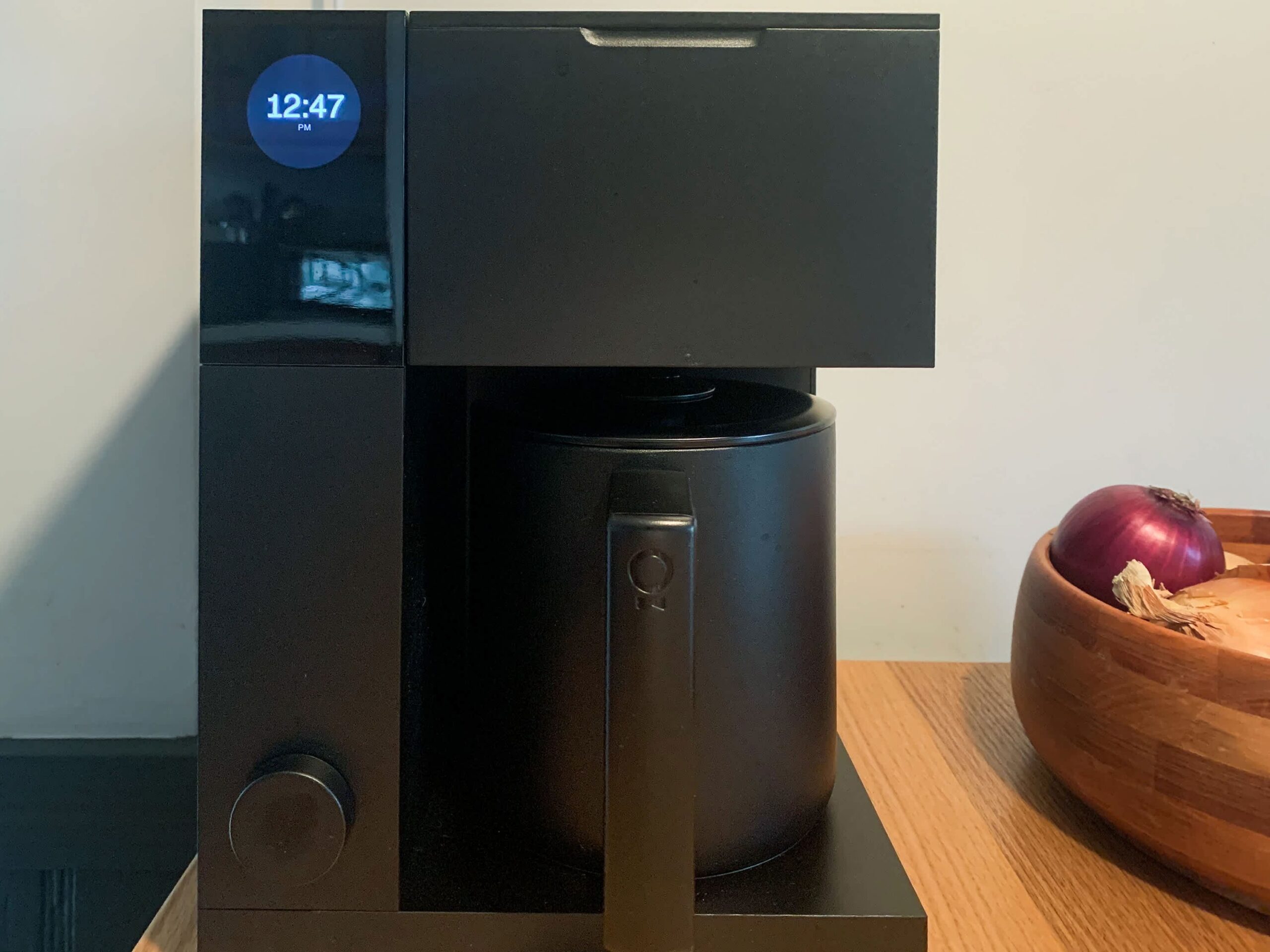
The Fellow Aiden Coffee Makeris an advanced precision drip machine featuring dual-wall thermal carafes, programmable brewing profiles, and interchangeable filter baskets for $365 USD on Amazon, designed for serious home baristas and morning coffee drinkers alike who want cafe-quality extraction without commercial counter friction. When you look closely at the modern countertop appliance landscape, very few machines manage to bridge the gap between uncompromising engineering and user-friendly daily automation.
🛒 Where to Buy: Fellow Aiden Precision Coffee
Editorial Note & Product Verification: The Cool Great Buys editorial desk independently verifies manufacturer technical specifications, cross-checks active retail availability across authorized sellers, and evaluates verified consumer reliability data before publishing product evaluations. All featured prices and promotions reflect active market rates at the time of publication.
- Fellow Aiden Precision Coffee: View on Amazon
Click the link above to check current pricing, availability, and customer reviews on Amazon.
Making a great cup of coffee at home usually involves choosing between absolute simplicity and total control. Automated drip machines make mornings easy by taking the guesswork out of water temperature and flow rates, but they often leave you stuck with mediocre extraction, channeling, and uneven saturation. On the flip side, manual pour-over setups let you obsess over every single variable—from water temperature down to the exact pour rate and bloom time—but they demand your full attention, precise timing, and physical labor before you have even had your first sip of caffeine. When the Fellow Aiden Coffee Maker launched, it promised to bridge that exact gap by automating complex manual pour-over techniques while keeping precision tuning accessible to everyday users who might otherwise feel intimidated by scales, gooseneck kettles, and complicated manual routines.
Upfront Investment & 2-Year Total Cost of Ownership
Purchasing the hardware requires an initial investment of $365 USD on Amazon. For a normal household, buying a premium kitchen appliance at this price point means looking closely at what it costs to keep the machine running over time. Unlike basic capsule brewers that lock you into recurring proprietary pod purchases or subscription models, this machine uses standard paper filters and whole-bean coffee, which keeps your daily operating costs tied entirely to your personal preference in beans rather than corporate consumables. You retain absolute freedom to source your coffee from any local roaster or online supplier without paying an artificial markup for proprietary pods.
To calculate a realistic two-year total cost of ownership for a typical household brewing one pot or a few large cups each morning, we need to factor in consumables like paper filters and descale solutions. Assuming a daily consumption rate that uses roughly one standard paper filter per day alongside quality specialty coffee beans, your recurring annual spend on filter paper will hover $35 USD USD. Over a two-year window, factoring in the initial purchase price of $365 USD plus roughly $70 USD for filters and standard citric acid descaling solutions, your total two-year cost of ownership comes out to $435 USD, excluding your weekly bean budget. That is actually fair when you compare it against high-end espresso setups that demand regular backflushing, expensive grouphead gaskets, and specialized cleaning tablets, or frequent daily trips to local specialty coffee shops where a single pour-over can easily cost six to seven dollars. By investing in this hardware, households that consume multiple cups daily often find that the machine pays for itself within the first year of operation, provided they enjoy exploring different origins and roast profiles from specialty roasters.
What You Actually Get: Core Features & Build Specs
Unboxing the hardware reveals a thoughtfully engineered countertop appliance measuring 9.5 inches wide by 9.5 inches deep by 12.8 inches tall, weighing in at roughly 8.5 pounds. According to technical documentation published with this release, the internal heating system utilizes a precision PID controller paired with a high-accuracy pump to maintain precise water temperatures between 195°F and 205°F throughout the entire extraction cycle, ensuring optimal compound extraction without scorching delicate light roasts or under-extracting dense natural process beans. The package includes the main brewing base, a thermal double-wall stainless steel carafe, a single-serve basket adapter, a batch-brew basket, and a starter pack of custom-fit paper filters designed specifically to match the geometry of the interchangeable baskets.
The physical build leans heavily on matte black plastics, brushed stainless steel accents, and a clean digital control dial that makes navigating brew profiles straightforward, even before you connect the unit to your home network. What caught my eye reading the full spec sheet is the inclusion of interchangeable brew baskets, which lets users switch seamlessly between a smaller cone filter for a single mug and a flat-bottom basket for larger 10-cup batches without sacrificing extraction uniformity. The removable water tank holds up to 1.5 liters, featuring clear volume markings that eliminate guesswork when filling the reservoir for specific batch sizes. Furthermore, the specialized showerhead is engineered to saturate the coffee bed evenly, mimicking the circular motion of a skilled barista pouring water from a gooseneck kettle. This careful attention to flow dynamics ensures that every single coffee particle is hydrated uniformly during the crucial bloom phase, releasing trapped carbon dioxide and paving the way for a sweet, balanced, and remarkably clean cup.
Hidden Costs, Ecosystem Dependencies & Fine Print
Every premium kitchen gadget comes with a few peripheral expenses that do not show up immediately in the initial sticker price. While the machine does not rely on proprietary subscriptions or locked software walls to function properly out of the box, achieving optimal results does require supporting gear that you might need to purchase separately. If you are upgrading from a basic blade grinder or a cheap spice mill, you will quickly discover that precision drip brewing demands a consistent burr grinder to prevent muddy extraction, excessive fines, and bitter, astringent flavors in your cup. Investing in a quality conical or flat-burr grinder is practically mandatory if you want to experience the true potential of the programmable extraction profiles.
The one critical detail the official spec sheet buries in the footnotes is that while the machine supports Wi-Fi connectivity for firmware updates and remote schedule programming through its companion application, it requires a stable 2.4GHz network frequency during initial setup, meaning users with modern mesh routers broadcasting combined 5GHz bands may need to temporarily adjust their router settings to establish connection. Furthermore, storing the bulky dual-wall thermal carafe and managing two distinct basket sizes requires dedicated cabinet or counter space. You also have to factor in the physical footprint of keeping a proper digital kitchen scale nearby if you plan to utilize the manual profile adjustments to their fullest extent, adding minor clutter to your kitchen counter. Cleaning the removable showerhead and descale cycles also demands occasional routine maintenance, ensuring that mineral buildup from hard tap water does not interfere with the internal PID heating element over years of heavy daily use.
Smarter Alternatives at This Price
If you are hesitant about dropping over three hundred dollars on a single-purpose drip machine, there are alternative hardware options on the market that approach automated morning coffee from different angles. One major competitor is the Bonavita Connoisseur Coffee Maker, retailing for $169 USD on Amazon, which strips away the digital screens and Wi-Fi connectivity to focus entirely on classic, Specialty Coffee Association (SCA) certified brewing performance with a simple one-touch activation switch. The Bonavita excels at delivering rock-solid water temperature stability and a powerful showerhead, making it a fantastic pick for people who want pure brewing simplicity without complex companion apps or software updates, though it lacks single-cup versatility, flow-rate manipulation, and programmable multi-stage profiles.
Another strong alternative for tech-minded households is the Breville Precision Brewer, which typically sells for $299.95 USD on Amazon. The Breville unit offers a similar level of temperature customization, adjustable flow rates, and dedicated cold-brew settings, wrapped in a brushed stainless steel chassis that matches modern kitchen aesthetics nicely. While the Breville provides granular control over bloom time and flow speed through an intuitive dial interface, it lacks the specialized dual-basket system and the ultra-compact countertop footprint found in newer generational releases like the Aiden, proving that buyers must weigh app-driven convenience and streamlined single-serve transitions against physical form factor and traditional drip design.
Final Buyer Verdict: Is the Investment Worth It?
Choosing to bring this machine into your kitchen ultimately comes down to how much you value morning convenience paired with absolute control over your extraction variables. For dedicated home coffee enthusiasts who want the artisanal precision of a manual pour-over without standing over a kettle at six in the morning, the engineering and automated profiling justify the initial investment. It successfully bridges the gap between hands-on craft brewing and automated morning routines, making it a standout appliance for anyone who treats their daily cup as a serious ritual rather than a mere caffeine delivery system.
On the other hand, if you simply want a hot cup of black coffee to jump-start your morning commute and care very little about bloom times, water temperature curves, or origin notes, spending over three hundred dollars on a specialized drip machine is likely overkill. Frugal buyers who stick strictly to dark roasts with cream and sugar will find that simpler, lower-cost thermal carafes get the job done just as well without any digital learning curve. But for households ready to elevate their daily coffee routine with smart automation, verified precision, and versatile batch-to-single brewing capabilities, this machine delivers on its ambitious promises and represents a genuinely worthwhile countertop upgrade.