

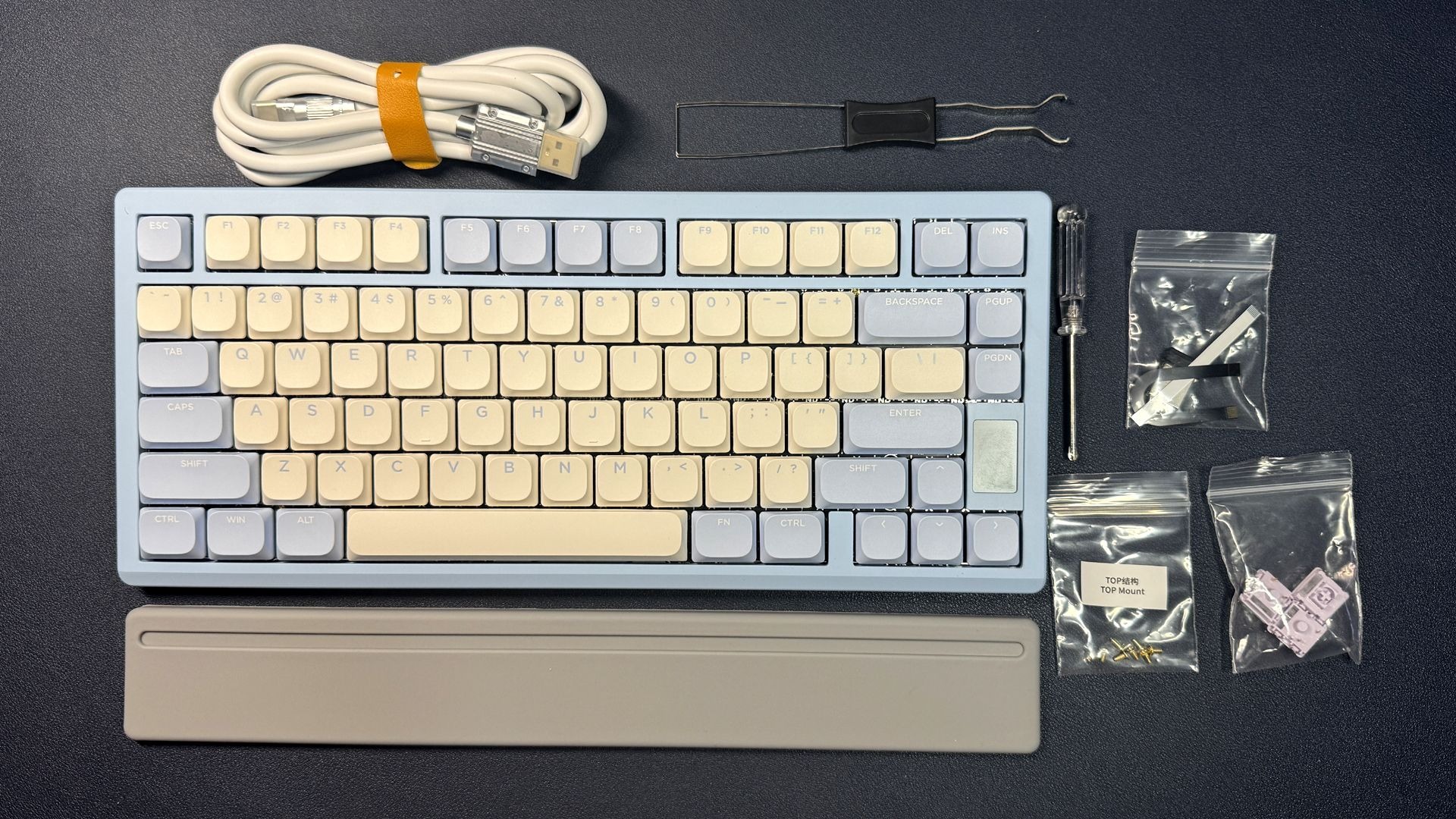
Pre-built mechanical keyboards engineered with hot-swappable printed circuit boards, gasket-mounted plate structures, and factory-lubricated switch stems provide enterprise typists and computational workers with custom-grade tactile input. Ranging in cost from the Keychron V1 Wired Mechanical Keyboardat $84 USD on Amazon to the retro-styled 8BitDo Retro Mechanical Keyboardat $99 USD on Amazon, this tier of hardware targets professional writers, software developers, and input hardware enthusiasts seeking acoustic isolation and key customization without the financial commitment of boutique custom kits.
🛒 Where to Buy: Keyboards
- Keyboards: View on Amazon
Click the link above to check current pricing, availability, and customer reviews on Amazon.
Historically speaking, evaluating the sub-$100 mechanical keyboard market five years ago revealed a landscape dominated by stiff steel tray-mount plates, hollow ABS plastic chassis, and unlubricated switch stems that produced severe spring ping and tactile harshness. Early budget attempts prioritized garish RGB backlighting over basic acoustic dampening and keycap density. The structural engineering of entry-level peripherals was treated as a disposable commodity. In practice, typists seeking an elevated typing feel were forced to source custom aluminum cases, solder individual switches onto raw PCBs, and lube each stem manually using Krytox compounds—a process requiring considerable technical labor and expenditures frequently exceeding $300. Initial product disclosures and reporting were tracked via Tomshardware.
In 2026, manufacturing efficiencies and automated assembly lines have inverted these market dynamics entirely. The democratization of high-density Polybutylene Terephthalate (PBT) keycaps, gasket-isolation mounts, and internal sound-absorbing foam layers has elevated sub-$100 factory-assembled boards into direct competition with mid-tier semi-custom builds. Verified retail availability analysis confirms initial launch stock for these key platforms is shipping direct across primary authorized channels. This supply chain maturity ensures that budget-conscious professionals no longer face group-buy delays or inventory artificial scarcity to access refined typing acoustics.
State of the Category & What Changed
The contemporary desktop peripheral sector is defined by a fundamental realignment in consumer expectation. Where mechanical keyboards were once segregated between rigid office membrane boards and noisy gaming peripherals, current manufacturing protocols integrate acoustic dampening directly into entry-level chassis. Modern typists expect minimal frame ping, solid keycap feel, and hardware-level reprogrammability straight out of the box. The emergence of standardized hot-swappable switch sockets—rated for thousands of insertion cycles—means users are no longer locked into their initial switch selection, mitigating the long-term risk of hardware obsolescence.
This category transformation is driven largely by competition among dedicated mechanical keyboard manufacturers who have refined multi-layer acoustic design. By inserting sound-dampening materials between the top plate, PCB, and bottom case shell, manufacturers effectively absorb the high-frequency vibrations caused by switch bottom-out forces. Notably, the introduction of 75% and Tenkeyless (87-key) form factors has optimized desk surface footprint, giving users an ergonomic alignment that reduces shoulder strain by allowing the mouse to remain closer to the body’s midline during extended workflows.
Furthermore, micro-controller processing capability within budget keyboards has advanced substantially. Hardware now routinely features 1,000 Hz USB polling rates, 32-bit ARM Cortex microcontrollers, and multi-device connection configurations. The integration of tri-mode connectivity—enabling seamless switching between 2.4 GHz low-latency wireless, Bluetooth 5.1, and USB-C wired connections—allows single peripherals to drive multi-system engineering workstations without requiring physical KVM switches or external adapters.
Generational Delta: The Engineering Upgrades That Matter
Analyzing technical documentation published with recent budget keyboard releases highlights the stark architectural division between traditional tray-mount designs and modern gasket-mounted assemblies. In legacy tray-mount keyboards, the metal mounting plate is screwed directly into plastic standoffs molded into the bottom case. This rigid contact points transmit kinetic impact energy directly into the outer housing, creating an uneven typing feel across different key zones and generating persistent hollow resonance. Modern implementations, such as the EPOMAKER Aula F75 Wireless Mechanical Keyboard($69 USD on Amazon), utilize silicone or Poron foam gaskets around the perimeter of the plate, suspending the entire PCB and plate assembly inside the housing to provide uniform flex and dampened tactile feedback.
Keycap manufacturing has experienced a parallel engineering upgrade. Early budget boards utilized thin, single-shot Acrylonitrile Butadiene Styrene (ABS) keycaps with pad-printed legends that quickly absorbed human skin oils, resulting in physical shine and structural degradation within months of active use. Modern sub-$100 boards now ship standard with double-shot or dye-sublimated PBT keycaps featuring wall thicknesses between 1.3mm and 1.5mm. The distinction matters here: PBT is a dense, semi-crystalline polymer with superior chemical resistance, ensuring keycap surfaces maintain their textured finish and legend clarity over millions of keystrokes.
Mechanical switches themselves have undergone a notable transformation at the factory level. Switches such as the Leobog Reaper linear switches or Kailh Box V2 White tactile switches arrive pre-lubricated on the stem rails and leaf contacts using automated precision dispensers. Examining the fine print of modern switch specifications reveals tighter stem housing tolerances, which drastically reduce lateral stem wobble during keystrokes. Combined with south-facing surface-mount RGB LEDs that prevent physical keycap interference when swapping to Cherry-profile keycap sets, these physical refinements eliminate the necessity for aftermarket tinkering to achieve clean typing mechanics.
Everyday Usability Trade-Offs & Adoption Barriers
Despite significant acoustic and structural advancements, operating within the sub-$100 price bracket requires specific engineering trade-offs. The primary compromise resides in outer housing material selection. While premium custom keyboards utilize multi-pound CNC-machined 6063 aluminum cases, sub-$100 options rely predominantly on injection-molded ABS or polycarbonate plastics. An exception is the low-profile Keychron K3 Max Wireless Mechanical Keyboard($94 USD on Amazon), which incorporates an aluminum top frame, but most standard-height options maintain plastic lower housings. While plastic housings reduce weight for portable use, they lack the absolute structural rigidity and mass stability of solid metal enclosures.
A secondary operational barrier involves software support and configuration ecosystems. While open-source firmware platforms like QMK and configuration interfaces like VIA allow real-time layout remapping stored directly on the keyboard’s onboard EEPROM without background software execution, many budget wireless options rely on proprietary manufacturer software utilities. These proprietary tools frequently present regional translation gaps, rigid operating system dependencies, or mandatory background system processes. For enterprise security environments where unsigned software installation is restricted by IT policies, selecting a board with native QMK/VIA compliance like the Keychron V1 is an absolute requirement.
Ergonomic geometry represents another consideration for daily work sessions. High-profile mechanical keyboards feature front lip heights exceeding 18mm to 20mm. Typing on these surfaces without proper wrist support forces excessive wrist extension, increasing tendon tension in the carpal tunnel. Integrating ergonomic hardware accessories—such as the HyperX Wrist Rest($20 USD on Amazon) featuring cooling gel-infused memory foam, or the rigid Glorious Wooden Wrist Rest($25 USD on Amazon)—is essential for maintaining a neutral wrist posture during prolonged input sessions. Similarly, organizing desktop cable routing via detachable interconnects like the Keychron Coiled Aviator Cable($19 USD on Amazon) improves desk tidiness while protecting physical USB-C ports from strain.
Category Alternatives and Rival Solutions
When evaluating the sub-$100 mechanical keyboard ecosystem, prospective buyers must weigh these modular open-standard platforms against mass-market enterprise options. The most prominent corporate competitor is the Logitech MX Keys S($109 USD on Amazon). The MX Keys S represents a fundamentally different engineering philosophy, employing membrane scissor-switch mechanisms within a low-profile aluminum shell. It offers multi-device Bluetooth switching, smart proximity backlighting, and software integration across corporate environments. However, its switches are non-replaceable, its keycaps are permanently fixed ABS membrane caps, and key travel is constrained to 1.8mm. If an individual switch fails or keycap printing wears off, the entire assembly must be discarded. For users seeking switch customization, long travel distances, and component repairability, sub-$100 mechanical boards provide vastly superior structural longevity.
A second alternative within the legacy gaming space is the Razer BlackWidow V4 X($129 USD on Amazon). While Razer’s entry-level mechanical keyboard offers dedicated macro keys and high polling rates, its underlying chassis relies on older tray-mount architecture without sound-dampening foam layers. In practice, keystrokes on the BlackWidow V4 X produce high-pitched shell resonance and metallic spring echo compared to gasket-mounted budget alternatives like the EPOMAKER Aula F75 or Keychron V1. Additionally, mainstream gaming brands often utilize thin ABS keycaps that polish rapidly, whereas enthusiast-focused budget boards include double-shot PBT keycaps out of the box at a lower retail price.
For typists who already own an established mechanical keyboard base and simply desire a physical overhaul, standalone keycap sets offer a cost-effective alternative. The Glorious GPBT Keycaps($50 USD on Amazon) provide double-shot PBT construction in a classic Cherry profile with crisp, opaque legends. Replacing worn keycaps with dense PBT caps alters both the pitch and weight of key actuation, effectively refreshing existing hardware without purchasing a new PCB or enclosure assembly. This modular path underlines the intrinsic advantage of open-standard mechanical keyboards over proprietary enterprise alternatives.
Final Trajectory Verdict: Future Outlook & Buying Advice
The structural trajectory of the mechanical keyboard market indicates that features once reserved for expensive custom group-buys are now permanent standards in the budget sector. Factory-lubricated linear switches, multi-layer Poron acoustic dampening, gasket mounting plates, and high-density PBT keycaps have successfully transitioned into baseline requirements for sub-$100 hardware. As manufacturing tooling continues to refine plastic molding tolerances and low-latency wireless microcontrollers, the real-world performance gap between a $90 pre-built mechanical keyboard and a $300 custom kit has narrowed to aesthetic details and case weight rather than fundamental typing feel or acoustic quality.
For buyers evaluating their current setup, hardware selection should align strictly with workflow dependencies. If open-source key remapping, Linux OS compatibility, and absolute software transparency are paramount, the Keychron V1 Wired Mechanical Keyboard($84 USD on Amazon) remains the definitive recommendation due to its full QMK/VIA support and durable build. If quiet acoustic isolation, low-latency 2.4 GHz wireless operation, and maximum out-of-the-box dampening are required for shared office spaces, the EPOMAKER Aula F75 Wireless Mechanical Keyboard($69 USD on Amazon) delivers an exceptional acoustic profile at a lower initial outlay. Pairing either keyboard with a solid wooden or gel wrist rest establishes a highly capable, durable input system that easily surpasses mainstream corporate peripherals.