

The Catit Senses 2.0 Grass Planteris a low-profile indoor botanical cultivation tray engineered with a low-center-of-gravity grid cover designed to provide felines with non-toxic organic wheat and barley grass without the mess of overturned soil. Retailing for $14.99 USD on Amazon, this pet health accessory targets suburban pet parents and multi-cat households struggling to keep curious indoor felines away from dangerous household houseplants. By isolating the growing substrate beneath an acrylonitrile butadiene styrene (ABS) cover, the hardware allows cats to nibble fresh shoots while preventing them from digging up roots or knocking the planter off elevated surfaces.
🛒 Where to Buy: Catit Senses
Editorial Note & Product Verification: The Cool Great Buys editorial desk independently verifies manufacturer technical specifications, cross-checks active retail availability across authorized sellers, and evaluates verified consumer reliability data before publishing product evaluations. All featured prices and promotions reflect active market rates at the time of publication.
- Catit Senses: View on Amazon
Click the link above to check current pricing, availability, and customer reviews on Amazon.
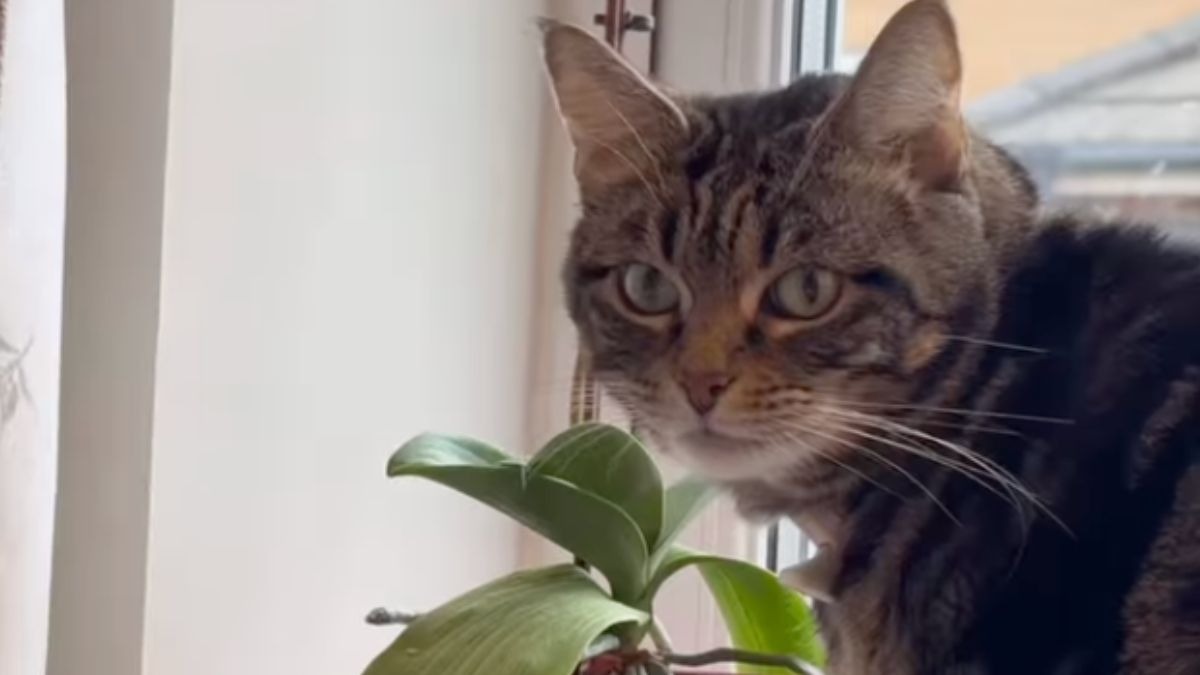
The issue of plant chewing gained renewed attention following a viral video analysis on CatTime published by Ritika Singh, which highlighted how a tabby cat named Pearl repeatedly pretended to chomp on a windowsill houseplant purely to trigger a reaction from her owner. While Pearl’s performative leaf-licking made for wholesome social media content, in a normal household, plant nibbling represents a genuine health hazard. Common domestic greenery such as pothos, monstera, and peace lilies contain calcium oxalate crystals that induce severe oral irritation and vomiting in felines. Providing a dedicated, non-toxic grass tray satisfies a cat’s innate craving for plant fiber—which aids digestion and hairball passage—without exposing them to toxic flora.
Historically, the indoor cat grass category was dominated by disposable aluminum pans or thin vacuum-formed plastic containers packed with potting dirt. For a normal household, these legacy options presented immediate friction points. Cats would habitually pull whole grass clumps up by the roots, scattering loose soil across carpets, or knock the flimsy pots off windowsills entirely. Over the past several years, pet hardware design has pivoted toward heavy-base, modular hydroponic and semi-hydroponic systems that prioritize structural stability, sanitation, and long-term cost efficiency over throwaway single-use containers.
State of the Category & What Changed
The modern cat grass market has evolved from simple nursery leftovers into specialized pet wellness accessories built to withstand feline play habits. In past product generations, pet parents bought pre-sprouted pots from grocery stores that wilted within five days or required constant soil maintenance. Modern hardware designs focus on soil-free vermiculite or substrate mats held down by physical physical barriers. The primary goal of current design engineering is restricting paw access to the root bed while keeping water weight evenly distributed at floor level.
Catit revised its Senses lineup specifically to solve the stability and tipping vulnerabilities present in first-generation pet planters. Early cat grass bowls possessed high side walls and narrow bases, creating a high center of mass that easily tipped when a 10 lb cat leaned its weight against the rim. The redesigned 2.0 platform broadens the base footprint to 24cm while reducing total height to 13cm, effectively transforming the unit into a wide disc that resists vertical tipping. This architectural change reflects a broader industry shift toward pet gear that integrates into existing indoor spaces without requiring continuous parental supervision.
From a financial standpoint, the transition toward refillable planter bases alters the long-term math for pet owners. Instead of paying $7.00 USD to $10.00 USD for temporary nursery pots every two weeks, consumers invest in a permanent base hardware housing and purchase bulk seed packets in multi-packs. This modular approach reduces long-term plastic waste and lowers annual maintenance costs for multi-cat homes, making dedicated planter hardware a practical standard for modern indoor cat care.
Generational Delta: The Engineering Upgrades That Matter
Comparing the Catit Senses 2.0 Grass Planterto standard plant pots reveals several critical mechanical refinements. The top cover features a specialized grid mesh stamped with 4mm micro-slits. This layout forces grass blades to grow vertically through the narrow openings while creating an physical barrier that blocks cat paws from digging into the growing medium below. In practice, this eliminates the primary cause of indoor pet plant mess: pawing, scratching, and root excavation.
What caught my eye reading the full spec sheet is that the 2.0 design completely eliminates the deep soil tray of the original version, replacing it with a shallow substrate tray that uses 30% less growing medium while expanding the effective surface area by 15%. The lower drainage bowl holds up to 1.2 liters of water, featuring a recessed rim that collects excess liquid and prevents root rot. The base of the unit incorporates synthetic rubber suction-style pads that grip smooth flooring, preventing cats from sliding the planter across tile or wood while feeding.
Consumable recurring costs remain low under this revised layout. The official Catit Senses 2.0 Cat Grass Kitsells for $6.99 USD on Amazon, supplying three individual sets of seeds combined with lightweight vermiculite growing medium. Breakdown calculations show that each fresh batch costs roughly $2.33 USD and yields dense growth lasting 14 to 21 days under typical indoor ambient lighting. Over a 24-month operational window, the total expenditure for the planter base hardware and refills averages less than $4.00 USD per month for a single cat home.
The physical composition of the housing relies on durable, non-BPA plastic that resists scratching and cracking. Unlike traditional ceramic pots, which shatter if knocked off a windowsill, the polypropylene and ABS assembly absorbs impact without fracturing. The internal components disassemble into four distinct parts, allowing owners to wash the mesh top, substrate dish, and base reservoir with mild dish soap between planting cycles.
Everyday Usability Trade-Offs & Adoption Barriers
Despite its structural improvements, the the equipment system introduces specific operational trade-offs that buyers must account for. First and foremost is the human labor required for cultivation. Unlike pre-grown store-bought options, this hardware requires pet owners to handle the initial germinating phase. Users must soak the wheat and barley seeds in water for 24 hours, spread the included vermiculite across the tray, water the mixture evenly, and place the unit in direct sunlight for 4 to 6 days before the grass reaches a usable height of 10cm.
Environmental conditions inside the home also impact performance. In warm, high-humidity environments, stagnant water in the lower reservoir can promote mold growth along the bottom mesh if air circulation is poor. Users must monitor liquid levels closely and avoid overwatering. Furthermore, while the rubber feet prevent lateral sliding on smooth tile, the plastic assembly weighs under 350g when empty. If the lower reservoir dries out completely, an enthusiastic cat can still lift the edge of the unit with its teeth or nudge it around carpeted surfaces.
Behavioral adaptation presents another variable. Cats accustomed to chewing wide, soft houseplant leaves may initially ignore the rigid vertical blades of wheatgrass. Pet owners may need to sprinkle small amounts of catnip onto the mesh surface during the first few days to encourage interaction. If your household felines show no interest in greens and strictly seek out soft broadleaf houseplants, the physical form factor of structured grass blades may not satisfy their specific chewing preferences.
Category Alternatives and Rival Solutions
To evaluate whether the the gear offers the best overall value, it is essential to examine competing physical products currently available on retail shelves. The immediate low-cost competitor is the SmartyKat Sweet Greens Cat Grass Kit, which retails for $5.99 USD on Amazon. The SmartyKat package includes an oat seed blend packed inside a disposable, lightweight plastic container with potting soil. While it delivers an unbeatable entry price point for buyers who want an out-of-the-box solution, it lacks any tip-over protection or paw-blocking mesh. A single vigorous push from a cat frequently flips the container, dumping wet soil and root fragments onto the floor. Over a two-year period, replacing disposable SmartyKat containers every two weeks costs approximately $155.00 USD, making it significantly more expensive over time than maintaining a refillable hardware planter.
For pet parents seeking a heavier, higher-end aesthetic, the MessyMutts Cat Grass Planter Setoffers a non-disposable alternative priced at $12.99 USD on Amazon. The MessyMutts unit features a heavy non-slip silicone base housing a removable stainless steel inner bowl. The stainless steel bowl is exceptionally easy to sanitize and dishwasher safe, eliminating concerns about bacterial buildup in plastic scratches. However, the MessyMutts design lacks an integrated top mesh cover. Determined cats can easily dig their claws directly into the root layer, pulling up large chunks of dirt and scattering them around the feeding area. While its structural materials feel premium, its lack of a physical dig barrier creates ongoing maintenance work for owners of active pets.
When evaluated side by side, the the item strikes the optimal middle ground between mechanical functionality and long-term cost of ownership. SmartyKat offers convenience at the expense of structural stability and recurring expense. MessyMutts delivers excellent build material quality with stainless steel and silicone, but misses the crucial anti-dig mesh cover that keeps indoor spaces clean. Catit’s combination of a locked mesh top, wide anti-tip base, and affordable $2.33 USD per-batch refill system delivers superior utility for households dealing with persistent plant chewers.
Final Trajectory Verdict: Future Outlook & Buying Advice
The indoor pet product market continues to move away from disposable single-use items toward durable, modular accessories that lower total cost of ownership. The the product Grass Planter fits squarely into this practical trajectory, solving the immediate safety hazard of houseplant chomping while eliminating the mess of overturned dirt pots. For a one-time hardware investment of $14.99 USD on Amazon plus minimal ongoing seed refill costs, it provides an organized, safe botanical solution that keeps curious felines entertained and healthy.
For budget-conscious families and multi-cat households, the verdict is clear: if you are tired of cleaning up tipped-over nursery pots or worrying about whether your cat is nibbling on toxic houseplants like the viral sensation Pearl, this hardware planter is worth every penny. Its low profile, dig-proof mesh cover, and affordable refill ecosystem deliver real value that easily justifies the small effort of home seed germination.