

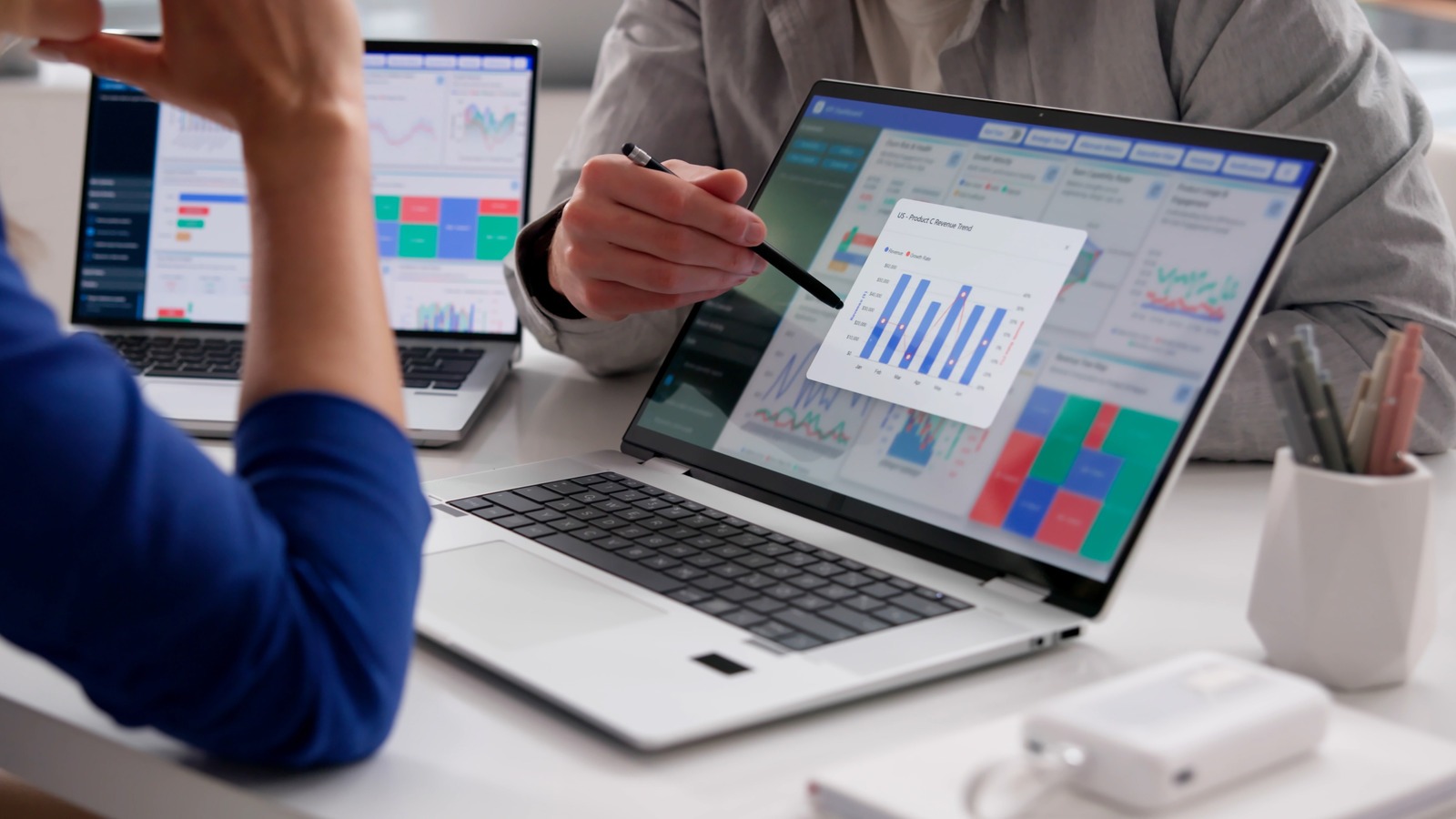
Converting an underutilized mobile computer into an auxiliary display panel relies on dedicated hardware capture tools like the Anker USB HDMI Video Capture Cardpriced at $19.99 USD on Amazon, or hardware emulators like the Fit-Headless HDMI Dummy Plugavailable for $9.99 USD on Amazon. Designed for remote professionals, software developers, and administrative multi-taskers, these compact physical components interface directly with legacy operating systems to expand active desktop space without requiring dedicated, high-cost desktop monitors. The baseline distinction matters here: standard laptop HDMI ports operate strictly on a video-out signaling path, meaning that hardware translation accessories or network streaming software protocols are mandatory to convert raw display signals into readable frame buffers on secondary laptop chassis.
🛒 Where to Buy: Repurposing Legacy Laptops
- Repurposing Legacy Laptops: View on Amazon
Click the link above to check current pricing, availability, and customer reviews on Amazon.
Historically speaking, software-based monitor extension is not a novel concept. During the late 2000s and early 2010s, early utilities such as MaxiVista attempted to route frame data over local area networks, but those early iterations suffered from severe driver collisions, unmitigated CPU overhead, and latency figures exceeding 200ms, rendering secondary screens practically unusable for anything beyond static text files. As detailed in recent analysis of display deployment methods on secondary laptop monitor configurations, modern hardware acceleration and updated system protocols have fundamentally shifted this capability. Knowledge workers seeking to upgrade your workflow can now deploy functional secondary displays with minimal initial investment, provided they accept the architectural trade-offs inherent in hardware-captured streams versus native panel controllers.
The contemporary ecosystem divides display repurposing into two clear methodologies: native operating system wireless casting tools and hardware-assisted video capture pipelines. Understanding the operational boundaries of both approaches is essential before integrating repurposed hardware into daily production environments, as each option introduces distinct latency characteristics, resolution thresholds, and host compute requirements.
State of the Category & What Changed
The market for secondary productivity displays was previously dominated by fixed desktop panels operating over dedicated DisplayPort or HDMI interfaces. Over the past decade, however, the rise of flexible work models escalated demand for mobile multi-monitor configurations. Rather than purchasing newly manufactured hardware, a growing subset of users opts to repurpose decommissioned enterprise notebooks. The baseline setup requires zero internal modifications to the secondary machine, relying instead on network protocols or external hardware ingest tools to pass desktop frames to the secondary display driver.
What changed structurally in recent operating system builds is the inclusion of low-overhead media streaming standards at the kernel level. Microsoft integrated Miracast protocol handling directly into Windows 10 and Windows 11 under the Wireless Display optional feature framework, while Apple built native AirPlay Receiver functionality into macOS Monterey and subsequent releases for hardware manufactured in 2018 or later. These platform adjustments transformed display extension from a fragile software hack into a native system utility. Consequently, the economic calculation shifted: adding a second monitor no longer mandates purchasing a standalone panel when existing silicon can render secondary video feeds with minimal setup complexity.
However, the reliance on wireless networking introduces inherent variability. Signal degradation on congested 2.4GHz or 5GHz Wi-Fi bands leads to dropped frames, dynamic resolution scaling, and visible cursor desynchronization. In practice, this baseline reality limits pure software solutions to non-real-time applications, such as reference document display, email monitoring, or static dashboard tracking.
Generational Delta: The Engineering Upgrades That Matter
In official technical documentation published alongside recent wireless display protocol updates, engineering specifications confirm that native Miracast and AirPlay implementations leverage hardware H.264 and H.265 video encoding modules built directly into modern graphics processors. This hardware encoding pipeline significantly reduces host CPU utilization compared to legacy software frame-scraping tools. When executing a wireless display session, the primary host encodes screen buffers directly through GPU media blocks, transmitting compressed packets over Wi-Fi Direct protocols to bypass standard network router bottlenecks.
For cross-platform environments—such as extending a Windows host to a Linux notebook or bridging macOS with generic x86 hardware—open-source utilities like Deskreen utilize WebRTC architecture to stream desktop views directly into standard HTML5 browsers. Unlike native operating system casting, Deskreen operates at the application layer. To achieve true screen extension rather than screen mirroring, the primary machine must register an active display controller output. This is precisely where physical virtual display adapters, such as the Fit-Headless HDMI Dummy Plug($9.99 USD on Amazon), become mandatory components, tricking the host GPU into allocating hardware resources for an phantom 1080p or 4K display canvas.
The most decisive technical advancement for zero-network-dependency setups, notably, is the democratization of high-speed USB Video Class (UVC) capture hardware. Historically restricted to high-cost broadcast equipment, compact HDMI-to-USB cards convert standard HDMI output signals into universal webcam feeds. By running open-source capture software like OBS Studio or native camera utilities on the receiving laptop, users convert physical HDMI signals into full-screen video windows. This physical interface completely circumvents Wi-Fi interference, reducing system-to-system transport latency from network averages of 80ms–150ms down to hardware ingestion latencies of 30ms–50ms.
Everyday Usability Trade-Offs & Adoption Barriers
Examining the fine print of the hardware documentation reveals that budget HDMI-to-USB video capture dongles operate under strict USB 2.0 or USB 3.0 bandwidth constraints. When ingesting a 1080p video stream, low-cost capture hardware frequently compresses incoming frames using lossy Motion JPEG (MJPEG) encoding rather than uncompressed YUY2 formats. This compression produces subtle color artifacts along high-contrast text edges, fine lines, and small typography, making prolonged text rendering noticeably softer than a direct DisplayPort interface.
Thermal management and power efficiency present additional real-world usability barriers. Operating a secondary laptop strictly as a monitor receiver requires running two complete compute stacks, motherboard power rails, and active cooling fans simultaneously. The receiving laptop must keep its main processor, display controller, and system memory fully powered simply to process an incoming network stream or camera feed. In practice, this results in significantly higher ambient power consumption—often drawing 15W to 45W continuously from the wall—compared to a dedicated portable monitor that consumes under 8W over USB-C power delivery.
Furthermore, keyboard and mouse input handling introduces friction across extended desktop setups. While native Windows Miracast allows mouse input passthrough via human interface device (HID) emulation, cross-platform software configurations typically isolate cursor movement to the host machine unless auxiliary software bridges like Barrier or Input Director are configured. Users attempting to run low-latency video games or color-critical photo editing across repurposed secondary screens will encounter insurmountable obstacles regarding screen refresh rate caps, color accuracy drift, and variable frame pacing.
Category Alternatives and Rival Solutions
For users who require uniform color output, low latency, and single-cable power transport, dedicated portable monitors represent the primary market alternative to repurposed laptop configurations. These panels eliminate compute overhead entirely, drawing power and video signals through a single standard connection.
The ASUS ZenScreen MB166Bis available for $139.00 USD on Amazon and targets entry-level mobile productivity setups. Featuring a 15.6-inch Full HD (1920×1080) panel with a slim 0.4-inch profile, the ZenScreen utilizes a single USB 3.0 cable for both power and video transmission via DisplayLink driver architecture. Weighing just 1.74 lbs, it avoids the physical bulk and battery decay associated with carrying a secondary legacy laptop. However, the trade-off with the MB166B lies in its panel panel response times and limited 220 nits maximum brightness, which can struggle in bright environment environments compared to native laptop displays.
Stepping up in performance, the Lenovo ThinkVision M14retailing at $229.00 USD on Amazon provides a significantly refined alternative for business travelers. The ThinkVision M14 features a 14-inch IPS display with a native 1920×1080 resolution, 300 nits of peak brightness, and 72% NTSC color gamut coverage. Crucially, it incorporates dual USB-C ports on either side of its integrated tilt base, supporting pass-through power delivery up to 65W. This allows users to charge their primary laptop through the monitor while passing native DisplayPort Alt Mode video signals simultaneously, completely eliminating the software configurations, physical capture dongles, and display compression artifacts common to repurposed laptop setups.
Final Trajectory Verdict: Future Outlook & Buying Advice
Repurposing an existing laptop as a secondary display offers an exceptional return on investment for users operating within modest budget constraints. By deploying minor hardware investments—such as an Anker USB HDMI Video Capture Cardfor $19.99 USD on Amazon or a Fit-Headless HDMI Dummy Plugfor $9.99 USD on Amazon—knowledge workers can successfully reclaim idle hardware to expand their daily working real estate. This methodology is particularly well-suited for static productivity workflows, including code documentation reference, communication dashboard monitoring, and administrative spreadsheet management, where absolute low latency and uncompressed color fidelity are secondary concerns.
However, for mobile professionals, gaming enthusiasts, and color-accurate visual creators, hardware workarounds remain an imperfect compromise when evaluated against dedicated display solutions. The elevated power consumption, thermal fan noise, software setup complexity, and unavoidable frame latency of repurposed hardware contrast sharply with the plug-and-play efficiency of dedicated panels like the Lenovo ThinkVision M14. The decision ultimately hinges on workflow priorities: if minimizing upfront capital expenditure is paramount, software casting and capture dongles provide an effective interim bridge. If workspace ergonomics, portability, and native display fidelity drive your purchasing decisions, investing in a dedicated portable monitor remains the superior long-term strategy for professional office environments.