

The Viking PureGlide Pro Cookware Setprovides a multi-piece non-toxic cooking system engineered with a heavy-gauge hard-anodized aluminum body and a proprietary ceramic nonstick interior coating. It is currently available for $299 USD on Amazon, representing a steep discount from its standard $599 USD list price during early holiday sales events. This cookware set is designed for home chefs and family cooks who require effortless food release without risking exposure to fluorinated synthetic chemicals or constantly replacing flaking bargain frying pans every twelve months.
🛒 Where to Buy: Viking PureGlide Pro Cookware
Editorial Note & Product Verification: The Cool Great Buys editorial desk independently verifies manufacturer technical specifications, cross-checks active retail availability across authorized sellers, and evaluates verified consumer reliability data before publishing product evaluations. All featured prices and promotions reflect active market rates at the time of publication.
- Viking PureGlide Pro Cookware: View on Amazon
Click the link above to check current pricing, availability, and customer reviews on Amazon.
Nonstick pots and pans serve as the backbone of daily home cooking, but legacy polytetrafluoroethylene coatings have caused understandable anxiety for budget-conscious parents concerned about long-term chemical breakdown. As a dad cooking eggs, pancakes, and weeknight dinners for a hungry household, the cycle of buying cheap $25 USD grocery store pans only to watch their coatings peel after a few months of spatula friction gets exhausting and expensive. In plain English, paying a higher upfront cost for premium cookware only makes financial sense if the hardware stays intact long enough to pay for itself across several years of daily meal preparation.
The Viking PureGlide Pro collection targets buyers shifting away from synthetic chemical coatings while retaining serious kitchen performance. According to reporting from The Kitchn’s cookware coverage, consumer demand for non-toxic kitchen gear has reshaped how legacy culinary brands construct their mid-tier and flagship pot sets. For a normal household, cookware cannot just look pretty on an open shelf; it must endure accidental sink impacts, handle rapid temperature shifts, and remain easy to sanitize after searing proteins or simmering sticky sauces on busy weeknights.
Real-World Context and Target Buyer Profile
Evaluating kitchen gear through a household utility lens means calculating the total cost of ownership over a multi-year horizon. Most budget nonstick sets sold at big-box retailers rely on low-grade aluminum and thin chemical linings that degrade quickly when exposed to high heat or abrasive dish sponges. If a family replaces a $100 USD entry-level nonstick set every eighteen months, they spend $400 USD over six years while dealing with warped bases and compromised cook surfaces. Investing $299 USD up front for commercial-grade metalwork and non-toxic ceramic engineering reverses that cycle.
This specific Viking set fits families who balance high-volume weeknight cooking with weekend meal prep. The inclusion of versatile pot sizes—ranging from small saucepans for heating soup to large skillets capable of handling multiple chicken breasts simultaneously—eliminates the need to buy extra standalone pans. The target buyer is someone who wants the low-oil cooking benefits of traditional nonstick gear but refuses to allow fluorinated compounds anywhere near their family’s food supply.
Furthermore, home cooks using modern heat sources like induction cooktops often struggle to find nonstick cookware that transfers heat evenly without buzzing or developing cold zones near the pan edges. Viking engineered this set to bridge the gap between commercial culinary standards and practical residential usability. It appeals directly to buyers who want professional thermal response without the steep learning curve and delicate seasoning maintenance required by bare cast iron or raw carbon steel.
Hardware Engineering, Materials, and Core Specs
The core construction of the Viking PureGlide Pro set relies on heavy-gauge anodized aluminum. Anodization hardens the raw aluminum metal through an electrochemical process, rendering the exterior shell twice as hard as stainless steel while preventing chemical reactivity with acidic ingredients like tomato sauce or lemon juice. The chassis thickness measures approximately 4.5mm at the base, creating a rigid structure that resists warping even when moved from a hot burner directly to a prep counter.
The interior coating features Viking’s advanced PureGlide ceramic formulation, which is completely free of PFAS, PFOA, PTFE, lead, and cadmium. What caught my eye reading the full spec sheet is that Viking rates this ceramic coating for oven heat tolerance up to 500°F for the pan bodies and 400°F for the tempered glass lids. Standard budget nonstick pans usually cap out around 350°F to 400°F, above which traditional chemical coatings can release toxic fumes or lose structural integrity. That thermal buffer allows home cooks to finish thick cut steaks or frittatas directly under the oven broiler without changing pans.
At the base of each vessel, Viking integrates an impact-bonded stainless steel disk plate. This magnetic plate ensures full compatibility across all stovetop platforms, including gas burners, electric coil ranges, smooth glass cooktops, and high-efficiency induction hubs. Stainless steel cast handles are double-riveted to the vessel walls using heavy-duty stainless rivets, ensuring structural stability when lifting full pots of boiling water or heavy braises. The included lids utilize shatter-resistant tempered glass wrapped in wide stainless steel protective rims to seal in moisture while keeping food visible during cooking.
Everyday Usability & Design Compromises
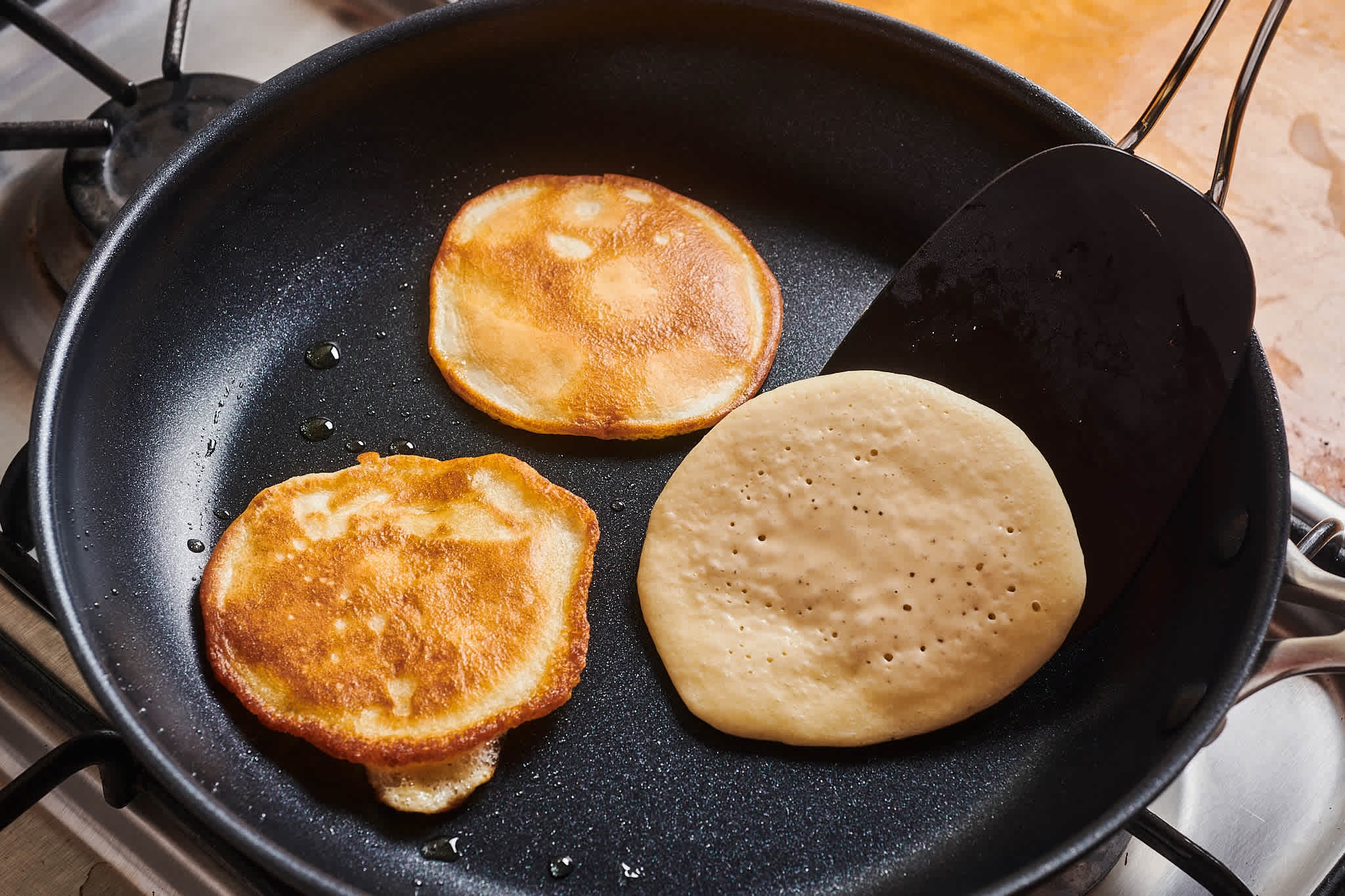
From a daily usability standpoint, the PureGlide Pro set executes core cooking tasks effortlessly. Nonstick performance out of the box is exceptional; delicate foods like sunny-side-up eggs, tilapia fillets, and crepes slide across the pan surface with minimal oil or butter required. The ergonomic stainless handles feature a subtle underside finger contour that improves control when pouring liquid or tilting the 12-inch skillet to drain fat. The balance between pan body weight and handle leverage feels substantial without becoming overly fatiguing during active sautéing.
However, practical engineering always involves trade-offs. While the solid cast stainless handles stay cool during quick burner tasks, they absorb ambient heat during extended sauce simmers or oven cycles. You will need silicone grips or cloth hot pads when handling these pots after twenty minutes on gas flame cooktops. Additionally, the flat stainless steel lid knobs can become slick when wet or greasy, requiring a firm grip when lifting hot lids to stir bubbling food.
Cleaning routine requirements represent another area where buyers must maintain reasonable expectations. That’s the catch with high-performance ceramic nonstick cookware: while Viking technically rates these pans as dishwasher safe, putting them through aggressive automated wash cycles with harsh detergent tablets will dull the ceramic shine and degrade release properties over time. To maintain peak slickness over a five-year window, hand washing with warm water, mild liquid soap, and a soft microfiber sponge is essential. Fortunately, because burnt cheese and dried egg slide off effortlessly, hand cleaning takes under thirty seconds per pan.
Storage space footprint is another design compromise worth noting. Because hard-anodized metal is dense and the pan walls are thick, stacking these pieces directly inside one another without protective felt dividers can cause the metal rims to chip the ceramic lining of nested pans. For a normal household with tight kitchen cabinets, factoring in an extra $15 USD for felt storage pads or vertical pan racks is a practical necessity to protect your investment.
Category Alternatives and Value Comparison
To contextualize the value proposition of the the gear, it helps to compare it against prominent market competitors in the non-toxic ceramic space. The Caraway Nonstick Ceramic Cookware Setcurrently retails for $395 USD on Amazon for a standard 4-piece core set with lids. Caraway gained widespread popularity through aggressive marketing and vibrant aesthetic colorways. Both sets utilize non-toxic ceramic inner linings free of synthetic fluoropolymers, but the structural execution differs significantly in terms of durability and heat handling.
Caraway pans use an aluminum body paired with a painted ceramic exterior enamel that, while attractive on social media, tends to show heat discoloration and scuff marks when exposed to high gas flames over time. Furthermore, Caraway cookware caps out at an oven temperature rating of 450°F compared to Viking’s higher 500°F ceiling. At $395 USD, Caraway charges a premium for included organizational accessories like magnetic pan racks and canvas lid holders, whereas the Viking set directs its manufacturing budget into thicker base metals and superior heat tolerance for $299 USD.
Another popular high-end alternative is the GreenPan Valencia Pro CeramicNonstick 11-Piece Set, priced at $399 USD on Amazon. GreenPan remains a foundational pioneer in ceramic nonstick technology, and their Valencia Pro line features Magneto 2.0 induction bases paired with hard-anodized aluminum bodies rated for oven temperatures up to 600°F. That heat rating beats Viking by 100°F, making GreenPan an exceptionally tough contender for heavy high-heat cooking.
That’s actually fair, but for a normal household watching their total spend, paying an extra $100 USD for GreenPan’s 600°F rating offers diminishing practical returns. Most home cooks rarely bake or sear nonstick cookware above 450°F, making Viking’s 500°F threshold more than adequate for daily family cooking routines. When evaluating raw cost-per-piece value, Viking matches GreenPan’s hard-anodized chassis quality and induction compatibility while retaining a lower price point during promotional sales periods.
Final Buyer Verdict: Long-Term Ownership Value
The the item Cookware Set delivers an impressive balance of high-end culinary engineering, non-toxic food safety, and realistic practical value. By pairing heavy-gauge anodized aluminum construction with an advanced PTFE-free ceramic release surface, Viking has eliminated the chemical health concerns associated with older nonstick sets while building hardware capable of surviving rigorous daily kitchen environments. The flat induction-ready base plates ensure uniform thermal delivery across diverse cooktop surfaces without hot spots or pan warping.
While long-term ceramic care requires hand washing and basic storage mindfulness to avoid rim chipping, these simple operational habits pay massive dividends in pan longevity. At its discounted price of $299 USD on Amazon, the set represents a smarter, more cost-effective long-term investment than replacing low-tier $100 USD department store cookware every year. For busy parents and budget-minded home cooks ready to upgrade to cleaner, professional-grade cookware, the the product set earns a strong recommendation for long-term kitchen ownership.