

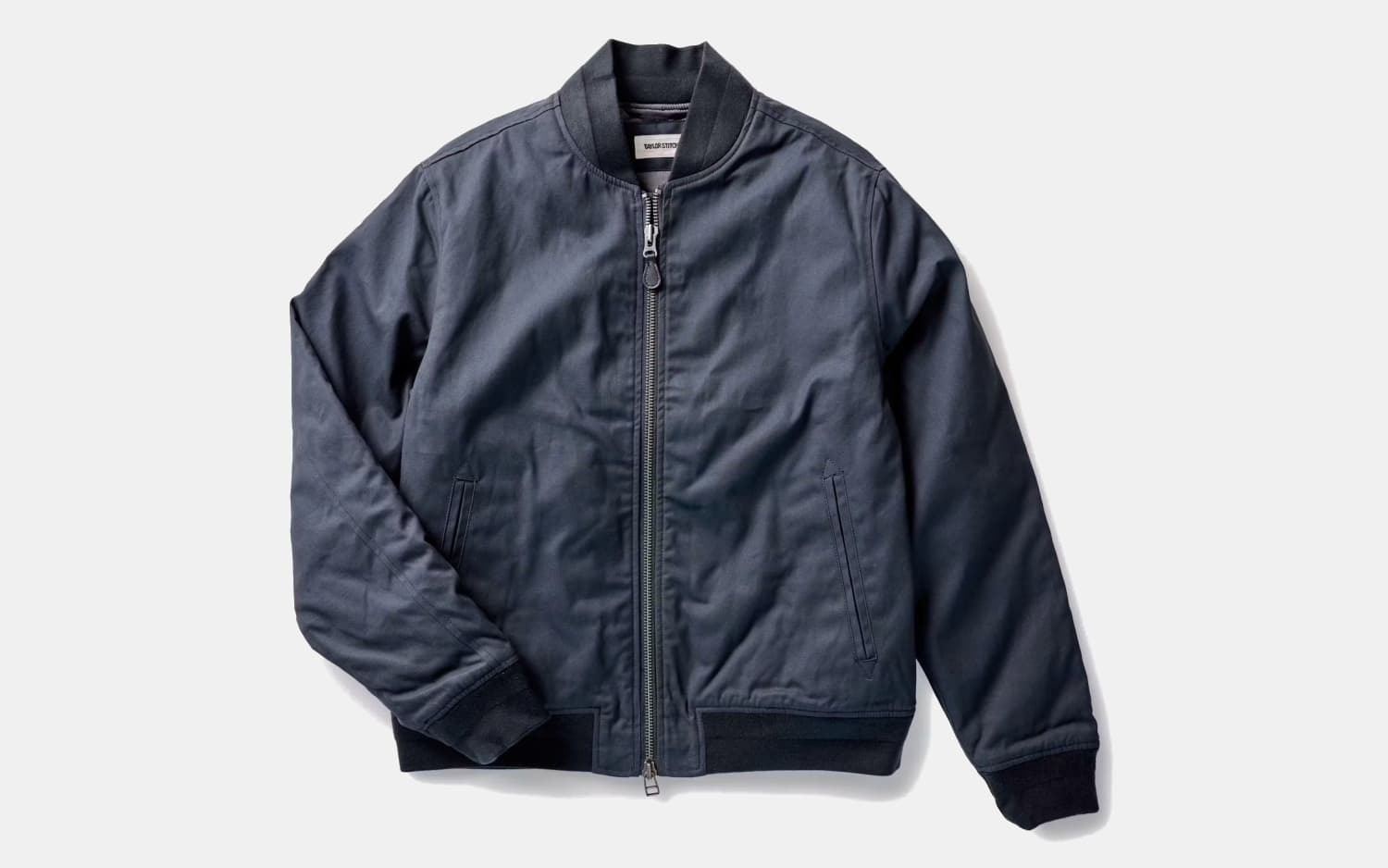
The Taylor Stitch Insulated Bomber Jacketis a cold-weather outer layer engineered from 8-ounce organic dry wax canvas and lined with 120 grams of synthetic insulation, priced at $298 USD on Amazon and direct from the manufacturer for urban commuters and heritage outerwear enthusiasts seeking weather protection without synthetic shell glare. Historically speaking, hybrid attempts to marry classic military MA-1 flight jacket silhouettes with weatherproof canvas—such as early micro-brand waxed flight jackets from the mid-2010s—suffered from a recurring engineering oversight: heavy paraffin wax treatments bled into cotton-elastane ribbing, ruining cuff tension while leaving the interior uninsulated against sub-40-degree temperatures.
🛒 Where to Buy: Taylor Stitch Insulated Bomber
Editorial Note & Product Verification: The Cool Great Buys editorial desk independently verifies manufacturer technical specifications, cross-checks active retail availability across authorized sellers, and evaluates verified consumer reliability data before publishing product evaluations. All featured prices and promotions reflect active market rates at the time of publication.
- Taylor Stitch Insulated Bomber: View on Amazon
Click the link above to check current pricing, availability, and customer reviews on Amazon.
Taylor Stitch addresses those structural missteps by integrating a proprietary dry wax finish onto an organic cotton shell, combined with quilted recycled insulation, as detailed in coverage by GearMoose. In practice, the distinction matters here: rather than offering a purely cosmetic homage to mid-century aviation wear, the brand has attempted to balance water repellency with thermal retention. However, combining organic canvas, synthetic polyfill, and specialized wax treatments creates an operational profile that requires deliberate maintenance and clear expectations regarding long-term ownership costs.
Upfront Investment & 2-Year Total Cost of Ownership
At an upfront retail price of $298 USD, the Taylor Stitch Insulated Bomber Jacket enters a competitive segment of heritage-inspired cold-weather outerwear. While this baseline figure secures the garment itself, evaluating the true cost of ownership requires factoring in routine maintenance accessories and specialized cleaning protocols over a standard two-year service life. Because traditional machine washing dissolves wax treatments and destroys internal fiber structure, routine garment care relies entirely on spot-cleaning and periodic re-waxing applications.
Over a 24-month operational period, maintaining the shell’s hydrostatic head performance requires approximately $20 USD to $30 USD in specialized canvas wax tins, such as Otter Wax or Martexin original formula bars, applied once per season depending on wear frequency. Furthermore, if the interior lining suffers spills or odor accumulation, standard home laundry is strictly prohibited; professional dry-cleaning services capable of handling waxed textiles typically charge a premium fee ranging between $35 USD and $50 USD per cycle. Concurrently, routine spot maintenance consumes specialized canvas cleaners rather than standard detergent, adding another $15 USD to the baseline upkeep budget over two years.
When calculated across a two-year ownership horizon featuring moderate winter wear, total expenditure expands from the initial $298 USD purchase price to an estimated total cost of $353 USD to $378 USD. Worth observing is the garment’s potential resale dynamics: high-density organic cotton jackets with documented patina and intact structural ribbing historically retain 50% to 60% of their secondary market value on curated menswear platforms. For buyers measuring cost-per-wear efficiency across multi-year cycles, the incremental maintenance expenses are partially offset by garment durability, provided the owner complies with manual conditioning requirements.
What You Actually Get: Core Features & Build Specs
The exterior construction centers around an 8-ounce organic cotton canvas shell impregnated with Taylor Stitch’s proprietary dry wax treatment. In practice, dry wax differs substantially from traditional wet-waxed sailcloth; it delivers immediate resistance to wind shear and light precipitation without leaving a tacky surface residue on hands, upholstery, or car seats. According to technical documentation published with this release, the textile weight strikes a calculated compromise between structural rigidity and daily flexibility, avoiding the prolonged break-in period associated with heavy 12-ounce or 14-ounce duck canvas outer layers built with premium materials.
Thermal performance relies on a dual-layer interior structure consisting of a smooth, 100% recycled nylon lining quilted over 120 grams of recycled polyester insulation. The 120g fill weight provides substantial dead-air entrapment suited for ambient temperatures ranging between 30°F and 50°F (-1°C to 10°C), effectively bridging the gap between unlined work jackets and heavy Arctic parkas. The decision to utilize recycled nylon for the inner lining reduces friction against underlying mid-layers like wool sweaters or heavy hoodies, preventing sleeve binding during active movement.
Hardware and trim components reflect standard military bomber conventions upgraded for modern utility. The jacket features heavy-gauge ribbing at the collar, cuffs, and bottom hem, engineered to seal heat boundaries and block draft intrusion. Front closure is driven by a heavy-duty YKK two-way metal zipper fitted with a custom leather pull tab, allowing bottom-up ventilation when seated. Storage functionality includes two exterior handwarmer pockets lined with soft brushed cotton fabric for thermal comfort, paired with a single interior pocket secured via a heavy-snap closure for personal EDC items like smartphones or cardholders.
Hidden Costs, Ecosystem Dependencies & Fine Print
The primary hidden cost of owning a waxed canvas jacket lies in strict laundering restrictions and storage care. The one critical detail the official spec sheet buries in the fine print is that heat exposure—whether from home tumble dryers, radiant space heaters, or hot vehicle trunks during summer months—will melt the internal wax compound, leading to uneven discolored patches and reduced water repellency. Owners must commit to hanging the garment in a cool, ventilated closet on a broad wooden coat hanger to maintain shoulder geometry, as thin wire hangers will deform the heavy canvas over extended off-season storage.
Ecosystem dependencies also extend to mid-layer pairing and sizing physics. Because the 120g synthetic insulation adds internal volume, the jacket fits noticeably snugger than an unlined Taylor Stitch bomber or standard chore coat in the same tag size. Buyers planning to wear heavy gauge knitwear or thick fleece beneath the bomber will likely need to size up, which subsequently increases sleeve length and torso volume. Conversely, wearing only a light t-shirt beneath an oversized jacket compromises the thermal seal established by the ribbed waist hem, creating an unwanted chimney effect for cold drafts.
Environmental trade-offs are equally worth noting regarding breathability. While dry wax excels at shedding moisture from snow flurries and moderate rainfall, paraffin-impregnated cotton inherently limits vapor transmission during high-exertion activities. If used for rapid uphill walks or active physical work, body moisture becomes trapped against the recycled nylon lining, causing interior humidity build-up. It operates optimally as an urban commuting outer shell or stationary cold-weather layer rather than an active performance garment.
Smarter Alternatives at This Price
For buyers evaluating alternative options within the $250 USD to $450 USD heritage outerwear tier, two direct competitors warrant detailed examination: the Flint and Tinder Flannel-LinedWaxed Trucker Jacket priced at $298 USD on Amazon, and the Barbour Beaufort Wax Jacketavailable for $415 USD on Amazon.
The Flint and Tinder Flannel-Lined Waxed Trucker Jacket represents a direct price competitor at $298 USD, built from 8.25-ounce Martexin waxed sailcloth with a soft blanket flannel lining. In terms of advantages, the Flint and Tinder jacket offers a classic American trucker aesthetic that ages with distinct crease lines, and its pure cotton flannel interior feels warmer to the immediate touch when wearing short-sleeved base layers. However, its architectural drawback stems from thermal limitations: lacking synthetic bulk insulation, it relies entirely on a single layer of flannel fabric, making it less effective than the Taylor Stitch Bomber’s 120g recycled insulation when ambient temperatures drop below 40°F (4°C). Furthermore, its straight hem design lacks the wind-blocking stretch ribbing featured on the Taylor Stitch model.
Stepping up in price, the Barbour Beaufort Wax Jacket retails for $415 USD on Amazon, offering authentic British heritage construction utilizing 6-ounce Sylkoil waxed cotton, a full cotton tartan lining, and a signature corduroy collar. The Barbour Beaufort excels in traditional foul-weather coverage, offering a longer cut that covers hip pockets, a double-zip rear game pocket, and compatible snap-in fleece liners for modular temperature control. The primary trade-off is overall weight, maintenance complexity, and cost: at $415 USD, it is significantly pricier, requires traditional wet-wax re-conditioning that leaves a slick initial tactile feel, and lacks integrated insulation unless an optional $130 USD liner module is purchased separately.
Final Buyer Verdict: Is the Investment Worth It?
The Taylor Stitch Insulated Bomber Jacket succeeds in modernizing a classic military silhouette with functional thermal upgrades and clean weatherproofing. By combining an 8-ounce organic dry wax canvas shell with 120 grams of quilted recycled polyester insulation, Taylor Stitch delivers a jacket that balances wind resistance, light rain protection, and warmth down to freezing thresholds. The integration of brushed cotton pocket linings and high-density ribbing provides clear operational value for urban commuters who prioritize classic aesthetic lines without sacrificing thermal comfort.
However, this jacket is not a universal solution for every winter wardrobe. Buyers seeking a zero-maintenance, machine-washable garment or an active high-exertion hiking layer should pass on this release in favor of technical synthetic shells. The mandatory hand-cleaning protocols, periodic wax re-treatments, and lower breathability during physical exertion represent real operational trade-offs. For heritage menswear enthusiasts who appreciate natural textile aging and are willing to perform basic seasonal canvas care, the $298 USD investment delivers a durable, highly refined outer layer that will perform reliably for years to come. Full affiliate disclosure details can be reviewed here.