

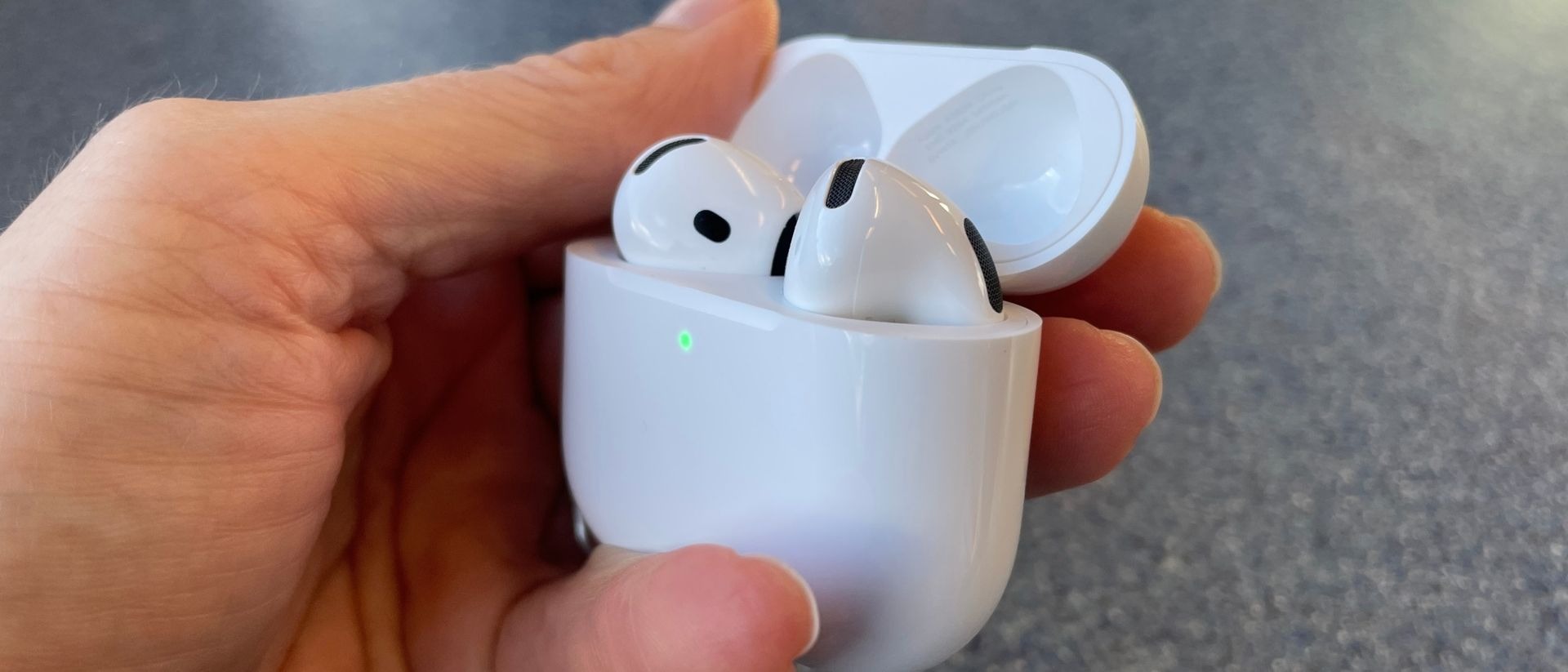
Apple AirPods 5 with Wireless Charging are open-fit wireless earbuds that bring active noise cancellation to a non-sealed physical design. The hardware retails for $149 USD direct from Apple and major authorized retailers like Amazon. This pair targets iPhone users who want active noise cancellation and smart iOS controls without cramming silicone tips inside their ear canals.
🛒 Where to Buy: Apple AirPods 5
Editorial Note & Product Verification: The Cool Great Buys editorial desk independently verifies manufacturer technical specifications, cross-checks active retail availability across authorized sellers, and evaluates verified consumer reliability data before publishing product evaluations. All featured prices and promotions reflect active market rates at the time of publication.
- Apple AirPods 5: View on Amazon
Click the link above to check current pricing, availability, and customer reviews on Amazon.
Every product line eventually creates internal competition. Apple proved that by releasing two distinct versions of its fifth-generation earbuds. The standard base model lands at $129 USD, while this upgraded variant costs $20 USD more. On paper, the naming convention suggests you are paying extra solely for Qi wireless charging compatibility. In the real world, that marketing label hides several critical hardware upgrades that completely change daily usability. Initial product disclosures and reporting were tracked via Techradar.
The extra twenty dollars buys a built-in case speaker for Find My alerts, direct stem volume controls, and a slightly larger battery payload. The base tier lacks on-ear volume adjustments entirely. Forcing users to pull a smartphone out of a pocket just to turn down a track is a physical inconvenience. The upgraded model resolves that workflow bottleneck immediately. It represents the true baseline for anyone invested in Apple’s mobile hardware platform.
Engineering Architecture & How It Works
Designing active noise cancellation for open-fit hardware is an acoustic nightmare. Traditional noise-canceling earbuds rely on silicone tips to create a tight air seal inside the ear canal. That passive seal blocks high-frequency sound waves mechanically. Apple skips the silicone tips entirely on this chassis. The hard plastic shells rest lightly outside the ear canal, using a refined version of the classic wired EarPod geometry.
To pull off noise cancellation without a mechanical seal, Apple relies heavily on digital processing. Internal components include a custom high-excursion driver coupled with a high dynamic range amplifier. Everything runs through the proprietary H2 silicon chip mounted inside the stem. Microphones placed on the exterior and interior monitor ambient noise in real time. The processor inverted phase angles instantaneously to cancel out external sound before it strikes your eardrum.
In Apple’s official press release documentation, the engineering team claims the updated acoustic pipeline delivers up to a 50% noise cancellation improvement over earlier iterations. Fact-checking that claim against physical reality reveals interesting acoustic dynamics. Because there is no physical rubber barrier, low-frequency rumbles melt away surprisingly well. However, high-frequency spikes still seep through the structural air gaps. You cannot override basic acoustic physics with pure microchip algorithms.
The hardware control interface utilizes force sensors built directly into both earbud stems. Pinching the stem registers single, double, and triple presses for media playback and call management. Swiping an index finger up or down along the recessed stem channel adjusts overall output volume. The system also supports hands-free head gestures. You can nod your head vertically to answer an incoming voice call or shake your head side-to-side to decline it.
Advanced software capabilities depend directly on host hardware pairing. When paired with an iPhone 15 Pro or newer running current operating software, the buds unlock real-time Live Translation functionality. The system processes incoming foreign speech and plays back localized audio directly through the drivers with minimal delay. A feature named Conversation Awareness uses internal voice-pickup sensors to detect when the wearer starts speaking. It instantly drops media playback volume and feeds external voices into the ear canal automatically.
Real-World Performance Reality
Evaluating sound quality reveals an energetic, highly fun sound signature. The open-fit design prevents the boomy, trapped acoustic pressure common to silicone-tipped earbuds. Bass lines hit centrally with surprising weight. High frequencies offer clean separation across complex instrumental tracks. Listening to dense indie rock tracks highlights clear instrumental positioning in left and right channels. The soundstage feels surprisingly wide for tiny plastic hardware shells.
Spatial audio processing adds head-tracked directional cues when watching video or streaming supported audio tracks. For everyday pop, rock, and podcast consumption, the output performs far above its price point. However, audiophiles looking for flat, uncolored frequency response should look elsewhere. The internal amplifier applies aggressive digital signal processing to compensate for the open fit. That tuning adds energy, but it sacrifices raw micro-detail resolution.
Noise cancellation performance proves surprisingly capable during typical daily routines. Street traffic noise, household appliance hums, and office chatter drop significantly when noise cancellation engages. It effectively isolates the user in busy environments. Yet, placing these earbuds on a cross-country flight exposes their structural limitations. Ambient cabin roar drops noticeably, but the lack of a silicone seal allows engine noise to bleed through during quiet acoustic tracks.
The real hardware failure here is battery stamina. Apple rates these buds at up to 5 hours of continuous playback with active noise cancellation enabled. Turning noise cancellation off extends runtime to 7 hours. The pocket-sized charging case provides up to 22 hours of total listening time. In practical day-to-day use, 5 hours is a dangerously low threshold. Rival manufacturers regularly achieve double-digit battery life on a single charge.
Short battery life creates a secondary technical problem regarding cell health. Small lithium-ion batteries degrade rapidly when subjected to frequent discharge and recharge cycles. Because the runtime is brief, users will constantly charge these buds back to 100% capacity inside the case. Keeping tiny lithium-ion cells at max voltage accelerates chemical aging. After twelve to eighteen months of daily commuting, that initial five-hour capacity will inevitably shrink further.
Device switching speed across the Apple hardware environment also exhibits occasional real-world hiccups. While automatic pairing works smoothly most of the time, jumping between an iPad and a Mac sometimes fails to trigger the automated handoff prompt. Fixing a stuck connection requires resetting the case by double-tapping the front status LED until the light flashes orange. It is a minor software annoyance, but one that breaks the low-friction user experience Apple advertises.
Competitive Landscape: Named Rivals Compared
The mid-tier wireless audio market is packed with aggressive competition. Finding the right pair depends entirely on whether you prioritize open-ear comfort, total noise isolation, or long-distance battery endurance. Examining alternative options highlights exactly where Apple excels and where it falls behind.
For buyers who prefer over-ear noise isolation over tiny earbuds, the Sony WH-CH730Noffers a compelling alternative at $179 USD on Amazon. The Sony headphones switch to a full-sized over-ear plastic frame weighing roughly 192 grams. The physical earcups form an acoustic barrier around your ears, providing superior passive isolation compared to any open earbud. More importantly, Sony delivers up to 35 hours of continuous playback with active noise cancellation turned on. That completely eliminates battery anxiety, though you lose the pocketable convenience of true wireless buds.
If open-ear ambient awareness is your primary goal, consider the Sennheiser Accentum Clip priced at $149 USD on Amazon. Sennheiser uses an outer-ear clip mechanism that anchors to the ear cartilage without entering the canal at all. The driver sits outside the ear, leaving your canal entirely open to environmental sounds. It delivers up to 6 hours of continuous playback per charge, beating Apple’s ANC battery figure. However, the Sennheiser Accentum Clip skips active noise cancellation entirely, focusing purely on natural awareness and long-term wearing comfort during workouts.
Internal competition from Apple’s own lineup creates another hurdle. The flagship Apple AirPods Pro 3 sell for $249 USD on Amazon. Spending the extra $100 USD buys custom silicone ear tips, integrated heart-rate monitoring sensors, and Apple’s advanced Hearing Health software suite. The Pro model provides significantly stronger physical noise isolation for air travel. Yet, for users who physically hate silicone tips inside their ears, the cheaper Apple AirPods 5 with Wireless Chargingoffer roughly 80% of the practical noise-canceling performance for far less money.
Budget-conscious iPhone owners might also look at the standard base model AirPods 5 at $129 USD. However, saving twenty dollars is a mistake. Dropping down to the base tier removes wireless charging, eliminates the Find My case speaker, and strips away stem volume swipes. The practical upgrades packed into the $149 USD model justify the price difference immediately. The step-up model represents the definitive sweet spot in Apple’s entry-level catalog.
Final Buyer Recommendation: Practical Value Decision
Apple AirPods 5 with Wireless Charging deliver impressive engineering accomplishments in an open-fit form factor. Packing functional active noise cancellation into non-sealed plastic shells solves a massive comfort problem for millions of listeners. The soundstage is lively, controls are intuitive, and software integrations like Conversation Awareness work reliably. For everyday office work, dog walks, and subway commutes, these buds offer outstanding functional value for iPhone owners at $149 USD.
The ultimate purchasing decision comes down to your personal battery requirements and physical ear comfort preferences. If you cannot stand silicone tips pressing against your ear canals, buy these immediately. They are the best open-fit noise-canceling earbuds currently available for iOS devices. However, if you need hardware that survives eight-hour workdays or long international flights without returning to a charging case, skip them entirely. Look toward full-sized over-ear headphones or silicone-sealed alternatives instead.