

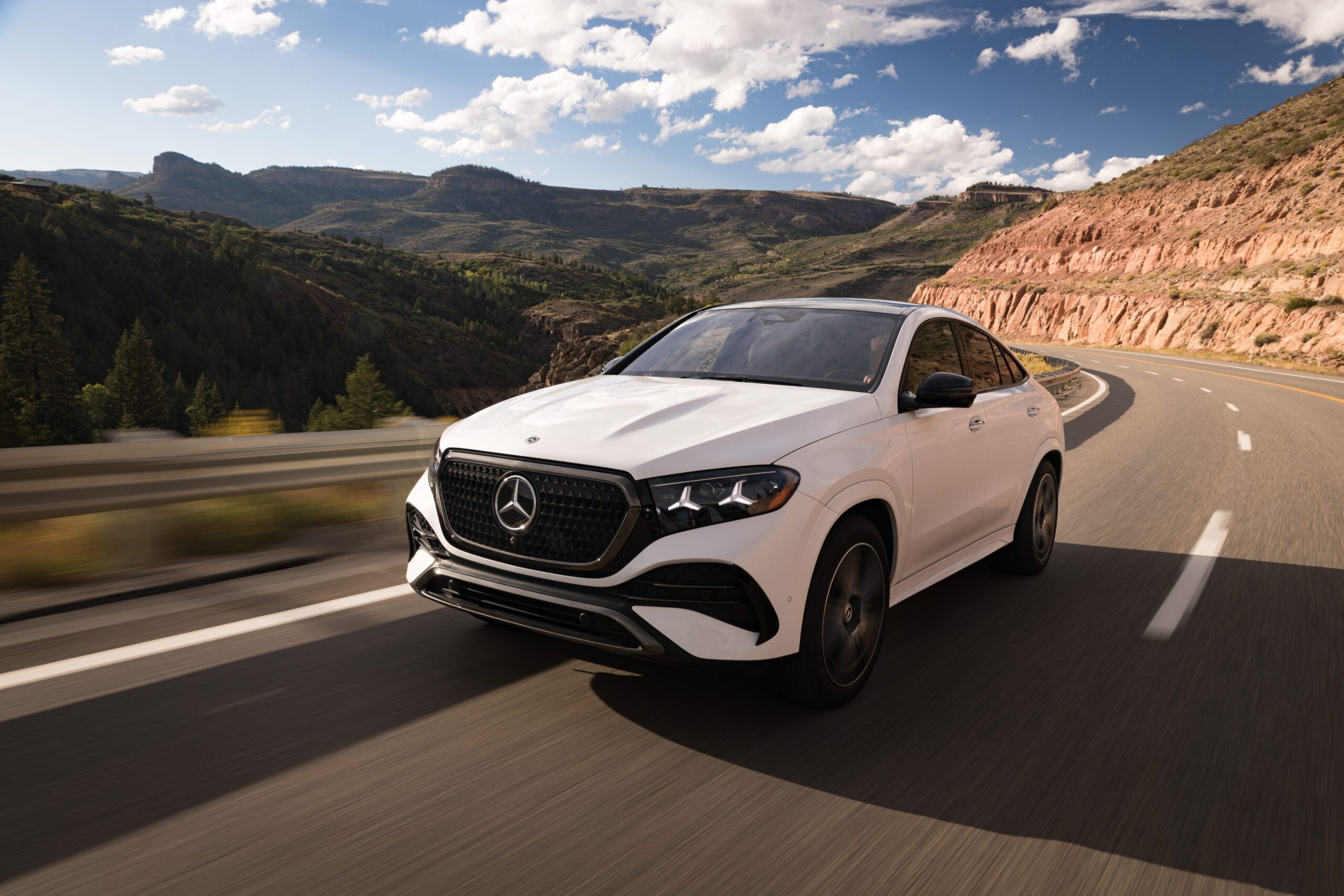
The 2027 Mercedes-Benz GLE and GLS are mid-size and full-size luxury sport utility vehicles featuring updated mild-hybrid and plug-in hybrid powertrains, a revised electrical architecture, and refreshed exterior styling. Pricing starts at $69,850 USD for the entry-level GLE350 4Matic and scales up to $122,500 USD for the flagship GLS580 4Matic direct from Mercedes-Benz. These vehicles are designed for affluent families and executive buyers seeking high-end passenger comfort, advanced driver-assistance systems, and highly refined road manners.
🛒 Where to Buy: NOCO Boost Plus GB40 Jump Starter
- NOCO Boost Plus GB40 Jump Starter: View on Amazon
Click the link above to check current pricing, availability, and customer reviews on Amazon.
To keep these aging platforms competitive against newer rivals, Mercedes-Benz has executed a second major refresh for both models. The visual updates are subtle but distinct, characterized by redesigned front bumpers and new grilles filled with rows of tiny three-pointed stars. The lighting signatures have also been revised; the GLE features horizontal star elements in its headlights, while the larger GLS stacks them vertically. At the rear, the distinction matters here: two star elements in each taillight denote a GLE, while three stars indicate the larger GLS. It is a meticulous, if slightly confusing, branding exercise designed to signal prestige to onlookers. Initial product disclosures and reporting were tracked via Caranddriver.
Under the skin, these aesthetic updates are supported by minor aerodynamic refinements. The engineers have reshaped the front wheel spoilers and optimized the cladding around the rear wheel arches, reducing the drag coefficient slightly to improve high-speed efficiency and cabin quietness. Buyers can choose from a revised palette of paint finishes, including new metallic options like Alpine Grey and Sodalite Blue, alongside an expanded selection of alloy wheels ranging from standard 19-inch designs to massive 23-inch AMG multi-spoke rollers. These larger wheel options dramatically enhance the road presence of both vehicles, though they come with distinct ride-quality compromises that discerning buyers should carefully weigh before signing the purchase order.
Upfront Investment & 2-Year Total Cost of Ownership
Acquiring a 2027 Mercedes-Benz SUV requires a substantial upfront capital allocation, particularly since the manufacturer has streamlined the lineup by eliminating the more affordable rear-wheel-drive configurations. The entry-point Mercedes-Benz GLE 350 4Matic now starts at $69,850 USD direct from Mercedes-Benz. Stepping up to the more powerful inline-six GLE450 4Matic requires $76,250 USD, while the stylized GLE450 4Matic Coupe commands $82,750 USD. The heavily revised plug-in hybrid GLE500e 4Matic is priced at $82,450 USD, and the V-8-powered GLE580 4Matic tops the mid-size range at $97,750 USD. For those requiring three-row utility, the larger GLS starts at $95,500 USD for the GLS450 4Matic and peaks at $122,500 USD for the GLS580 4Matic.
Beyond the initial purchase price, a realistic two-year total cost of ownership (TCO) analysis reveals significant ongoing expenditures that buyers must anticipate. Historically speaking, German luxury SUVs in this class suffer from steep depreciation curves, typically losing between 35% and 45% of their residual value within the first 24 months. Scheduled maintenance is another notable factor; routine Mercedes-Benz Service A and Service B visits, which include synthetic oil changes, cabin filter replacements, and brake fluid flushes, are projected to cost approximately $1,800 USD over the first two years. Furthermore, replacing the massive staggered-width performance tires on models equipped with 21-inch or larger wheels can easily add another $2,200 USD to the maintenance ledger within the first 20,000 miles, as the heavy curb weights of these vehicles accelerate tread wear. Insurance premiums for vehicles of this valuation are also premium, averaging $3,200 USD annually depending on the driver’s profile and region.
Fuel costs represent a major variable in the TCO equation, particularly for the non-hybrid V-8 models. Analyzing the manufacturer spec sheet reveals that the GLS580 carries an EPA-estimated combined fuel economy of just 16 to 21 mpg, requiring a steady diet of premium unleaded fuel. Conversely, the plug-in hybrid GLE500e offers a compelling financial offset for drivers with short daily commutes, delivering an EPA-estimated 52 miles of all-electric range and a combined rating of 60 MPGe. However, the GLE500e’s upfront premium of $82,450 USD represents an $8,850 USD increase over the previous-generation plug-in model, meaning it will take several years of gasoline savings to amortize the initial surcharge. When factoring in depreciation, insurance, premium fuel, and maintenance, the estimated two-year TCO for a mid-tier GLE450 4Matic is projected to hover around $34,000 USD, while the flagship GLS580 4Matic will likely exceed $52,000 USD over the same period. Out-of-warranty repair projections are also high, making lease structures or extended factory warranties highly advisable for those planning to keep the vehicle beyond the standard four-year/50,000-mile coverage window.
What You Actually Get: Core Features & Build Specs
Underpinning the 2027 refresh is a completely overhauled electrical architecture that aligns both the GLE and GLS with the hardware standards of the flagship S-Class. This upgrade is not merely academic; it enables seamless over-the-air (OTA) updates and integrates the necessary sensor suite for Mercedes’s upcoming Hands-Free Highway Assist and City Pro systems. In practice, the physical cabin is dominated by the standard “Superscreen” layout, which unites a 12.3-inch driver display, a 12.3-inch central infotainment touchscreen, and a newly added 12.3-inch passenger touchscreen under a single glass pane. The physical HVAC vents have been subtly reshaped, and thankfully, they retain manual directional controls rather than forcing users to navigate digital submenus. The overall interior build quality remains exceptionally high, featuring standard open-pore wood trims, hand-stitched dashboard panels, and robust center console grab handles that serve as a nod to the platform’s off-road heritage.
The powertrain lineup has been thoroughly massaged to deliver linear, uninterrupted torque. The entry-level GLE350 utilizes a 2.0-liter turbocharged four-cylinder engine (designated M254 Evo) producing 255 hp and 295 lb-ft of torque, now aided by an electric compressor to mitigate turbo lag. The mid-tier GLE450 and GLS450 employ a 3.0-liter turbocharged inline-six engine, which benefits from combustion and breathing updates to deliver 375 hp and 413 lb-ft of torque—a notable increase of 44 lb-ft. The plug-in hybrid GLE500e subverts the old four-cylinder setup for a refined 3.0-liter inline-six combined with an electric motor, generating a total system output of 429 hp and 502 lb-ft of torque. At the apex, the GLE580 and GLS580 inherit the S-Class’s 4.0-liter twin-turbo M177 Evo V-8, which produces 530 hp and 553 lb-ft of torque. All engines are paired with a nine-speed automatic transmission and a 48-volt mild-hybrid system that integrates an electric starter-generator capable of contributing an extra 20 hp and 148 lb-ft of torque during low-speed acceleration.
To achieve the level of refinement expected at this price point, Mercedes engineers went to extraordinary lengths with the V-8 engine’s architecture. According to technical documentation published with this release, the transition to a flat-plane crankshaft design—historically utilized in high-revving sports cars to improve exhaust gas scavenging and thermal efficiency—typically introduces harsh secondary vibrations. To counteract this inherent engineering trade-off, the M177 Evo V-8 incorporates counterweighted balance shafts and a highly specific exhaust camshaft timing offset for each cylinder bank. This meticulous calibration ensures the engine retains a muted, sophisticated acoustic profile rather than the raw, aggressive bark associated with flat-plane engines from rival performance brands. The result is an incredibly smooth power delivery that masks the vehicle’s speed, whispering up to highway velocities with almost zero mechanical intrusion into the passenger cabin.
Chassis dynamics have been similarly refined across three distinct suspension configurations. The GLE comes standard with traditional steel springs and adaptive dampers, while a conventional air suspension and the advanced electrohydraulic E-Active Body Control system are optional. The larger GLS features the standard air suspension, with the electrohydraulic setup remaining an upgrade. Both air-sprung systems now utilize cloud-based predictive damping alongside the existing camera-based road-scanning technology. This allows the vehicle to receive real-time pavement telemetry from the cloud, preparing the dampers for upcoming potholes or expansion joints before the tires physically make contact. In real-world testing, this predictive capability noticeably reduces secondary body motions over broken pavement, though sharp, high-frequency impacts can still occasionally penetrate the cabin when riding on the optional 22-inch wheels.
Hidden Costs, Ecosystem Dependencies & Fine Print
While the inclusion of advanced hardware is a selling point, examining the fine print of the hardware documentation reveals that several of the most heavily promoted features are locked behind future software updates or subscription paywalls. The sensors required for the Hands-Free Highway Assist and City Pro driving suites are physically installed on every 2027 model, yet these systems will not be active at delivery. Instead, owners must wait for a future over-the-air update, which Mercedes-Benz has historically monetized through annual subscription packages. This “hardware-as-a-service” model means buyers are effectively paying upfront for physical sensors while facing ongoing recurring costs to actually utilize them. This trend is becoming increasingly common across the luxury segment, but it remains a point of frustration for buyers who expect a fully functional vehicle at the time of purchase.
The standard Superscreen also introduces its own set of ecosystem dependencies and hidden frustrations. The passenger-side 12.3-inch touchscreen is a prime example of technology for technology’s sake; in practice, co-drivers almost exclusively rely on their personal smartphones or tablets, rendering the third screen redundant. Furthermore, the system’s reliance on the Mercedes-Benz User Experience (MBUX) software means that to get the most out of the integrated navigation, online music streaming, and the new AI assistant—which manifests as one of three customizable digital blobs on the screen—owners must maintain an active Mercedes me Connect subscription after the initial trial period expires. Without this subscription, the infotainment system loses its real-time traffic data, advanced voice recognition capabilities, and remote vehicle monitoring functions, leaving owners with a severely degraded user experience.
Physical touchpoints also reveal some lingering ergonomic compromises. While Mercedes-Benz responded to widespread customer complaints by replacing the steering wheel’s capacitive volume slider with a physical roller and the cruise control with a mechanical rocker, the directional pad on the right spoke remains a capacitive-touch surface. This hybrid layout can lead to accidental inputs during spirited driving, such as unintentionally changing the radio station or altering the driver’s instrument cluster layout while turning the wheel. Additionally, the E-Active Body Control suspension, while technically impressive, can feel as unnatural as ever in practice. The system actively leans the SUV into corners like a motorcycle to counteract body roll; while this works flawlessly to defy physics on tight curves, the sensation can be disorienting for passengers accustomed to traditional vehicle dynamics, representing a subjective comfort trade-off that may not appeal to all buyers.
Smarter Alternatives at This Price
For buyers evaluating the mid-size luxury segment, the BMW X5 remains the most formidable and direct competitor to the Mercedes-Benz GLE. The X5, particularly in its xDrive40i trim, features a highly acclaimed 3.0-liter turbocharged inline-six engine that is widely considered the gold standard for smoothness, thermal efficiency, and long-term reliability. Unlike the GLE, which prioritizes isolated comfort, the BMW X5 offers a more engaging and athletic driving experience without sacrificing ride quality. Its steering is more communicative, and its traditional physical controls are generally easier to operate on the move. Furthermore, the X5’s infotainment system, while highly digital, does not lock as many core convenience features behind subscription paywalls, making it a more straightforward and less stressful ownership proposition over a multi-year period.
Moving up to the full-size three-row segment, the GLS faces its stiffest competition from the BMW X7 and the Genesis GV80. The BMW X7 offers a nearly identical footprint but delivers superior third-row legroom and a more sophisticated split-tailgate design that is highly practical for tailgating or loading heavy cargo. On the other hand, the Genesis GV80 presents an incredibly compelling value alternative to the mid-size GLE. While it lacks the historical prestige of the three-pointed star, the Genesis offers a meticulously crafted cabin, a whisper-quiet ride, and a comprehensive suite of standard driver-assistance features for roughly fifteen thousand dollars less than a comparably equipped GLE. Genesis also backs its product with an industry-leading ten-year/100,000-mile powertrain warranty, which stands in stark contrast to the relatively brief four-year coverage provided by Mercedes-Benz.
For buyers who are willing to stretch their budgets beyond the standard GLS pricing, the Land Rover Range Rover and Range Rover Sport offer an unmatched level of British aristocratic charm and off-road capability. While the Range Rover has historically suffered from a spotty reliability record, its peerless brand cachet, commanding driving position, and ultra-luxurious material choices make it a highly desirable alternative for executive buyers. Ultimately, while the 2027 Mercedes-Benz GLE and GLS represent highly engineered, technologically advanced packages, their heavy reliance on subscription-based features and complex hybrid powertrains may alienate buyers seeking a more traditional, hassle-free luxury experience. For those who value driving dynamics, the BMW alternatives remain superior, while the Genesis GV80 represents a far smarter financial decision for the pragmatic luxury buyer. Overall, this represents a dependable option for buyers seeking practical performance in this category, provided they are willing to accept the realities of the modern subscription-era luxury landscape.