

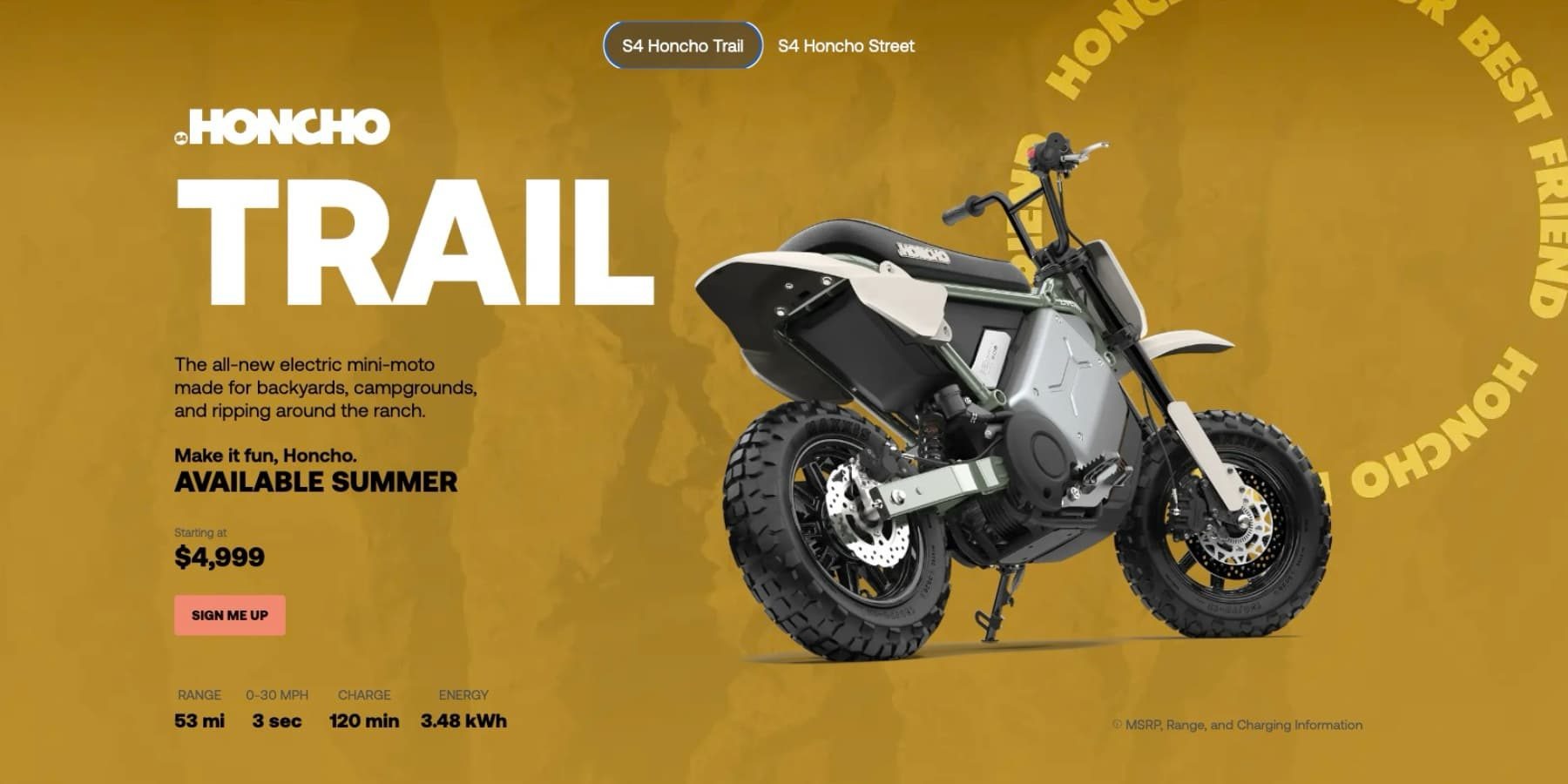
LiveWire’s expansion into lightweight, modular electric two-wheelers—exemplified by the upcoming S4 Honcho line and the dirt-focused DUST platform—represents a deliberate pivot away from heavy, high-voltage electric motorcycles toward accessible urban and trail machinery. With entry-level street configurations like the S4 Honcho Street starting at $9,999 USD direct from LiveWire, the manufacturer is targeting urban commuters and recreational trail riders who find full-sized electric cruisers prohibitively expensive and physically cumbersome. This multi-tiered hardware strategy will be formally showcased at the EICMA trade exhibition in Milan from November 5 through 8, 2026, following preliminary technical spec disclosures scheduled for November 2.
🛒 Where to Buy: Level 2 Portable EV Charger 240V
- Level 2 Portable EV Charger 240V: View on Amazon
Click the link above to check current pricing, availability, and customer reviews on Amazon.
Historically speaking, the primary barrier to adoption in the premium electric motorcycle segment has been the imbalance between retail pricing, battery weight, and practical urban range. LiveWire’s early offerings, specifically the original LiveWire ONE priced at $22,799 USD and the middleweight S2 Del Mar at $15,499 USD, catered to early adopters willing to pay a substantial premium for rapid straight-line acceleration and high-voltage DC fast-charging capabilities. However, these heavier architectures required extensive active liquid cooling and rigid structural battery enclosures, pushing curb weights beyond 430 lbs to 500 lbs. This created a vacant middle ground between lightweight e-bikes and full-scale street motorcycles—a gap LiveWire is now attempting to systematically capture through a unified ladder of smaller, lighter vehicles.
State of the Category & What Changed
The contemporary personal electric vehicle landscape exhibits a sharp division between lightweight unhomologated pit bikes and heavyweight highway-capable motorcycles. The former often lack street legality, DOT-compliant lighting, and formal dealer support, while the latter present physical and financial barriers for casual riders. LiveWire’s strategic shift addresses this divide by broadening its product spectrum from juvenile STACYC balance bikes at the entry point, through the mid-tier lightweight S4 Honcho series, up to specialized off-road variants derived from acquiring the assets of Dust Moto earlier this year.
At EICMA 2026, LiveWire will display this unified line alongside its majority shareholder, Harley-Davidson. The primary hardware highlight is the public reveal of the S4 Honcho Skate, a previously unseen urban utility variant that expands upon the existing S4 Honcho Street and S4 Honcho Trail models. Simultaneously, LiveWire plans to debut production-intent iterations of the DUST Hightail and DUST Spur, both aimed at a 2027 market arrival. While the S4 Honcho Street undergoes its immediate European commercial launch following the show, preliminary technical specifications for the Skate and DUST models will be released on November 2, with final production specs and regional pricing expected in the first quarter of 2027.
According to technical documentation published with this release by LiveWire, the overarching goal of this expanded portfolio is to establish a clear upgrade path for riders. Rather than treating electric two-wheelers as isolated niche products, the company is attempting to construct a unified brand pipeline that moves consumers seamlessly from small-displacement recreational hardware to highway-legal urban transit. The distinction matters here: success in this segment depends less on achieving maximum top speed and more on minimizing production manufacturing costs and physical curb weight.
Generational Delta: The Engineering Upgrades That Matter
The primary engineering delta between LiveWire’s flagship S2 platform and the new S4 Honcho platform lies in the transition from a high-voltage, liquid-cooled architecture to a simplified, modular low-to-medium voltage design. The original premium full-size electric motorcycles produced by the brand utilized complex battery-as-a-frame structural casings operating at upwards of 300V. In contrast, the S4 platform relies on a streamlined central chassis core designed to accept scalable air-cooled battery modules operating between 48V and 100V. This engineering trade-off trades fast DC charging support for a dramatic reduction in dry weight and manufacturing complexity.
By eliminating heavy liquid-cooling radiators, coolant pumps, high-voltage contactors, and heavy-gauge shielded cabling, the S4 chassis achieves a targeted vehicle weight situated between 180 lbs and 240 lbs depending on trim. This represents a weight reduction of roughly 200 lbs compared to the S2 Del Mar. The modular nature of the S4 chassis allows LiveWire to swap subframes, swingarms, and suspension components cleanly. The S4 Honcho Street employs 17-inch cast aluminum wheels with street-oriented valving, while the S4 Honcho Trail integrates a 19-inch front wheel, spoked rims, and extended suspension travel for light unpaved fire roads. The newly introduced S4 Honcho Skate appears to leverage a lower standover height, altered rake geometry, and integrated cargo mounting points optimized for dense urban maneuvering.
Similarly, the DUST platform development represents an adaptation of Dust Moto’s lightweight dirt bike architecture into LiveWire’s serial manufacturing pipeline. The DUST Hightail and DUST Spur utilize lightweight aluminum alloy perimeter frames paired with high-torque mid-mount motors. Rather than relying on heavy chain-reduction gearboxes, these models favor high-efficiency primary belt or direct chain drives tuned for low-speed off-road throttle modulation. The engineering focus for these 2027 units focuses squarely on mass centralization, ensuring that battery mass sits directly over the center of gravity to emulate the handling dynamics of a traditional 125cc to 250cc internal combustion motocross bike.
Everyday Usability Trade-Offs & Adoption Barriers
While reduced physical weight and lower retail pricing make the S4 and DUST lines significantly more approachable, these design choices introduce inherent thermal and operational compromises. Examining the fine print of the hardware documentation reveals that the air-cooled battery packs utilized in the S4 platform rely entirely on ambient airflow for thermal dissipation. In practice, sustained operation at full throttle or repeated high-speed runs on multi-lane highways will elevate internal cell temperatures, triggering automatic software thermal throttling. This protective measure scales back power delivery to protect lithium-ion cell chemistry, effectively limiting long-distance high-speed cruising capability.
Furthermore, the elimination of CCS Level 3 fast-charging hardware—done deliberately to save 12 lbs to 15 lbs of onboard component weight and trim retail costs—means owners must rely exclusively on Level 1 (120V AC) wall outlets or standard Level 2 (240V AC) AC chargers. The one critical detail the official spec sheet buries in the footnotes is that total energy capacity on the lightweight S4 modular frame is capped around 4.0 kWh to 5.5 kWh. Consequently, riders can anticipate a realistic urban operating range between 40 miles and 60 miles under moderate throttle application, dropping down to under 25 miles if operated continuously near its maximum output.
It is worth observing that these battery capacity constraints severely restrict geographic utility. For urban apartment dwellers without dedicated ground-floor garage access or accessible Level 1 outlets, charging a non-removable or heavy modular battery pack poses a genuine logistical hurdle. Furthermore, while the physical curb weight of sub-250 lb machines makes them exceptional for tight city traffic and low-speed parking maneuvers, their lighter mass leaves riders far more susceptible to highway crosswinds and turbulence from commercial truck traffic compared to full-sized 500 lb roadsters.
Category Alternatives and Rival Solutions
Evaluating LiveWire’s strategy requires directly comparing its lightweight offerings against established category competitors operating in the middleweight electric and dual-sport sectors.
The primary benchmark in the street-legal dual-sport and supermoto class remains the Zero FXE, which carries a starting price of $12,495 USD direct from authorized Zero Motorcycles dealerships. The Zero FXE is equipped with a 7.2 kWh Z-Force lithium-ion battery pack and an interior permanent magnet motor capable of producing 46 hp and 78 lb-ft of peak torque. In practice, the FXE offers superior top-end performance, reaching sustained speeds of up to 85 mph with an urban range reaching close to 100 miles. However, the FXE carries a price tag that is $2,496 USD higher than the baseline LiveWire S4 Honcho Street, weighs significantly more at 298 lbs, and relies on a monocoque frame design that lacks the modular panel and subframe adaptability of LiveWire’s newer chassis.
On the lighter off-road end of the spectrum, the Sur-Ron Ultra Bee presents a compelling hardware alternative at $6,499 USD direct through authorized power-sports importers. The Ultra Bee utilizes a 74V / 55Ah lithium-ion battery (4.07 kWh total capacity) housed within a forged aluminum alloy frame, resulting in a remarkably low curb weight of 187 lbs. While the Ultra Bee beats the S4 platform on initial acquisition cost and trail agility, it faces significant regulatory limitations. In many U.S. states and European jurisdictions, the Ultra Bee lacks full factory street-homologation out of the box, requiring riders to purchase aftermarket lighting, horn, and mirror kits while navigating complex state-level titling procedures. Additionally, Sur-Ron lacks the established brick-and-mortar dealer service network provided by Harley-Davidson’s international retail infrastructure, leaving buyers largely dependent on direct-to-consumer online parts sourcing for ongoing maintenance.
Final Trajectory Verdict: Future Outlook & Buying Advice
LiveWire’s strategic shift toward modular, lightweight platforms marks a necessary maturation phase for the electric two-wheeler market. By stepping away from the capital-intensive pursuit of ultra-high-performance, high-voltage flagships, the brand is aligning its engineering budget with actual urban market demand. The introduction of the S4 Honcho lineup and the upcoming DUST series addresses the historical pricing and weight barriers that previously alienated casual and novice riders. Provided LiveWire maintains strict quality control over its modular assembly lines, this expanded ecosystem establishes a viable foundation for long-term category growth.
For prospective buyers, the purchasing decision comes down to intended operational geography. Urban commuters looking for a fully homologated, street-legal electric motorcycle backed by nationwide dealer service will find strong practical value in the S4 Honcho Street at $9,999 USD. Conversely, riders who require sustained interstate highway speeds above 65 mph or daily commuting ranges exceeding 50 miles should refrain from buying into this lightweight platform category. Off-road enthusiasts interested in the DUST Spur or DUST Hightail would be wise to monitor the official specs disclosure on November 2 before placing early deposits, verifying final suspension travel, peak power output, and battery removal mechanics prior to the 2027 production rollout.