

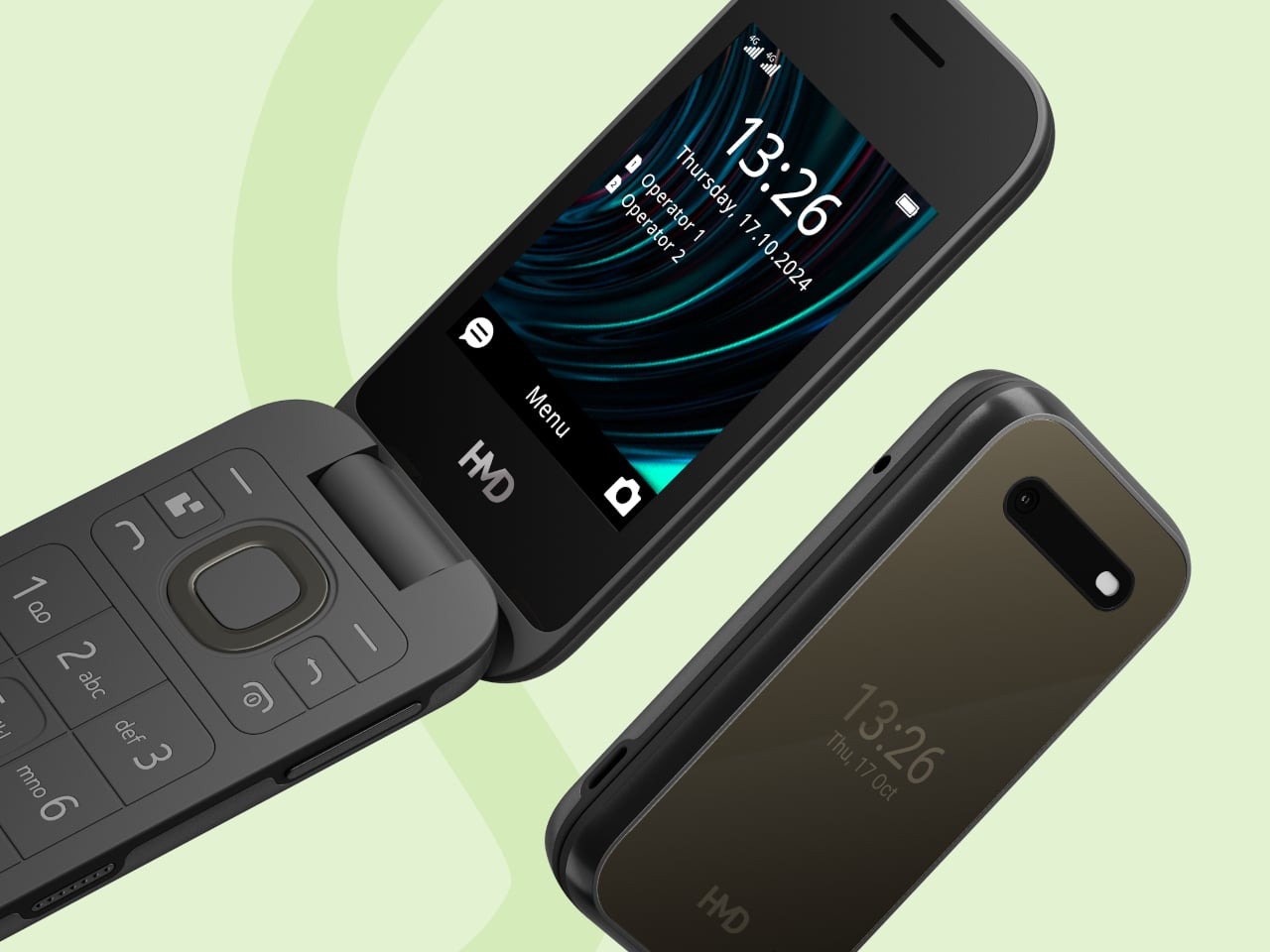
The HMD 2660 Flip Senior Edition sku=1GF033CPH1L05SE” target=”_blank” rel=”noopener”>HMD Global, the handset targets aging adults who want physical keypad usability without navigating complex glass touchscreens. It strips away modern app stores while attempting to solve senior social isolation through voice software.
🛒 Where to Buy: HMD 2660 Flip Senior
- HMD 2660 Flip Senior: View on Amazon
Click the link above to check current pricing, availability, and customer reviews on Amazon.
The consumer electronics market routinely misjudges older buyers. Hardware brands typically push two extreme options. They offer stripped-down emergency panic clickers or full-sized glass smartphones crammed with confusing app menus. Initial reporting from Yanko Design highlights how this updated model attempts to bridge that gap. It retains classic folding hardware while adding a dedicated conversational engine. In practice, the core hardware succeeds far better than the software service tacked onto it.
HMD built this model on the same mechanical framework as the standard regular HMD 2660 Flip. The primary physical change is a dedicated software integration from inTouch. This software introduces “Mary,” an AI companion programmed to hold open-ended voice chats with owners. The premise sounds benevolent on paper. However, hardware realities and ongoing subscription costs complicate the long-term value proposition for actual buyers.
Real-World Context and Target Buyer Profile
Designing technology for older demographics requires absolute friction reduction. A single extra step in a settings menu can render a device completely useless for someone with arthritis, poor eyesight, or memory loss. The HMD 2660 Flip Senior Edition keeps physical interactions deliberately simple. Opening the folding body answers an incoming call. Closing the physical shell terminates the connection. That physical mechanism eliminates screen-tapping errors entirely.
The target buyer is an older individual who wants reliable voice calling and basic text messaging without digital bloat. It also targets adult children buying gear for aging parents. These relatives often spend hours troubleshooting remote smartphone glitches. A flip phone running lightweight software eliminates app crashes, malware risks, and accidental system updates. It provides pure cellular connectivity inside a durable shell.
Marketing pitch aside, adding artificial intelligence to basic hardware creates an interesting tension. Generative voice software requires cloud connectivity, reliable network data, and ongoing server processing. HMD attempts to make this complex backend look like a normal telephone call. Selecting Mary from the main menu automatically initiates an outbound data call to the inTouch servers. Users speak naturally into the receiver rather than typing on a miniature screen.
The core question for prospective buyers is whether this AI integration adds genuine daily utility. Older adults often face shrinking social circles and limited mobility. A voice system that listens patiently and responds without rushing can provide light mental stimulation. However, buyers must evaluate whether a automated voice engine justifies a recurring monthly charge on top of a standard phone bill.
Hardware Engineering, Materials, and Core Specs
The exterior chassis uses a durable, dark matte polycarbonate shell with softly rounded corners. It feels solid in the hand without looking like an industrial medical device. Weighing just under four ounces, it sits comfortably in a shirt pocket or handbag. The outer surface features a secondary glance screen that displays the time, caller ID, and battery status. You do not need to flip open the phone just to check the hour.
Opening the main hinge reveals a 2.8-inch TFT internal display paired with an oversized tactile numeric keypad. The individual plastic keycaps feature high-contrast white numbering printed on dark buttons. Key travel is distinct and springy, offering physical click feedback with every press. A prominent directional pad sits directly below the screen for menu navigation. This physical layout eliminates accidental touch inputs.
Examining the fine print of the hardware documentation reveals specific physical protections built into the chassis. In HMD’s official launch documentation, the engineering team rates the body at an IP54 protection level. That metric guarantees resistance against fine dust ingress and water splashes from any direction. It will easily survive rain drops or an accidental kitchen spill without shorting the internal logic board.
Powering the device is a removable 1,450mAh lithium-ion battery charged via a standardized USB-C port. A removable battery is a major design advantage over sealed modern smartphones. When the cell eventually degrades after several years of charge cycles, owners can buy a fresh replacement battery for roughly $15 USD. You swap the component in seconds rather than discarding the entire physical phone.
- Main Display: 2.8-inch TFT LCD with large UI scaling.
- Cover Display: Monochromatic external glance screen for time and notifications.
- Durability Rating: IP54 dust and splash resistance.
- Battery Specs: 1,450mAh user-replaceable cell via USB-C.
- Cellular Bands: 4G LTE VoLTE voice call support.
- Audio Hardware: High-volume earpiece speaker and 3.5mm headphone jack.
Everyday Usability & Design Compromises
In real-world use, physical telephone operations are exceptional. Sound output from the primary earpiece speaker is loud, clear, and tuned for speech intelligibility over ambient background noise. The key pad buttons offer plenty of space, keeping typing mistakes to a minimum. Dedicated speed-dial mapping allows users to call family members by holding down a single numeric button. Emergency assistance features are easily mapped to outer controls.
The “Mary” AI voice feature functions as an internal system contact. You navigate to her icon in the main menu and press the green call key. The phone dials into the inTouch cloud processing engine. The voice assistant speaks deliberately slow, pauses long enough for the user to form full thoughts, and remembers details mentioned in previous conversations. It can play verbal word games, discuss historic events, or listen to personal stories.
Despite this simple interface, the initial setup process introduces an immediate physical barrier. Activating the Mary companion requires scanning an external QR code or navigating to an online web portal from a secondary computer or smartphone. An elderly user working alone without existing internet access will struggle to complete this step. The setup phase practically demands a tech-savvy family member to configure the service beforehand.
The financial math behind the AI service warrants severe scrutiny. The handset purchase price of £79.99 GBP (approx. $107 USD) includes a brief 5-hour trial of the Mary conversational service. Once those five hours of call time expire, continuing the service costs £16.90 GBP (roughly $23 USD) every single month. That software fee rapidly eclipses the actual cost of the basic cellular voice plan.
That monthly software fee auto-renews unless manually canceled through the online portal. In real-world terms, paying nearly $280 USD per year solely for an AI voice companion on a $107 USD phone is a tough sell. Thankfully, the hardware functions normally as a basic 4G flip phone if you let the AI trial expire. You retain a durable phone for calls and texts without paying ongoing software fees.
There is also a social reality buyers must respect. Synthetic AI interactions cannot replace actual family contact or physical community support. While the software provides patient conversation, it remains a script-driven server algorithm responding to audio inputs. Buying an AI phone should never serve as a substitute for checking in on elderly relatives in person or calling them directly.
Category Alternatives and Value Comparison
When shopping for senior-focused mobile hardware, buyers must evaluate both initial device prices and forced subscription fees. The feature phone market contains several direct rivals, each taking a wildly different approach to safety, software features, and monthly costs.
The Lively Flip2costs $99.99 USD on Amazon and stands as the most direct physical competitor in North America. Like the HMD device, it features a traditional flip form factor, large physical buttons, and high-contrast screens. However, Lively focuses on medical response services rather than conversational AI. Their plans start around $19.99 USD per month, granting access to 24/7 urgent response agents and board-certified doctors over the phone. For families seeking actual safety oversight rather than casual conversation, Lively offers far more practical value for a similar monthly fee.
Another strong alternative is the Jethro SC490, available for $84.99 USD on Amazon. The Jethro SC490 uses an unlocked bar-style design paired with an included desktop charging dock. It eliminates monthly software fees entirely. You insert any standard SIM card from carriers like T-Mobile or AT&T, pay your basic monthly talk plan, and face zero recurring software fees. The hardware includes an SOS emergency button on the back that dials up to five personal contacts directly. It is a far more economical choice for seniors who simply need a reliable cellular connection.
Comparing these options makes the financial positioning of the HMD 2660 Flip Senior Edition very clear. At roughly $107 USD for the hardware, HMD prices the physical phone competitively. However, adding $23 USD per month for an AI chatbot makes the long-term ownership cost far higher than standard feature phones. Unless the owner specifically desires an ongoing conversational voice companion, traditional unlocked flip phones provide significantly better overall value.
Final Buyer Verdict: Long-Term Ownership Value
The the hardware Edition succeeds as a piece of classic mobile hardware. The tactile keypad, bright internal display, physical flip mechanism, and dust-resistant IP54 shell are expertly engineered for senior usability. The removable 1,450mAh battery and standard USB-C charging port ensure the physical phone will remain operational for years without technical headaches or battery degradation. It handles traditional cellular voice calls and text messaging with absolute reliability.
However, the headline feature—the Mary AI companion—is hard to justify financially over time. Charging £16.90 GBP (approx. $23 USD) per month for basic conversational server access creates an unnecessary recurring expense on a budget feature phone. Buy the the device Edition if you want a well-built, easy-to-use 4G flip phone with large physical buttons. Enjoy the 5-hour free trial of the AI feature, but skip the paid monthly subscription once that trial ends.