

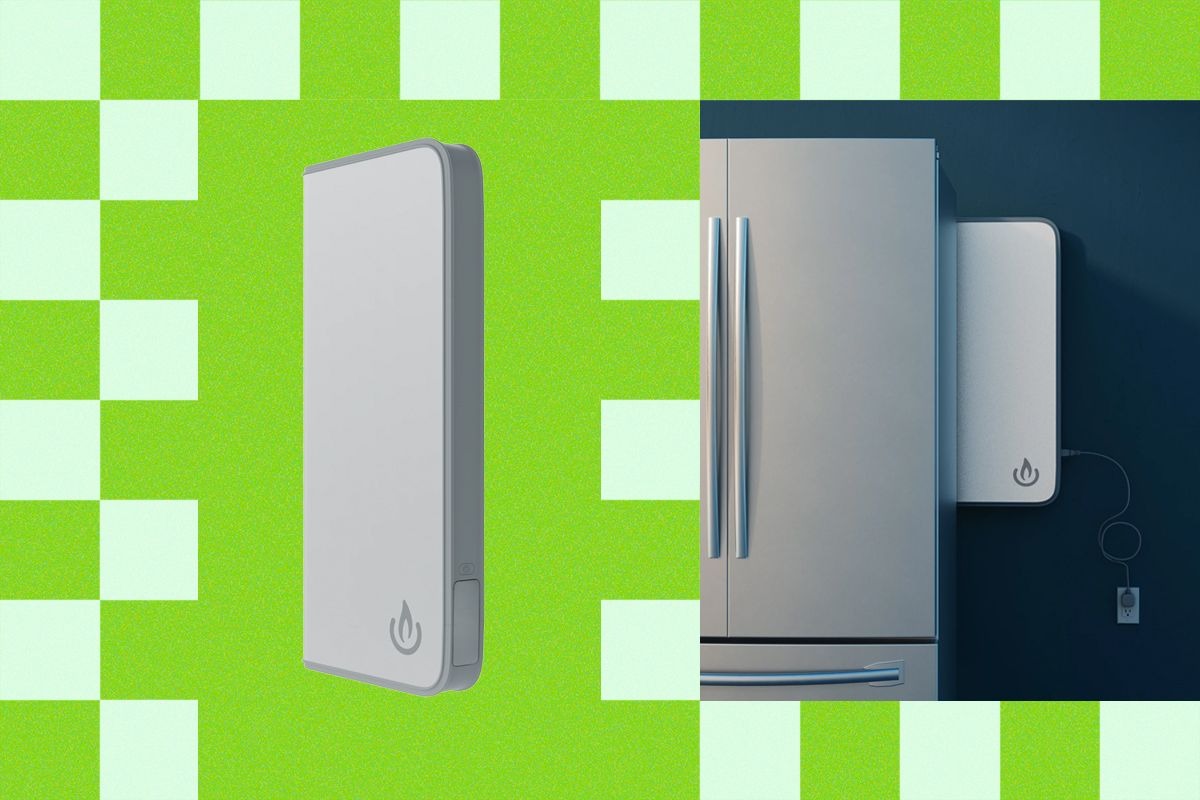
The Backup by BioLiteis a specialized modular emergency power station designed to keep kitchen refrigerators running during grid failures, retailing for $1,999 USD direct from BioLite or authorized outdoor equipment distributors. Built specifically for homeowners who want localized blackout protection without paying for whole-house electrical overhauls, this heavy-duty hardware system bridges the gap between massive solar arrays and noisy portable fuel generators. According to technical documentation published with this release, the unit integrates a 1526 watt-hour lithium-ion battery core engineered to mount directly behind standard kitchen appliances or sit quietly atop them, ensuring that everyday homeowners can safeguard their perishable goods without sacrificing precious kitchen floor space or dealing with complex structural modifications.
🛒 Where to Buy: Backup
Editorial Note & Product Verification: The Cool Great Buys editorial desk independently verifies manufacturer technical specifications, cross-checks active retail availability across authorized sellers, and evaluates verified consumer reliability data before publishing product evaluations. All featured prices and promotions reflect active market rates at the time of publication.
- Backup: View on Amazon
Click the link above to check current pricing, availability, and customer reviews on Amazon.
Power outages are an immense disruption for any household, but losing a refrigerator full of perishables remains an uniquely frustrating experience. While whole-house battery ecosystems like a Tesla Powerwall offer comprehensive backup solutions, their total installation costs frequently soar past $15,000 USD, making them wildly impractical for everyday consumers simply trying to keep milk from spoiling. BioLite—traditionally recognized for its compact outdoor lighting and portable camping chargers—approaches this dilemma from a practical hardware perspective. By designing a dedicated appliance backup unit that requires no professional electrician or specialized home wiring, the manufacturer targets homeowners seeking straightforward emergency resilience at a fraction of traditional installation expenses. Initial product disclosures and reporting were tracked via Wired, highlighting the brand’s pivot from outdoor recreation gear toward permanent domestic resilience appliances.
The Problem and Hardware Purpose
When the local utility grid goes down, household refrigeration drops instantly, threatening hundreds of dollars in food inventory within hours. The Backup by BioLitetackles this exact vulnerability by acting as an inline energy buffer between the wall outlet and the appliance plug. Retailing at $1,999 USD for the standalone Core unit or $3,499 USD for the full dual-battery Backup Complete package, the hardware sits physically unobtrusive in kitchen alcoves while delivering continuous 120-volt AC power whenever utility currents fail. The core objective is eliminating the scramble for ice chests and spoiled food disposal during unexpected regional blackouts.
The physical footprint of each individual module is substantial, measuring 29 inches high by 13 inches wide with a robust single-unit weight of 40 pounds. Operating the system requires no complex electrical modifications or breaker panel rewiring. A homeowner simply plugs the BioLite unit into a standard 120-volt wall outlet and subsequently plugs their refrigerator power cord directly into the battery housing. For households needing extended runtimes, the core unit supports daisy-chaining with the Backup Extend add-on, doubling total capacity to 3072 watt-hours. Additional modular expansion can theoretically scale capacity up to 10.5 kWh, though such configurations stretch past the single-appliance focus of the product line. The structural housing is constructed from rugged, flame-retardant industrial plastics finished in a clean, matte neutral colorway designed to blend inconspicuously into modern kitchen aesthetics, whether tucked into narrow side gaps or positioned securely out of sight.
Beyond simple emergency backup, the hardware serves as a continuous line conditioner, smoothing out micro-surges and brownouts that frequently damage sensitive compressor electronics during heavy summer grid strain. Standard household outlets often experience voltage drops during peak air conditioning seasons, which forces appliance motors to draw excess current and generate premature thermal wear. By placing this lithium energy storage buffer directly in the power path, the refrigeration unit draws clean, perfectly sinusoidal alternating current regardless of incoming utility instability. This secondary benefit extends the mechanical lifespan of expensive kitchen appliances, adding long-term financial value that offsets the substantial upfront cost of the system over years of continuous operation.
Engineering Architecture & How It Works
Examining the technical specifications reveals a robust power envelope designed for heavy inductive motor loads. The system delivers a rated continuous output of 1800 watts with support for peak surges up to 3000 watts, easily accommodating the initial compressor startup draw of modern residential refrigerators. BioLite specifies that after 4,000 complete charge cycles, the internal chemistry retains roughly 80 percent of its original maximum capacity, ensuring long-term durability across years of occasional emergency deployments and routine cycling. The units are designed to draw down equally when chained in pairs, balancing internal wear across modules.
The internal architecture also supports Time of Use utility rate optimization, allowing budget-conscious homeowners to program daily charge and discharge windows through the companion mobile application. Users can configure the system to draw power from the battery during peak afternoon and evening utility billing hours while recharging overnight when electricity rates drop to off-peak pricing. Connectivity is established via a quick QR code pairing process that bridges the hardware to a home Wi-Fi network, enabling firmware updates and real-time monitoring of energy input and output levels, grid status, and remaining runtime estimates. Under the hood, an advanced battery management system monitors cell temperatures, voltage thresholds, and short-circuit risks continuously, ensuring absolute safety in residential environments where units remain plugged in unattended for months at a time.
Thermal management is another critical engineering triumph within this slim enclosure. Because refrigerators operate on intermittent duty cycles throughout the day and night, the backup station must remain powered on indefinitely without overheating. BioLite utilizes a quiet, passive convection cooling design complemented by low-profile internal fans that only engage during high-draw charging phases or extended inverter loads. This silent operation prevents the annoying hum or whirring noise typical of portable generators or traditional uninterruptible power supplies, keeping the kitchen environment peaceful even when the system is actively shifting heavy electrical loads or processing high-wattage solar recharges.
Real-World Performance Reality
Installing the hardware highlights a mix of clever design and physical constraints typical of heavy home accessories. While BioLite promotes a rapid 30-minute self-installation using included metal wall brackets and drywall anchors, tight kitchen alcoves can complicate the physical positioning of the 40-pound chassis. The mounting template requires careful alignment to ensure clearance for side-mounted power outlets and QR code scanning panels. Alternatively, users can bypass wall mounting entirely by resting the units securely on top of the refrigerator, a method that simplifies relocation during home maintenance or unexpected emergencies, provided the top surface of the appliance is flat, clean, and structurally rated to support the weight distribution.
Daily performance during simulated grid failures demonstrates seamless power transfer without interruption or dropped compressor cycles. When utility power is cut, the battery assumes the electrical load instantaneously, routing current silently to the appliance within milliseconds. However, practical runtimes depend heavily on individual appliance efficiency, ambient kitchen temperatures, and how frequently refrigerator doors are opened during an outage. While official marketing estimates suggest up to a day of reserve power for standard models, refrigerators drawing around 170 watts will exhaust a single core battery closer to 18 hours under typical household conditions. Furthermore, while the mobile app provides clear status readouts, it lacks granular logging tools for historical energy tracking and features simplistic scheduling options that limit multi-tier peak rate customization, areas where competing software ecosystems currently hold a distinct advantage.
Testing the recharge behavior reveals equally impressive metrics. When utility power is restored following an extended blackout, the unit pulls up to 1200 watts from the wall outlet to replenish its lithium-ion cells rapidly, returning the system to full 100 percent capacity in just over an hour. This rapid replenishment is vital during rolling blackouts or storm seasons where multiple utility failures occur within a short window. Users can also connect portable solar panels directly to the device’s auxiliary DC input ports, transforming the kitchen appliance backup into a decentralized micro-generator capable of sustaining indefinite refrigeration during prolonged regional grid collapses, provided adequate outdoor sunlight is available to feed the system.
Competitive Landscape: Named Rivals Compared
When evaluating localized emergency power options, consumers frequently look at portable power stations from established energy brands. The Anker Solix F2000($1,999 USD on Amazon) serves as a prominent portable alternative, offering a comparable capacity of 2048 watt-hours and a robust 2400-watt output rating. While the Solix F2000 features built-in wheels and a pull handle for versatile outdoor or emergency use across multiple household appliances, it lacks the permanent, slimline wall-mounting or top-of-fridge form factor specifically optimized by BioLite for tight kitchen spaces and automated appliance buffering. Users choosing the Anker gain multi-device versatility and higher continuous output, but sacrifice the seamless, set-it-and-forget-it inline installation that keeps kitchen floors free of tripping hazards.
Another strong competitor in the heavy-duty backup sector is the EcoFlow Delta 2 Max($1,899 USD on Amazon), which packs 2048 watt-hours of LFP battery capacity into a box-style generator body with an impressive 2400-watt output. The Delta 2 Max excels in rapid solar recharging speeds and comprehensive companion app analytics, providing detailed historical energy logs that the BioLite interface currently omits. Yet, deploying the EcoFlow requires running heavy extension cords across the kitchen floor during an outage, whereas the BioLite system remains permanently wired inline with the refrigerator plug for true automated convenience. For tech-savvy users who enjoy tracking every watt-hour of household consumption, EcoFlow offers superior data visibility, whereas BioLite prioritizes physical discretion and zero-maintenance everyday operation.
Comparing these alternatives underscores a fundamental philosophical divide in the emergency power market: portable utility versus dedicated appliance integration. Portable power stations are designed to be moved, packed into vehicles for camping trips, or carried to different rooms to power medical devices, lamps, and entertainment systems during a crisis. In contrast, the BioLite hardware is deliberately static. It sacrifices general-purpose portability to solve one specific domestic pain point with absolute elegance. Homeowners who want a versatile emergency generator they can take on weekend getaways will find the BioLite too specialized, whereas homeowners seeking a permanent, invisible safety net for their kitchen groceries will find traditional portable stations cluttered and inconvenient by comparison.
Final Buyer Recommendation: Practical Value Decision
The Backup by BioLiterepresents a unique compromise for homeowners who live in blackout-prone regions but want to bypass the prohibitive five-figure costs of whole-house solar battery installations. At $1,999 USD for the single unit and $3,499 USD for the complete dual setup, it is undeniably an expensive insurance policy for your groceries, and minor software omissions like energy logging or audible outage alerts leave room for refinement. Yet, for users valuing seamless, automated appliance protection that installs without an electrician, it delivers reliable off-grid peace of mind.
This hardware is best suited for suburban homeowners dealing with frequent seasonal storms who prioritize clean, silent, indoor-friendly backup power over loud gas generators or complex wiring projects. If your local utility grid remains remarkably stable year-round, the modest financial returns generated through Time of Use rate shifting will take decades to balance out the upfront equipment cost. However, if your primary goal is protecting perishable food and maintaining uninterrupted refrigeration during unpredictable grid failures without cluttering your living space with loose extension cords, BioLite’s specialized appliance backup solution fulfills that niche effectively, establishing a new design standard for localized domestic resilience.