

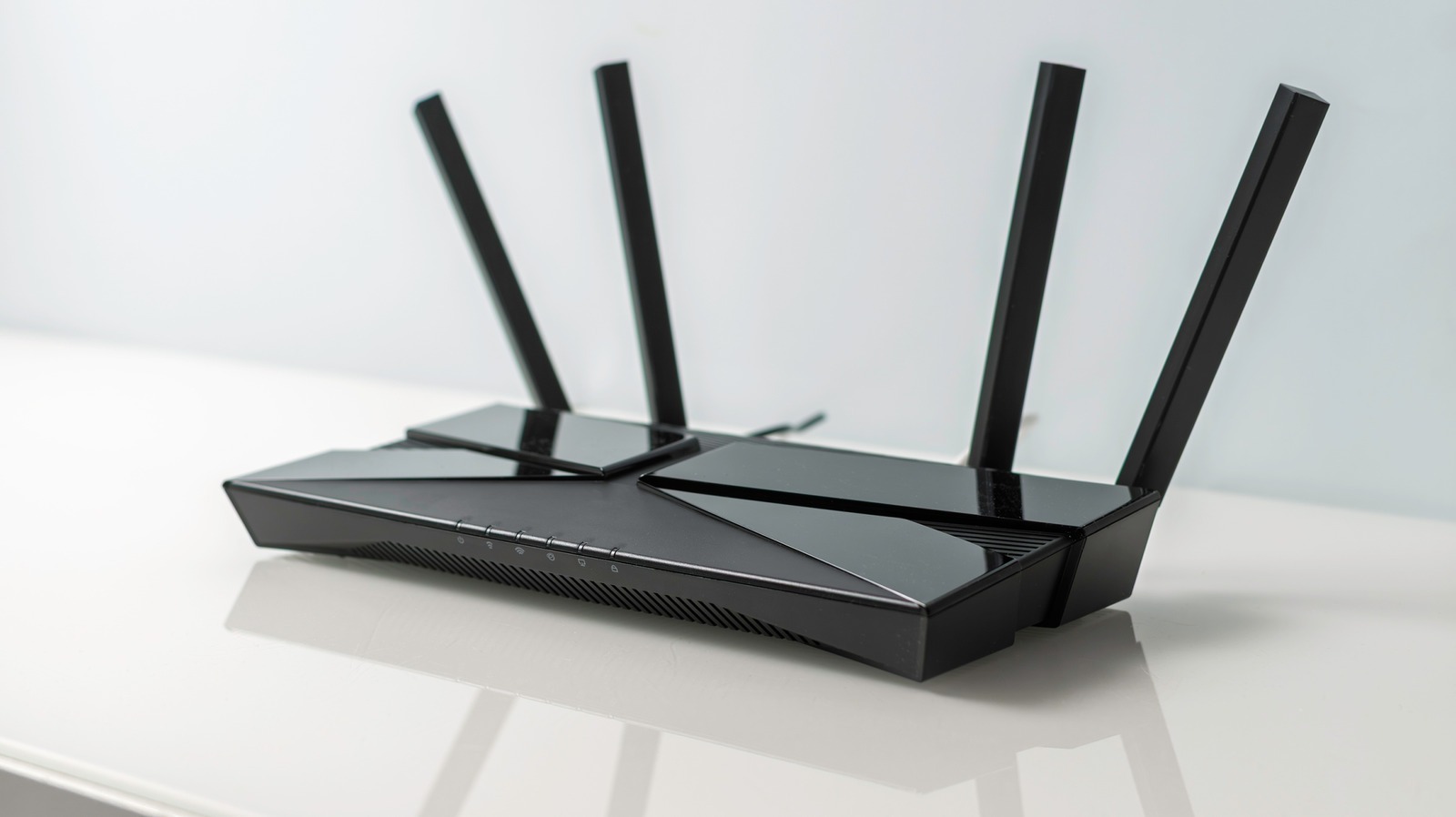
The ARRIS SURFboard SBG8300is an integrated DOCSIS 3.1 cable modem and Wi-Fi 6 gateway engineered to collapse residential networking infrastructure into a single desktop unit. Available for $199 USD on Amazon, this device combines a multi-gigabit signal demodulator with an AC2300 dual-band Wi-Fi broadcast system. It is designed specifically for cable internet subscribers seeking to eliminate recurring monthly rental charges from broadband providers without managing separate physical enclosures, power adapters, and coaxial jumpers.
🛒 Where to Buy: ARRIS SURFboard SBG8300 DOCSIS
- ARRIS SURFboard SBG8300 DOCSIS: View on Amazon
Click the link above to check current pricing, availability, and customer reviews on Amazon.
In practice, the distinction between modem and router functionality remains absolute, even when both subsystems inhabit a shared enclosure. As explored in recent analysis on modem-router integration, a modem converts high-frequency radio signals delivered over coaxial lines into standard Ethernet frames, while a router manages local IP assignment, packet routing, and local wireless distribution. Standalone retail routers almost universally omit modem functionality to remain agnostic of broadband delivery mediums, whether fiber, DSL, or cable. Combined gateway hardware attempts to bridge this gap for cable subscribers, though historically speaking, this approach has required clear engineering trade-offs.
The market context for integrated gateways has evolved considerably over the past decade. Early two-in-one units deployed between 2012 and 2015 frequently suffered from thermal throttling and inadequate radio frequency insulation. High component density inside unventilated plastic housings caused modem chipsets to overheat, which degraded wireless throughput and shortened internal hardware lifespan. The ARRIS SURFboard SBG8300addresses those historical failures with an enlarged vertical chimney chassis, though prospective buyers must still evaluate whether single-box integration aligns with their long-term home networking strategy.
Real-World Context and Target Buyer Profile
For the average household, home networking hardware is an utility that should operate silently in the background. Many consumer subscribers default to equipment rented from major U.S. internet service providers like Comcast Xfinity or Cox Communications, paying between $14 USD and $18 USD monthly in equipment rental fees. Over a standard three-year window, rental charges total between $504 USD and $648 USD for baseline hardware that remains the property of the ISP. Purchasing a retail DOCSIS 3.1 gateway like the $199 USD SBG8300 serves as a direct capital substitution aimed at amortizing hardware costs within roughly 12 to 14 months of ownership.
The target buyer for this architecture is a consumer on a tier-one cable provider whose home footprint does not require complex mesh topologies or custom network routing policies. While some modern Wi-Fi routers may have hidden features such as third-party firmware support, dedicated VPN client routing, and granular quality-of-service controls, an integrated gateway targets simplicity over modular customization. It is ideal for apartments, single-story homes, or medium-sized residences under 2,500 square feet where coaxial outlets are centrally located.
Conversely, this hardware profile is poorly suited for environments with non-cable broadband infrastructure. Fiber-to-the-home deployments utilize an Optical Network Terminal (ONT) that outputs standard RJ45 Ethernet, making the coaxial DOCSIS 3.1 modem in the SBG8300 entirely redundant. Similarly, power users who intend to upgrade their wireless radios every two years while keeping their broadband modem for six to eight years will find the integrated form factor limiting, as the entire unit must be retired when upgrading either the modem or wireless generation.
Hardware Engineering, Materials, and Core Specs
The chassis of the SBG8300 measures 10.0 x 2.25 x 9.8 inches and weighs approximately 2.1 pounds. It utilizes a matte black polycarbonate enclosure designed for vertical placement on flat surfaces. Vertical orientation is essential for convective cooling; passive airflow vents line the top, bottom, and rear panels to draw cool air upward past the internal aluminum heat sinks. Examining the fine print of the official hardware documentation reveals that ARRIS engineered internal shielding barriers around the DOCSIS tuner to isolate high-frequency cable line interference from the 2.4GHz and 5GHz wireless amplifier circuits.
On the specification sheet, the modem component features 32×8 channel bonding on DOCSIS 3.0 downstream and upstream channels, along with 2×2 OFDM (Orthogonal Frequency-Division Multiplexing) channel support under DOCSIS 3.1. This allows theoretical downstream capacities up to 10Gbps, though real-world ISP cable provisioning tiers cap practical throughput well below this theoretical maximum. The rear panel accommodates four 1-Gigabit Ethernet ports, supporting local wired connections to desktop computers, gaming consoles, or local NAS units.
- Modem Standard: DOCSIS 3.1 with legacy DOCSIS 3.0 32×8 channel backward compatibility
- Wi-Fi Standard: Wi-Fi 6 (802.11ax) dual-band concurrencies
- Total Theoretical Throughput: AC2300 (up to 600Mbps on 2.4GHz; up to 1750Mbps on 5GHz)
- Physical Interfaces: 4x Gigabit RJ45 LAN ports, 1x Type-F Coaxial connector, 1x DC power jack
- MIMO Configuration: 4×4 spatial streams on 5GHz band
- Dimensions & Weight: 10.0 x 2.25 x 9.8 inches; 2.1 lbs
According to technical documentation published with this release, the SBG8300 incorporates internal beamforming technology and 4×4 MU-MIMO antenna arrays on the 5GHz frequency band. In practice, this allows simultaneous communication with multiple spatial stream client devices without severe time-slice degradation. However, notably absent from the physical hardware is a 2.5-Gigabit Ethernet WAN/LAN port or a USB 3.0 host port for network-attached storage, an engineering omission that highlights its positioning as an entry-to-mid-tier integrated solution rather than an enthusiast gateway.
Everyday Usability & Design Compromises
Operating an integrated gateway involves distinct day-to-day management realities compared to standalone router deployments. Setup is straightforward: connecting the coaxial cable to the rear gold-plated Type-F connector, powering the unit via the external 12V DC transformer, and proceeding through the provider’s walled-garden activation page. However, once activated on a cable network, a fundamental operational trade-off emerges regarding administrative control over system software.
On any DOCSIS-certified gateway, system firmware updates are governed strictly by the Internet Service Provider, not the end user or hardware manufacturer. Even if ARRIS issues a critical security patch or stability update, the firmware binary must be validated and pushed down over the coaxial network by Comcast, Cox, or Spectrum. If an ISP delays firmware deployment, users cannot manually upload image files via the web management interface. This restriction means that keeping the network updated with modern security measures depends heavily on the update schedule of your broadband operator.
Physical placement compromises are also unavoidable with combination hardware. A standalone Wi-Fi router can be placed on an elevated shelf in a central hallway via an extended Ethernet cable from a basement cable outlet. An integrated gateway, by contrast, must reside near an active coaxial drop. If the coaxial outlet in a home is located in an off-center corner or near a basement utility panel, wireless signal propagation across far-field rooms suffers significantly due to attenuation through drywall and structural framing.
Additionally, system troubleshooting carries elevated friction. On a modular setup comprising a separate modem and router, network dropped connections can be isolated quickly: if wired LAN traffic functions but Wi-Fi drops, the standalone router requires attention; if the internet link drops across all interfaces, the modem’s upstream signal levels are suspect. With an integrated unit, an unexpected system crash or thermal event drops both local inter-device communication and external internet routing simultaneously, requiring a full system reboot that temporarily halts local file transfers and internal device traffic.
Category Alternatives and Value Comparison
Evaluating the integrated gateway market requires direct comparison against competing combination units as well as discrete two-piece component setups. Two principal market competitors in the DOCSIS 3.1 gateway category are the NETGEAR Nighthawk CAX30and the Motorola MG8702. Both target similar consumer deployment profiles but exhibit slight variations in feature allocation and pricing structures.
The NETGEAR Nighthawk CAX30trades at $249 USD on Amazon, representing a $50 USD price premium over the ARRIS SBG8300. In exchange for that additional investment, the CAX30 offers AX2700 theoretical wireless throughput and adds a USB 3.0 port for basic file sharing over SMB. Build quality on the CAX30 utilizes a wider horizontal foot print with external adjustable antennas, which can assist in directing wireless energy in multi-level structures. However, its thermal envelope runs noticeably warmer during sustained high-throughput file transfers, making vertical space clearings mandatory.
The Motorola MG8702carries a retail price of $229 USD on Amazon. It features AC3200 total Wi-Fi throughput and four Gigabit Ethernet ports, matching the physical connectivity of the SBG8300. The MG8702 incorporates a integrated power supply design that eliminates external wall-wart transformers, utilizing a standard AC line cord instead. While this clean power cable arrangement simplifies desktop cable management, it consolidates heat conversion inside the main chassis, requiring a larger overall physical housing than the ARRIS unit.
Alternatively, buyers can select a discrete hardware setup comprising a standalone modem such as the ARRIS SURFboard SB8200at $149 USD paired with an entry-level Wi-Fi 6 router like the TP-Link Archer AX55at $99 USD on Amazon. The combined cost of this modular route totals $248 USD. While this represents a $49 USD premium over the all-in-one SBG8300, it eliminates physical placement bottlenecks and allows independent hardware upgrades when newer Wi-Fi standards enter the market.
Final Buyer Verdict: Long-Term Ownership Value
The ARRIS SURFboard SBG8300is a practical hardware option for cable internet subscribers seeking to reduce monthly equipment charges through a single device. Its DOCSIS 3.1 tuner guarantees compatibility with current gigabit cable tiers across major U.S. providers, while its vertical cooling design avoids the severe thermal throttling issues that affected previous-generation combination gateways. At $199 USD on Amazon, it offers a predictable payback window that recovers its initial cost within slightly over a year of canceled ISP equipment rentals.
However, purchasing this gateway requires clear acceptance of its structural compromises. The inability to apply manual firmware updates, the lack of 2.5GbE LAN networking, and the physical link between cable line access points and Wi-Fi transmission mean it cannot offer the flexibility of dedicated discrete hardware. For users seeking an uncomplicated home networking solution that reduces cable clutter and monthly service bills, the SBG8300 delivers satisfactory baseline performance grounded in sensible physical engineering.