

🛒 Where to Buy: Featured Smartwatches & Fitness Trackers
- Whoop 5.0: View on Amazon
- Fitbit Air: View on Amazon
- Garmin Cirqa: View on Amazon
Click any link above to check current pricing, availability, and customer reviews on Amazon.
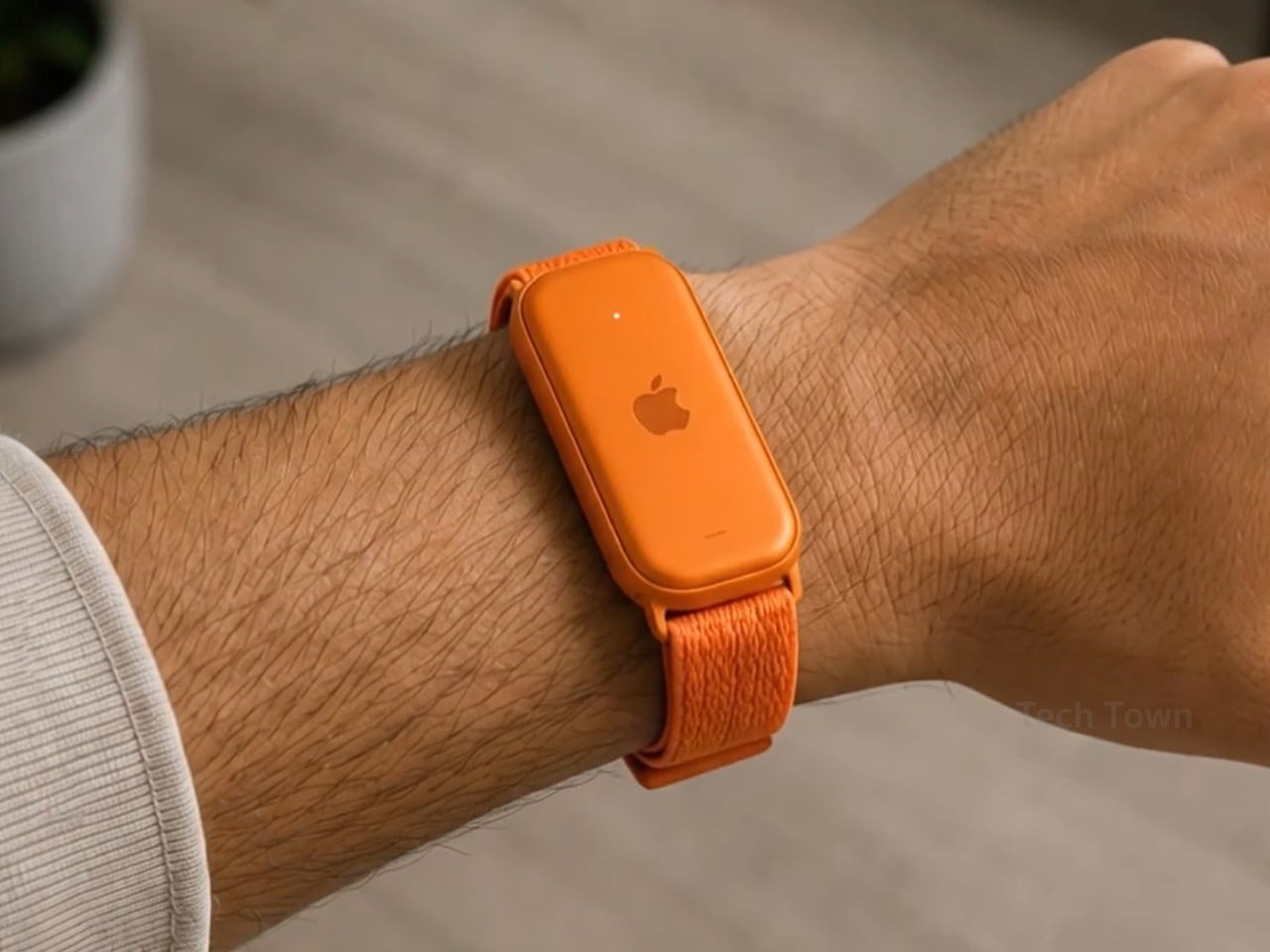
The rumored Apple Watch Air aims to strip down the familiar smartwatch experience, focusing solely on health tracking in a screen-less, band-like form factor. While no official price exists, market speculation and competitor pricing suggest it would target the $99-$299 USD range, likely sold direct from Apple and authorized retailers. This device is for the user who prioritizes discreet, continuous health monitoring over notifications and apps, seeking a simpler, longer-lasting wearable alternative to the full Apple Watch line.
This isn’t just another Apple Watch variant. This is Apple taking a hard look at a market segment it has largely ignored, a segment currently dominated by focused health trackers. The idea of a screen-less Apple wearable might sound counter-intuitive to some, but it has historical precedent. The iPod Shuffle, for all its limitations, proved that stripping down features could lead to significant sales. It sold 10 million units in its first year. The Watch Air, if it ships, would follow a similar philosophy: less is more, but only if “less” means a better, more focused experience for a specific user base. This isn’t about replacing the Apple Watch Ultra; it’s about capturing a different kind of wrist. Initial product disclosures and reporting were tracked via Yankodesign.
Real-World Context and Target Buyer Profile
The concept of a screen-less Apple Watch, dubbed “Watch Air” by some, isn’t born in a vacuum. It’s a direct response to a rapidly maturing health and fitness wearable market. Companies like Whoop and Fitbit have carved out significant niches by offering dedicated, data-rich health tracking without the distractions of a full smartwatch display. These devices appeal to a specific demographic: athletes, fitness enthusiasts, and individuals deeply invested in understanding their body’s recovery, strain, and sleep patterns. They want data, not notifications. They want long battery life, not daily charging.
Apple’s current Watch lineup, from the SE to the Ultra, offers comprehensive health features, but always tethered to a screen and the expectation of daily interaction. The Watch Air, on paper, would shed this baggage. It would be a passive data collector, feeding information directly into the Apple Health app, much like a Whoop band. This shift targets the user who finds the full Apple Watch too intrusive, too expensive, or simply overkill for their primary need: continuous, background health monitoring. Think of the marathon runner who wants to track recovery without a bright screen on their wrist, or the busy professional who needs sleep insights without another device demanding attention.
Bloomberg’s Mark Gurman reported that Apple’s industrial design team has spent considerable time exploring “something that transforms the product for a new era.” A screen-less band is reportedly at the core of this exploration. This isn’t just about making a cheaper Watch. It’s about addressing a critical gap in Apple’s wearable strategy, particularly as competitors like Whoop gain traction among high-profile users. Eddy Cue, who took over health and fitness oversight in late 2025, reportedly wears both Oura and Whoop. That’s a clear signal. Apple’s own leadership is using competitor products, indicating a perceived deficiency in Apple’s current offerings for deep, continuous health insights without the smartwatch overhead. The Watch Air would be Apple’s answer to that internal and external market pressure.
The target buyer for the Watch Air isn’t necessarily a current Apple Watch owner looking to upgrade. It’s more likely someone who has considered a Whoop or Fitbit Air but prefers the Apple hardware environment for data integration and privacy. It’s also for those who find the Apple Watch’s price point, even the SE, prohibitive for a dedicated health tracker. A screen-less device could potentially hit a lower price tier, making advanced Apple health tracking more accessible. This isn’t about mass appeal in the same way the iPhone is; it’s about strategic market capture in a specialized, growing segment. The success of the iPod Shuffle wasn’t about being the best music player; it was about being the most accessible and focused. The Watch Air would aim for a similar outcome in health tracking.
Hardware Engineering, Materials, and Core Specs
A hypothetical Apple Watch Air would need to leverage existing, proven Apple technology to be viable. The source dispatch highlights that Apple has “quietly, well, not quietly, actually already built the brain this device would need.” This refers to the advanced sensor stack and processing capabilities found in the Apple Watch Series 12 and Ultra 4, launched in September. Specifically, the new Readiness app, which provides a daily score based on activity, vitals, and sleep, is a direct competitor to Whoop’s core offering. The Series 12 also samples Heart Rate Variability (HRV) every five minutes, a 24 times denser reading than the Series 11. This data, split into overall HRV and Recovery HRV against a personal baseline, is the functional equivalent of a Whoop screen, but currently tied to a full smartwatch display.
Stripping away the display means the Watch Air would need to house a compact, efficient version of the S-series chip, likely optimized for low power consumption. Chassis materials would prioritize lightness and durability. Expect medical-grade plastics, perhaps with a touch of recycled aluminum for the sensor housing, similar to what’s seen in current fitness bands. Dimensions would be minimal, designed for unobtrusive, 24/7 wear. The goal is to make it forgettable on the wrist, a stark contrast to the prominent Apple Watch display. Water resistance would be paramount, likely rated for 50 meters or more, making it suitable for swimming and showering without removal. This is a fundamental requirement for any continuous health tracker.
Battery life is the critical hardware specification for a screen-less tracker. The source notes that the Watch Air would address “the one part of the Apple Watch nobody asked to keep charging every single night.” This implies a battery life measured in days, not hours. Competitors like Whoop 5.0 offer 14 days, while Fitbit Air manages 7 days, and Garmin Cirqa reaches 10 days. To compete effectively, the Watch Air would need to deliver at least 7-10 days of continuous use. Achieving this would require a combination of a smaller, more efficient chip, a larger battery cell than current Apple Watches (relative to its size), and aggressive power management, especially without a power-hungry display. The sensor array would likely include an optical heart sensor, blood oxygen sensor, temperature sensor, accelerometer, and gyroscope. ECG capabilities might be included, but without a screen, interpretation would be solely via the iPhone app.
Connectivity would be streamlined. Bluetooth Low Energy (BLE) for constant syncing with the iPhone is a given. Wi-Fi might be included for faster data offload or firmware updates, but cellular connectivity is highly unlikely. The entire design philosophy would revolve around minimizing power draw and maximizing wear time. The internal storage would be sufficient to hold several days of health data before requiring a sync, ensuring no data loss even if separated from the iPhone for extended periods. The hardware reality of a screen-less device is that every component must justify its power consumption and physical footprint. Apple’s engineering prowess would be tested in delivering a robust sensor package with multi-day battery life in a truly minimal form factor.
Everyday Usability & Design Compromises
The most significant design compromise of the Apple Watch Air is inherent in its name: the lack of a screen. This immediately shifts the user experience from immediate, on-wrist feedback to a purely app-driven model. All data review, trend analysis, and setting adjustments would occur on the paired iPhone via the Health app. For users accustomed to glancing at their wrist for notifications, time, or quick health metrics, this would be a fundamental change. The Watch Air demands a different mindset, one that values passive data collection and post-hoc analysis over real-time interaction. This isn’t a device for checking messages; it’s for tracking your sleep quality over a month.
Ergonomics would be paramount for a device designed for 24/7 wear. It would need to be lightweight, comfortable, and unobtrusive, especially during sleep. The band material would likely be soft, breathable, and hypoallergenic, similar to Whoop’s textile bands or Fitbit’s silicone options. The sensor module itself would need to sit flush against the skin for accurate readings without causing irritation. The charging mechanism would also need to be simple and efficient, perhaps a magnetic puck similar to the current Apple Watch, but designed for less frequent use. The goal is to make the device disappear on the wrist, only to be acknowledged when reviewing the data on the iPhone.
Interaction with the Watch Air would be minimal. The source mentions Fitbit Air’s “double tap gesture” and Garmin Cirqa’s “single physical side button.” Apple would likely adopt a similar approach. A simple gesture or button press could trigger a status check (e.g., battery level indicated by an LED) or mark an activity. However, any complex interaction would be offloaded to the iPhone. This reliance on a companion app is a trade-off. It simplifies the hardware, extends battery life, and potentially lowers cost, but it also means the device is not self-sufficient for information display. For some, this is a feature, reducing digital distraction. For others, it’s a limitation, requiring them to pull out their phone for any insight.
Durability is another practical consideration. Without a screen, the primary point of failure shifts. The band attachment, the integrity of the sensor housing, and water resistance become even more critical. A device worn continuously for health tracking will inevitably encounter bumps, scrapes, and exposure to various environments. Apple would need to engineer the Watch Air to withstand daily abuse without the benefit of a sapphire crystal or robust casing protecting a display. The design compromises are clear: maximum data collection with minimal on-device interaction, all packaged in a form factor that prioritizes comfort and longevity over immediate feedback. This is a focused tool, not a general-purpose gadget.
Category Alternatives and Value Comparison
The market Apple would enter with a Watch Air is already established and fiercely competitive. The source dispatch names key players: Whoop, Fitbit, and Garmin. Each offers a distinct approach to screen-less or minimal-screen health tracking, providing a clear benchmark for Apple’s potential offering. Understanding these alternatives is crucial to assessing the Watch Air’s potential value proposition.
At the premium end, we have the Whoop 5.0. Whoop operates on a subscription model, where the hardware is essentially free with an active membership starting around $199 USD per year, purchased direct from Whoop. This model is Whoop’s structural strength and Apple’s potential weakness if it tries to emulate it. Whoop offers a robust 14-day battery life and focuses heavily on recovery, strain, and sleep coaching, providing deep, actionable insights. Its textile band is designed for comfort and continuous wear. The Whoop experience is about deep data analysis and personalized recommendations, all viewed through its comprehensive smartphone app. Apple’s Watch Air would need to match or exceed Whoop’s data granularity and actionable insights to justify its place, especially if it adopts a similar subscription model, which Apple has historically avoided for core hardware functionality.
Google’s entry into this space is the Fitbit Air, which launched in May at $99.99 USD on Amazon. This device is a tiny, 5.2-gram pod with no screen and no buttons, relying on a double-tap gesture and a battery LED for minimal interaction. It offers roughly 7 days of battery life. The Fitbit Air targets the more budget-conscious user who wants basic, continuous tracking without the frills. Its primary appeal is its discreet form factor and low price point, making it an accessible entry into the world of passive health monitoring. For Apple to compete here, it would need to hit a similar price point while offering superior data integration with the Apple Health hardware environment, which is a significant advantage.
Another strong contender is the Garmin Cirqa, priced at $199.99 USD on Amazon. The Cirqa offers a single physical side button for interaction and boasts an impressive 10 days of battery life, crucially without a subscription requirement. Garmin is known for its robust fitness tracking capabilities and strong GPS performance in its other devices, and the Cirqa likely leverages this expertise for accurate activity monitoring. It sits between the budget Fitbit Air and the premium, subscription-based Whoop. Apple’s Watch Air would need to offer a compelling blend of Apple’s advanced health sensors and software intelligence, coupled with competitive battery life and a clear pricing strategy, to stand out against these established players. The challenge for Apple is not just to build a screen-less tracker, but to build one that offers a distinct, superior value proposition in an already crowded and specialized market.
Final Buyer Verdict: Long-Term Ownership Value
The rumored Apple Watch Air presents a fascinating, albeit speculative, proposition. On one hand, it addresses a clear gap in Apple’s wearable lineup, targeting users who prioritize discreet, continuous health monitoring and extended battery life over a full smartwatch experience. The potential to leverage Apple’s advanced sensor stack, already proven in the Series 12 and Ultra 4, combined with the deep integration into the Apple Health app, offers a compelling vision. For the user who wants detailed recovery scores, sleep analysis, and activity tracking without the daily charging ritual or the constant notifications of a traditional smartwatch, the Watch Air could be a powerful tool. Its long-term value hinges on delivering accurate, actionable data in a truly unobtrusive form factor, all while maintaining Apple’s reputation for privacy and data security.
However, the Watch Air faces significant hurdles. The market is mature, with established players like Whoop, Fitbit, and Garmin already offering compelling screen-less or minimal-screen solutions at various price points. Apple would need to differentiate itself not just on brand, but on tangible benefits. The lack of a screen, while extending battery life, also means a complete reliance on the iPhone for any data review or interaction, which might not appeal to everyone. Furthermore, Apple’s pricing strategy will be critical. If it aims for the sub-$100 USD market, it risks diluting its premium brand. If it targets the $200-$300 USD range, it must offer a feature set that clearly surpasses its rivals without falling into the subscription trap that Whoop uses. The short answer is: wait for version 2. This first iteration, if it ever ships, will be Apple’s test run in a new category. It will likely have compromises. For now, the existing alternatives offer proven, focused health tracking. Until Apple commits to a definitive product, price, and feature set, the Watch Air remains an intriguing concept, but not a hardware reality worth betting on.