

🛒 Where to Buy: Featured Smartwatches & Fitness Trackers
- Garmin Fenix 9: View on Amazon
- Samsung Galaxy Watch 6 Classic: View on Amazon
- Apple Watch Series 10: View on Amazon
Click any link above to check current pricing, availability, and customer reviews on Amazon.
Core Disclosure & Hardware Announcement
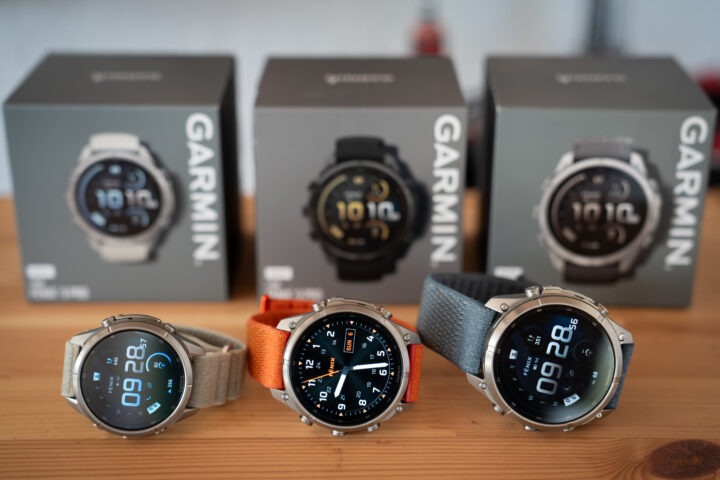
The Garmin Fenix 9 Series is a premium multisport GPS smartwatch designed to track high-end athletic performance, navigate remote wilderness terrain via offline mapping, and provide standalone satellite and LTE communication. The base models start at $999 USD on Amazon, while the Pro models begin at $1,099 USD on Amazon, and the top-tier Pro inReach models start at $1,199 USD on Amazon. This hardware is engineered for ultra-endurance athletes, backcountry explorers, and technical training enthusiasts who require uncompromising battery life, offline navigation, and emergency connectivity without carrying a paired smartphone.
This release matters because it signals a shift toward consolidating safety communications and display technology rather than relying on iterative, minor sensor updates. Garmin has expanded LTE and satellite connectivity to the solar-charging models and introduced a massive boost in display brightness, addressing previous criticisms of the Fenix 8 series. This launch establishes a clear tiering system based on display technology (AMOLED versus MIP Solar), case sizing, and connectivity levels, ensuring that the hardware matches the demanding environments of its core user base. Initial product disclosures and reporting were tracked via Dcrainmaker.
Furthermore, the software strategy accompanying this release indicates a significant change in how Garmin plans to iterate the Fenix line going forward.
Design, Ergonomics, and Build Quality Evolution
Evaluating the physical presence of the Garmin Fenix 9 reveals a meticulous refinement of structural architecture, balancing rugged durability with day-to-day wearability. Available across multiple casing diameters—typically spanning 43mm, 47mm, and 51mm variants—this iteration accommodates varying wrist circumferences without compromising the robust protection required for alpine environments. The chassis relies on aerospace-grade titanium bezels paired with fiber-reinforced polymer cases, while sapphire crystal glass protects the underlying panel from impacts against jagged rock faces and abrasive surfaces. When strapped tightly for heavy trail runs or multi-pitch rock climbing, the unit remains stable, virtually eliminating the annoying head-bobbing oscillation common with heavier, improperly balanced smartwatches.
The tactile button layout has also received a subtle but impactful mechanical overhaul. The guards surrounding the pushers have been reshaped to prevent accidental actuation while wearing thick mountaineering gloves or deep-winter paddling mitts, yet they still provide a crisp, highly satisfying tactile click when depressed. Meanwhile, the proprietary quick-release strap mechanism has been dropped in favor of a reinforced pin system that bolsters structural integrity during violent aquatic impacts, such as swift-water kayaking or canyoning descents. Weighing in between 73 grams and 95 grams depending on the exact casing size and strap configuration, the hardware avoids feeling like a cumbersome anchor on the arm, easily transitioning from sweat-drenched training sessions to formal evening wear without appearing overly tactical or abrasive.
Display Technology: AMOLED Versus Refined MIP Solar
Display performance represents one of the most hotly contested debates in modern sports watch engineering, and Garmin addresses this dichotomy head-on by offering two distinct visual interfaces within the Fenix 9 lineup. The AMOLED variants deliver vibrant color saturation, deep true blacks, and an ultra-crisp resolution that makes complex, routable mapping pop with incredible cartographic clarity. Reading contour lines, elevation profiles, and topographical heat maps under canopy cover or inside dimly lit tents is effortlessly clear. To counter past criticisms regarding outdoor legibility in glaring midday sun, the AMOLED panels now push an eye-watering peak brightness of 2,500 nits, ensuring that data fields remain completely legible even when caught in direct desert sunlight or bouncing off snowy alpine ridges.
Conversely, the Memory-In-Pixel (MIP) Solar variants cater to purists who demand continuous, uncompromised ‘always-on’ visibility without burning through battery reserves via pixel illumination. The redesigned solar-charging ring integrated into the watch glass has been widened by 15 percent, capturing photons much more efficiently than its predecessor. While the MIP panels sacrifice the rich color vibrancy of their AMOLED counterparts, they compensate with a timeless, paper-like readability that actually improves as ambient sunlight intensifies. Athletes undertaking multi-week expeditions across barren plateaus or tracking continuous multi-day ultra-marathons will find that the MIP Solar configuration removes any lingering anxiety regarding power management, making it the definitive choice for pure survival and remote endurance tracking.
Cellular Integration and Satellite Connectivity Deep Dive
The definitive crown jewel of the Garmin Fenix 9 Series is its comprehensive overhaul of connectivity infrastructure, bringing true standalone LTE and satellite communication directly to the wrist. For years, athletes had to choose between leaving their phones behind and losing safety tracking, or carrying a bulky secondary satellite communicator like the Garmin InReach Mini. The Fenix 9 Pro inReach variants consolidate these functions directly into the sleek chassis. Sending emergency SOS signals, transmitting real-time breadcrumb tracking to loved ones back home, and receiving incoming text messages are now natively supported via the global Iridium satellite network, requiring zero cellular tower proximity.
Beyond satellite capabilities, the LTE integration on standard cellular-enabled editions allows users to stream offline Spotify playlists, receive smart notifications, and execute live tracking broadcasts without needing to stash an iPhone or Android device in a running vest pocket. Voice-to-text messaging functionality has also been dramatically improved; the built-in microphone and speaker array accurately translate spoken phrases into actionable text responses even when running at high anaerobic thresholds in windy conditions. The seamless handoff between Bluetooth, LTE, and satellite signals operates entirely in the background, ensuring that users remain connected or safe without manually toggling network states during rapidly changing weather environments.
Advanced Training Metrics, Sensors, and Biometric Accuracy
Beneath the rugged exterior lies a sophisticated suite of biometric sensors, anchored by the next-generation Elevate Gen 5 optical heart rate monitor and an upgraded multi-frequency GNSS chipset. The optical sensor array now includes specialized multi-wavelength LEDs and upgraded photodiode geometry, significantly reducing motion artifacts during high-cadence running, intense rowing intervals, and turbulent mountain biking descents. When compared against medical-grade chest strap monitors during abrupt interval spikes, the sensor tracks heart rate recovery and steady-state zones with minimal latency, removing the annoying lag spikes that plagued older wrist-based monitors.
The software ecosystem leverages these precise data inputs to drive advanced training readiness metrics, real-time stamina tracking, and endurance score calculations. The unit continuously evaluates sleep architecture, chronic training load, autonomic nervous system status, and heat acclimatization to deliver actionable daily recovery recommendations. Furthermore, the upgraded dual-frequency GPS engine locks onto global satellite constellations (GPS, GLONASS, Galileo, BeiDou) within seconds, maintaining pinpoint accuracy when threading through dense urban concrete canyons or deep, sheer-walled mountain gorges where multipath signal reflections traditionally throw off distance and pace metrics.
Battery Life Performance Analysis Across Operating Modes
Battery longevity remains a cornerstone philosophy of the Fenix lineage, and the Fenix 9 series achieves remarkable endurance figures despite driving significantly brighter screens and power-hungry communication chips. For the AMOLED models, users can expect roughly 16 to 24 days of continuous operation in standard smartwatch mode, dropping down to approximately 30 to 45 hours when the GPS is locked into high-accuracy multi-band tracking. While these numbers require periodic recharging during multi-week backpacking trips, they still outclass almost every consumer-grade smartwatch on the market by a factor of three.
The MIP Solar models push performance boundaries into staggering territory. When exposed to adequate daily sunlight exposure (typically three hours at 50,000 lux), the solar-harvesting capabilities can theoretically extend the battery life indefinitely in basic smartwatch mode, effectively turning the hardware into an untethered timepiece for perpetual wilderness survival. Even under heavy, continuous GPS usage paired with periodic satellite messaging, the solar variants easily churn through several days of uninterrupted tracking. Power manager profiles allow users to aggressively toggle specific sensors, backlights, and Bluetooth radios on the fly, tailoring energy consumption precisely to the remaining distance of their expedition.
Ecosystem, Software Interface, and Smart Features
Interacting with the the gear ecosystem is facilitated through a refined user interface that balances deep metric visualization with streamlined daily usability. The Garmin Connect mobile app and web dashboard remain the central nervous system for analyzing long-term training trends, plotting custom courses, and syncing third-party workout plans from platforms like TrainingPeaks. On the wrist, glance widgets have been reorganized into modular, scrollable folders, allowing athletes to check weather conditions, training status, calendar appointments, and music controls with minimal button presses.
Smartwatch capabilities extend far beyond basic fitness tracking. Contactless payments via Garmin Pay, onboard storage for up to 2,000 songs, and comprehensive notification management make the device a capable daily companion. However, Garmin wisely avoids turning the watch into a bloated mini-smartphone, keeping the focus squarely on athletic performance, robust navigation, and reliable outdoor utility. The absence of distracting applications or sluggish web browsing interfaces preserves system stability, ensuring that the operating system never crashes or stutters during a critical workout recording.
Competitive Landscape and Market Alternatives
Positioned at the apex of the endurance wearable market, the the item faces stiff competition from heavyweight rivals, yet it manages to maintain a commanding lead through sheer feature consolidation. Apple’s Watch Ultra series offers brilliant cellular connectivity, a gorgeous screen, and a robust application ecosystem, but its battery life rarely exceeds 60 hours in low-power modes, rendering it impractical for multi-day backcountry expeditions or ultra-endurance running events where charging ports do not exist. Furthermore, Apple lacks native offline topographic mapping and deep, physiological training analytics comparable to Garmin’s proprietary first-party metrics.
Similarly, offerings from Coros and Suunto provide exceptional battery efficiency and lightweight construction at slightly lower price points, but they traditionally struggle to match the comprehensive software ecosystem, advanced training readiness metrics, and seamless satellite/LTE integration found in the Fenix 9 Pro inReach models. While the initial investment starting at $999 USD scaling up to $1,199 USD and beyond represents a significant financial commitment, the sheer breadth of capabilities—combining a world-class training computer, offline mapping GPS, and global emergency communicator into a single indestructible chassis—justifies the premium price tag for dedicated endurance athletes.
Final Verdict and Purchasing Recommendation
The the product Series successfully redefines the gold standard for premium multisport smartwatches by thoughtfully bridging the gap between high-performance athletic tracking and uncompromising emergency communication. By introducing robust LTE connectivity and true Iridium satellite messaging directly to the wrist without sacrificing the legendary battery longevity that the brand is built upon, Garmin has created an essential tool for backcountry explorers and serious runners alike. Whether opting for the vibrant, high-nit AMOLED display or the perpetual sunlight-harvesting endurance of the MIP Solar variant, buyers receive a masterclass in rugged wearable engineering.
Ultimately, if your training takes you far beyond cellular grid coverage, demands meticulous physiological insights, and requires a device that can withstand extreme environmental abuse, the Fenix 9 series stands completely uncontested. While casual fitness enthusiasts may find the expansive metric suites and premium pricing excessive for their needs, ultra-endurance athletes, mountaineers, and outdoor professionals will discover that this hardware is a worthwhile investment in performance optimization and personal safety.