

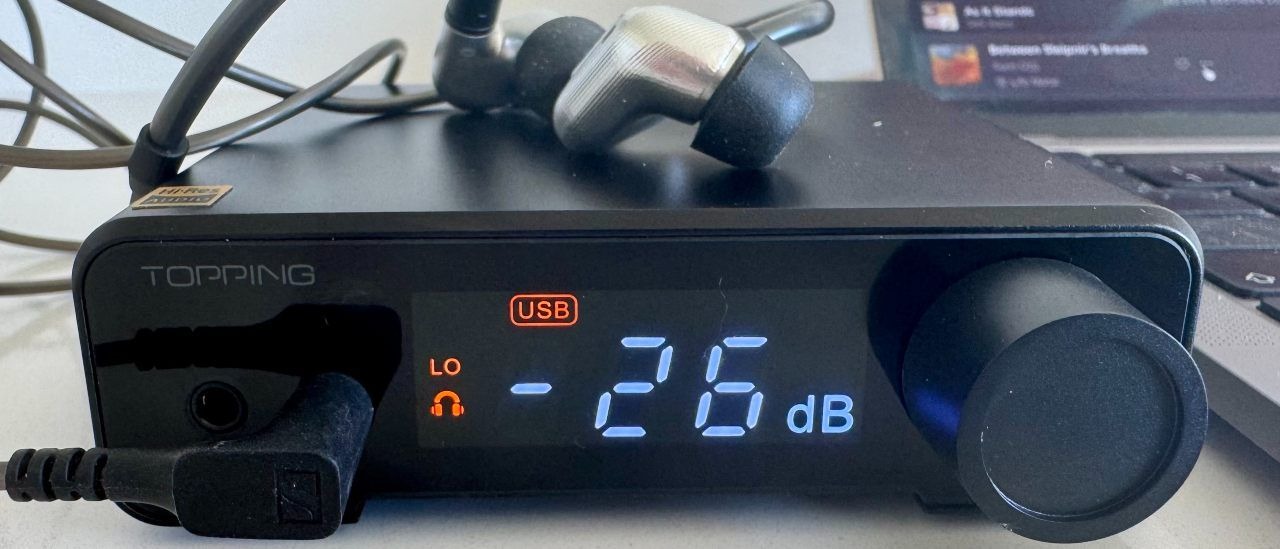
The Topping DX1 II is a compact desktop digital-to-analog converter and headphone amplifier designed to bridge the gap between computers or gaming consoles and wired listening gear. Priced at $119 USD on Amazon, this hardware upgrade targets desktop users, remote professionals, and headphone enthusiasts looking to bypass onboard computer audio without investing in massive studio racks. Examining the fine print of the hardware documentation reveals a thorough update over its predecessor, utilizing dual-DAC architecture and balanced analog circuitry to elevate desktop audio performance.
🛒 Where to Buy: Topping DX1 II
- Topping DX1 II: View on Amazon
Click the link above to check current pricing, availability, and customer reviews on Amazon.
Desktop listening hardware occupies a crowded corner of consumer electronics, yet manufacturers continue refining sub-$150 units for everyday desk setups. Evaluating these desktop units requires looking past raw spec sheets to examine real-world handling, interface quirks, and actual listening behavior. This analysis reviews how the physical unit performs across daily workflows, examining its component choices, ergonomic shortcomings, and market positioning relative to other compact desktop alternatives. Initial product disclosures and reporting were tracked via Techradar.
Real-World Context and Target Buyer Profile
Placing an external digital-to-analog converter between a laptop and wired headphones transforms a routine listening setup into a capable audio chain. The hardware functionality centers on converting USB-C or optical digital streams into clean analog signals for headphones or powered speakers. This process eliminates the electrical interference common inside budget computer motherboards, resulting in a cleaner noise floor and improved instrument separation. For remote workers tethered to laptops all day, adding a dedicated desktop unit brings noticeable clarity improvements to music streaming and video calls alike, reducing listener fatigue during marathon virtual meetings.
Gamers seeking deeper immersion also fall squarely within the target demographic for this hardware. By utilizing the UAC 1.0 toggle switch on the rear panel, the unit accepts digital signals directly from consoles like the Sony PlayStation 5 or Nintendo Switch without requiring complex driver installations. Connecting a pair of wired headphones to the front output jacks turns console gaming into a spatially detailed experience, revealing subtle audio cues like footsteps, environmental echoes, and distant reloading sounds that standard TV speakers or wireless controllers miss. Furthermore, its balanced output delivers sufficient power to drive demanding 32-ohm studio headphones with ease, ensuring that dynamic explosions and cinematic scores retain their intended impact.
Beyond traditional desktop environments and gaming rigs, this hardware accommodates casual media consumption setups in small bedrooms or study dens. Students studying late into the night benefit from the dead-silent background when pairing sensitive multi-driver in-ear monitors with the front 3.5mm output. Because budget laptop audio jacks often suffer from an audible hiss or electromagnetic interference generated by busy graphics processors, routing the audio stream through an isolated external USB device immediately restores pristine background blacks to quiet ambient tracks and spoken-word podcasts.
Hardware Engineering, Materials, and Core Specs
According to technical documentation published with this release, the unit is built around an ESS ES9039Q2M DAC chipset arranged in a dual-DAC configuration. This layout assigns a dedicated converter to each channel, isolating processing pathways to keep noise and distortion down to remarkably low levels. A 16-core XMOS XU-316 processor handles incoming signal tasks, supporting hi-res digital files up to 32bit/384kHz alongside DSD256 native playback. The chassis itself consists of machined aluminum measuring 32 x 100 x 100mm, giving the hardware a sturdy physical footprint that resists sliding around the desk under heavy cable weight, while its minimalist aesthetic blends effortlessly into professional office environments.
Connectivity options span a generous selection for a device in this price tier. Digital audio feeds through either the rear optical input or the primary USB-C port, which simultaneously supplies clean operating power to the internal circuitry. Output routing includes an unbalanced 3.5mm headphone jack, a balanced 4.4mm headphone socket, a dedicated 4.4mm line-level output for powered monitors, and stereo RCA connections. Topping’s official launch documentation emphasizes that this balanced analog architecture maintains signal integrity from input to output, offering performance metrics that challenge larger desktop gear, such as an exceptionally low signal-to-noise ratio and minimal channel crosstalk.
Delving deeper into the interior circuitry reveals a meticulous layout designed to minimize jitter and electromagnetic interference. The power filtering stage employs dedicated voltage regulators that isolate the digital decoding section from the analog amplification stages, preventing high-frequency noise from the USB bus from bleeding into sensitive headphone outputs. The volume control implementation relies on an electronic ladder network rather than a noisy analog potentiometer, ensuring perfect channel balance even at whisper-quiet listening levels where traditional volume pots often suffer from imbalance. Every solder joint, capacitor, and resistor selection has been optimized to maximize longevity and thermal stability during sustained high-output listening sessions.
Everyday Usability & Design Compromises
Measuring just 275g, the hardware remains light enough to stay put on a crowded desk without being dragged off by stiff headphone cables, yet its dense metal shell prevents it from feeling hollow or cheap. The front fascia features a legible LED display indicating current volume levels and active inputs, paired with a multifunction turn-and-press dial that provides satisfying tactile feedback. In practice, relying solely on the front dial for deep system adjustments proves less than intuitive. Navigating advanced software settings or custom filters directly through the physical knob involves a steep learning curve, which makes the included infrared remote control or computer software an essential accessory for managing everyday tweaks.
Software integration expands user control significantly when connected to a computer via USB-C. Utilizing Topping’s web platform or the Topping Tune software opens access to gain adjustments, eight distinct digital filters, and a 10-band parametric equalizer with independent left and right channel tuning. These tools allow listeners to tailor the sound profile to specific headphones or correct for acoustic anomalies in their listening space. However, they cannot entirely eliminate the unit’s natural sonic tendencies. High frequencies exhibit a slight roll-off that softens sharp treble bites, and the internal headroom limits the dramatic impact of sudden dynamic swings in complex orchestral or metal tracks.
Ergonomically, the placement of the rear connections requires careful cable management. Because both USB-C power/data inputs, the optical port, and the RCA outputs are clustered closely together on the back panel, thick aftermarket audio cables or rigid power cords can crowd the space and push the unit forward on the desk. Users employing both balanced 4.4mm headphones and rear line-out connections simultaneously will find the front-to-back workflow straightforward, but those swapping between multiple USB sources manually will notice the absence of a dedicated front-panel input toggle button, requiring a quick press of the multi-function dial to cycle through available digital streams.
The thermal management of the machined aluminum chassis deserves praise, as the enclosure acts as a passive heatsink that dissipates internal heat efficiently during long listening sessions. Even when driving demanding planar magnetic or low-impedance dynamic headphones at elevated volume levels for hours, the exterior casing remains cool to the touch. This passive cooling design completely eliminates the need for internal cooling fans, ensuring that the background noise floor remains utterly silent without any mechanical whirring to distract from delicate acoustic recordings or quiet ambient passages.
Category Alternatives and Value Comparison
The desktop audio market features several compelling alternatives that approach portable and desktop conversion from different angles. For instance, the iFi Unois available for $79 USD on Amazon, offering a more affordable entry point with a distinct, confident sound signature. While it lacks the extensive metal casework, optical input, and dual-DAC sophistication of higher-end units, it punches above its weight class for casual desktop setups. Buyers prioritizing maximum portability often look toward ultra-compact dongles like the iFi Go Link Max, priced $79 USD on Amazon, which trades desktop connectivity, balanced 4.4mm jacks, and physical volume displays for pocket-friendly mobile convenience.
Comparing these options highlights a clear hardware divide. Portable dongle solutions sacrifice physical input switching, optical ports, and balanced 4.4mm connections in exchange for pocket-sized convenience and plug-and-play phone compatibility. Larger desktop units provide robust physical connectivity, substantial power output, and advanced software parameter tuning that simple dongles cannot match. Choosing between them depends entirely on whether the listener needs a permanent desktop hub with multiple source inputs or a lightweight mobile DAC for on-the-go phone listening. For stationary office setups, the inclusion of a dedicated optical input makes the hardware vastly more versatile than USB-only dongles that cannot interface with standalone CD players or television audio outputs.
Another strong competitor in the sub-$150 bracket includes entry-level stack offerings from brands like Schiit Audio or SMSL, which often split conversion and amplification into two separate standalone boxes. While separate component stacks offer the illusion of future upgradability, they consume significantly more desk space and require an extra power brick and interconnect cables. The integrated chassis approach chosen here streamlines cable management while retaining high-end engineering principles. When weighed against entry-level stacks, this compact unit delivers comparable sonic resolution while occupying a fraction of the physical footprint, making it an ideal choice for minimalist workstations where desk real estate is at a premium.
Final Buyer Verdict: Long-Term Ownership Value
Evaluating long-term ownership value requires weighing the exceptional build quality and comprehensive technical specification against the relaxed sonic presentation. The machined aluminum housing, robust component selection, and extensive EQ capabilities deliver a tangible sense of quality that justifies its three-figure investment. It provides an uncomplicated, non-fatiguing listening experience that easily outperforms standard computer audio outputs across extended listening sessions, making it a reliable fixture for daily desk work and relaxed media consumption without causing listening fatigue.
Ultimately, prospective buyers should consider whether a laid-back, smooth treble response aligns with their listening preferences. Listeners craving sharp transient attack and aggressive dynamic swings might find the presentation a bit too polite when paired with bright, analytical headphones. However, for anyone seeking a durable, feature-rich desktop DAC with exceptional detail retrieval and flexible routing options, the hardware earns its place on the desk. Buy it if you need a versatile desktop hub for mixed computer and console audio; skip it if you demand energetic, forward-leaning treble performance and aggressive transient punch.