

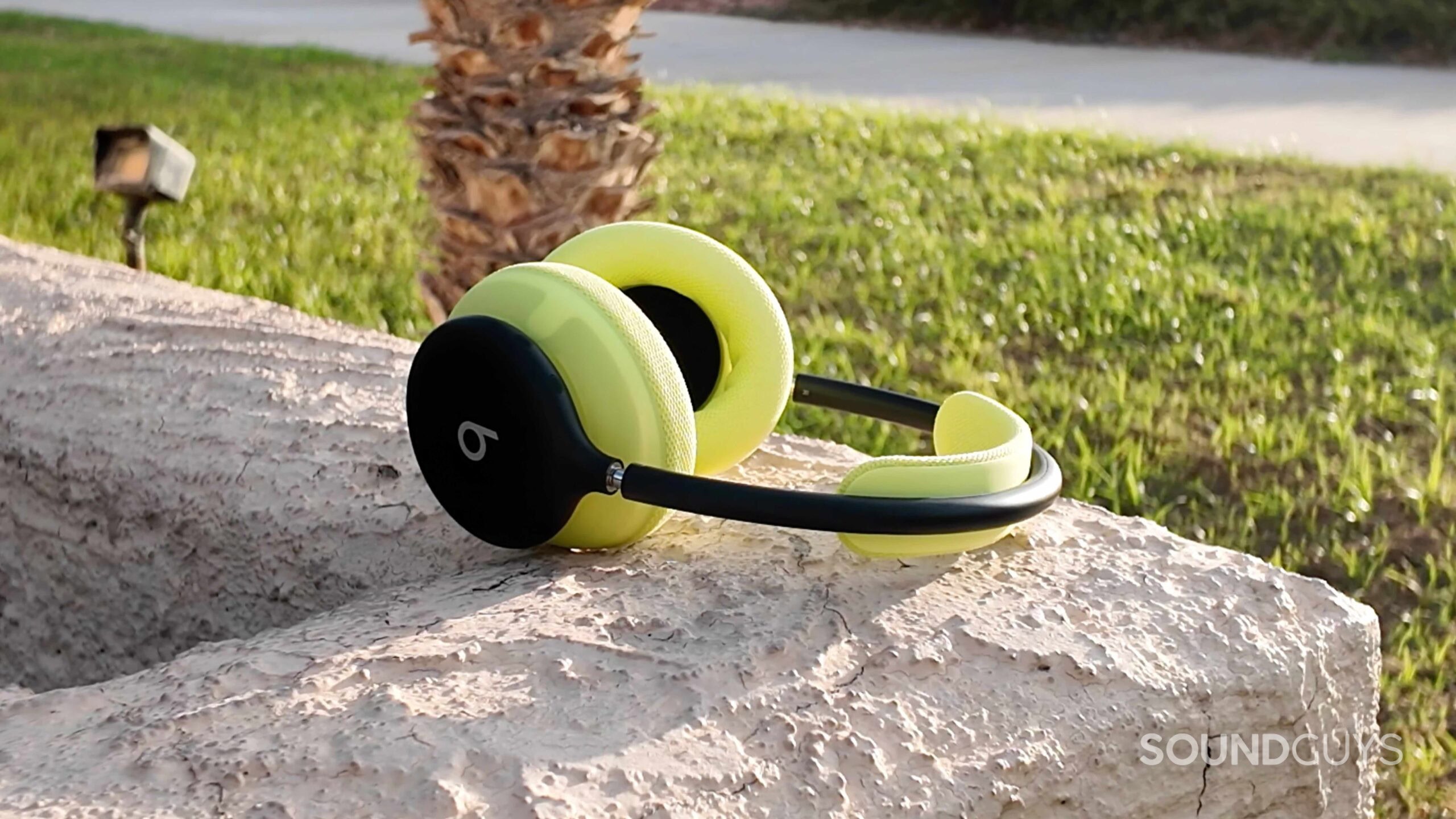
Beats 360 delivers an entirely fresh over-ear lifestyle headphone design featuring modular swappable ear cushions, IPX4 water resistance, and wireless-only connectivity. Retailing at $350 USD on Amazon, these headphones are built specifically for mobile listeners, daily commuters, and fitness enthusiasts who prioritize style, weather durability, and modular comfort over traditional wired studio monitoring.
🛒 Where to Buy: Beats 360
Editorial Note & Product Verification: The Cool Great Buys editorial desk independently verifies manufacturer technical specifications, cross-checks active retail availability across authorized sellers, and evaluates verified consumer reliability data before publishing product evaluations. All featured prices and promotions reflect active market rates at the time of publication.
- Beats 360: View on Amazon
Click the link above to check current pricing, availability, and customer reviews on Amazon.
The consumer audio market has long treated over-ear headphones as static blocks of plastic and metal. When components wear out, users typically replace the entire unit. Beats breaks that cycle by shifting toward a modular build strategy that rethinks how a portable headphone fits into everyday life. Initial product disclosures and reporting were tracked via Soundguys.
For years, major audio brands have focused primarily on incremental improvements in active noise cancellation algorithms and digital signal processing, leaving the physical chassis essentially unchanged. Ear pads wear out, headbands lose their tension, and sweat degrades internal foams, eventually forcing consumers to discard otherwise functioning electronics simply because external textiles deteriorated. By engineering a system where vulnerable contact points can be easily uninstalled and replaced, the manufacturer acknowledges that physical wear and tear is just as important a metric of longevity as battery chemistry. This shift challenges the industry status quo, forcing competitors to reconsider how long-term product support and sustainability are handled in the premium portable bracket.
Real-World Context and Target Buyer Profile
Modern wireless headphones face a difficult balancing act between active gym use and long-haul commuting. Many consumer models struggle with moisture buildup, clamping fatigue, or deteriorating headband padding within the first year of ownership. The Beats 360 directly addresses these physical durability issues by incorporating IPX4 water resistance into a lifestyle over-ear chassis. For urban commuters dealing with sudden rain showers or gym-goers logging daily cardio sessions, this moisture protection provides necessary peace of mind without sacrificing everyday styling.
The target buyer for this hardware is a mobile-first listener embedded within the Apple or Android hardware environment who values aesthetic customization and physical comfort above all else. Because the physical architecture relies entirely on a true wireless dual-cup battery and processor layout, the Beats 360is tailored for smartphone and tablet owners rather than wired studio engineers or audiophiles requiring lossless digital playback. Anyone seeking a versatile daily driver for travel and workouts will find the feature set aligns closely with their daily routine.
Evaluating this gear in authentic everyday environments reveals how well it transitions from a crowded subway platform to a high-intensity workout. Traditional over-ear gear often traps body heat and sweat, creating an uncomfortable sauna effect around the ears during moderate exercise. By integrating specialized breathable fabrics and moisture-shedding exterior coatings, the hardware manages to stay secure during dynamic movements without sliding off or causing excessive skin irritation. Commuters will likewise appreciate how easily the profile slips into crowded backpacks, while the sleek modern geometry ensures it looks natural in professional office environments as well as casual weekend settings.
Hardware Engineering, Materials, and Core Specs
Examining the hardware documentation reveals a completely redesigned cylindrical plastic headband connecting two independent audio drivers. Weighing in at 294.5 grams, the device manages its mass efficiently by housing separate batteries, antennas, and processors inside each ear cup. This true wireless internal architecture mimics modern earbuds to achieve balanced weight distribution across the head. According to technical specifications published with this release, the build introduces two distinct ear cushion options: eco-leather UltraPlush and sweat-absorbing Performance Knit.
Official launch documentation notes that the Beats 360uses the brand’s fourth-generation proprietary chip alongside eight MEMS microphones to handle environmental noise attenuation. Beats claims this processor delivers 1.75 times more noise cancellation than the previous Studio Pro. Connectivity relies on Bluetooth 5.3 supporting AAC and SBC codecs, paired with Apple one-touch pairing and Google Fast Pair. Battery life is rated at 32 hours of continuous playback with active noise cancellation engaged, backed by a rapid charging circuit that delivers one hour of runtime from a five-minute charge via the single USB-C port.
A closer look at the internal acoustic chambers shows that splitting the core processing duties between both ear cups eliminates the traditional bridge cable that normally routes audio signals and power through the headband. This engineering choice not only improves mechanical reliability by removing a frequent point of wire failure, but it also optimizes internal air volume for the custom dynamic drivers. The inclusion of eight microphones ensures that environmental sampling occurs with high precision, allowing the adaptive noise cancellation algorithms to react instantly to sudden shifts in ambient decibel levels, whether you are walking past construction sites or sitting inside a commercial jet cabin.
Everyday Usability & Design Compromises
In practice, the choice between the two included cushion materials dictates the daily wearing experience. The UltraPlush eco-leather pads create a rigid seal that enhances passive isolation and active noise cancellation, but their strong clamping force can cause fatigue during extended listening sessions. Conversely, the Performance Knit textile cushions wick moisture effectively and relieve head pressure, making them the superior choice for workouts and warm-weather outdoor use. However, because the cushions utilize a twist-to-lock mounting mechanism, failing to secure them perfectly can disrupt the acoustic seal and degrade noise-canceling performance.
Control ergonomics show significant improvement over older Beats designs. Instead of forcing users to press flat logo panels directly into their ears, the Beats 360features a physical volume rocker and playback button on the back of the right ear cup, with an ANC cycling button positioned on the left. The flush power and pairing button, while preventing accidental presses, proves frustratingly difficult to locate by touch in low-light environments. The most polarizing engineering compromise is the complete omission of wired audio support. With no 3.5mm headphone jack and a USB-C port restricted strictly to power delivery, users cannot connect via cable for zero-latency or lossless listening when the battery depletes.
Furthermore, managing Bluetooth-only connections in multi-device office setups highlights both the strengths and weaknesses of modern smartphone-centric peripherals. While quick-pairing protocols allow instant handoffs between phones and tablets, the lack of an analog backup means that if you find yourself on a transatlantic flight with a depleted battery and no spare charging cable, the headphones become entirely useless. Users who regularly interface with legacy studio equipment, inflight entertainment screens, or high-end portable digital audio players will find this restriction creates significant friction in scenarios where Bluetooth pairing is restricted, unsupported, or prone to wireless interference.
Category Alternatives and Value Comparison
Evaluating the Beats 360against competing flagship hardware requires looking at established market leaders that offer distinct advantages for similar financial outlays. The Sony WH-1000XM5, retailing around $399 USD on Amazon, remains the gold standard for pure active noise cancellation and high-resolution LDAC codec support. While Sony’s flagship lacks the modular swappable cushions and water-resistant gym durability of the Beats hardware, it provides a much more flexible acoustic hardware environment for traditional travelers and wired-audio enthusiasts.
Another direct competitor in the premium over-ear category is the Bose QuietComfort Ultra, priced at $429 USD on Amazon. Bose delivers industry-leading comfort and superior cabin-noise attenuation that outperforms the Beats model during long flights. However, neither Sony nor Bose matches the reliable cross-hardware environment auto-switching, modular color customization, and IPX4 weather sealing found on the Beats hardware. Buyers must weigh whether lifestyle durability and custom aesthetics outweigh pure acoustic performance and wired connectivity.
When comparing these market alternatives, it becomes clear that consumer preferences dictate the correct purchase. Listeners who spend their days traveling between corporate meetings, fitness clubs, and coffee shops will benefit greatly from the robust weatherization and swappable pads of the Beats unit. On the other hand, individuals who view their over-ear headphones as stationary acoustic reference monitors will inevitably miss the expansive codec support, foldable hinges, and physical auxiliary inputs found on competitor flagships. Weighing these distinct engineering philosophies ensures that buyers invest in hardware tailored precisely to their consumption habits.
Final Buyer Verdict: Long-Term Ownership Value
The Beats 360succeeds as a stylish, comfortable, and weather-resistant daily companion for mobile users who value modular customization and reliable phone integration. Its true wireless internal architecture and sweat-wicking Performance Knit cushions solve historical over-ear comfort complaints, making it an exceptional choice for active listeners who want a headphone that survives daily commutes and gym sessions alike.
At the same time, the strict omission of wired audio support and high-resolution codec compatibility means traditional audiophiles and frequent fliers relying on physical cables will find its limitations frustrating. For smartphone-centric users who live on Bluetooth and prioritize wear-and-tear longevity through replaceable parts, the hardware justifies its premium placement. Those requiring uncompressed studio monitoring or absolute top-tier noise cancellation should look toward established alternatives.
Ultimately, long-term ownership value rests on how well the modular design philosophy prevents obsolescence over years of regular use. By allowing users to swap worn-out pads and refresh the exterior tactile elements independently, the manufacturer extends the usable lifespan of the device well past typical industry limits. While the lack of an analog cable connection remains a notable hurdle for certain power users, the combination of robust battery longevity, weather resistance, and smart ergonomic controls solidifies its place as a forward-thinking choice for modern mobile consumers.