

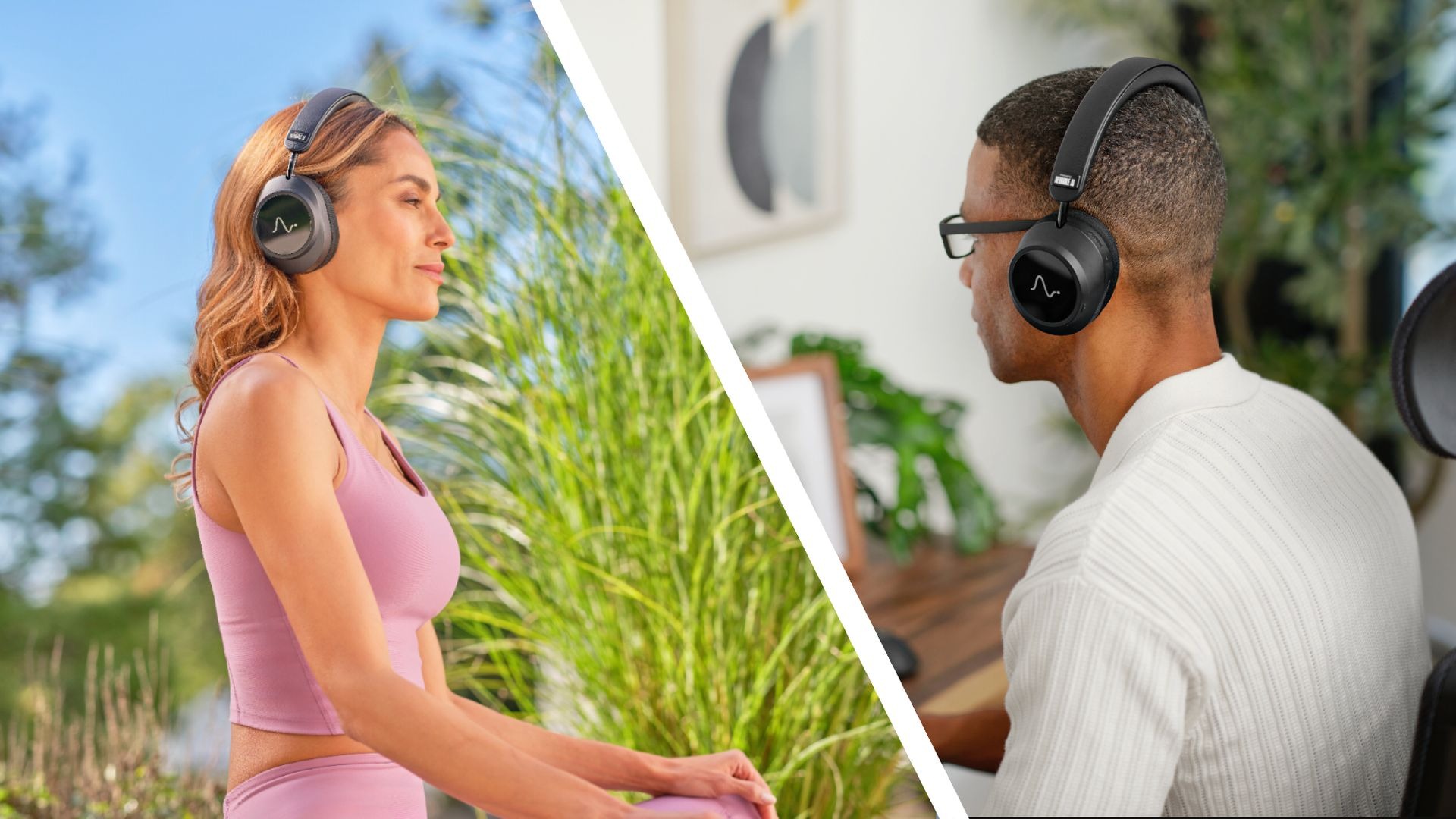
The Neurable One is an over-ear active noise-canceling headphone integrated with 12 dry electroencephalography (EEG) sensors designed to continuously monitor and analyze the wearer’s real-time cognitive metrics. Retailing for $499 USD direct from Neurable, this specialized wearable is engineered specifically for knowledge workers, software developers, and productivity-focused professionals who require objective data to manage mental fatigue and optimize their daily focus intervals. By embedding clinical-grade sensor technology into a familiar consumer audio form factor, the device attempts to bridge the gap between passive consumer electronics and active neurological monitoring, transforming standard office accessories into active diagnostic platforms.
🛒 Where to Buy: Neurable One
Editorial Note & Product Verification: The Cool Great Buys editorial desk independently verifies manufacturer technical specifications, cross-checks active retail availability across authorized sellers, and evaluates verified consumer reliability data before publishing product evaluations. All featured prices and promotions reflect active market rates at the time of publication.
- Neurable One: View on Amazon
Click the link above to check current pricing, availability, and customer reviews on Amazon.
Historically speaking, the consumer neurotechnology market has been defined by niche, single-purpose headbands that users routinely abandoned due to the physical friction of wearing them during a standard workday. Neurable has spent nearly a decade attempting to solve this retention problem, transitioning from early brain-computer interface software for virtual reality in 2017 to hardware partnerships with premium audio brands. The Neurable One represents a pivotal milestone for the company, moving away from the heavy, co-branded Master & Dynamic chassis seen in previous iterations to a completely proprietary, in-house design. This structural independence allows the engineering team to optimize the physical architecture of the headphones specifically around the requirements of the EEG sensors rather than retrofitting them into an existing third-party frame, resulting in a more unified structural composition that directly impacts daily comfort. Initial product disclosures and reporting were tracked via Techradar.
A notable advancement in this release is the introduction of passive background recording, which addresses a major usability bottleneck identified in prior generations. In previous models, users were required to manually launch a dedicated “Focus Session” within the companion application to begin data collection—a step that many frequently forgot, resulting in fragmented data sets. The Neurable One resolves this by operating much like a modern fitness tracker, continuously and silently logging electrical brain activity whenever the headphones are powered on and worn. This shift to passive telemetry is designed to make cognitive tracking a seamless, low-friction component of the user’s daily routine, providing a more comprehensive longitudinal view of mental energy without imposing tedious operational overhead on the busy professional.
Core Disclosure & Hardware Announcement
The Neurable One enters the market at a highly competitive $499 USD price point, positioned directly against established premium consumer headphones. Unlike its predecessors, which relied on third-party acoustic platforms, this model is built from the ground up by Neurable’s in-house engineering team. The primary objective of this hardware is to provide continuous, non-invasive cognitive tracking without requiring the user to alter their daily habits or wear conspicuous medical equipment. By integrating the sensors directly into the ear cushions, the device maintains a conventional aesthetic that is indistinguishable from standard high-end office headphones, ensuring that users can wear them in open-plan workspaces or corporate boardrooms without attracting undue attention.
The hardware package includes active noise cancellation, high-resolution audio drivers, and a companion application compatible with both iOS and Android platforms. The primary target demographic consists of professionals operating in high-stress, cognitively demanding environments where mental burnout is a frequent operational hazard. By translating complex neural signals into simplified metrics, the system aims to help users identify their peak productivity windows and recognize when a short mental break is physically necessary to maintain long-term cognitive efficiency. Beyond mere tracking, the unit aims to function as an active behavioral coach, utilizing data-driven insights to nudge users toward healthier work habits and more sustainable cognitive pacing throughout an eight-hour shift.
It is worth observing that Neurable’s transition to a proprietary hardware design represents a significant financial and engineering risk. Developing a competitive acoustic platform from scratch is notoriously difficult, especially when competing against established audio giants like Sony, Bose, and Apple who possess decades of audio engineering pedigree. However, by controlling both the hardware and software development pipelines, Neurable has been able to eliminate the integration bottlenecks that limited the performance and comfort of their earlier collaborative models, resulting in a more cohesive and refined end-product that treats audio fidelity and neural sensing as equal engineering priorities.
Manufacturer Claims vs. Engineering Reality
The primary marketing proposition of the Neurable One centers on its ability to calculate a real-time “Brain Battery” metric and track “Alpha Peak Frequency” (APF), which the manufacturer describes as the neurological equivalent of heart rate variability (HRV). According to technical documentation published with this release, these metrics are derived from the continuous monitoring of micro-volt electrical signals generated by neural activity. In practice, however, translating raw EEG data into actionable consumer insights requires navigating significant engineering trade-offs. The human scalp is a highly noisy electrical environment, and dry EEG sensors are notoriously sensitive to external interference, meaning that stray electrical fields from office lighting, computer monitors, and Bluetooth transmissions can easily corrupt clean signal acquisition if not properly managed by sophisticated shielding.
The physical reality of dry-sensor EEG technology is that it lacks the conductive gel and secure physical anchoring used in clinical or laboratory settings. Consequently, simple physical movements such as walking, nodding, jaw clenching, or even blinking generate massive muscle-induced electrical artifacts that can easily swamp the delicate micro-volt signals of the brain. While Neurable’s proprietary signal-processing algorithms are engineered to filter out these physical artifacts, the resulting data is inevitably a highly processed approximation rather than a direct, raw reading of neural states. Users must understand that the “Brain Battery” is an algorithmic interpretation of filtered data, not a direct physical measurement of cognitive exhaustion, and its accuracy depends heavily on maintaining stable skin contact over extended periods.
Furthermore, the claim that the headphones can deploy “neuroadaptive audio” to actively manipulate the user’s cognitive state warrants analytical skepticism. The concept of adjusting audio volume or soundscapes based on real-time focus levels sounds promising in theory, but the latency involved in detecting a cognitive shift, processing the data, and adjusting the audio output can create a jarring user experience. If the system lowers the volume because it senses a drop in focus, it may inadvertently signal to the user that the device is malfunctioning rather than gently guiding them back to a productive state. The engineering trade-off between real-time responsiveness and algorithmic accuracy remains a difficult balance to strike in a consumer-grade product, and users should approach adaptive audio features with cautious optimism regarding their immediate utility.
Under the Hood: Technical Architecture and Build Quality
Examining the physical architecture of the Neurable One reveals a concerted effort to balance the competing demands of acoustic performance, sensor contact, and long-term wearing comfort. The headphones feature 12 dry EEG sensors seamlessly woven into the fabric of the ear cushions, positioned to make consistent contact with the skin surrounding the ears. To ensure these sensors function correctly, the headband must exert a precise amount of clamping force; too loose, and the electrical connection is lost, resulting in dropped data streams; too tight, and the user experiences physical fatigue and tension headaches over a multi-hour work session. Neurable has engineered a lightweight polymer frame that distributes this pressure more evenly than the heavy metal components of older designs, shaving significant weight from the overall package.
On the acoustic side, the Neurable One utilizes custom-tuned dynamic drivers designed to deliver a balanced, neutral sound signature suitable for long listening sessions of background music, podcasts, or conference calls. However, the physical integration of the EEG sensors and their associated wiring within the ear cups presents a distinct engineering challenge. The internal volume of a headphone ear cup is critical for acoustic resonance and bass response; crowding this space with sensor hardware, shielding, and processing boards can negatively impact the acoustic tuning. Neurable’s acoustic engineers have addressed this by utilizing specialized internal chamber baffling to isolate the driver cavities from the digital sensor traces, preventing electromagnetic interference from bleeding into the audio signal path and preserving sonic clarity.
Battery performance is another critical consideration for a wearable that combines continuous neurological monitoring with active noise cancellation and wireless audio streaming. The unit houses a high-density lithium-ion battery engineered to deliver up to 32 hours of continuous audio playback with active noise cancellation enabled, dropping to approximately 24 hours when continuous background EEG telemetry is actively running in the background. Charging is handled via a modern USB-C port located on the right ear cup, supporting fast-charging protocols that yield roughly three hours of mixed-use operation from a brief fifteen-minute charge. This ensures that the device can easily survive a demanding cross-country flight or an intense week of remote work without requiring midday top-offs.
Software Ecosystem and Daily User Experience
The companion application serves as the central hub for interpreting the vast streams of neurological data collected by the headset, presenting complex frequency band analyses—including delta, theta, alpha, beta, and gamma waves—in clean, accessible graphical dashboards. Upon pairing the Neurable One via Bluetooth 5.3, the software walks the user through an initial calibration phase, establishing a baseline resting neurological state by measuring electrical activity while the eyes are closed for sixty seconds. This baseline is essential because baseline brainwave patterns vary wildly from person to person, meaning that generalized algorithms are far less effective than personalized models that adapt to an individual’s unique neurological signature over the first few weeks of consistent use.
Throughout the workday, the app provides real-time notifications when the system detects sustained drops in cognitive stamina, gently suggesting micro-breaks or recommending shifts in task complexity to match current mental capacity. The interface avoids overly clinical terminology, opting instead for intuitive gauges and color-coded energy bars that make it easy to glance down and understand one’s current cognitive posture at a moment’s notice. Integration with third-party productivity tools is currently supported via webhooks and basic calendar synchronization, allowing the software to correlate mental fatigue spikes with specific meetings, projects, or environmental stressors logged throughout the day, giving knowledge workers unprecedented visibility into their own internal rhythms.
However, privacy considerations surrounding neurological data remain a valid concern for enterprise users and security-conscious professionals. Neurable handles this by processing the vast majority of signal filtering and metric calculation locally on the device’s onboard processing chip, with only anonymized, high-level productivity metrics synced to cloud storage for longitudinal trend analysis. Users who prefer absolute data isolation can configure the application to operate in a strictly local mode, preventing any telemetry from leaving the physical smartphone. This architecture demonstrates a commendable commitment to data sovereignty, recognizing that brain data is among the most sensitive personal information an individual can generate, and reassuring corporate users that their cognitive telemetry will not be exploited for third-party advertising.
Industry Benchmarks and Structural Metrics for and Long-Term Value Proposition
When evaluated against alternative productivity wearables, the Neurable One occupies a unique category that defies direct comparison. Traditional smartwatches and fitness trackers measure peripheral physiological indicators such as heart rate, skin conductance, and sleep duration, treating cognitive fatigue as a secondary inference derived from physical exertion. In contrast, the Neurable One measures central nervous system activity directly at the scalp, providing a fundamentally different tier of insight into mental workload and sustained attention. While specialized consumer EEG headbands like the Muse series focus almost exclusively on guided meditation and relaxation training, this model is explicitly designed for active work environments, blending high-end office audio functionality with continuous cognitive tracking in a single, cohesive device.
The build quality and acoustic performance place the hardware in direct competition with mainstream flagships like the Sony WH-1000XM5 and Bose QuietComfort Ultra, both of which retail near the four-hundred-dollar mark. While those traditional audio giants offer superior active noise cancellation algorithms and more refined high-end codec support, they lack any capacity for neurological monitoring. For the target demographic of software developers, data analysts, and burnout-prone professionals, the additional one-hundred-dollar investment over a standard flagship headphone is easily justified by the inclusion of clinical-grade sensor architecture and passive cognitive tracking. The device successfully avoids the awkward dual-wielding trap of wearing separate audio headphones and brain-tracking headbands simultaneously.
Ultimately, the Neurable One represents a significant leap forward in practical consumer neurotechnology, successfully transitioning brain-monitoring hardware from clumsy laboratory curiosities into stylish, everyday office gear. While dry-sensor limitations and algorithmic data approximations mean that the metrics should be viewed as insightful trends rather than infallible medical diagnoses, the value proposition for knowledge workers is substantial. By making cognitive fatigue visible and actionable, the hardware empowers professionals to manage their energy reserves proactively, reducing the risk of burnout and optimizing their most productive hours. For anyone striving to navigate high-pressure knowledge work with empirical self-awareness, this specialized wearable delivers an unprecedented window into the inner workings of the human mind.