

Core Disclosure & Hardware Announcement
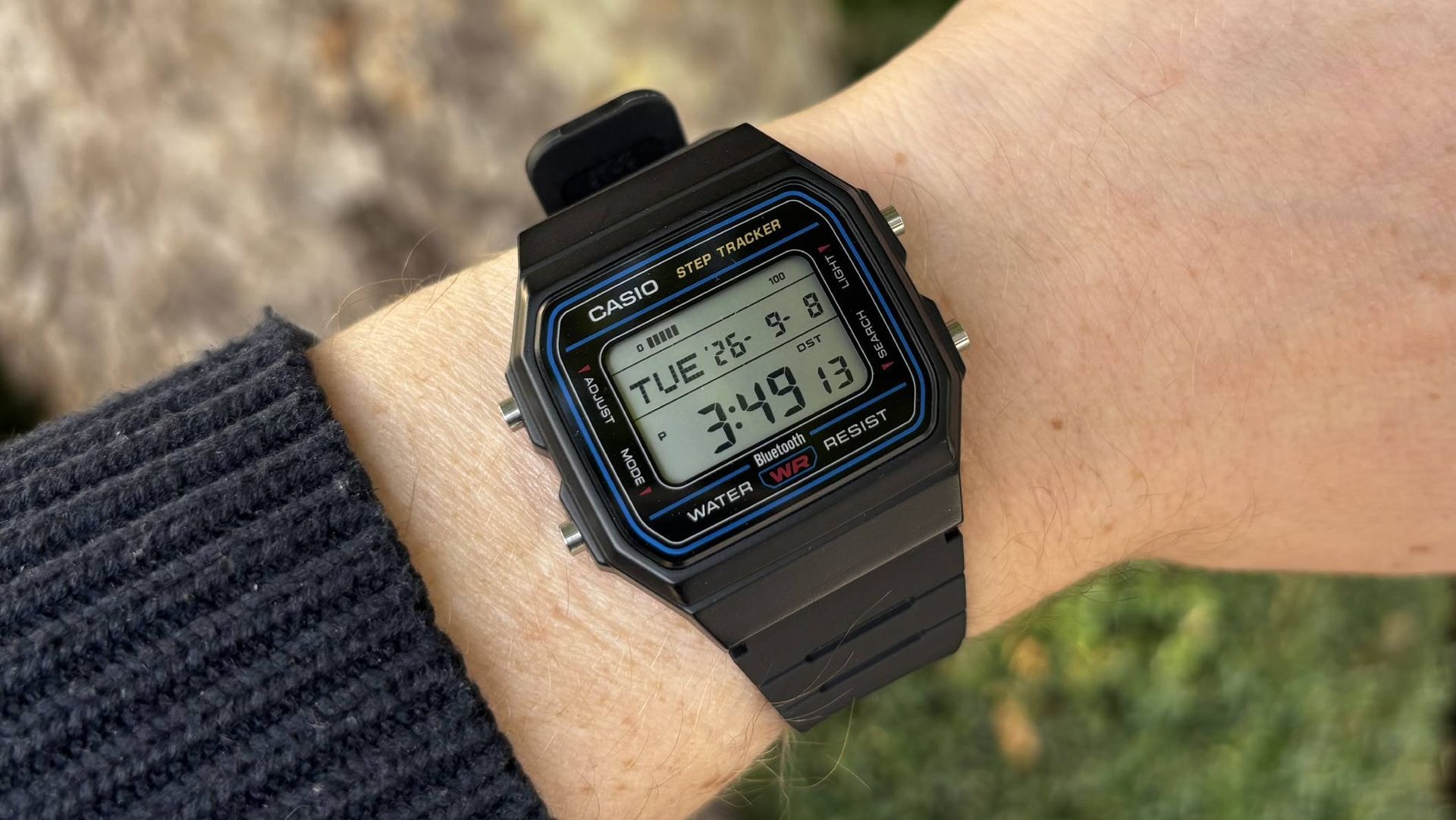
The Casio F-B100W is a retro-styled digital timepiece that tracks daily steps and syncs basic activity data via Bluetooth. This hybrid wearable is available for $64.95 USD direct from Casio. It targets users who want basic fitness tracking without the distraction of a full-color touchscreen. It is also designed for those who want to avoid daily charging hassles. The physical hardware relies on a classic digital watch layout. It features a monochrome liquid crystal display and physical side buttons for navigation.
🛒 Where to Buy: Casio
Editorial Note & Product Verification: The Cool Great Buys editorial desk independently verifies manufacturer technical specifications, cross-checks active retail availability across authorized sellers, and evaluates verified consumer reliability data before publishing product evaluations. All featured prices and promotions reflect active market rates at the time of publication.
- Casio: View on Amazon
Click the link above to check current pricing, availability, and customer reviews on Amazon.
According to a report by Notebookcheck, the watch is now officially available in the US market. This release follows a highly successful launch in Japan in August, where the device sold out within hours. The US release features three distinct color options. Buyers can choose the black model with blue highlights (F-B100W-1A), the all-black variant (F-B100W-1B), or the green version (F-B100W-3A). This rollout brings the popular Japanese import directly to American consumers through official retail channels. Initial product disclosures and reporting were tracked via Techradar.
The US price carries a slight premium compared to the Japanese retail price. In Japan, the watch launched at ¥8,800 JPY, which converts to roughly $50.95 USD before taxes. This means US buyers face a $14.00 USD markup. Despite the price bump, demand remains high. The watch previously sold out quickly in the UK, where early adopters praised its simplicity. It offers a stark contrast to the typical high-maintenance smartwatch options currently flooding the market.
This launch marks a strategic move by Casio to capture the low-cost hybrid market. Many consumers are tired of devices that require daily charging. They want a simple, durable wrist companion. The Casio F-B100W delivers exactly that. It strips away the complex notifications and focuses on core utility. This review will analyze whether this budget tracker is worth your money in the real world.
The companion app for this device is the Casio Watches app. It is available on both iOS and Android platforms. The app handles time synchronization, step history, and alarm settings. It connects to the watch via Bluetooth Low Energy. The pairing process is straightforward but requires creating a Casio ID. This digital requirement might annoy purists who prefer offline timepieces. However, it is necessary for data logging and firmware updates.
Manufacturer Claims vs. Engineering Reality
Casio’s marketing materials place heavy emphasis on the battery life of this device. The official specification sheet claims a 2-year battery life on a single CR2016 coin cell battery. In the real world, this claim requires some serious scrutiny. A standard CR2016 battery holds a nominal capacity of only 90mAh at 3V. Running a continuous three-axis accelerometer and a Bluetooth Low Energy radio on 90mAh for 24 months is a massive engineering challenge. On paper vs in practice, these numbers tell two different stories.
To achieve this longevity, Casio limits how the watch communicates with your phone. The Bluetooth radio does not maintain a constant, active connection. Instead, it relies on manual synchronization or brief, scheduled connection intervals. If you sync the watch multiple times a day, the battery life will drop. Frequent use of the built-in LED backlight will also drain the cell rapidly. On paper, the 2-year estimate is possible. In practice, heavy users should expect closer to 12 to 18 months of actual use before needing a battery swap.
Another key marketing claim is the integrated step tracker. Casio states the internal accelerometer accurately counts daily steps and displays progress on the LCD screen. However, budget accelerometers are notorious for false positives. Simple hand movements, such as washing dishes or typing, can register as steps. Without an onboard GPS or advanced filtering algorithms, the step count is merely a rough estimate. It is not a precision instrument for serious athletic training.
The watch also features a “Find My” phone locator function. This feature relies entirely on the active range of a Bluetooth connection. In an open space, this range is roughly 30 feet. Inside a home with plaster walls and wireless interference, that range drops significantly. If your phone is lost in another room, the watch may fail to connect. The hardware reality is that this feature is a convenience tool, not a foolproof tracking system.
Finally, let us look at the time synchronization claim. Casio claims the watch automatically adjusts its time four times a day via the smartphone app. This feature is highly convenient for frequent travelers. However, it requires the companion app to run constantly in the background of your phone. Many modern mobile operating systems aggressively close background apps to save phone battery. If your phone kills the Casio app, the automatic time sync will fail. You will have to open the app manually to force a connection.
Under the Hood: Technical Architecture and Build Quality
The physical construction of the F-B100W stays true to Casio’s historic design language. The case and bezel are made entirely of lightweight resin. This material keeps the total weight of the watch exceptionally low, coming in at just 27 grams. It feels almost weightless on the wrist. The strap is also made of flexible resin, secured by a simple plastic buckle. While this keeps production costs down, the plastic buckle feels cheap. It lacks the durability of a stainless steel clasp found on premium models.
The display is a basic, high-contrast monochrome LCD. It does not feature a touchscreen. Navigation relies on physical side buttons. This design choice is highly practical. Touchscreens are difficult to operate with wet hands or gloves. Physical buttons provide tactile feedback and work reliably in all weather conditions. The screen is protected by acrylic glass. Acrylic is highly resistant to shattering, but it scratches very easily. Expect to see fine hairline scratches within the first few weeks of daily wear.
Water resistance is rated at 30 meters (3 bar). In watchmaking terms, this rating is misleading. A 30-meter rating does not mean you can dive to that depth. It means the watch can withstand splashes, rain, and brief hand washing. You should not wear this watch while swimming or showering. The steam from a hot shower can easily bypass the rubber gaskets. This is a major limitation for a device marketed under the fitness and wearables category.
The internal architecture is highly integrated. The mainboard combines the micro-controller, Bluetooth chip, and accelerometer into a single, compact module. This integration reduces power consumption and manufacturing complexity. However, it also means the watch is entirely non-repairable. If a component fails after the warranty period, the entire unit must be discarded. This disposable nature is a common trade-off in the budget wearable segment.
The backlight uses Casio’s Super Illuminator LED technology. It illuminates the entire LCD screen with a bright amber light. This is a massive upgrade over the dim green micro-bulbs used in older retro models. The light duration can be set to either 1.5 or 3 seconds. While the backlight is excellent for legibility in pitch-black conditions, it is a major power hog. Excessive use will quickly degrade the lifespan of the small coin cell battery inside.
Verified Market Alternatives
If you want a more capable fitness tracker, several alternatives exist in this price bracket. The Amazfit Band 7is available for $49.99 USD on Amazon. Unlike the Casio, the Amazfit features a vibrant 1.47-inch AMOLED color touchscreen. It includes continuous heart rate monitoring, blood oxygen tracking, and sleep analysis. The battery life is rated for up to 18 days on a single charge. While you must recharge it periodically, it offers a far more comprehensive suite of health metrics for a lower retail price.
The Amazfit companion app, Zepp OS, is also much more advanced than Casio’s offering. It integrates with third-party fitness platforms like Strava and Google Fit. It provides detailed charts of your heart rate zones and sleep stages. The physical footprint is slim and lightweight, making it comfortable for 24/7 wear. However, it lacks the classic, rugged aesthetic of a traditional digital watch. It looks like a standard fitness band, which may not appeal to style-conscious buyers.
Another strong competitor is the Xiaomi Smart Band 8, priced at $39.99 USD on Amazon. This tracker offers a 1.62-inch display with a smooth 60Hz refresh rate. It supports over 150 sports modes and features a metallic frame design. The battery lasts up to 16 days under normal usage. It provides a modern, sleek aesthetic that contrasts sharply with Casio’s retro look. For users focused purely on athletic performance and health data, the Xiaomi is a superior tool.
The Xiaomi also features a unique “pebble mode” that allows you to clip the tracker to your running shoe. This mode provides advanced running metrics, such as stride length and ground contact time. It is a highly specialized feature that runners will appreciate. The companion app, Mi Fitness, is clean and easy to navigate. The main drawback is the lack of physical buttons. You must rely entirely on the touchscreen, which can be frustrating during intense, sweaty workouts.
For those who prefer the classic Casio look but do not need smart features, the standard Casio F91W-1remains a legendary option. It retails for $19.99 USD on Amazon. It lacks Bluetooth and step tracking entirely. However, it offers a legendary 7-year battery life and a highly durable design.