

🛒 Where to Buy: Featured Deals
- Anker Prime 20000mAh Power Bank: View on Amazon
- Bose QuietComfort Noise Cancelling Headphones: View on Amazon
- Apple AirTag 4 Pack: View on Amazon
Click any link above to check current pricing, availability, and customer reviews on Amazon.
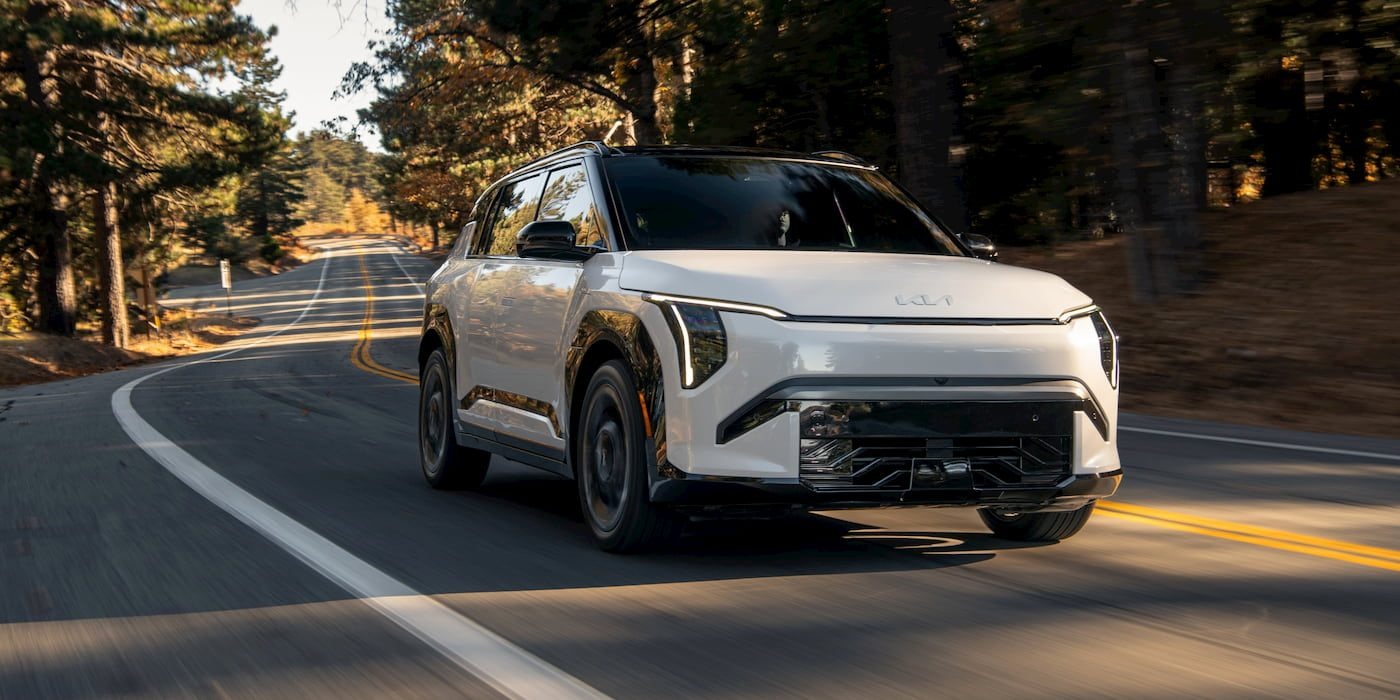
Kia EV3 compact electric SUV offers a 58.3 kWh or 81.4 kWh battery pack, up to 321 miles of EPA-estimated range, and a starting retail price of $29,890 USD directly from the manufacturer for everyday drivers seeking long-range zero-emission transit. Entering the market alongside established compact alternatives, this vehicle attempts to capture cost-conscious buyers through front-wheel-drive efficiency and standard North American Charging Standard compatibility. Understanding how these baseline figures translate into monthly obligations requires dissecting the real-world financial commitments involved in leasing versus purchasing, as well as evaluating how promotional dealer structures reshape the vehicle’s actual showroom value.
Consumer interest in affordable electric vehicles has surged, making the launch of the 2027 Kia EV3 a major industry milestone. As detailed in recent coverage of Kia EV3 offers, buyers face a web of promotional financing rates, lease structures, and localized cash discounts that alter the initial math. Looking closely at the actual hardware configurations and dealership incentives reveals whether this compact utility vehicle delivers genuine value or merely inflated marketing claims. When prospective owners walk onto the lot, they must navigate regional inventory variations, documentation fees, and dealer-installed accessories that frequently inflate the advertised starting price well beyond the manufacturer’s suggested retail floor.
Furthermore, analyzing the macroeconomic environment surrounding battery electric vehicles highlights why pricing strategies fluctuate so rapidly. Fluctuating raw material costs, shifting federal tax credit interpretations, and aggressive maneuvers by rival automakers force brands like Kia to constantly recalibrate their leasing incentives. For the consumer, this dynamic marketplace demands a rigorous examination of the fine print attached to every promotional advertisement, ensuring that hidden acquisition fees or mileage restrictions do not erode the intended savings of an affordable electric lifestyle.
Core Disclosure & Hardware Announcement
The EV3 launches in the United States across five distinct trim levels: Light, Wind, Land, GT-Line, and a performance-focused GT variant. The entry-level Light model carries a base manufacturer suggested retail price of $29,890 USD, positioning it directly against low-cost electric hatchbacks. However, acquiring the base model means accepting a smaller 58.3 kWh battery pack that delivers a more modest EPA-estimated driving range of 221 miles on a single charge. Stepping up to the Wind, Land, GT-Line, or GT variants introduces an upgraded 81.4 kWh battery pack, which pushes the maximum driving range up to an impressive 321 miles. This dramatic disparity between battery options forces shoppers to weigh their daily commuting habits against upfront capital expenditure.
Beyond battery capacities, powertrain choices dictate the baseline financial investment. Front-wheel-drive configurations rely on a single 201-horsepower electric motor, while upgrading to all-wheel-drive adds a rear electric motor for a combined output of 261 horsepower at an additional cost of $3,200 USD. For buyers leaning toward aggressive styling and elevated performance, the range-topping $46,000 USD EV3 GT bumps power output to 288 horsepower, incorporating stiffer suspension tuning and unique aesthetic touches. Every variant ships with a native NACS charge port, allowing direct connection to high-speed Supercharger stations without fumbling with third-party adapters. This native compatibility streamlines long-distance road trips, cutting down on charging friction that has traditionally plagued non-Tesla electric vehicle owners across North America.
Delving deeper into the hardware architecture, the thermal management system utilizes an advanced heat pump across the higher trim levels to mitigate range loss during sub-freezing winter conditions. This hardware choice is critical for buyers in northern climates, where cabin heating can otherwise sap twenty to thirty percent of an electric vehicle’s usable charge. Meanwhile, the underbody aerodynamics feature smooth protective shielding that not only reduces wind noise at highway speeds but also optimizes energy efficiency, allowing the compact utility vehicle to slice through the air with minimal drag coefficient penalties.
Manufacturer Claims vs. Engineering Reality
According to technical documentation published with this release, the smaller 58.3 kWh battery takes roughly 29 minutes to replenish from 10% to 80% charge under optimal DC fast-charging conditions, while the larger 81.4 kWh pack requires approximately 31 minutes. In practice, charging speeds vary wildly based on ambient temperature, grid congestion, and the thermal management state of the pack. Marketing materials heavily emphasize the headline-grabbing 321-mile range figure, earning the vehicle the title of “America’s most affordable 315+ mile range EV” in promotional literature. Yet, achieving that maximum distance requires sticking strictly to the Wind FWD configuration with the large battery pack, which alters the entry math significantly and strips away the allure of the sub-$30,000 base price.
Promotional lease figures advertised by the manufacturer require careful scrutiny of the fine print. Kia promotes a 24-month lease for the EV3 Wind FWD at $349 a month, requiring $3,999 USD due at signing. A 36-month term is also available for $359 a month with the same down payment. Meanwhile, the all-wheel-drive Wind variant commands $399 a month for 24 months or $409 a month for 36 months, again paired with $3,999 USD due at signing. Factor in the upfront capital and monthly commitments, and the effective monthly cost for the Wind FWD sits at $515 USD. That figure strips away much of the perceived budget appeal touted in initial press releases, reminding shoppers that promotional headlines often mask the true cost of acquisition.
Real-world efficiency testing further complicates these manufacturer claims. While EPA test cycles simulate controlled driving environments, actual highway commutes involving high-speed pacing, headwinds, and accessory usage routinely reduce real-world range by fifteen to twenty percent. Drivers utilizing the high-performance GT variant will notice an even steeper energy penalty due to wider, stickier rubber compounds and heavier wheel assemblies. Consequently, managing expectations regarding daily range is paramount for buyers transitioning from internal combustion engines to this battery-electric platform.
Under the Hood: Technical Architecture and Build Quality
The interior architecture centers on Kia’s latest ccNC connected car Navigation Cockpit. Drivers are greeted by a sprawling display setup spanning nearly 30 inches of combined screen real estate. This layout pairs a dual 12.3-inch instrument cluster and touchscreen infotainment display with a dedicated 5-inch climate control screen sandwiched between them, offering quick touch-sensitive adjustments without burying controls in deep software submenus. Wireless Apple CarPlay and Android Auto come standard across all trim levels, eliminating the clutter of charging cables for everyday navigation and audio streaming, while over-the-air update capabilities ensure the operating system receives continuous security patches and feature enhancements.
Beneath the modern cabin tech, the structural platform utilizes dedicated EV architecture designed to maximize interior volume within a compact footprint. Front-wheel-drive models manage daily commuting efficiently with adequate torque delivery, though hard acceleration on slick pavement reveals torque steer typical of single-motor layouts. Upgrading to the all-wheel-drive version introduces mechanical complexity and adds mass, but the dual-motor setup plants the vehicle securely during adverse weather conditions. Build quality exhibits tight panel gaps and durable cabin materials, though lower door cards and hidden console areas rely on scratch-prone hard plastics to keep production costs down.
Ergonomically, the seating positions provide ample head and legroom for front passengers, while the rear bench accommodates adults adequately for short-to-medium journeys. Cargo capacity benefits from a flat load floor and a convenient under-floor storage compartment designed to stow charging cables and emergency gear out of sight. The absence of a traditional transmission tunnel frees up center console space, allowing for versatile storage bins, floating armrests, and deep cup holders that cater to the demands of modern daily driving.
Verified Market Alternatives
Evaluating the EV3 requires examining how it stacks up against direct rivals currently populating showroom floors. The closest competitor, the Chevy Bolt, lists an FWD LT configuration at $419 a month for 36 months with $5,119 USD due at signing. That puts the Chevy’s effective monthly cost at $561 USD, making the Kia EV3 roughly $46 cheaper on a monthly normalized basis. Despite that slight financial edge, the base $29,890 USD EV3 Light trim lacks aggressive lease promotions, leaving its estimated lease payment hovering near $352 USD for 24 months with $3,999 USD due at signing, which narrows the competitive gap for budget-focused consumers.
Stepping sideways into corporate sibling territory reveals an even tougher internal battle. The Hyundai IONIQ 5 offers substantially more interior volume, faster charging architecture, and higher overall power outputs. Hyundai currently provides up to $5,000 in total savings on the IONIQ 5, with lease rates starting at $319 for 24 months with $4,999 USD due at signing. With an effective cost sitting at $527 USD per month, the larger Hyundai costs a mere $12 more each month than the smaller Kia EV3 Wind FWD. When buyers can secure a larger, more mature platform for nearly identical monthly outlays, convincing shoppers to pull the trigger on a compact newcomer becomes a steep uphill climb for dealership sales teams.
Additional alternatives from legacy manufacturers and emerging EV startups further crowd the segment, offering varying compromises in infotainment software, build execution, and localized service networks. While some competitors boast superior autonomous driving assistance packages, others stumble on sluggish user interfaces or lack native NACS charging hardware. Navigating this crowded hardware environment requires buyers to carefully weigh whether Kia’s specific mix of range, pricing, and warranty coverage outweighs the compelling factory discounts currently attached to larger, more established utility vehicles.
Final Editorial Verdict: Long-Term Reliability Outlook
The 2027 Kia EV3 delivers impressive battery range numbers and modern cabin tech on paper, but the real-world economics tell a more complicated story. When effective monthly lease rates climb past the $500 mark once down payments are amortized, the vehicle loses a significant portion of its budget-friendly luster. Competing directly against established alternatives that offer superior interior space and aggressive factory incentives makes the EV3 a hard sell at current promotional pricing levels. Dealerships will likely need to slash effective lease costs well below the $450 mark before these compact utility vehicles move in high volumes across regional showroom floors.
Prospective buyers drawn to the native NACS port and 321-mile range of the long-range battery packs should wait for deeper customer cash discounts or reduced promotional APR financing before signing paperwork. While the hardware itself is fundamentally sound and well-engineered, the current financial incentives do not adequately reflect the vehicle’s position as an entry-level market disruptor. Skip the initial launch window lease rates, keep an eye on incoming dealer inventory adjustments, and wait for market realities to force a more sensible pricing structure that genuinely rewards electric vehicle adopters.