

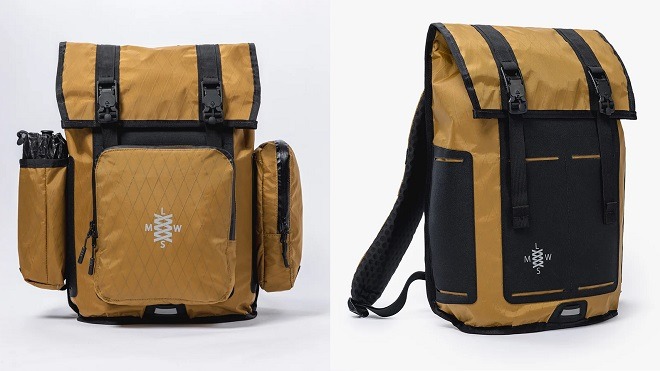
The DSPTCH Standard Packis an 18-liter technical daypack crafted from high-performance composite textiles, engineered to organize daily carry gear and sensitive electronics within a minimalist external silhouette. Available for $418 USD direct from DSPTCH, this American-made daybag targets demanding urban commuters, technical apparel enthusiasts, and frequent travelers who require resilient materials without aesthetic clutter. Highlighted in recent technical carry dispatches compiled by the Carryology Scouted Report, the pack represents an industry-wide transition away from external tactical webbing toward internal spatial efficiency, modular pouch architecture, and advanced laminate fabrics.
🛒 Where to Buy: DSPTCH Standard Pack
- DSPTCH Standard Pack: View on Amazon
Click the link above to check current pricing, availability, and customer reviews on Amazon.
Historically speaking, the technical carry landscape has struggled to reconcile textile stiffness with everyday ergonomics. In the early 2010s, early iterations of high-denier technical packs—most notably early ultra-high-molecular-weight polyethylene and heavy ballistic nylon designs—suffered from rigid structural folding, abrasive exterior surfaces, and noisy fabric crinkling during daily transit. The distinction matters here because modern bag engineering has shifted toward blending high-tensile technical composites like Dyneema Composite Fabric and Dimension-Polyant X-PAC with softer, ergonomic harness assemblies. Evaluating this current generation of autumn technical gear requires looking past marketing claims to analyze how these material choices hold up under long-term physical stress, weather exposure, and daily friction.
Upfront Investment & 2-Year Total Cost of Ownership
Acquiring high-tier technical carry gear represents a significant capital commitment up front, particularly when evaluating specialized domestic manufacturing against mass-produced alternatives. The base price of $418 USD for the DSPTCH Standard Pack applies across all four available shell configurations: 5.0 oz Dyneema Composite Fabric, X-PAC X50 Tactical, ECOPAK EPLX 1680D ballistic, and ECOPAK EPX400. Unlike lower-cost mass-market daypacks that rely on standard 500D Cordura, these technical laminates drive up the raw bill of materials, reflecting domestic labor costs in San Francisco and backing the product with a lifetime guarantee against structural failure. When paired with complementary technical wardrobe pieces scouted in the same cycle—such as the SPC/LST SEARCHER_01W Workshirtat $145 USD or the Nocs Provisions Portal AFN7 Adventure Camera—the total initial kit outlay quickly exceeds $800 USD.
Calculating the true two-year cost of ownership requires factoring in maintenance, accessory modules, and textile care products. Over a 24-month operating cycle, maintaining hydrophobic finishes on technical laminates like Dyneema or X-PAC demands periodic washing with specialized technical fabric cleansers rather than standard detergents, adding approximately $30 USD in maintenance fluids. Additionally, users integrating external attachments via D-ring mounting points or adopting modular hydration hardware like the memobottle Round(priced between $45 USD and $55 USD depending on the 700ml or 1L capacity) will see ancillary hardware expenses reach roughly $500 USD for the complete bag ecosystem. Over two years of daily commuting, the amortized cost of the pack comes out to $0.57 USD USD per day, which represents a defensible expenditure for professionals whose carry gear must protect thousands of dollars in mobile computing hardware.
Secondary wear elements also introduce ongoing cost considerations that buyers frequently overlook during initial purchase decisions. Specialized apparel in this release cycle, such as the Vollebak Sashiko Chore Jacket or the Outerknown Fall 2026 Woolaroo Collection featuring Manteco MWool® recycled fiber, requires specific dry cleaning or low-friction cold-water care to preserve structural integrity. For example, Vollebak’s use of 5.5km of meta-aramid fire-retardant stitching across a heavy Japanese cotton shell means the fabric is engineered to fade irregularly through friction, but aggressive washing can damage the garment’s underlying structure. Budgeting an additional $50 USD annually for appropriate garment care and textile treatments ensures these specialized materials achieve their multi-year lifespan without premature degradation.
What You Actually Get: Core Features & Build Specs
The engineering specifications of the DSPTCH Standard Pack demonstrate a clear focus on organizing modern tech hardware while maintaining a clean exterior profile. According to technical documentation published with this release, the bag measures an 18-liter internal volume and incorporates dedicated compartmentation designed around contemporary work devices. The primary storage bay features a wide-opening zipper track that grants immediate access to a tilting padded laptop sleeve, an independent tablet sleeve, a zippered mesh security pocket, and pleated top-loading organization sleeves. Externally, dual pleated side pockets expand to hold water bottles up to 32 oz in size, collapsing flat against the bag body when empty to avoid snagging during transit.
Examining the wider October dispatches reveals several notable design choices across hardware, apparel, and carry accessories:
- the new release: 18L capacity, 418 USD retail; choice of 5.0 oz Dyneema Composite Fabric, X-PAC X50 Tactical, ECOPAK EPLX 1680D ballistic, or ECOPAK EPX400 shell; tilting padded laptop sleeve, security zip pocket, D-ring attachment points, luggage pass-through strap; manufactured in the USA with lifetime warranty.
- Mission Workshop x LandSpeeder Sanction LS: 18L capacity; reconstructed from original 15-year-old paper patterns; Dimension-Polyant VX21 shell made in the USA; dual Fidlock magnetic flap closures; padded laptop compartment with false bottom; integrated LandSpeeder Attachment System utilizing hidden Velcro release tabs for modular folios and side pouches.
- memobottle Round: 700ml and 1L capacities; double-walled 304 stainless steel construction providing up to 24 hours of cold thermal retention; features a 3-piece quick-disassemble lid system separating the straw, interior plug, and 360-degree rotating Sip360 mouthpiece for thorough cleaning.
- Nocs Provisions Portal AFN7 Adventure Camera: 4.9 oz total weight; 16MP sensor with 4K UHD video capture; IP56 weather-sealed chassis resistant to dust, rain, and splashes; screen-free design with USB-C data transfer; includes NocDoc optical shroud for direct shooting through binoculars and monoculars.
- Leatherman Garage Batch 10 Picnic: Limited numbered run of under 1,000 units; six integrated tools including a dual-lever corkscrew, single-handed sheepsfoot culinary blade, bottle opener, pry tool, and a standard bit driver with Phillips/flathead bits.
- belavey x FALCK Verso Sling: Single-compartment modular sling handcrafted in Italy by FALCK using performance nylon from Limonta (est. 1893); metal hardware, cotton-blend ambidextrous strap, and expandable modular pouch setup available via Kickstarter.
Material choices across the apparel selections reflect a heavy emphasis on hybrid technical performance and deliberate tactile aging. The SPC/LST SEARCHER_01W Workshirt utilizes a proprietary Cordura cotton stretch broken twill at $145 USD, incorporating asymmetric “Person Built” chest pocket placement to accommodate modern smartphone dimensions. Outlier offers its Lighthooded pullover in two distinct fabric weights: the Acrispcotton Lighthooded using 90gsm Albini Giza 87 extra-long staple cotton for dense wind resistance, and the Trackwool Lighthooded at 110gsm blending 80% wool and 20% nylon for enhanced breathability and thermal regulation.
Hidden Costs, Ecosystem Dependencies & Fine Print
The primary architectural limitation of high-end modular carry lies in proprietary ecosystem lock-in. For instance, the Mission Workshop x LandSpeeder Sanction LS introduces the LandSpeeder Attachment System on its lateral panels, which utilizes a hidden Velcro pull-tab release mechanism. Examining the fine print of the hardware documentation reveals that standard MOLLE or PALS pouches cannot be secured to these side rails without secondary third-party adapters. Buyers investing in the Sanction LS must purchase LandSpeeder’s proprietary folios, side pouches, and bottle holders to utilize the exterior modular capacity, adding substantial cost on top of the base pack price.
Similarly, operational restrictions govern several of the key hardware accessories featured in this cycle. The memobottle Round addresses the historical hygienic failure of reusable water bottles—mold buildup inside multi-piece straw lids—by engineering a 3-second teardown mechanism with three distinct components. However, official manufacturer documentation explicitly notes that the double-walled 304 stainless steel body is restricted strictly to cold liquids. Thermal expansion from hot beverages poses a risk to the internal silicone seals and the click-lock mechanism of the 360-degree rotating Sip360 mouthpiece, rendering the bottle unsuited for hot coffee or tea commuting.
Hardware trade-offs extend to imaging gear and technical apparel as well. The Nocs Provisions Portal AFN7 Adventure Camera deliberately omits a rear LCD screen to encourage presence during outdoor travel, relying on fixed optical framing and pre-set filter toggles. While the 4.9 oz weight and IP56 weather sealing make it impervious to rain and trail impacts, users must wait until connecting the camera via USB-C to inspect photo exposure and focus alignment. Furthermore, when pairing the camera with the included NocDoc shroud to shoot through optical binoculars, the absence of optical image stabilization (OIS) in the camera body means handheld shots at high magnification require extremely stable resting points or a rigid monopod mount.
Smarter Alternatives at This Price
At the $418 USD price point, the the product sits at the upper tier of production daypacks, where it faces direct competition from established technical carry manufacturers. Buyers evaluating this category should examine how alternative layouts handle daily tech loads, material durability, and internal organization before committing to a purchase.
The primary rival in the high-end technical segment is the Peak Design Everyday Backpack 20L, priced at $279.95 USD on Amazon and direct. The Peak Design pack utilizes a custom 400D double poly-coated nylon shell paired with a patented MagLatch top closure and dual side-access zippers. For hardware-heavy users and photographers, Peak Design’s internal FlexFold divider system offers far superior structural customization compared to the static sewn sleeves inside the the model. However, the Everyday Backpack comes in noticeably heavier at a dry weight of 4.43 lbs, whereas DSPTCH’s use of high-tech composite laminates like Dyneema and ECOPAK provides a lighter overall footprint with superior tear strength per ounce.
A second compelling alternative for urban commuters is the Aer City Pack Pro, retailing for $209 USD on Amazon and direct. Built from heavy-duty 1680D Cordura ballistic nylon with YKK Japanese hardware, the Aer pack provides a full lay-flat main compartment opening, superior shoulder strap padding, and a dedicated top quick-access pocket. While the Aer City Pack Pro lacks the boutique USA-manufacturing heritage and ultra-light laminate options of the the unit, its lower entry price allows buyers to acquire both a full-featured 24L daypack and secondary technical accessories like the memobottle Round while staying well below DSPTCH’s $418 USD base price.
Final Buyer Verdict: Is the Investment Worth It?
Checking authorized retailer listings confirms initial launch stock for these scouted releases is shipping direct ahead of broader retail distribution, catering to early adopters of technical gear. The the hardware, alongside companion releases like the SPC/LST SEARCHER_01W Workshirt and the Mission Workshop Sanction LS, delivers exceptional build quality rooted in functional textile engineering. For design professionals, technical apparel collectors, and high-mileage commuters who demand specialized materials like Dyneema Composite Fabric or Dimension-Polyant X-PAC made in American manufacturing facilities, the the device justifies its $418 USD premium through superior longevity, clean lines, and reliable hardware protection.
Conversely, casual commuters, students, and budget-conscious buyers should pass on this specific lineup. Spending over $400 USD for an 18-liter capacity pack introduces diminishing returns if your daily carry demands do not strictly require high-tensile composite textiles or specialized attachment ecosystems. Options like the Aer City Pack Pro at $209 USD or the Peak Design Everyday Backpack 20L at $279.95 USD offer broader organizational flexibility and better overall dollar-to-volume efficiency. Unless you are fully committed to building out an ultra-durable, boutique technical carry setup, your capital is better spent on mid-tier carry solutions that deliver similar core utility at half the price.