

Real-World Context and Target Buyer Profile
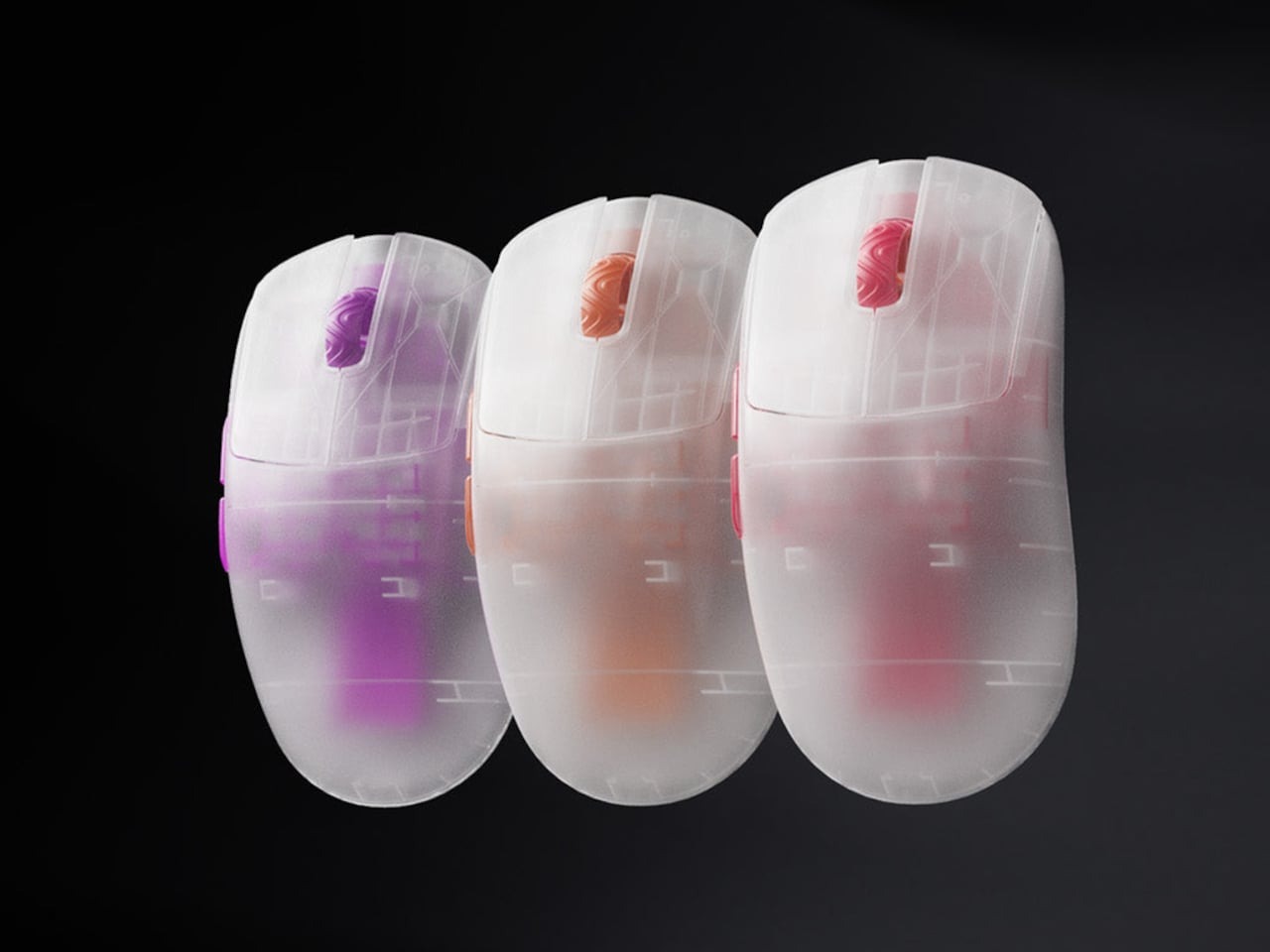
The Scyrox V12 Wirelessis a high-polling, ultra-lightweight peripheral engineered with a closed frosted translucent shell that exposes an internal color-coded structural frame, retailing for $69.99 USD direct from Scyrox and $79.99 USD on Amazon for the bundled Ultra configuration. Built specifically for competitive esports players and desktop minimalists who demand sub-50-gram agility without sacrificing chassis integrity or enduring open honeycomb cutouts, this hardware signals a noticeable pivot in desktop peripheral aesthetics. Rather than hiding structural plastic ribbing behind opaque paint or layering aggressive geometric lines across the outer shell, the design team at Scyrox uses the internal load-bearing frame as the primary visual anchor.
🛒 Where to Buy: Scyrox V12 Wireless
- Scyrox V12 Wireless: View on Amazon
Click the link above to check current pricing, availability, and customer reviews on Amazon.
For years, high-performance gaming mice have drifted into two visual extremes: either overly aggressive, militarized plastic shells with sharp cutouts, or hyper-minimalist black plastic eggs that look completely indistinguishable on a mousepad. The arrival of the V12 matters because it signals a broader shift toward functional translucency in consumer hardware design. By using a semi-milky frosted polycarbonate exterior that diffuses deep purple, vivid orange, or punchy red internal skeletal accents, the peripheral delivers visual identity without requiring external graphics, RGB LED strips, or structural mesh holes that collect dust, sweat, and dead skin cells over extended gaming sessions. Initial product disclosures and reporting were tracked via Yankodesign.
The target demographic for this device centers on competitive first-person shooter (FPS) players operating in titles like Valorant, Counter-Strike 2, and Apex Legends, where low static friction and swift directional resets dictate flick accuracy. Gamers operating at high arm speeds routinely suffer fatigue when swinging heavy 80-gram pointer hardware across large desk mats. By keeping total mass hovering around the 50-gram mark while offering distinct sizing options, Scyrox caters to precision-focused users who need strict mechanical reliability from optical switches alongside low-latency wireless transmission.
Looking at the broader arc of hardware design, the V12 addresses a long-standing aesthetic fatigue in the PC gaming space. Users building custom keyboards with frosted acrylic cases, custom hand-braided cables, and clean desk layouts have rarely had ultra-lightweight esports mice that match that refined, industrial-translucent aesthetic. Scyrox delivers a functional tool that integrates seamlessly into modern minimalist setups without compromising on the stringent performance requirements demanded by high-tier ranked play.
Hardware Engineering, Materials, and Core Specs
Analyzing the physical construction of the peripheral reveals an engineering approach focused entirely on structural efficiency. Scyrox releases the mouse in two distinct shell sizes: the medium V12M, which measures 4.80 inches (122mm) in length and weighs a claimed 1.73 ounces (49g), and the larger V12L, stretching to 4.96 inches (126mm) with a total mass of 1.80 ounces (51g). Both variants utilize a fully enclosed, smooth-surfaced polycarbonate chassis. The rigidity of the outer shell relies on an internal load-bearing framework that distributes pressure evenly when a user grips the mouse tightly during intense firefights, completely eliminating side-wall flex and creaking typically seen in ultra-lightweight mice under 50 grams.
Under the main left and right click plates, Scyrox implements optical switches linked to a preloaded tensioning system. Traditional mechanical mouse switches suffer from physical contact wear, leading to double-clicking issues and progressive tactile degradation over millions of actuations. The optical switches inside the V12 register inputs using an infrared light beam, cutting debounce delay to near-zero levels. The mechanical pre-tensioning mechanism maintains constant contact between the plunger and the switch housing, eliminating pre-travel distance before the click registers and providing a crisp, immediate tactile click feel. For scrolling duties, the internal assembly replaces standard mechanical rotary encoders with a magnetic scroll wheel encoder, eliminating mechanical friction points and resisting dust-induced scroll jumps over time.
According to technical documentation published with this release, tracking accuracy is driven by the PixArt PAW Next I flagship optical sensor, capable of supporting native 8,000Hz (8kHz) polling rates over both 2.4GHz wireless and USB-C wired connections. Operating at 8,000 reports per second drops the input reporting interval from 1 millisecond (standard 1,000Hz) down to a minuscule 0.125 milliseconds. This dramatic reduction in transmission delay ensures micro-adjustments map flawlessly to high-refresh-rate gaming monitors operating at 240Hz, 360Hz, or 540Hz. Power management inside the mouse balances this high-frequency MCU data throughput against overall battery longevity, utilizing automatic sleep states when idle.
In Scyrox’s official launch documentation, the engineering team highlights that keeping the chassis wall thickness uniform across the translucent shell required specialized high-pressure injection molding. Varying plastic density would warp the frosted light diffusion and compromise the structural integrity of the internal ribbing. Examining the fine print of the hardware documentation reveals that achieving sub-50g weights without external honeycomb perforations required shrinking the internal printed circuit board (PCB) to a ultra-compact footprint, mounting components directly atop structural internal struts rather than utilizing standard multi-layered internal plastic sleds.
Everyday Usability & Design Compromises
From an ergonomic standpoint, both the V12M and V12L feature a symmetrical outline featuring a moderately raised rear hump and gently tapered waist section. This geometric profile suits claw and fingertip grip styles remarkably well, allowing the palm’s knuckle ridge to rest comfortably against the back slope while leaving ample room for vertical thumb and pinky adjustments. Scyrox explicitly recommends the V12L for gamers with hand lengths exceeding 7.5 inches (190mm). However, while the chassis shape itself is symmetrical, the side button placement is distinctly asymmetric. Two dedicated thumb buttons sit exclusively on the left side, making the mouse ideal for right-handed users while relegating left-handed gamers to a grip layout without accessible side thumb inputs.
The wireless connectivity experience centers around Scyrox’s proprietary desktop receivers. The standard configuration ships with the circular Halo receiver, which features an exposed ambient light ring around its outer perimeter. This light ring serves a practical desktop operational role: one dedicated status mode pulses bright red whenever internal battery capacity dips below 20%, while a separate mode briefly illuminates the exact color assigned to your active DPI sensitivity tier upon pressing the underside DPI button. By placing functional telemetry on the desk surface directly within the user’s peripheral field of vision, Scyrox solves the common problem of palm-covered status LEDs hidden on the underside of the mouse chassis.
The optional Ultra edition upgrades the desktop accessory to a magnetic charging base equipped with three dedicated status indicator lights. Instead of manually plugging in a USB-C cable when power runs low, users park the mouse onto magnetic contact points when stepping away from the desk. Device configuration relies on a modern, browser-based control center rather than bloated background software applications. Users can customize DPI steps, rebind button functions, adjust debounce timers, and change polling rates directly inside Chromium-based web browsers, writing preferences straight to the mouse’s onboard memory without consuming background CPU cycles on the host PC.
Despite these engineering accomplishments, the design involves clear daily trade-offs. Scyrox includes a note in the fine print advising competitive players against using the Halo receiver’s click-synchronized lighting mode. This feature pulses the receiver’s light ring in exact tandem with physical mouse clicks, but the real-time lighting processing introduces a subtle micro-second processing delay into the wireless receiver pipeline. Serious competitive players will want to leave the light ring fixed strictly to battery monitoring mode to preserve absolute minimum latency. Additionally, while the frosted translucent coating offers a sleek satin feel, users with chronically dry hands may find the bare polycarbonate shell somewhat slippery during un-gripped palm transitions, requiring third-party grip tape for maximum tactile security.
Category Alternatives and Value Comparison
To evaluate the market positioning of the Scyrox V12, it is necessary to compare it directly against established rivals competing in the high-performance sub-50-gram wireless gaming space. Two primary competitors stand out in this exact weight and spec class: the Pulsar X2V2 Wirelessand the Ninjutso Sora V2 Wireless.
The Pulsar X2V2 Wirelesscommands a retail price of $99.99 USD on Amazon. It features a solid-shell symmetrical chassis weighing 1.86 ounces (53g), custom optical switches, and a PixArt PAW3395 sensor. While the Pulsar X2V2 established a strong reputation for structural rigidity and clean clicks, its out-of-the-box wireless polling rate is capped at 1,000Hz, requiring users to purchase a separate $29.99 USD high-polling dongle to access 4,000Hz or 8,000Hz modes. Furthermore, Pulsar’s opaque matte black or white plastic finish lacks the internal structural visual identity of the Scyrox V12. At $69.99 USD direct, the Scyrox V12 offers 8,000Hz wireless capabilities right out of the box at a significantly lower entry price point, making it a substantially stronger value proposition for budget-conscious competitive gamers.
Another fierce rival is the Ninjutso Sora V2 Wireless, which retails for $99.99 USD on Amazon. The Sora V2 is an engineering marvel in its own right, pushing total weight down to a featherlight 1.37 ounces (39g) without using external honeycomb holes. Like the Scyrox V12, the Sora V2 utilizes a web-based configuration utility and optical switch hardware. However, the Sora V2 achieves its sub-40g weight by utilizing an extremely thin polycarbonate shell that lacks structural internal coloring and requires purchasing an optional dongle for 8,000Hz operation. Gamers choosing between the two must weigh absolute minimum weight against visual design and out-of-the-box accessory inclusions. The Scyrox V12 provides a distinct internal color skeleton aesthetic, native 8K wireless functionality out of the box, and dual size choices (V12M/V12L) for $30 USD less than the Sora V2.
Comparing these options underscores Scyrox’s aggressive pricing strategy. By shipping native 8K polling capabilities, a magnetic scroll encoder, dual shell sizes, and visual flair at the $69.99 USD baseline, the V12 undercuts established category leaders without cutting corners on component selection or core sensor performance.
Final Buyer Verdict: Long-Term Ownership Value
The Scyrox V12 represents a refreshing shift in how ultra-lightweight gaming peripherals balance form, structural engineering, and raw technical execution. Rather than treating visual flair and high-speed gaming specs as mutually exclusive, Scyrox delivers a closed-shell mouse that weighs under 50 grams, tracks with an advanced PixArt PAW Next I sensor, and incorporates long-lasting magnetic scroll encoder technology. Minor compromises—such as latency trade-offs on the click-sync lighting mode and right-side thumb button absence for southpaw gamers—do little to detract from the sheer value on offer. For right-handed claw and fingertip grip players seeking peak 8,000Hz performance without paying a premium over $100, the V12 stands out as one of the most compelling releases in the current hardware cycle.
What’s next for this hardware category? If this generation gets the translucent structural skeleton concept right, the next iteration could integrate transparent inductive wireless charging coils directly into the visible internal chassis frame, completely removing physical charging contacts while maintaining sub-50-gram agility. Upgrading to the Scyrox V12 makes absolute sense today for competitive players migrating off older 70-gram-plus hardware or those tired of cleaning dust out of honeycomb-perforated shells. Unless you require an ergonomic left-handed layout or demand an ultra-minimalist sub-40g shell like the Sora V2, the Scyrox V12 delivers exceptional performance, distinct industrial design, and long-term mechanical reliability that easily earns its place on any high-refresh-rate gaming desk.