

Upfront Investment & 2-Year Total Cost of Ownership
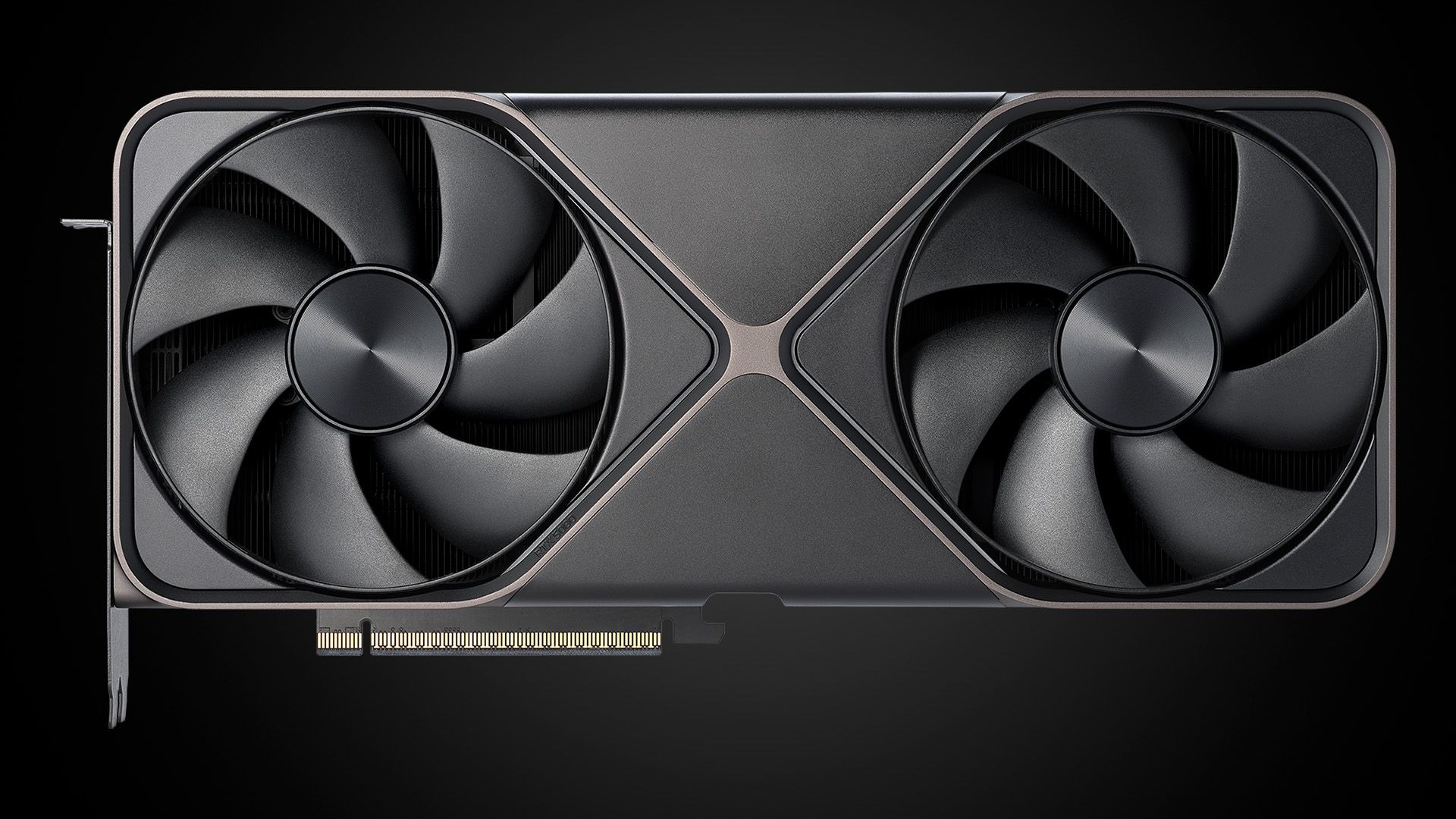
The Nvidia GeForce RTX 5080 k=PNY+GeForce+RTX+5080+ARGB+Epic-X+RGB+OC” target=”_blank” rel=”noopener”>PNY GeForce RTX 5080 ARGB Epic-X RGB OC now commands a staggering $2,199.99 USD on Amazon, turning what was once positioned as a high-end consumer and prosumer component into a luxury expenditure. This product is engineered specifically for workstation professionals, visualization engineers, and technical software developers who require substantial parallel compute capacity within a desktop enclosure, yet the prevailing macroeconomic realities of the current hardware market have fundamentally distorted its financial accessibility. For independent creators, small render farms, and enterprise testing labs operating on strict quarterly budgets, absorbing a price point more than double the original baseline figure forces an immediate recalculation of resource allocation and project timelines.
🛒 Where to Buy: Nvidia
- Nvidia: View on Amazon
Click the link above to check current pricing, availability, and customer reviews on Amazon.
Analyzing the long-term economic commitment of this graphics card requires looking far beyond its inflated checkout price. The direct acquisition cost at present street pricing sits at 2.2X over the original baseline figure, representing a premium that significantly skews standard capital expenditure timelines for small studios and individual operators. Over a 24-month operational lifecycle, ongoing energy consumption adds a measurable overhead that compounds the initial financial sting. Rated at a maximum board power of 320W under sustained workstation compute loads, operating the device for eight hours daily at an average commercial rate of $0.16 per kWh yields an electricity expense of approximately $150 USD annually, or $300 USD across a two-year deployment. When coupled with secondary thermal management demands—such as augmented climate control for small office environments, dedicated circuit load balancing, and continuous air-conditioning operation to counteract heat output—the operational total cost of ownership easily breaches $2,550 USD before factoring in peripheral hardware upgrades.
Historically speaking, purchasing consumer-class graphics hardware at market peaks driven by supply contraction carries extreme depreciation risk. The quiet delisting of the card from Nvidia’s primary store interface—following the earlier disappearance of the GeForce RTX 5090—strongly suggests an imminent structural shift in product allocation by upstream manufacturers. Buyers who absorb a 120% street premium today risk immediate asset devaluation should mid-cycle hardware revisions, Super-tier refreshes, or reallocated silicon stabilize market supply over the coming quarters. Furthermore, workstation components purchased at such inflated rates rarely retain their residual value when enterprise leasing companies or hardware liquidation firms adjust their secondary market valuations downward once normal supply chains recover.
In addition to raw electrical draw and immediate capital outlay, workspace ergonomics and infrastructure updates introduce hidden financial layers to the total cost of ownership. A 320-watt component continuously venting heat into a confined studio space requires adequate ambient room ventilation to prevent thermal throttling of secondary system components, including high-end NVMe solid-state drives and memory modules. Consequently, facilities managers must often factor in localized cooling upgrades or acoustic dampening enclosures if multiple rendering nodes are housed in close proximity to human operators. These peripheral expenses, while minor when viewed in isolation, accumulate rapidly over a multi-year deployment cycle, further stretching the payback period of a hardware investment acquired at double its intended retail value.
What You Actually Get: Core Features & Build Specs
In Nvidia’s official launch documentation, the engineering team details the Blackwell microarchitecture powering the GeForce RTX 5080. The physical processor incorporates 10,752 CUDA cores paired with 16GB of high-speed GDDR7 memory operating across a 256-bit bus interface. This configuration yields a theoretical memory bandwidth exceeding 960 GB/s, catering directly to complex shading models, real-time viewport acceleration, and localized language model execution. Physical display outputs are standardized around three DisplayPort 2.1a connectors alongside a single HDMI 2.1a port, ensuring full compatibility with multi-monitor 8K editing arrays, high-refresh color-calibrated panels, and next-generation visual display interfaces without requiring cumbersome signal adapters.
The structural build parameters of third-party implementations, such as the PNY Epic-X RGB variant, reflect the heavy thermal requirements of modern high-wattage GPUs. The unit occupies 3.5 expansion slots within a standard ATX chassis, measuring over 330mm in length and weighing nearly 2.1 kilograms. Power delivery relies on the standardized 12V-2×6 power connector, requiring clean 12V rail stability from an ATX 3.0-compliant power supply unit to prevent voltage sag during transient power spikes. Heat dissipation is handled via a massive chamber heatsink routed through nickel-plated copper heat pipes and triple axial cooling fans that feature intelligent stop-mode technology, remaining completely silent during low-load idle periods while ramping up aggressively under sustained compute loads.
The core architectural compromise lies within the memory subsystem. This specific design choice echoes the historical misstep of the GeForce RTX 3080 10GB release, where raw compute capabilities were prematurely constrained by an undersized memory buffer, forcing a revised 12GB variant to market shortly thereafter. In practice, the 16GB frame buffer on the RTX 5080 creates a distinct performance ceiling for workstation tasks involving massive 3D scene files, uncompressed 8K video footage, or LLM context windows that exceed 16GB of allocated VRAM. While raw CUDA processing speed remains high, the distinction matters here: memory capacity often serves as the hard boundary between successful render execution and driver-level out-of-memory errors that instantly crash long-duration rendering jobs.
Delving deeper into real-world behavioral characteristics under heavy workloads, the PNY Epic-X RGB implementation maintains respectable core clock stability, rarely dropping below its nominal boost frequency during multi-hour stress testing, provided the host chassis has adequate intake airflow. The aesthetic design incorporates addressable RGB lighting zones along the shroud and backplate, which can be managed via proprietary utility software or synchronized with major motherboard lighting ecosystems. However, the sheer physical heft of the cooler means that system builders must exercise extreme caution during transport; standard PCIe slots lacking reinforced metal armor can easily warp or fracture under the continuous downward torque exerted by a 2.1-kilogram mass hanging perpendicularly from the motherboard.
Hidden Costs, Ecosystem Dependencies & Fine Print
Integrating a modern graphics processing unit of this scale into an existing workspace introduces several indirect capital requirements. Achieving peak throughput requires a motherboard supporting PCIe 5.0 x16 bandwidth, a modern multi-core host CPU to eliminate system bottlenecks, and a high-capacity power supply rated for at least 850W. Upgrading an aging workstation tower to safely house and power a 320W card typically demands an additional $250 USD to $400 USD in supporting components, including heavy-duty GPU anti-sag support brackets to mitigate motherboard socket stress over prolonged installations, customized power cables to ensure clean routing, and potential chassis modifications to accommodate a card length exceeding thirty-three centimeters.
Software dependencies also present long-term strategic considerations. While the hardware excels under Nvidia’s proprietary CUDA, TensorRT, and OptiX frameworks, relying on consumer GeForce driver packages in enterprise environments creates specific constraints. GeForce drivers lack the ISV software certifications (such as dedicated stability validation for SolidWorks, AutoDesk, and Siemens NX) found in full enterprise RTX workstation lines. Furthermore, enterprise data center deployment of GeForce-branded hardware remains restricted under Nvidia’s end-user license agreements, forcing commercial rendering farms to carefully evaluate software compliance boundaries and potential licensing liabilities when scaling compute clusters.
Examining the fine print of current retail availability via Tom’s Hardware’s reporting dispatch illuminates the underlying cause of this market displacement. The complete removal of official marketplace listings—rather than a simple “Out of Stock” status label like that seen on the RTX 5070 Ti—points toward redirected silicon distribution. Industry reports indicate valuable GB202 and GB203 die production is being prioritized for high-margin enterprise AI accelerators and rumored 24GB workstation variants. Consequently, current retail supply of the 16GB model is dwindling rapidly, driving secondary pricing to artificial highs that reflect panic-buying dynamics rather than genuine consumer demand equilibrium.
Navigating warranty terms and vendor support channels adds yet another layer of complexity when purchasing heavily marked-up hardware from third-party marketplace sellers. Buyers must verify whether their chosen retail channel honors manufacturer warranty transfers or if regional distributor policies complicate RMA processing in the event of hardware failure. Given that these units operate at the bleeding edge of thermal and electrical density, component longevity is a valid concern for operators who push their hardware through continuous overnight render cycles. A lack of official direct-from-manufacturer stock forces reliance on secondary vendors, whose return windows and customer service responsiveness can vary dramatically during periods of acute supply chain disruption.
Smarter Alternatives at This Price
At the current inflated price point of $2,199.99 USD, the RTX 5080 faces fierce competition from alternative hardware configurations that offer superior value or expanded memory capabilities for professional applications. Buyers seeking immediate workstation upgrades must weigh alternative options across both architecture generations and competing hardware ecosystems to ensure their capital is deployed effectively.
The first primary alternative is the previous-generation flagship, the PNY GeForce RTX 4090 24GB Verto, currently available for $1,799.99 USD on Amazon. Despite utilizing the older Ada Lovelace architecture, the RTX 4090 provides 24GB of GDDR6X memory on a wide 384-bit interface, yielding a total memory bandwidth of 1,008 GB/s alongside 16,384 CUDA cores. For professional 3D rendering and AI model execution, the additional 8GB frame buffer offers a far more forgiving operational ceiling than the RTX 5080. Furthermore, at roughly $400 USD less than current scalp-level RTX 5080 pricing, the RTX 4090 delivers higher raw compute throughput and superior stability in memory-intensive production pipelines where loading high-resolution texture maps or running dense parameter models would otherwise trigger out-of-memory exceptions on a 16GB buffer.
The second viable alternative comes from the red team: the AMD Radeon RX 7900 XTX, retailing for $929.99 USD on Amazon. Built on AMD’s RDNA 3 chiplet architecture, this flagship card features 24GB of GDDR6 memory on a 384-bit bus, delivering 960 GB/s of bandwidth at less than half the street price of the inflated RTX 5080. The primary advantages include native DisplayPort 2.1 UHBR13.5 support, lower upfront capital risk, and excellent rasterization performance in open-source creative suites like Blender and DaVinci Resolve. The trade-offs involve reduced efficiency in ray tracing workloads, lack of native CUDA library support, and reliance on software emulation or ROCm translation layers for machine learning tasks, making it an ideal choice for pure rasterization artists who wish to bypass Nvidia’s current market premium entirely.
For enterprise-focused buyers who can stretch their budgets slightly further or pivot toward authorized B2B channels, certified workstation cards such as the Nvidia RTX professional series offer official driver stability, ECC memory error correction, and full ISV certification. While these professional-tier options command an initial financial premium over standard consumer parts, they eliminate the compliance risks associated with deploying GeForce cards in commercial server farms and eliminate the guesswork of consumer driver instability during mission-critical deployment phases. Evaluating these alternatives demonstrates clearly that paying double MSRP for a consumer-grade 16GB part is an inefficient strategy when mature 24GB alternatives exist across both consumer and open-source ecosystems.
Final Buyer Verdict: Is the Investment Worth It?
Paying a street price of $2,199.99 USD for a $999 USD MSRP graphics card represents an inherently poor allocation of workstation capital. While the Blackwell architecture brings clear architectural efficiencies, enhanced ray tracing structures, and robust raw processing power, the 16GB VRAM capacity remains a significant engineering trade-off that limits its effectiveness in heavy production environments. When a sub-flagship card commands pricing reserved for top-tier enterprise hardware, the price-to-performance ratio degrades past the point of logical recommendation for any rational studio manager or independent professional.
For office managers, creative directors, and independent engineers evaluating their upgrade paths, the immediate advice is to pass on current third-party listings for the GeForce RTX 5080. Those requiring immediate parallel compute capabilities should target existing 24GB solutions—such as the legacy RTX 4090—or pivot to open-source alternatives like the RX 7900 XTX to maintain budgetary discipline. Organizations with flexible timelines should pause acquisition until Nvidia clarifies its marketplace delistings and releases stabilized stock allocations or higher-capacity mid-cycle revisions, ensuring that hardware expenditures align with true market value rather than artificial scarcity premiums.