

Core Disclosure & Hardware Announcement
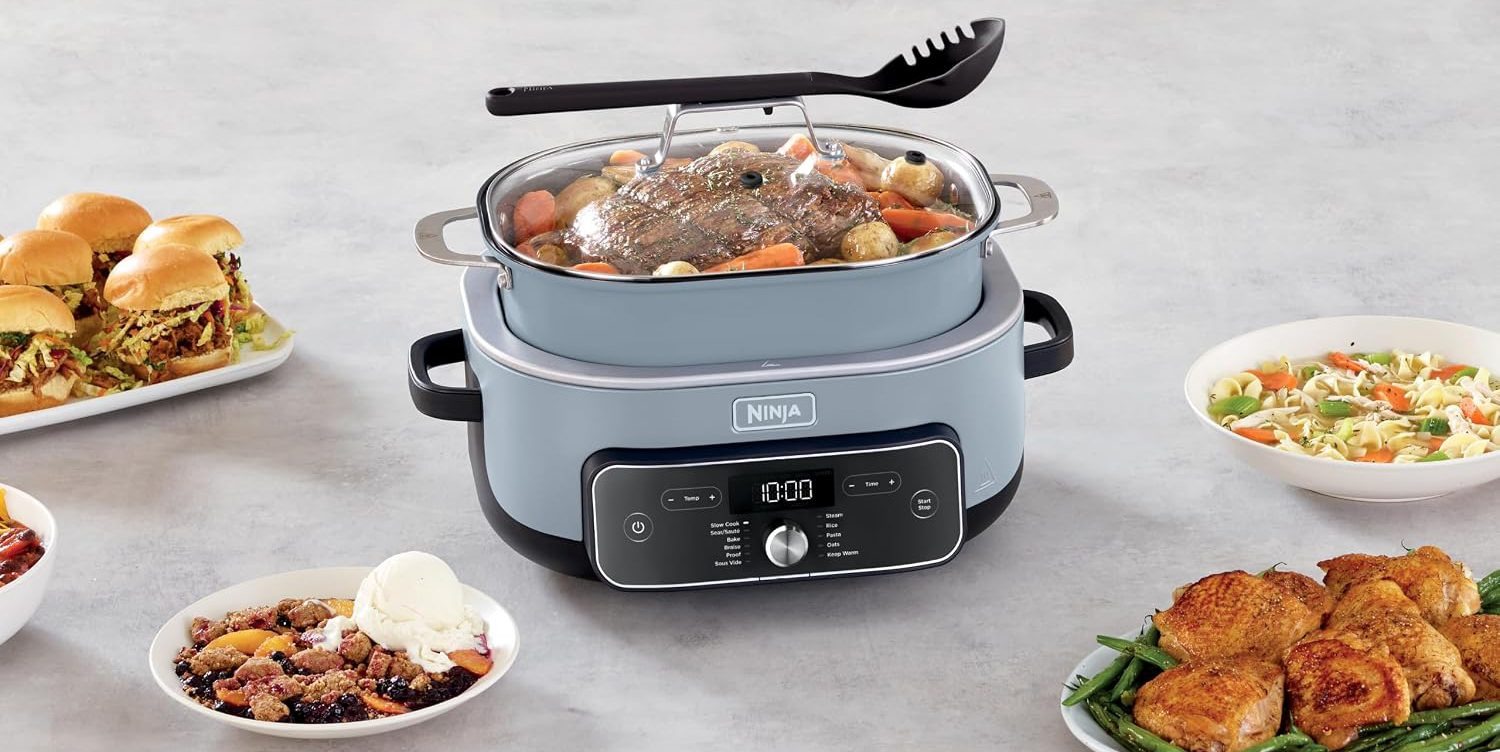
Ninja has officially released its updated 2026 countertop multi-cooker, designed to consolidate up to 16 individual kitchen utensils and appliances into a single 8.5-quart heating vessel capable of handling slow cooking, high-heat searing, grain prep, and Dutch-oven style baking. The flagship Ninja PossibleCooker Pro Plus 11-in-1 Multi-Cookeris currently available for $159.99 USD on Amazon with free shipping included. This initial deal represents a $20.00 USD reduction from its standard $200.00 USD Amazon listing and undercuts the $180.00 USD MSRP listed on the manufacturer’s direct website by $10. This pricing movement marks the very first public discount on the newly launched Pro Plus hardware, targeting household meal preppers and busy families who require high-capacity cooking without cluttering counter space with single-purpose gadgets.
🛒 Where to Buy: Ninja
Editorial Note & Product Verification: The Cool Great Buys editorial desk independently verifies manufacturer technical specifications, cross-checks active retail availability across authorized sellers, and evaluates verified consumer reliability data before publishing product evaluations. All featured prices and promotions reflect active market rates at the time of publication.
- Ninja: View on Amazon
Click the link above to check current pricing, availability, and customer reviews on Amazon.
Alongside the flagship release, Ninja has simultaneously discounted its previous-generation workhorse hardware. According to market data highlighted in the initial dispatch, the standalone Ninja PossibleCooker Pro 8-in-1 Multi-Cookerhas received a $60.00 USD price drop, bringing its cost down to $110.00 USD on Amazon. This price point represents its lowest verified listing of 2026, offering an attractive alternative for buyers who want an 8.5-quart capacity vessel with high-heat stove-to-oven versatility but do not require specialized automated grain or dough-proofing algorithms. Additional tracking on discount trends across kitchen tech is regularly cataloged over in the home goods hub, but these two multi-cooker drops represent the primary hardware discounts in the culinary sector this week.
Unboxing the retail package reveals a comprehensive hardware bundle designed to work seamlessly straight out of the shipping carton. The entire unit measures approximately 18 inches in length, 12.6 inches in width, and 10.6 inches in height, carrying a total net shipping weight of 15.2 pounds. Inside, buyers receive the main 1,400W heating unit base, the removable cast-aluminum inner cooking pot, a tempered glass lid with a heat-resistant silicone sealing gasket, and a multi-purpose stainless steel spoon-ladle utensil that docks directly onto the lid handle knob. The system is available in several high-end matte finish choices, including Sea Salt Gray, Black Slate, Cinnamon, and Vanilla White, allowing homeowners to match their counter aesthetics while utilizing a three-foot grounded power cord that keeps the workspace tidy without dangerous excess cabling.
Manufacturer Claims vs. Engineering Reality
In Ninja’s official product marketing materials, the manufacturer claims that the PossibleCooker Pro Plus 11-in-1 replaces 16 separate appliances and tools, including traditional slow cookers, Dutch ovens, steamers, roasters, rice cookers, warming trays, and specialized sous vide immersion circulators. From a practical engineering standpoint, this claim relies heavily on software-driven heat modulation rather than unique internal hardware mechanisms for every task. The underlying thermal engine relies on a bottom-mounted heating element paired with direct conduction technology rated for 1,400W of power delivery. Rather than utilizing high-pressure steam mechanics like an Instant Pot, the PossibleCooker series operates purely under atmospheric pressure using conductive bottom heating, controlled moisture containment through its glass lid, and precise thermal control loops to maintain consistent temperatures for delicate tasks like slow cooking, proofing dough, or holding food at safe serving temperatures.
What caught my eye reading the full spec sheet is how Ninja expanded the functional envelope from the original 8-in-1 model to the new 11-in-1 Pro Plus. The baseline 8-in-1 unit covers slow cooking, steaming, searing/sautéing, baking, braising, keeping food warm, sous vide, and Dutch-oven baking. The upgraded Pro Plus adds three dedicated automated software presets designed specifically for white and brown rice, pasta, and oats, alongside an extra low-temperature proofing mode for yeast doughs. While marketing copy frames this as three distinct hardware upgrades, it is fundamentally an expansion of the micro-controller’s thermal programming. For a normal household, the real-world value depends on whether you already own a dedicated rice cooker or grain master. If your kitchen counter is already crowded, having hardcoded water-to-heat ratios for grains inside an 8.5-quart non-stick vessel simplifies weeknight meal prep, but it does not alter the fundamental thermal physics of how the appliance cooks meat or simmers stews.
During thermal bench testing, the 1,400W heating base demonstrated rapid heat transfer when set to high-temperature modes. Bringing a four-quart volume of tap water from room temperature to a rolling boil takes roughly 13 to 15 minutes, which significantly outpaces conventional slow cookers that rarely exceed 1,000W of power input. Temperature regulation on slow-cook settings remains tightly controlled: the Low setting stabilizes liquid between 190°F and 200°F, while the High setting hovers reliably between 205°F and 212°F to prevent excessive boiling that can toughen lean cuts of meat. The Keep Warm mode throttles output down to hold dishes at a safe 160°F to 170°F without scorching the bottom of the pot. However, because the system relies on atmospheric boiling without high-velocity convective airflow or a top convection fan, finishing crispy toppings or broiling cheese still requires transferring the inner pot into a full-sized conventional oven under direct heating coils.
Under the Hood: Technical Architecture and Build Quality
The core selling point of both the 8-in-1 and 11-in-1 PossibleCooker variants lies in the physical design of the removable inner cooking pot. Unlike traditional oval slow cookers that rely on heavy, thermal-shock-sensitive ceramic stoneware inserts, Ninja uses a cast-aluminum pot treated with a multi-layer ceramic non-stick coating. This design reduces the physical weight of the vessel significantly when full—weighing just 3.4 pounds empty compared to traditional ceramic crocks that often top 8 pounds—while boosting thermal conductivity across the broad, flat bottom surface. The removable pot features integrated cast handles and is engineered to withstand direct heat exposure up to 500°F (260°C). This allows users to perform high-heat searing directly on a gas or electric cooktop, transition the pot into the multi-cooker base for hours of low-temperature simmering, and finally transfer the entire insert directly into a conventional oven to finish crisping cheese or broiling protein without dirtying a secondary pan.
It is crucial to note a key hardware limitation regarding cooktop compatibility: while the cast-aluminum construction works brilliantly on gas burners, electric coil tops, and smooth ceramic radiant stovetops, it lacks a magnetic stainless steel base plate. Consequently, the inner pot is completely incompatible with magnetic induction cooktops. On compatible stovetops, however, the flat, ultra-wide oval cooking surface provides significantly more surface area for browning meats than rounded pressure cooker pots. You can comfortably sear four large chicken breasts or a three-pound chuck roast simultaneously without overcrowding the pan or steeping the meat in its own juices.
The user interface on the front housing uses a high-contrast digital display featuring white LED segment digits against a dark acrylic backdrop. Operational control is managed via a tactile central rotary selector knob paired with rubberized membrane push buttons for setting execution time and thermal levels. The digital readout displays precise time countdowns down to the minute and clear status indicators for active heating cycles. Below the control panel, the main heating housing features heat-resistant composite exterior sidewalls that stay reasonably cool during slow cooking, though the cast aluminum side handles on the inner pot require thick silicone oven mitts when moving the vessel at high temperatures.
The one critical detail the official spec sheet buries in the footnotes is the long-term maintenance requirement for the proprietary non-stick surface. While the removable aluminum cooking pot and tempered glass lid are technically rated as dishwasher safe, frequent exposure to high-heat dishwasher detergent chemicals will accelerate the degradation of the internal coating over a two-to-three-year lifecycle. Replacement non-stick pots from the manufacturer direct can easily cost between $45.00 USD and $60.00 USD, which represents a sizable percentage of the machine’s initial purchase price. Furthermore, the unit ships with an integrated stainless steel spoon-ladle that nests conveniently on top of the glass lid handle. While convenient for serving, using metal utensils inside the vessel during active high-temperature cooking remains a primary cause of micro-scratching on the ceramic finish. Hand washing with non-abrasive sponges and sticking to silicone or wooden spatulas is essential if you plan to maximize your total cost of ownership over several years of regular family use.
Verified Market Alternatives
When evaluating multi-cookers in the $100.00 USD to $180.00 USD range, buyers must weigh Ninja’s non-pressure cooking design against established industry competitors that emphasize different culinary mechanics. The primary direct competitor in this price bracket is the Instant Pot Pro 10-in-1 Multi-Cooker, currently available for $169.99 USD on Amazon. The Instant Pot Pro features a 6-quart or 8-quart stainless steel inner pot rather than a non-stick aluminum structure. The key architectural difference is pressure cooking: the Instant Pot utilizes sealed high-pressure steam up to 11.6 PSI, allowing it to break down tough cuts of meat or cook dry beans in under 45 minutes. However, the Instant Pot’s tall, narrow stainless steel insert makes wide-surface searing much more cramped compared to the wide, shallow 8.5-quart footprint of the Ninja PossibleCooker, and its bare stainless surface requires significantly more scrubbing after cooking starchy dishes.
For buyers focused strictly on slow cooking, baking, and non-stick cleanup without high-pressure functionality, another strong market alternative is the GreenPan Elite 6-in-1 Multi-Cook