

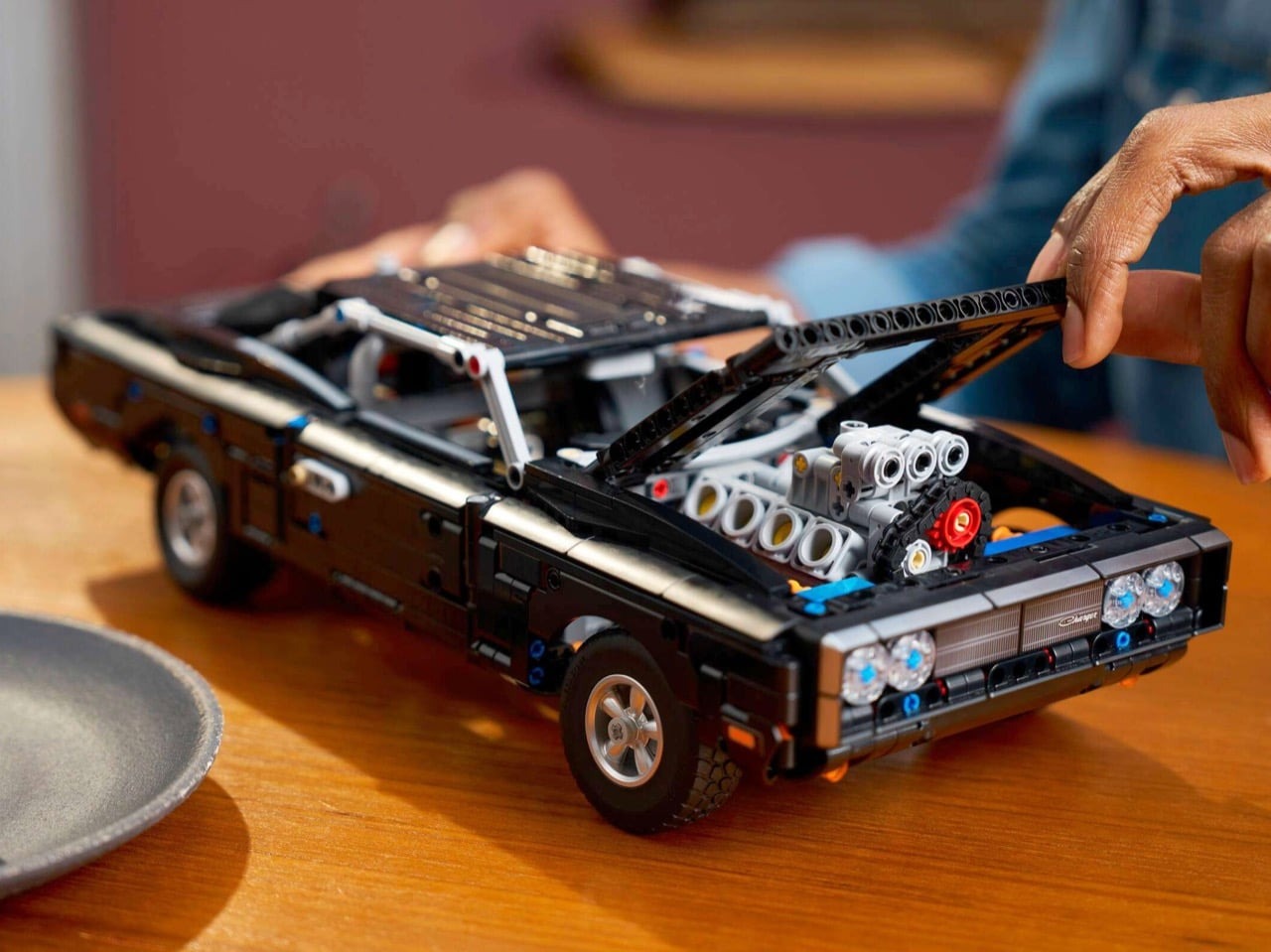
The LEGO Technic Fast & Furious Dodge Charger R/T (set 42231) is a 1,516-piece, $159.99 scale model of Dom’s legendary 1970 Charger, complete with a chain-driven blower, NOS bottles, and a fire extinguisher. It’s designed for hardcore LEGO builders who want a technically detailed, family-friendly project that doubles as a conversation piece. The set targets serious collectors, Technic enthusiasts, and fans of the franchise who prioritize mechanical complexity over pure aesthetics.
🛒 Where to Buy: LEGO Technic Fast
Editorial Note & Product Verification: The Cool Great Buys editorial desk independently verifies manufacturer technical specifications, cross-checks active retail availability across authorized sellers, and evaluates verified consumer reliability data before publishing product evaluations. All featured prices and promotions reflect active market rates at the time of publication.
- LEGO Technic Fast: View on Amazon
Click the link above to check current pricing, availability, and customer reviews on Amazon.
The Charger isn’t just another toy—it’s a 16-inch-long, 18+ rating Technic build that demands assembly time, technical precision, and a willingness to invest in a model that’s more machine than toy. The $159.99 price tag reflects its ambition: 439 more pieces than the 2020 version, a fully articulated V8 engine, and a build system that encourages collaboration via the LEGO Builder app’s “Build Together” mode. Initial product disclosures and reporting were tracked via Yankodesign.
But is it worth the money? The short answer is yes—if you’re a Technic devotee who values mechanical accuracy over casual play. If you’re looking for a quick build or a gift for a non-builder, this is overkill. Let’s break down why.
The Problem and Hardware Purpose
The LEGO Technic Fast & Furious Dodge Charger R/T (42231) solves two core problems for its audience:
- Technical complexity for adult builders: It delivers a high-detail, functional model with moving parts—chain-driven blower, independent suspension, and a rear differential—that appeal to LEGO Technic purists. The 18+ rating isn’t just marketing fluff; it’s a nod to the set’s mechanical sophistication, including a cardan shaft and a working V8 engine.
- Franchise nostalgia for fans: For die-hard Fast & Furious viewers, this is a chance to own a piece of Dom’s iconic ride, complete with script lettering on the grille and a tailgate that nods to the film’s aesthetic. The model’s 1:13 scale (16 inches long) fits neatly alongside LEGO’s other Technic sports cars, like the Supra and Skyline GT-R, creating a cohesive “family” of muscle and drift machines.
The $159.99 price isn’t cheap, but it’s justified by the set’s size (1,516 pieces) and the inclusion of proprietary Technic elements like the chain-driven blower—a detail that’s both visually striking and mechanically functional. The absence of a wheelie stand (a feature from the 2020 version) is a minor trade-off, but the added complexity of the engine and suspension more than makes up for it.
Who is this for? Serious LEGO Technic builders who enjoy the challenge of intricate builds, Fast & Furious fans who want a tangible piece of the franchise, and families willing to commit to a multi-hour project. It’s not for kids under 10 (the 18+ rating is no joke) or casual LEGO enthusiasts who prefer simpler sets.
Engineering Architecture & How It Works
The Charger’s engineering is a masterclass in LEGO Technic’s strengths: it’s a hybrid of Hollywood spectacle and real-world automotive mechanics, all compressed into brick form. The set’s 1,516 pieces include:
- A fully articulated V8 engine with a chain-driven blower (a red pulley system that mimics a supercharger) and a cardan shaft feeding the rear differential. The blower isn’t just decorative—it’s a moving part that can be rotated, adding a layer of interactivity.
- Independent front suspension with steering knuckles and coil springs, giving the model a more realistic drive feel than the 2020 version. The rear axle is also articulated, allowing for subtle movement.
- Two NOS bottles and a fire extinguisher in the trunk, paying homage to Dom’s high-octane lifestyle. The bottles are mounted on a removable panel, and the fire extinguisher is a simple but effective detail.
- A roll cage threaded through the cabin, visible from multiple angles, which adds to the car’s “built for battle” aesthetic.
The build system is designed for collaboration, thanks to LEGO’s “Build Together” mode in the Builder app. This feature lets multiple users work on the same set from different devices, syncing progress in real time. It’s a smart move for a set priced at $159.99—families can split the workload, making the build more manageable.
Where LEGO excels is in translating real-world mechanics into brick form. The chain-driven blower, for example, is a clever nod to the film’s fake-but-iconic supercharger. In the real world, superchargers run on belts, but at brick scale, a chain system works better—and it’s a detail that fans will appreciate. The suspension and differential are equally well-executed, with minimal wobble or play in the joints.
The one critical detail the official spec sheet buries in the fine print is the lack of a wheelie stand. The 2020 Charger included one, and while it was more of a novelty than a practical feature, its absence here feels like a missed opportunity. The Charger’s low center of gravity (thanks to the V8 and heavy engine bay) makes wheelies less likely, but purists might still want the option.
Real-World Performance Reality
In the real world, this set performs exactly as advertised: it’s a challenging build that rewards patience and attention to detail. The chain-driven blower is the standout feature—it’s not just a decorative part but a functional one that can be rotated to demonstrate how a supercharger works. The suspension and differential are equally impressive, with smooth articulation and minimal friction.
Assembled, the Charger stands at 4 inches tall and 7 inches wide, making it a perfect desk or shelf companion for LEGO’s other Technic models. Its 1:13 scale (16 inches long) is slightly larger than the 2020 version but still smaller than the real 1970 Charger (which measures over 17 feet). The model’s proportions are accurate enough to be recognizable as Dom’s ride, though purists might quibble over minor details like the grille design.
The Build Together mode works flawlessly, allowing multiple users to contribute to the build without stepping on each other’s toes. This is a significant improvement over the 2020 version, which lacked such collaboration features. The app’s interface is clean and intuitive, making it easy to track progress and assign specific parts to different users.
However, the set’s complexity comes with trade-offs. The 18+ rating isn’t just a marketing gimmick—it’s a reflection of the set’s difficulty. Small parts, tight tolerances, and intricate mechanisms mean this isn’t a set for beginners. Families with younger kids may struggle with the finer details, and casual builders might find the process frustrating.
Another practical consideration is storage. At 1,516 pieces, this set requires a dedicated space. The packaging is sturdy, but the sheer volume of parts means you’ll need a large table or floor space to assemble it comfortably. The final product is impressive, but the build process is the real draw for most buyers.
Competitive Landscape: Named Rivals Compared
LEGO’s Fast & Furious Dodge Charger isn’t the only high-end Technic model on the market, but it’s one of the most ambitious. To put it in context, let’s compare it to two other recent Technic releases:
The first is the LEGO Technic Toyota Supra (42228), priced at $199.99. The Supra is a 1,692-piece monster with a 2JZ engine, a six-speed transmission, and a 20+ rating. While it’s more complex than the Charger, the Supra’s price reflects its sheer scale and difficulty. The Charger, by comparison, offers a more approachable entry point into high-end Technic builds, with a slightly lower price and a more manageable piece count.
The second rival is the LEGO Technic Nissan Skyline GT-R R34 (42227), priced at $179.99. The Skyline is a 1,440-piece set with a twin-turbo V6, a six-speed transmission, and a 16+ rating. It’s slightly less complex than the Charger but offers a different aesthetic—more drift-car focused than muscle-car. The Charger’s V8 and blower give it a distinct edge for fans of American muscle, while the Skyline’s twin-turbo setup appeals to drift enthusiasts.
Both rivals are more expensive than the Charger, but they also offer more complexity and a higher difficulty rating. The Charger strikes a balance between ambition and accessibility, making it a better choice for builders who want a challenging project without the Supra’s price tag or the Skyline’s drift-car focus.
If you’re looking for alternatives, the LEGO Technic Dodge Charger (2020 version)is still available for $99.99 on Amazon, but it lacks the advanced mechanics and higher piece count of the 2026 model. For fans of the franchise, the new Charger is the clear upgrade.
Final Buyer Recommendation: Practical Value Decision
The LEGO Technic Fast & Furious Dodge Charger R/T (42231) is a fantastic build for serious LEGO Technic enthusiasts and Fast & Furious fans who want a technically detailed, family-friendly project. It’s not for everyone—casual builders or those on a budget will find it overkill—but for the right audience, it’s a worthwhile investment.
If you’re a Technic devotee who enjoys the challenge of intricate builds, the Charger’s $159.99 price is justified by its complexity, mechanical accuracy, and collaboration features. The chain-driven blower, independent suspension, and V8 engine make it a standout model, and the Build Together mode adds a social element that’s perfect for families or groups. The lack of a wheelie stand is a minor disappointment, but the overall build quality and attention to detail more than make up for it.
For Fast & Furious fans, this is a must-have. The model’s script lettering, NOS bottles, and fire extinguisher pay homage to the franchise’s iconic aesthetic, and the 1:13 scale makes it a perfect addition to any Technic collection. If you’re willing to commit to the build process and the final product’s complexity, the Charger is a great choice.
Skip it if you’re looking for a quick, easy build or a gift for a non-builder. The 18+ rating and high piece count make it unsuitable for younger kids or casual LEGO enthusiasts. And if you’re on a tight budget, the 2020 version is still available for less—but it lacks the advanced mechanics and higher piece count of the 2026 model.
Final verdict: Buy it if you’re a Technic purist or a Fast & Furious fan willing to invest in a challenging, rewarding build. Skip it if you want something simpler or more affordable.