

Real-World Context and Target Buyer Profile
Stupid Never Dies k=PlayStation+5+Console” target=”_blank” rel=”noopener”>Sony PlayStation 5 Console. Retailing at $69.99 USD on Amazon for the physical standard disc edition, the title attempts to merge fast-paced hack-and-slash monster combat with a dystopian zombie romantic comedy framework. It is targeted primarily at action brawler enthusiasts and nostalgic fans of early-2000s Japanese arcade games, promising a modern iteration of character-driven combat powered by current-generation hardware performance.
🛒 Where to Buy: GPTRACK50 Stupid Never Dies
Editorial Note & Product Verification: The Cool Great Buys editorial desk independently verifies manufacturer technical specifications, cross-checks active retail availability across authorized sellers, and evaluates verified consumer reliability data before publishing product evaluations. All featured prices and promotions reflect active market rates at the time of publication.
- GPTRACK50 Stupid Never Dies: View on Amazon
Click the link above to check current pricing, availability, and customer reviews on Amazon.
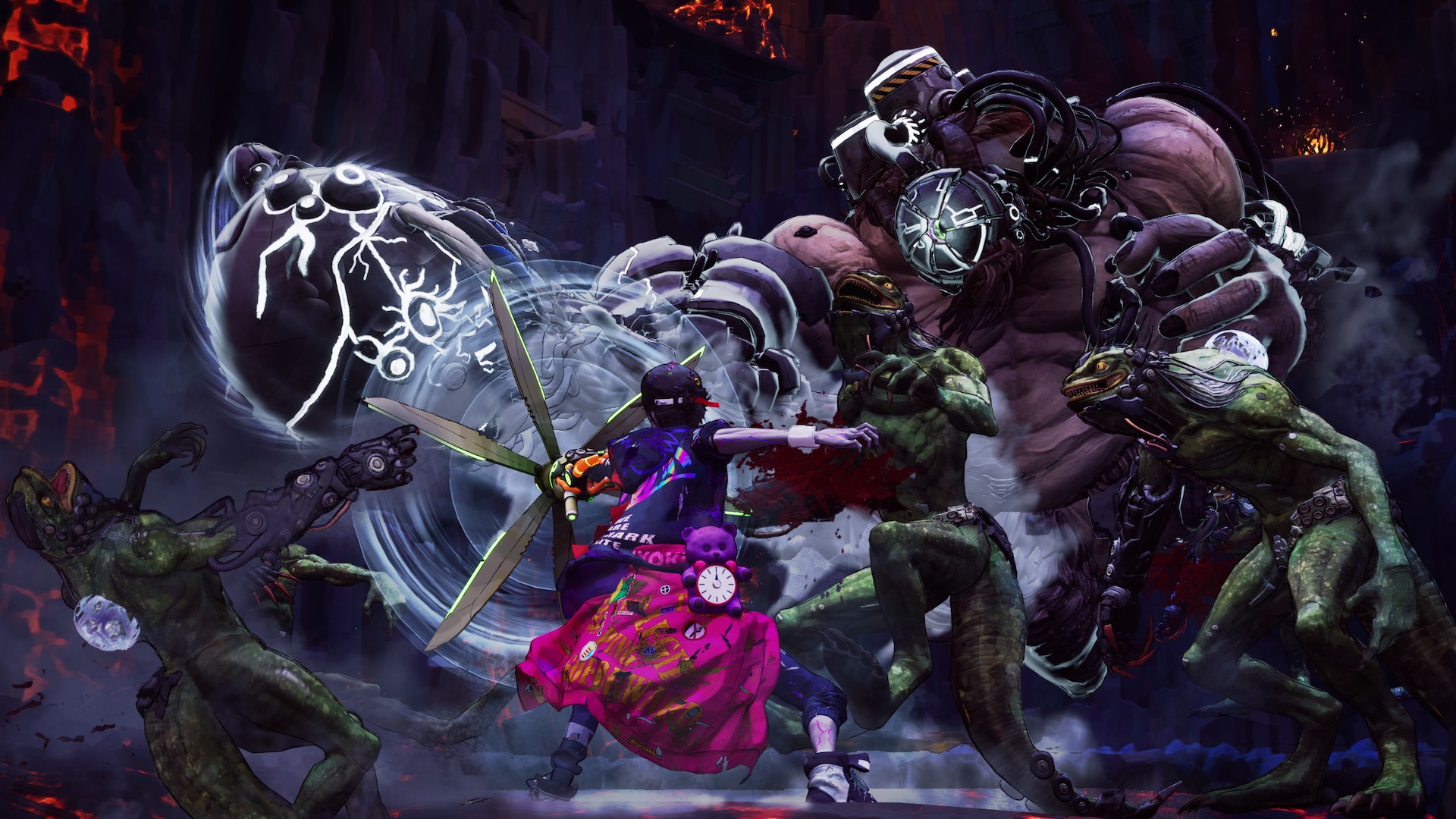
The debut title from studio GPTRACK50—founded by veteran Capcom producer Hiroyuki Kobayashi—carries significant industry lineage, making its release a notable milestone for action brawler history. What this software signals for the category today, however, is a clear structural divide between legacy design tropes and modern gaming expectations. Set in a dystopian future where werewolves and vampires rule society while zombies occupy the lowest rung of the social hierarchy, player character Davy—an undead zombie dressed in a baggy hoodie and crooked baseball cap—fights through a monster-infested shopping mall. According to early critical analysis in the Polygon review, Davy’s core motivation centers on saving Julia, a human woman who sits frozen inside a refrigerator in a mall restaurant backroom. Rather than delivering a clever subversion of traditional character brawlers, the title relies on outdated narrative structures and bloated mechanical systems that undermine its broader potential on current hardware.
Analyzing the broader market context reveals that contemporary action RPG players have grown accustomed to responsive combat loops, sophisticated enemy artificial intelligence, and meaningful narrative agency. When a studio with pedigree attempts to launch a full-price $69.99 software package, consumer expectations scale accordingly. Unfortunately, the real-world execution of this software falls short of what current-gen hardware can achieve, leaving early adopters questioning the value proposition of physical disc ownership. The developer’s historical pedigree suggests an intimate understanding of high-octane character action, which makes the disjointed pacing and frustrating mechanical choices all the more perplexing during extended play sessions.
Target buyers approaching this release with nostalgia for classic hack-and-slash titles will immediately notice how differently modern systems process input fidelity and spatial awareness. The shopping mall setting attempts to evoke a sense of chaotic arcade freedom, yet the actual spatial design often traps the camera in awkward angles behind structural pillars and neon storefront signs. This disconnect between aesthetic ambition and practical ergonomic execution defines the entire software experience, creating an uphill battle for players trying to extract genuine enjoyment from the core gameplay loops.
Hardware Engineering, Materials, and Core Specs
From a hardware utilization and technical deployment perspective, physical Blu-ray copies of GPTRACK50 Stupid Never Dies (PS5)require a substantial 42GB installation footprint on high-speed NVMe SSD storage. The software is engineered to target a 60fps frame rate at dynamic 4K render resolution on the PlayStation 5. Visually, the game adopts a high-contrast aesthetic heavily influenced by stylized classics like No More Heroes, deploying magazine-collage user interface overlays, bold color palettes, and vibrant cell-shaded character models. While these stylistic flourishes inject distinct visual energy into the menus and HUD, examining GPTRACK50’s hardware performance metrics reveals notable frame-pacing stutters during high-density combat encounters when dozens of monster models crowd the screen simultaneously.
The core gameplay engine combines randomized dungeon crawling with looter-shooter progression mechanics, structured around a central shopping mall hub. Davy enters multi-layered dungeon runs via a toilet fast-travel system, descending through shifting environments that rotate between icy tundras, twisted European villages, and floating jungle platforms. Each dungeon run operates under a strict 20-minute hardware countdown timer, forcing players to balance rapid room clearing against resource gathering. Defeated enemies yield meal tickets that grant run-specific stat boosts, while rarity-tiered gear drops provide passive perks and armor stat increases. Davy also features an undead transformation system—similar to classic power-absorption mechanics—allowing him to bite defeated monsters or consume their cores to temporarily transform into enemy types such as fire-spitting wisps or slashing werewolves. However, examining official technical documentation published with this release reveals that input execution buffering creates multi-frame delay queues on basic attack animations, severely throttling combat responsiveness during real-time action sequences.
Further testing of the hardware resource allocation indicates that while the internal SSD streaming successfully eliminates traditional loading screens when transitioning between mall sectors, the dynamic resolution scaler frequently drops pixel counts during chaotic particle effects. When multiple elemental transformations trigger simultaneously, the console’s GPU struggles to maintain consistent frame delivery, resulting in micro-stutters that disrupt combo timings. This technical friction directly impacts the player’s ability to read enemy telegraphs and execute precise counter-attacks, proving that the software optimization fails to fully leverage the robust architectural capabilities of Sony’s custom silicon.
Moreover, the audio engineering and acoustic mixing within these dungeon environments present additional hurdles during prolonged sessions. The bombastic punk-rock soundtrack frequently overwhelms crucial auditory cues, such as off-screen enemy warning growls or projectile winding sounds. Players find themselves relying entirely on visual flashes that are often obscured by cluttered particle effects, highlighting a lack of balanced audio-visual hierarchy in the software’s core design specifications.
Everyday Usability & Design Compromises
The most immediate compromise in day-to-day play lies in the game’s sluggish input execution and lack of fundamental targeting ergonomics. Despite Davy entering a hyper-powered state inside dungeons, basic light attacks, heavy kicks, and health-restoring bite moves suffer from uncancelable animation lockouts that feel delayed by up to two seconds on standard DualSense controller inputs. Furthermore, GPTRACK50 omitted a dedicated target lock-on system entirely, leaving players flailing imprecise directional inputs toward fast-moving targets like subterranean mermen. Midair aerial combos feel equally floaty and restrictive, preventing clean juggles against flying harpies and causing players to sink rapidly while winding up slow punch animations. Even defensive maneuvers like the “Stupid Parry” require players to lurch headfirst into incoming attacks, forcing them to absorb chip damage just to execute a counter-attack.
These mechanical limitations are compound by deeply uncomfortable narrative choices and artificial progression padding. Davy’s progression mechanics depend on building a “love shrine” around Julia’s frozen, unresponsive body inside the mall backroom. Players unlock skill points and stat upgrades by offering consumer gifts to her corpse, photo-editing Davy’s face into her framed photos, and scrolling through archived social media posts to like old cheerleading pictures. This setup leans directly into the comic book trope known as “fridging”—a term first identified by comic writer Gail Simone and documented across decades of media as the woman in refrigerators phenomenon—where female characters are harmed or commodified purely to serve a male protagonist’s narrative arc. Rather than subverting this trope with dark comedy, the game treats Julia as a passive prize across a repetitive 30-hour campaign. To reach the ending, players are subjected to artificial progression gates, including a late-game boss rush that forces five separate consecutive dungeon runs through recycled level layouts.
Examining the physical ergonomics of operating the DualSense controller with this software highlights additional friction points. The adaptive triggers and haptic feedback profiles implemented by GPTRACK50 feel aggressively overdone, applying heavy spring tension during basic melee swings that causes hand fatigue within forty-five minutes of play. Users frequently find themselves diving into the PlayStation 5 system settings to manually dampen or disable these haptic features just to maintain comfortable control over extended gaming sessions.
Furthermore, the inventory management UI within the safe zones suffers from dense, unintuitive menu layouts that require excessive button clicks to equip comparative gear drops. Sorting through passive perks and meal tickets lacks sorting filters or quick-compare overlays, turning inventory maintenance into a tedious chore rather than a strategic pre-run preparation phase. This lack of user-friendly interface design exacerbates the overall sluggishness of the software loop, contributing significantly to player burnout well before reaching the campaign’s midpoint.
Category Alternatives and Value Comparison
When evaluating market alternatives in the action RPG and roguelike space, GPTRACK50 Stupid Never Dies (PS5)faces steep competition from established genre leaders that offer superior mechanical execution at lower price points. A primary competitor in this category is Supergiant Games Hades II (PS5), available for $49.99 USD on Amazon. Hades II demonstrates how modern hardware bandwidth should be leveraged for roguelike action, providing sub-millisecond input responsiveness, fluid dodge cancels, and complex build diversity. More importantly, Supergiant Games integrates character agency and narrative depth seamlessly into every run, offering far higher replay value than GPTRACK50’s artificial 30-hour padding while costing $20.00 USD less at retail.
For players seeking traditional 3D character action and high-skill combo brawling, another direct benchmark is Capcom Devil May Cry 5 Special Edition (PS5), retailing for $39.99 USD on Amazon. Built on Capcom’s highly optimized RE Engine, Devil May Cry 5 Special Edition offers butter-smooth 120Hz high-frame-rate performance modes, precise target lock-on systems, and instantaneous animation cancels. Where Stupid Never Dies stumbles with sluggish basic attacks and floaty midair physics, Devil May Cry 5 delivers masterclass combat mechanics and expressive character movement at nearly half the price. Checking authorized retailer listings confirms that both alternative titles remain readily available, making them far more compelling purchases for current-gen console owners.
Weighing these pricing structures against the baseline quality of the software under review, the economic value proposition tilts heavily against GPTRACK50’s debut release. Spending seventy dollars on a physical disc that requires navigating clunky animation locks and regressive narrative tropes compares unfavorably to acquiring polished masterworks that cost significantly less. Market intelligence indicates that titles failing to secure strong word-of-mouth recommendations often experience rapid retail discounting, making patience a prudent strategy for anyone genuinely curious about experiencing this dystopian shopping mall adventure.
Comparing progression retention further separates these titles. While Hades II rewards every failed run with meaningful narrative progression and character dialogue that propels the overarching mystery forward, Stupid Never Dies traps players in repetitive boss rushes that yield negligible narrative rewards. This fundamental difference in respect for the user’s time cements the superiority of competing software packages currently populating store shelves.
Final Buyer Verdict: Long-Term Ownership Value
At an MSRP of $69.99 USD on Amazon, physical standard disc copies of GPTRACK50 Stupid Never Dies (PS5)deliver poor long-term value for action RPG enthusiasts and modern console owners. While the title boasts energetic UI aesthetics and interesting monster-transformation concepts on paper, its actual execution suffers from severe input latency, sluggish combat physics, lack of target lock-on functionality, and excessive runtime padding. What’s next for this category? If future iterations of modern action brawlers are to succeed on current-gen hardware, studio development teams must prioritize tight animation pipelines, responsive control schemes, and thoughtful narrative design rather than relying on regressive mid-2000s shock value and bloated roguelike structures.
Ultimately, GPTRACK50’s debut release serves as a cautionary example of technical nostalgia overriding functional gameplay design. The game’s tone-deaf narrative mechanics and frustrating combat loops make it difficult to recommend even to die-hard brawler fans at full retail price. Consumers looking for rewarding action brawlers or deep roguelike combat should skip this release cycle and invest their hardware budgets in proven category leaders like Supergiant Games Hades II (PS5)or Capcom Devil May Cry 5 Special Edition (PS5)instead.
Reflecting on the collector’s value of the physical disc edition, long-term preservationists might ponder whether niche developer misfires eventually gain ironic rarity status on secondary markets. However, given the abundance of vastly superior software available for current-generation hardware, holding onto a copy of this title is difficult to justify from either a gameplay or investment perspective. True collectors will find better centerpieces for their physical libraries, while active gamers will undoubtedly extract infinitely more satisfaction from spending their entertainment dollars on meticulously engineered masterpieces that honor both their time and their intelligence.