

The Problem and Hardware Purpose
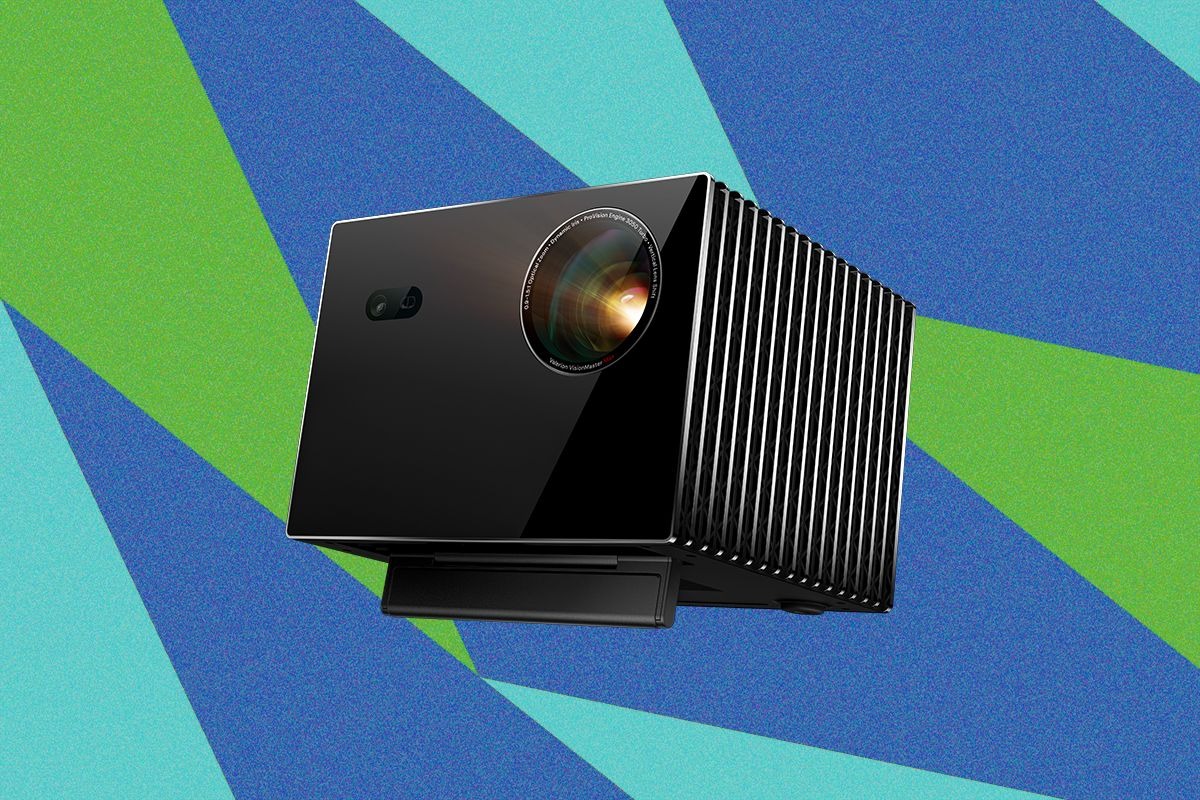
The Valerion VisionMaster Max 4K Projectoris a high-brightness RGB triple-laser projection system priced at $3,999 USD direct from Valerion and through select authorized retailers. The unit is designed specifically for home theater enthusiasts and multimedia power users who require authentic cinema-grade color accuracy, high physical contrast, and flexible optical adjustment without committing to a dedicated darkroom build or installing an expensive native 4K ceiling installation from traditional high-end optics vendors.
🛒 Where to Buy: Valerion VisionMaster Max 4K
- Valerion VisionMaster Max 4K: View on Amazon
Click the link above to check current pricing, availability, and customer reviews on Amazon.
For years, the home projection landscape has remained bifurcated between two distinct design philosophies. On one end sit lightweight, “point-and-play” lifestyle projectors that prioritize automated setup, integrated smart operating systems, and compact mobility at the direct expense of dynamic contrast, physical lens adjustment, and optical zoom. On the opposing end are massive, dedicated home theater units requiring fixed ceiling mounts, specialized focal distances, and separate media streaming devices. The VisionMaster Max solves this structural tension by embedding motorized vertical lens shift, a physical mechanical iris, and a true optical zoom assembly inside a compact 16.5-pound tabletop chassis running Google TV natively. Initial product disclosures and reporting were tracked via Wired.
By bridging the gap between casual plug-and-play convenience and rigorous optical performance, this hardware signals a clear shift in how high-performance displays are deployed in multi-use living environments. Following its massive crowd-funding launch, where the campaign on the platform that year crossed $8 million USD in backing, the device addresses the core modern entertainment dilemma: delivering massive screen sizes up to 300 inches with legitimate black-level depth during evening viewing, while retaining sufficient lumen power to remain fully usable under daylight conditions.
Engineering Architecture & How It Works
At the center of the VisionMaster Max hardware architecture is a pure RGB triple-laser light engine capable of producing 3,500 ISO lumens of peak brightness. Unlike single-laser projection systems that rely on a spinning color wheel to sequentially filter light—a process that frequently introduces distracting rainbow artifacts and reduces overall color saturation—the VisionMaster Max utilizes dedicated red, green, and blue laser diodes working simultaneously. This optical approach allows the projector to cover 110% Rec.2020 of the wide target space, exceeding the standard parameters required for high dynamic range (HDR) UHD content and delivering exceptional color purity across all luminance levels.
To overcome the elevated black levels that typically afflict high-brightness laser projectors, Valerion engineered a proprietary optical path containing a six-stage dynamic mechanical iris. This physical aperture contracts and expands dynamically on a frame-by-frame basis, narrowing during darker cinematic scenes to physically block excess light and deepen ambient black levels, then opening instantaneously when high peak brightness is demanded. Working alongside this mechanical iris is Valerion’s Enhanced Black Level (EBL) algorithm, an electronic signal processing system that modulates the power draw of the laser diodes in real time while reshaping the luminance curve to preserve shadow detail without crushing mid-tone values.
Optical setup flexibility is achieved through a specialized lens assembly offering a throw ratio of 0.9:1 to 1.5:1. Coupled with a physical optical zoom lens, users can increase or decrease the physical screen size without moving the chassis or relying on digital keystone scaling, which inevitably sacrifices native resolution by cropping pixels on the Digital Micromirror Device (DMD). Furthermore, the inclusion of hardware-level vertical lens shift allows the projected frame to move vertically across the wall surface via physical lens adjustment. This guarantees that digital distortion remains at zero when compensating for uneven furniture heights or off-center alignment.
On the processing front, the hardware incorporates advanced gaming display architecture designed to minimize signal delay. The projector supports high-refresh-rate input signals up to 240Hz at 1080p resolution, registering an ultra-low input lag rating of 4ms. When operating at native 4K at 60Hz, the input lag measures a swift 15ms. Signals are routed through two full-bandwidth HDMI 2.1 ports featuring Auto Low Latency Mode (ALLM) handshaking, ensuring immediate switching when connected to next-generation gaming consoles or dedicated media PCs.
Real-World Performance Reality
Translating theoretical specifications into daily usage outcomes demonstrates the true utility of a high-lumen RGB triple-laser engine. In ambient lighting conditions, such as a daylight-lit living room with unshaded windows, the 3,500 ISO lumens output creates a vivid, highly legible 75-inch to 100-inch display surface. While extreme ambient light naturally degrades high-contrast saturation—an unavoidable reality of front-projection optics—the sheer light output keeps television broadcasts, sports, and casual media completely visible without requiring blackout curtains.
When operating in a dark room environment, the interaction between the mechanical iris and the EBL image processor creates dramatic visual results. During complex low-light film sequences, such as the shadowed cityscapes in The Dark Knight, the projector eliminates the pale, charcoal-gray background haze common to standard DLP hardware. Dark shadow details remain clearly defined, while bright highlights, like street lamps and explosions, punch through with sharp contrast. Screen uniformity remains exceptionally stable across extended screen sizes; testing the output up to 130 inches yields clean pixel crispness right to the absolute corners of the image without noticeable chromatic aberration or vignetting.
Acoustic performance is handled by an integrated stereo speaker system powered by dual 12W drivers. While dialog clarity is crisp and high-frequency audio spatialization is well-handled within small rooms, the compact physical enclosure inherently restricts physical low-end bass reproduction. Increasing the volume output past level 25 out of 100 produces clear amplitude but lacks the physical lower-midrange warmth required for blockbuster cinematic soundstages. Fortunately, built-in decoding for Dolby Atmos and DTS audio formats allows seamless passthrough over HDMI eARC to dedicated multi-channel receiver systems or high-end soundbars.
According to technical documentation published with this release, the unit integrates automated keystone correction and autofocus routines designed for rapid temporary setups. However, examining the fine print of the hardware documentation reveals that relying heavily on automatic digital keystone correction downscales the effective pixel density on screen. Discerning viewers will want to take advantage of the physical vertical lens shift and manual optical zoom ring to align the frame natively, preserving every bit of the display’s true 4K surface resolution.
Competitive Landscape: Named Rivals Compared
When evaluated against the broader market of high-end home cinema and lifestyle display systems, the VisionMaster Max operates in an intriguing space, challenging both mobile hybrid options and specialized fixed optical systems.
The most direct lifestyle competitor in this price class is the Nebula X14K Projector, available for $3,999 USD on Amazon. Both models target users seeking ultra-bright 3,500 lumens laser output paired with modern Google TV smart software integrations. However, the operational priorities differ significantly between the two. The Nebula X1 prioritizes audio modularity and casual outdoor portability, featuring detached wireless satellite speakers that make spontaneous backyard movie nights effortless. Conversely, the Valerion VisionMaster Max trades ultimate portative convenience for internal optical architecture. With its dynamic six-stage mechanical iris and hardware vertical lens shift, the VisionMaster Max delivers noticeably superior native black levels, lower input lag (4ms vs standard 16ms+ on competitive units), and far more precise throw ratio options for dedicated indoor home theater installations.
Another prominent alternative comes from within Valerion’s own product lineup: the Valerion VisionMaster Pro 2, which retails at $2,999 USD direct from the manufacturer. The VisionMaster Pro 2 retains the core 3,500 ISO lumens RGB triple-laser engine, Google TV operating system, 110% Rec.2020 color gamut, optical zoom lens, and electronic EBL processing found on the flagship model. However, to achieve its lower price point, the Pro 2 strips out the physical dynamic mechanical iris and eliminates the vertical lens shift mechanism. For buyers planning to position their projector directly facing a flat wall without off-axis height displacement, saving $1,000 USD by choosing the Pro 2 represents a compelling value proposition, though black-level purists will miss the physical dynamic iris control of the Max.
Finally, luxury optics options like the Leica Cine Play 1, priced at $3,795 USD on Amazon, present a design-forward alternative. While the Leica model features iconic industrial design and tuned image processing parameters, it lacks the raw high-refresh-rate gaming specifications (240Hz at 1080p) and optical adjustment flexibility provided by the VisionMaster Max’s mechanical lens shift assembly.
Final Buyer Recommendation: Practical Value Decision
The Valerion VisionMaster Max 4K Projector is a uniquely capable piece of display hardware that successfully bridges the divide between convenience-driven lifestyle projectors and fixed-installation home theater gear. For home cinema builders who demand deep black levels, wide color volume via RGB triple-laser technology, and high-frame-rate gaming responsiveness, the investment of $3,999 USD delivers physical optical capabilities that competing point-and-play models simply cannot match. If your target installation involves a high-quality fixed screen, an external Dolby Atmos sound system connected via HDMI eARC, and a desire for massive picture sizes up to 130 inches or beyond, this unit earns a resolute recommendation for immediate adoption.
Conversely, casual users who simply want a secondary, highly portable display to move frequently from room to room—or those who intend to rely solely on internal speakers without dedicated audio gear—will find the Max’s 16.5-pound frame, extensive optical adjustment suite, and flagship price point to be unnecessary overkill. In those scenarios, opting for lower-tier optical solutions or the mid-range VisionMaster Pro 2 yields a far more sensible cost-to-performance ratio. Looking ahead at the broader arc of display engineering: what’s next for this category? If this generation successfully demonstrates that dynamic physical optics and high-luminance triple-laser engines can coexist in compact enclosures, the next iteration could integrate native Variable Refresh Rate (VRR) chipsets and motorized side-shift assemblies, setting an entirely new standard for uncompromising living room cinema.