

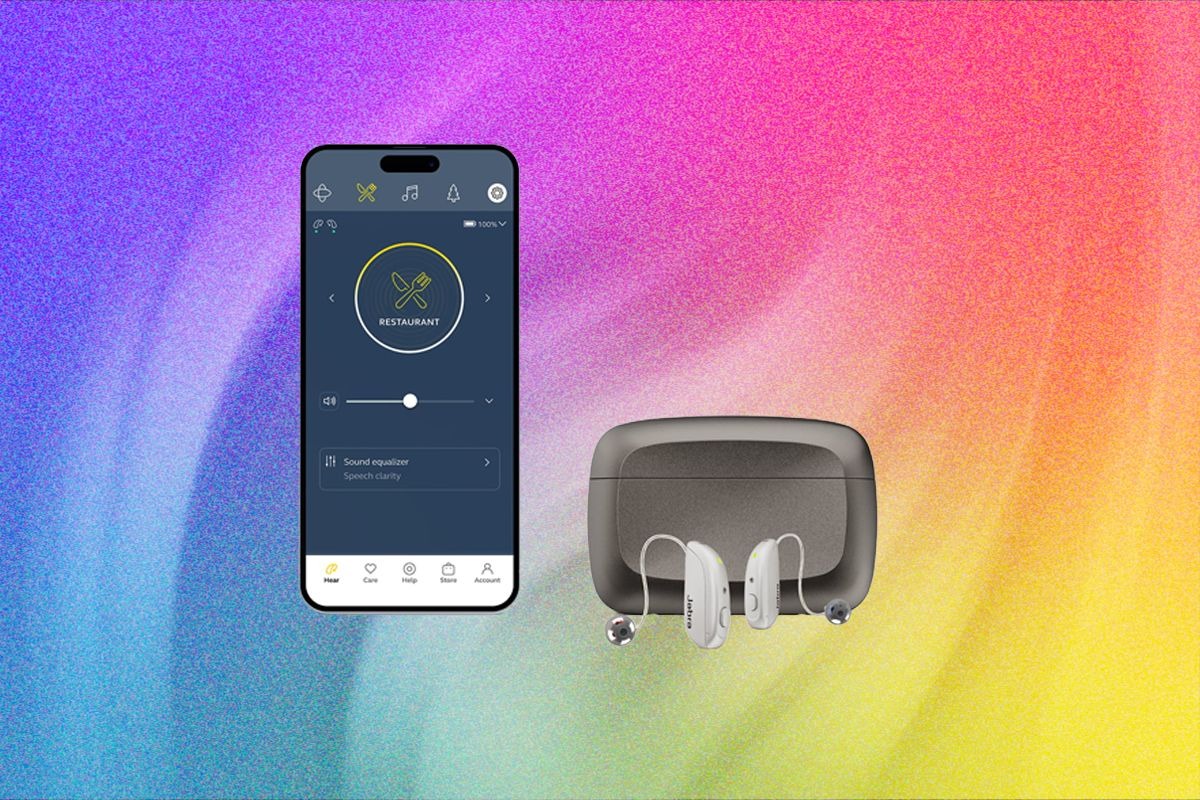
The Jabra Enhance Select M3 is a $1,995 USD direct-to-consumer, over-the-counter hearing aid designed for adults seeking clinical-grade amplification without a traditional audiology prescription. Built for consumers navigating mild-to-moderate hearing loss, this latest flagship model arrives alongside a completely refreshed product lineup that retires recent generations in favor of a modernized trio. According to technical documentation published with this release, the manufacturer’s engineering updates focus primarily on internal signal processing rather than a radical external redesign. For buyers weighing the investment against older models like the Jabra Enhance Select 700, understanding how these hardware modifications impact daily utility is essential before committing two thousand dollars. The over-the-counter category has matured rapidly over recent years, shifting from rudimentary amplification devices into sophisticated, app-integrated wearables that leverage smartphone connectivity, remote professional tuning, and advanced digital signal processing algorithms to restore natural soundscapes for aging adults.
🛒 Where to Buy: Jabra Enhance Select M3
- Jabra Enhance Select M3: View on Amazon
Click the link above to check current pricing, availability, and customer reviews on Amazon.
When unpacking the physical delivery box, the unit immediately feels refined, presenting an unboxing experience that mirrors high-end consumer electronics rather than sterile medical equipment. Inside the retail packaging, users discover the two behind-the-ear modules neatly nestled alongside a sturdy charging case, multiple sizes of closed and open silicone domes, cleaning tools, a power brick, and a braided USB-C charging cable. This comprehensive kit ensures that wearers can immediately experiment with different physical fits to find a secure, comfortable seal inside the ear canal, which is a critical step for preventing acoustic feedback and ensuring that low-frequency sounds are properly delivered to the eardrum. Manufacturers often emphasize electronic wizardry, but the fundamental acoustic seal remains the single most important factor determining whether an over-the-counter hearing aid performs adequately in bustling public spaces.
The Problem and Hardware Purpose
Direct-to-consumer hearing aids bridge the gap between expensive prescription devices and basic sound amplifiers, targeting millions of adults who experience age-related hearing decline. The core workflow involves self-administered diagnostic testing to generate a custom audiogram, which is then applied to shape the frequency response of behind-the-ear hardware. At a retail price of $1,995 USD direct from the manufacturer, the Enhance Select M3 aims to deliver sophisticated noise reduction and speech clarity without requiring repeated in-person doctor visits. However, because over-the-counter options remain a significant financial commitment for a normal household, analyzing whether these technical gains justify the premium over lower-cost alternatives is a critical step in the purchasing process. Millions of individuals suffer in silence from gradual hearing loss, often avoiding social gatherings because conversation in noisy restaurants or crowded family dinners becomes an exhausting, frustrating exercise in guesswork.
Examining the fine print of the hardware documentation reveals that Jabra has streamlined its entire catalog, replacing the 700, 500, 300, and 50R series with the new M-series architecture consisting of the M3, M2, and M1 models. This sweeping refresh means legacy models are rapidly disappearing from authorized retail channels, leaving consumers to choose among the new tier. The financial reality for a normal household purchasing the M3 involves factoring in the three-year professional support bundle included in the price, which covers remote audiologist tuning sessions via video chat. Evaluating this comprehensive service package alongside the raw hardware performance helps clarify what this device actually costs you over its operational lifespan. Remote professional support acts as a crucial safety net for novice users who might otherwise struggle with self-adjustment, ensuring that expert human guidance is always just a video call away whenever acoustic adjustments or fit tweaks become necessary.
Understanding the target demographic requires looking closely at how age-related sensorineural hearing loss manifests in everyday life. Frequencies in the higher registers, such as consonants like s, f, and th, are typically the first to degrade, turning speech into a mumbled, unintelligible blur even when overall volume levels seem loud enough. The Enhance Select M3 addresses this specific auditory deficit by selectively boosting high-frequency gains while applying sophisticated digital compression to prevent sudden loud noises from causing discomfort. This balancing act requires substantial computing power packed into a miniature enclosure that sits discreetly behind the outer ear, making the internal microchips and software tuning algorithms far more valuable than the plastic housing enclosing them.
Engineering Architecture & How It Works
The physical chassis of the M3 maintains the traditional behind-the-ear teardrop form factor, weighing an identical 2.12 grams to its predecessors. While historical audio engineering conventions suggest that higher-priced models feature smaller enclosures, Jabra has retained a uniform weight across the entire M-line. The M3 is distinguished physically by a slightly squatter silhouette measuring a few millimeters shorter than the M1 and M2, alongside an exclusive red color option that stands out from standard neutral tones. A single tactile button positioned on the back of each device handles power management, volume stepping, and environmental mode toggles through various press-and-hold combinations. Despite the diminutive scale, the casing feels remarkably durable, handling accidental drops, daily sweat exposure, and light rain showers without exhibiting mechanical failures or moisture intrusion.
Under the hood, the device relies on proprietary audio processing software branded as SoundScape, which handles real-time noise suppression and frequency tuning. The M3 introduces two exclusive capabilities within this software ecosystem: a revamped autofocus tool designed to lock onto speech streams in complex acoustic environments, and an advanced adaptive listening mode that dynamically shifts profiles based on surrounding noise levels. Powering these internal components is a rechargeable battery architecture rated for 24 hours of continuous operation, though real-world testing frequently stretches that metric closer to 26 hours. The charging case remains notably bulky, supplying three complete supplementary recharges before requiring a wired power replenishment. While the bulky charging case is less than ideal for minimalist travelers who prefer pocket-sized accessories, its robust internal battery capacity ensures that users can comfortably spend a long weekend away from a wall outlet without experiencing power anxiety.
The acoustic transducers housed within the tiny chassis are engineered to minimize harmonic distortion, ensuring that amplified speech sounds natural rather than metallic or synthetic. When sound waves enter the external microphones, digital signal processors analyze the acoustic landscape thousands of times per second, separating steady background hums from transient vocal bursts. This lightning-fast computation is what separates modern medical-grade and over-the-counter hearing aids from cheap personal sound amplification products that simply blast all ambient noise equally into the ear canal, often causing hearing damage or overwhelming sensory fatigue. By selectively amplifying frequencies where the user’s audiogram shows a deficit while dampening competing background clamor, the hardware acts as an intelligent acoustic filter tailored precisely to the wearer’s unique biological profile.
Real-World Performance Reality
In quiet environments such as one-on-one conversations or home media viewing, audio reproduction is exceptionally crisp, delivering near-perfect speech intelligibility. Keeping the master volume capped at 30 percent maximizes environmental amplification while successfully mitigating the electronic hiss that tends to scale upward with every incremental tick of gain. The newly introduced autofocus speech-locking feature performs moderately well in chaotic public spaces like restaurants, maintaining clean vocal separation even as conversation partners move dynamically around the wearer. Conversely, the advanced adaptive listening mode struggles to accurately predict real-time shifts in ambient noise, making manual mode selection and user-tweaked noise reduction profiles the preferred approach for daily wear. In bustling coffee shops or during windy walks outdoors, the adaptive algorithm occasionally misinterprets sudden clattering dishes or gusts of wind as important vocal cues, resulting in jarring fluctuations in overall volume that can momentarily distract the listener.
Bluetooth audio streaming functionality remains a secondary feature rather than a primary strength for this hardware generation. While the inclusion of Auracast support enables direct audio broadcasting from compatible public sources, music and movie playback suffer from a washed-out acoustic profile at lower volume levels, requiring maximum output to achieve acceptable clarity. Furthermore, encountering any amount of external ambient sound during media streaming tends to degrade the listening experience entirely. On the support front, the companion mobile application retains its robust self-diagnostic testing suite, allowing users to build or update a functional audiogram from scratch in just a few minutes without clinical intervention. Pairing the hearing aids with a smartphone via Bluetooth is generally straightforward, though maintaining a stable connection through thick winter hats or during active outdoor movement occasionally requires re-establishing the wireless link inside the companion app.
The smartphone application serves as the primary command center for the entire ecosystem, presenting a clean, accessible interface designed with senior accessibility in mind. Large buttons, high-contrast text, and straightforward menu navigation ensure that even less tech-savvy users can easily toggle between custom environmental presets, adjust individual frequency bands via a basic equalizer, or check remaining battery percentages for both the left and right modules. Beyond everyday adjustments, the app facilitates scheduled video appointments with licensed hearing care professionals who can remotely fine-tune the device’s gain curves based on the wearer’s real-world feedback. This hybrid approach—combining automated self-testing with professional human oversight—strikes an effective balance between independent troubleshooting and expert clinical care, minimizing the frustration often associated with medical technology adoption.
Competitive Landscape: Named Rivals Compared
When evaluating the M3 within the broader over-the-counter audio market, buyers must weigh its high price tag against two closely related stablemates that offer a similar foundational experience. The Jabra Enhance Select M2is available for $1,695 USD, delivering nearly identical physical dimensions and core amplification capabilities while omitting the M3’s exclusive autofocus and dynamic adaptive listening algorithms. For budget-conscious consumers who still want professional remote audiologist support and robust self-testing diagnostics, dropping down to the M2 preserves the primary hardware reliability of the brand while reducing the initial out-of-pocket expense by three hundred dollars. For many households, saving that substantial sum makes the M2 a far more rational purchase, especially considering that the core acoustic drivers and daily speech amplification quality remain virtually indistinguishable from the flagship model during routine home conversations and quiet gatherings.
Stepping down further into the lineup introduces the the item M1, which retails for $1,195 USD on Amazon and represents the entry point to the current generation. While the M1 lacks the specialized speech-locking software found on the flagship model, it utilizes the exact same 2.12-gram chassis weight and retains the essential SoundScape processing needed for clear daily communication in quiet settings. Comparing these three tiers demonstrates that consumers are primarily paying for marginal software refinements in noisy environments rather than foundational hardware improvements, making the lower-priced iterations deeply compelling for everyday users who do not regularly frequent high-noise commercial spaces. When stacked against external market competitors like Sony and Bose over-the-counter offerings, the Jabra ecosystem maintains a distinct advantage due to its integrated remote professional support bundle, which provides ongoing clinical reassurance that standalone consumer electronics brands simply cannot match.
Analyzing the broader market reveals that over-the-counter hearing solutions fall into two distinct camps: consumer tech giants leveraging brand recognition and specialized audio manufacturers rooted in audiological science. Jabra bridges these worlds effectively, but the steep pricing of the M-series flagship places it in direct competition with entry-level prescription devices dispensed through traditional audiology clinics. Buyers must weigh whether the convenience of direct home delivery and remote app-based tuning outweighs the personalized ear mold fittings and in-person canal impressions offered by brick-and-mortar hearing centers. For consumers with unusual ear canal geometries or severe manual dexterity challenges, visiting a local clinic may still yield superior physical comfort, whereas tech-forward buyers with mild-to-moderate hearing decline will find the direct-to-consumer model vastly more convenient and transparently priced.
Final Buyer Recommendation: Practical Value Decision
For shoppers with flexible financial means who frequently navigate complex, high-noise environments like crowded restaurants and bustling social gatherings, the the product M3 represents the most technically advanced over-the-counter listening device currently on the market. The inclusion of three years of live, on-staff audiologist support via video chat provides substantial peace of mind for first-time users, justifying a significant portion of the upfront cost when compared to traditional prescription alternatives that easily cost twice as much. If you can comfortably absorb the two-thousand-dollar investment and demand the absolute latest speech-locking software algorithms, this flagship model delivers reliable, clinical-grade results that can dramatically re-engage you in lively family conversations and professional meetings alike.
However, for a normal household operating on a stricter budget, the financial stretch required for the M3 is difficult to defend when the lower-priced alternatives perform almost identically in standard day-to-day scenarios. Buyers with more modest means will achieve nearly identical speech clarity and daily utility by opting for the $1,695 USD M2 or the $1,195 USD M1, both of which retain the core acoustic architecture and excellent self-test diagnostics of the brand. By skipping the flagship model’s incremental software additions and choosing a mid-tier configuration, everyday consumers can secure professional-grade amplification support while keeping hundreds of dollars safely in their pockets. Ultimately, matching your personal acoustic needs, lifestyle habits, and financial thresholds to the correct tier in this refreshed product lineup ensures you get maximum hearing enhancement value without paying for sophisticated algorithms you may rarely use.